
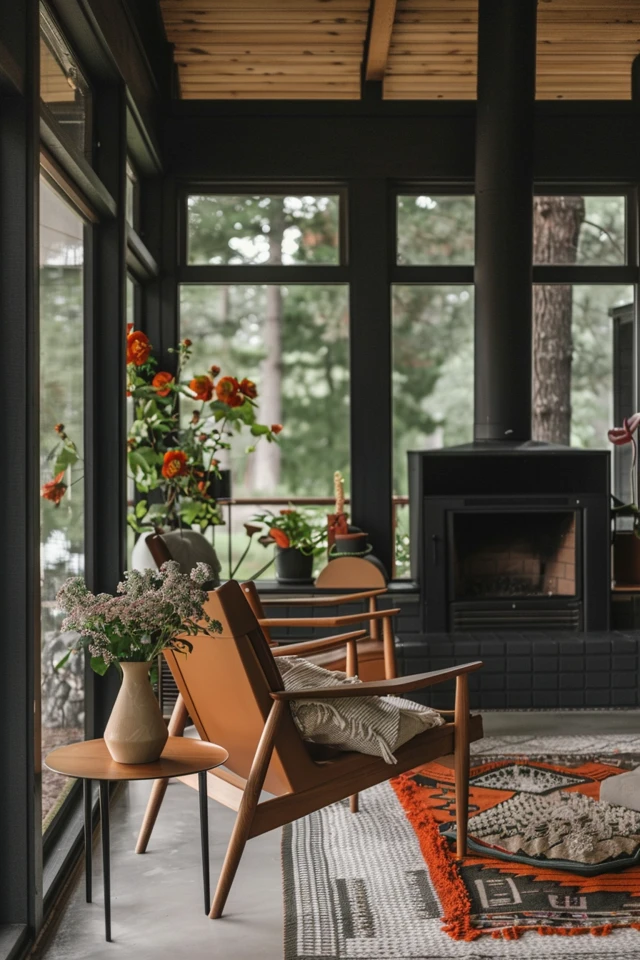
Cozy Screen Porch Fireplace Ideas I Love!
There is something undeniably magical about a screen porch. It bridges the gap between the comfort of your living room and the sensory experience of nature. Adding a fireplace to this space transforms it from a three-season luxury into a nearly year-round sanctuary. It creates a natural focal point that anchors the furniture layout while extending the usability of the space well into late autumn and early spring.
However, designing a fireplace for a screen porch is technically different from designing one for an interior living room. You have to contend with humidity, cross-breezes, floor structural loads, and exterior building codes. It requires a careful balance of aesthetic desire and practical durability. For those looking for visual inspiration, I have curated a stunning Picture Gallery at the end of the blog post.
In this guide, I will walk you through the technical considerations, layout rules, and styling tricks I use when designing these cozy spaces for clients. We will cover everything from fuel sources to rug sizes, ensuring your new porch becomes the most popular “room” in the house.
1. Choosing the Right Fuel Source and Fireplace Type
The first decision in any porch project is determining how you want to generate heat and ambiance. This choice dictates your budget, construction timeline, and ongoing maintenance.
Wood-Burning Masonry Fireplaces
This is the gold standard for ambiance. The crackle and smell of wood smoke are unbeatable for creating a cozy vibe. However, a true masonry fireplace is heavy and requires a full foundation and footing, which can be expensive to retrofit onto an existing deck.
You also need to consider the chimney height. By code, the chimney must usually extend at least two feet higher than any roofline within 10 feet. If your porch is attached to a two-story house, you might need a towering, expensive chimney stack to ensure the smoke draws upward rather than flooding your porch.
Gas Inserts (Vented vs. Vent-Free)
Gas fireplaces are incredibly popular for their convenience. You get instant heat with the flip of a switch, and no ash cleanup is required. For a screen porch, you must use an outdoor-rated unit.
I generally recommend direct-vent units for porches. While vent-free units are 99% efficient, they release moisture as a byproduct of combustion. On a humid summer evening or a damp fall night, this can make a screen porch feel clammy or cause condensation on the ceiling. Direct-vent units exhaust outside, keeping the air drier and more comfortable.
Electric and Ethanol Options
If you are a renter or have strict budget constraints, electric fireplaces or bio-ethanol burners are excellent alternatives. They require no venting and are much lighter, meaning you generally do not need to reinforce the floor joists. While they provide less heat than gas or wood, they offer the visual comfort of a flickering flame without the construction headache.
Designer’s Note: The “Wind Tunnel” Effect
One specific issue I see in screen porches is smoke back-drafting. Because screen porches often have cross-ventilation, a sudden gust of wind can push smoke from a wood-burning fire right back into the seating area.
To prevent this, I always recommend installing glass doors on wood-burning porch fireplaces. You can keep them open on calm nights, but on blustery evenings, you can close them to contain the smoke while still enjoying the radiant heat. If you go with gas, choose a unit with a high wind rating to ensure the pilot light stays lit.
2. Layout, Scale, and Spacing Rules
The placement of the fireplace determines the flow of the entire room. In an interior room, we often have solid walls to work with. On a screen porch, you are dealing with “walls” that are transparent and often contain doors to the yard.
Corner vs. Centered Placement
A centered fireplace commands attention and creates a formal living room feel. It allows for symmetrical furniture arrangements, such as two matching sofas facing each other. However, it blocks a significant portion of your view.
If your porch overlooks a stunning landscape or pool, I often suggest a corner fireplace. This keeps the sightlines open while still providing heat. A corner orientation works beautifully with a sectional sofa or a round table and chairs, creating a casual, conversational vibe.
Critical Measurements and Clearances
When planning your layout, you must adhere to safety clearances. A good rule of thumb is to keep any upholstered furniture at least 36 inches away from the hearth or firebox opening. For wood-burning units that tend to spark, I prefer extending that to 48 inches for safety.
Hearth Depth: If you have a wood burner, your non-combustible hearth should extend at least 18 to 20 inches into the room to catch embers.
Mantle Height: I usually place the mantle 54 to 60 inches off the floor. This keeps it high enough to protect decor from heat but low enough to serve as a focal point.
TV Placement: If you plan to mount a TV above the outdoor fireplace, check the manufacturer’s specifications for heat clearance. You may need a mantle that projects outward (at least 8-10 inches) to deflect heat away from the screen.
Common Mistakes + Fixes
Mistake: Ignoring the traffic flow from the house to the yard.
Fix: Map out your walking paths before pouring concrete. You need a minimum of 30 to 36 inches of clear walkway space behind your furniture. If the fireplace pushes the sofa back into this walkway, the room will feel cramped and frustrating to navigate.
Mistake: Undersizing the furniture.
Fix: Outdoor fireplaces are often large, stone structures. Dainty bistro chairs will look lost next to them. Use substantial, deep-seating furniture with thick cushions to balance the visual weight of the masonry.
3. Material Selection and Durability
A screen porch is a “damp location.” Even with a roof, the materials are exposed to humidity, blowing rain, and extreme temperature fluctuations. Everything you choose must be exterior-grade.
Stone and Brick Veneers
Natural stone and brick are the most durable options and age beautifully. If you are building a wood-frame chase for a gas insert, we typically use a thin stone veneer to save weight. This gives the look of full-depth stone without requiring a massive concrete footing.
When choosing stone, consider the color temperature. Grey and slate tones feel modern and cool, while fieldstone with browns and tans feels rustic and warm. I usually try to match the stone to the home’s existing foundation or retaining walls to make the addition feel seamless.
The Hearth and Mantle
For the hearth, I love using a single slab of bluestone or limestone. It minimizes grout lines, which can crack over time due to freeze-thaw cycles. Avoid polished marble or slippery tiles; honed or thermal finishes provide better slip resistance if rain blows in.
For the mantle, reclaimed wood beams are a favorite client request. However, they must be sealed properly with a marine-grade spar varnish or a high-quality outdoor sealer to prevent rot. Alternatively, a cast concrete mantle can mimic the look of wood or stone but is completely fireproof and rot-resistant.
Outdoor-Rated Drywall/Sheathing
If you are painting the area above the fireplace (shiplap is very popular), ensure the underlying substrate is moisture-resistant. Regular drywall will mold and crumble in a screen porch. Use cement board or exterior-grade gypsum sheathing, and use outdoor-rated paint that resists mildew.
4. Lighting and Ambiance Layers
Lighting a screen porch with a fireplace requires a subtle touch. You want to highlight the texture of the fireplace stone without overpowering the glow of the fire.
Sconces and Accent Lights
I almost always install two wall sconces flanking the fireplace. These should be placed at eye level, roughly 60 to 66 inches from the floor. Choose fixtures that are “Dark Sky” compliant or have a downward cast to avoid glare.
If you have a rough stone fireplace, consider installing a small “grazer” light in the ceiling aimed down at the stone. This emphasizes the texture and creates dramatic shadows in the evening.
Ceiling Fans and Overhead Lighting
A ceiling fan is non-negotiable for summer use, but avoid fans with integrated light kits that hang too low. They often cast a harsh, flat light. Instead, rely on floor lamps and table lamps rated for outdoor use.
Outdoor lamps have heavy, weighted bases so they won’t blow over in the wind, and they feature watertight bulb sockets. Placing a lamp on a side table next to the fireplace makes the porch feel just as designed and layered as your interior living room.
5. Styling for “Coziness” (Textiles and Decor)
The difference between a cold patio and a cozy porch lies in the soft goods. Since the fireplace introduces hard materials like stone and brick, you need to soften the space with textiles.
Rug Sizing and Material
A rug anchors the seating area. In a screen porch, always use a polypropylene or PET (recycled plastic) rug. These materials resist mold, can be hosed off, and dry quickly.
Size matters here. All front legs of your furniture should sit on the rug. If you have a fireplace, leave about 12 to 18 inches of bare floor between the hearth and the rug edge. This prevents embers from damaging the rug and keeps the visual spacing clean.
Cushions and Throws
Invest in high-performance fabrics like Sunbrella or Crypton for your upholstery. They resist fading and mildew. I like to keep a large wicker basket near the fireplace filled with heavy wool or fleece blankets.
Since the porch gets dirty from pollen and dust, store these blankets indoors or in a watertight deck box when not in use. Having them within arm’s reach is essential for enjoying the fireplace on a chilly October night.
Firewood Storage
If you have a wood-burning fireplace, incorporate storage into the design. Built-in niches on either side of the firebox look architectural and keep the wood dry. If that isn’t possible, a heavy iron log hoop is a classic choice. Just be wary of bringing too much wood onto the porch at once, as it can introduce spiders and insects into your relaxation zone.
What I’d Do in a Real Project: A Mini Checklist
If I were designing your porch today, this is the exact workflow I would follow to ensure success:
1. Verify Structure: Have a structural engineer confirm the deck or slab can support the weight of the fireplace (approx. 3,000+ lbs for masonry).
2. Check Zoning: Confirm setbacks. A fireplace usually counts as part of the structure and cannot encroach on property lines.
3. Select Unit: Choose a 42-inch wide firebox for maximum visual impact.
4. Gas Line Prep: Run the gas line before pouring the floor or closing up walls.
5. Flooring Integration: Install the hearth flush with the floor for a modern look, or raised 12 inches for extra seating.
6. Electrical Rough-in: Place outlets for the TV and mantle decor before the stone goes up.
7. Stone Install: Mock up the stone pattern on the ground first to avoid clustering small stones together.
Final Checklist for Your Porch Fireplace
Before you break ground or buy furniture, run through this final punch list to ensure you haven’t missed any details.
Building Permit: Have you obtained the necessary permits for a heat-producing appliance?Fuel Source: Is the gas line sized correctly for the BTU output of the unit?
Floor Protection: Do you have a non-combustible hearth of appropriate depth?
Spark Arrestor: Does the chimney cap have a mesh screen to prevent embers from flying out and animals from getting in?
Furniture Spacing: Is there a 3-foot clearance for walking past the furniture?
Rug Material: Is the rug rated for outdoor use and mold resistance?
Maintenance Plan: Do you have a plan for ash removal (metal bucket and shovel)?
FAQs
Can I put a TV above an outdoor fireplace?
Yes, but you must be careful. Electronics are sensitive to heat and humidity. Use an outdoor-rated TV (like a SunBrite) that can withstand temperature swings and dampness. Always install a mantle or heat deflector between the firebox and the TV to divert rising heat.
How much does it cost to add a fireplace to a screen porch?
Prices vary wildly by region and finish level. A prefab gas fireplace with a stone veneer surround might cost between $6,000 and $10,000 installed. A full masonry wood-burning fireplace with a brick chimney can easily run $20,000 to $35,000 or more due to the foundation work and labor intensity.
Do I need a chimney for a gas fireplace on a porch?
Not necessarily a masonry chimney. You usually need a vent pipe. Direct-vent units use a double-walled pipe that can go up through the roof or out a side wall. Vent-free units do not need a chimney, but as mentioned earlier, check your local codes and consider the moisture issues.
How do I clean the soot off the stone?
For outdoor stone, a mixture of warm water and mild dish soap usually works well with a stiff bristle brush. For stubborn soot stains, you can use a specialized masonry cleaner or a paste made of baking soda and water. Avoid wire brushes on soft stone like limestone, as they can scratch the finish.
Conclusion
Adding a fireplace to your screen porch is one of the best investments you can make for your home’s livability. It changes the psychology of the space, turning a simple outdoor deck into a legitimate living room that just happens to have fresh air.
Whether you choose a rustic wood-burning hearth or a sleek linear gas insert, the key is to respect the scale of the room and choose materials that can handle the outdoors. Prioritize comfort in your furniture choices and don’t skimp on the safety clearances.
With the right planning, your screen porch will become the go-to spot for morning coffee, evening cocktails, and everything in between. It is about creating a space where you can disconnect from the digital world and reconnect with the rhythm of the seasons.
Picture Gallery


