
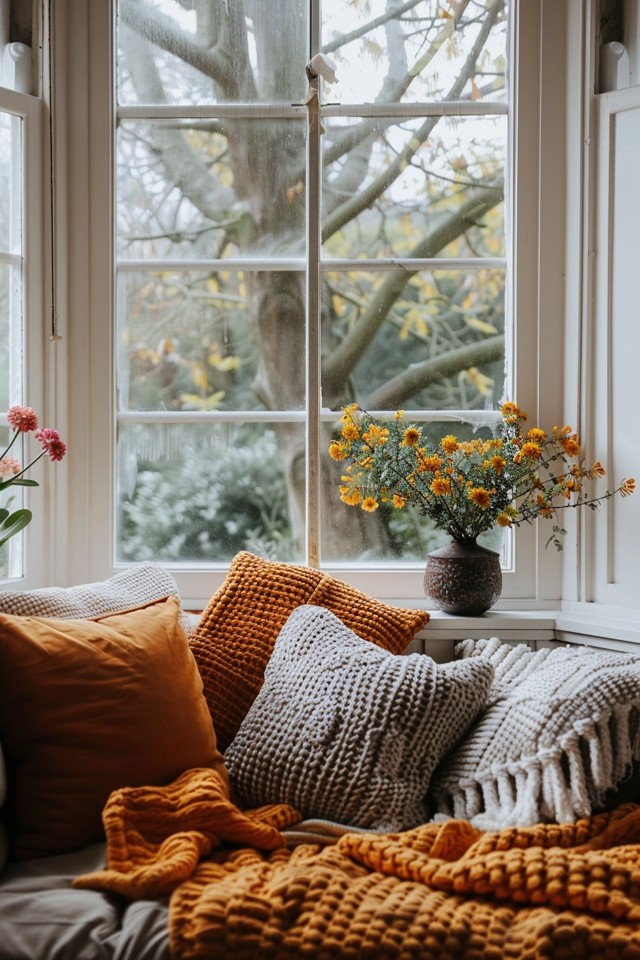
Title: Cozy Small Bedroom Bay Window Ideas for Your Space
Introduction
Small bedrooms present a unique set of challenges, usually revolving around where to put your stuff without making the room feel like a storage unit. When you add a bay window to the mix, you might feel stuck with an awkward architectural feature that consumes valuable floor space. However, in my design practice, I view a bay window not as a problem, but as the room’s greatest asset.
That angled alcove is actually “bonus square footage” that exists outside the main footprint of your room. It captures natural light, provides depth, and offers the perfect opportunity to create a dedicated zone for relaxation or storage. Whether you are renting and cannot drill holes, or you are ready for a full custom build-out, this space has untapped potential.
In this guide, we will look at technical layouts, textile choices, and lighting plans to transform that cold glass corner into the warmest part of your home. If you are looking for visual inspiration, you can skip to the Picture Gallery at the end of this blog post.
Maximizing Function with Custom Bench Seating
The most classic solution for a bay window is the built-in bench, but doing it right requires more than just shoving a box into the alcove. In a small bedroom, a bench must perform double duty as seating and substantial storage.
If you are going the custom route, scale is your most important variable. A comfortable seat height, including the cushion, should land between 18 and 20 inches. If your bench frame is 16 inches high, you will need a 3-inch or 4-inch cushion to reach a comfortable sitting level.
Depth is equally critical. For a bench where you plan to lounge or read, try to get at least 20 to 24 inches of depth. Anything shallower than 18 inches will feel like a waiting room perch rather than a cozy nook.
Designer’s Note: The Storage Trap
One of the most frequent complaints I hear from clients regarding existing window seats is the “lift-top” mechanism. While it is cheaper to build a lid that creates a toy-box style storage, it is functionally annoying. To access your winter blankets, you have to remove the cushion and all the throw pillows.
Instead, I always recommend drawers or cabinet doors on the face of the bench. Drawers are superior because they bring the contents out to you. If you have a radiator in the bay, you must incorporate localized venting (mesh grilles or decorative cutouts) into the toe kick or the top surface to allow heat to escape.
Materials and Cushion Construction
Do not skimp on the foam density for your bench cushion. Standard craft store foam will flatten out within a few months of regular use. Ask your upholsterer for High Resilience (HR) foam with a density of at least 2.5 pounds.
Wrap the foam in a Dacron batting layer. This gives the cushion a crowned, puffy look rather than a sharp, boxy edge. This small detail is often what separates a DIY look from a professional finish.
Styling a Reading Nook Without Construction
Not everyone can build a permanent structure, especially renters or those on a tight budget. You can still utilize the bay window effectively by treating it as a distinct “micro-room” within your bedroom.
The goal here is to select furniture that fits the angles without blocking the flow. Avoid heavy, skirted armchairs that look like blocks of foam. Instead, choose furniture with legs. Seeing the floor continue underneath the chair tricks the eye into thinking the room is larger than it is.
The Two-Chair vs. One-Chaise Debate
In a standard three-sided bay window, you generally have two layout options. The first is a single, substantial lounge chair or chaise angled in the corner. This is ideal for solitary reading.
The second option is a pair of petite accent chairs with a small shared table. This works better if the bay is wide (over 6 feet). If you choose chairs, look for “slipper chair” styles which lack arms; they take up less visual space and are easier to slip in and out of in tight quarters.
Common Mistakes + Fixes
Mistake: Using a standard coffee table in a small bay window.
Fix: Switch to a “drink table.” These are tiny, pedestal-style tables with a top diameter of 8 to 12 inches. They are large enough for a coffee mug and a phone but small enough to not obstruct your knees.
Mistake: Pushing furniture right up against the glass.
Fix: Leave a “breathing room” gap of at least 3 to 4 inches between the back of your chair and the window pane. This prevents condensation transfer and allows curtains to hang freely.
Window Treatments that Don’t Block the Light
Bay windows are notoriously difficult to dress because of the angles. The wrong curtain rod setup can make a small room feel disjointed and messy.
For small bedrooms, light is your best friend. You want to maximize the glass exposure during the day while ensuring total privacy at night. Avoid mounting separate rods on each of the three window frames, as this creates a cluttered look with too many finials and brackets.
Hardware Solutions
I recommend using a continuous bay window curtain rod with flexible elbow connectors. This allows the panels to glide smoothly across the entire span.
Mount the rod at least 4 to 6 inches above the window frame, or all the way to the ceiling line if you have crown molding. This vertical line draws the eye up, making your small bedroom feel taller.
Curtains vs. Roman Shades
If you have a radiator or a built-in bench, floor-length curtains are likely not an option. In this case, Roman shades are the gold standard.
Flat Fold Roman Shades: These offer a clean, modern look that stacks neatly at the top.
Relaxed Roman Shades: These have a slight swoop at the bottom, adding a softer, romantic vibe to a bedroom.
For bedrooms specifically, I often layer shades with non-functional drapery panels on the far left and right sides. This frames the bay without adding bulk in the center.
What I’d Do in a Real Project
If privacy is a major concern (e.g., street-level windows), I almost always specify “Top-Down Bottom-Up” cellular or woven wood shades. This allows you to lower the top half of the shade to let light in while keeping the bottom half covered to block the view from the street.
Lighting and Ambiance for Deep Niches
A bay window creates a deep recess that overhead ceiling lights usually don’t reach. This results in the “black hole” effect at night, where the window area becomes a dark void.
To make the space cozy, you need localized lighting. This transforms the nook into an inviting destination after sunset.
Hardwired vs. Plug-in Options
If you are renovating, add a junction box above the window seat or two sconce boxes on the side walls. A small pendant light hanging centrally in the bay adds a jewelry-like focal point.
For a less invasive approach, plug-in wall sconces are excellent. You can mount them on the side walls of the bay. Look for fixtures with adjustable swing arms so you can direct the light exactly where you are reading.
Designer’s Note: Cord Management
If you use plug-in sconces or a floor lamp, do not leave cords dangling. Use paintable cord covers that adhere to the wall. Paint them the exact same color as your walls, and they will virtually disappear.
Bulb Temperature Matters
In a bedroom, clinical blue-white light is a mood killer. Ensure your bulbs are 2700K (Kelvin). This provides a warm, soft white glow that mimics candlelight and encourages relaxation.
Textiles and Layering for Ultimate Coziness
The difference between a sterile waiting area and a cozy nook lies in the layers. Textiles absorb sound, which is important in a bay window that is essentially a box of hard, reflective glass.
If you have a bench, the seat cushion is your base layer. I prefer performance velvet for this application. It is soft to the touch, durable, and cleanable. Plus, the slight sheen of velvet reflects light beautifully.
The Pillow Formula
Do not just throw two identical pillows in the corners. Use a mix of sizes to create a casual, lived-in look.
1. Start with two 22-inch square pillows in the back corners.
2. Layer two 20-inch square pillows in front of them in a contrasting texture.
3. Finish with one rectangular lumbar pillow (around 12×20 inches) in the center.
Rug Considerations
Placing a rug inside a bay window recess is tricky. Unless you are having carpet custom-cut to fit the trapezoid shape, it is usually better to leave the bay floor bare and place your main area rug just outside the bay.
If the main bedroom rug is large enough, you can tuck the front legs of your reading chairs onto it, bridging the gap between the room and the window nook. This visually connects the two zones.
Durability Check
Since this area gets direct sunlight, UV fading is a real concern. Natural fibers like linen and cotton rot quickly under intense sun. Look for fabrics blended with acrylic or polyester, or specify “solution-dyed” fabrics (like Sunbrella or Crypton), which are fade-resistant.
Final Checklist: The Project Workflow
Before you buy a single pillow, run through this checklist to ensure your small bedroom bay window project stays on track.
1. Function First
- Decide if the primary goal is storage, seating, or display.
- Check for HVAC vents or radiators that cannot be blocked.
- Measure the depth and angles twice.
2. Layout & Furniture
- If building: Ensure seat height is 18-20 inches total.
- If buying: Verify chair width allows for movement (minimum 24-inch walkway).
- Select tables that are small scale (under 15-inch diameter).
3. Lighting & Power
- Locate the nearest outlet.
- Decide on plug-in vs. battery vs. hardwired lights.
- Choose 2700K warm bulbs.
4. Window Treatments
- Check for privacy needs (neighbors, street view).
- Measure required stack-back space for curtains.
- Verify mounting height for rods (high and wide).
5. Styling
- Select fade-resistant fabrics.
- Mix pillow shapes (square + lumbar).
- Add a throw blanket for texture and warmth.
FAQs
How do I handle a radiator in my bay window?
You have two main options. You can build a window seat over it, provided you install proper mesh grilles to let the heat escape and use heat-resistant materials. Alternatively, you can use a radiator cover that doubles as a shelf and place a chair next to it, rather than on top of it.
Is it expensive to build a custom window seat?
Custom carpentry varies by region, but a built-in bench is generally an investment. You can expect to pay between $1,500 and $4,000 depending on materials, drawers, and trim work. To save money, some homeowners use pre-made kitchen upper cabinets (which are roughly 12-15 inches deep) as the base and add a wood top.
Can I put a desk in a small bay window?
Yes, but watch out for glare. If your computer screen faces the window, the contrast will hurt your eyes. If the screen faces the room, the window will cause glare on the glass. You will absolutely need light-filtering solar shades to control brightness while working.
What if my bay window has really odd angles?
Create a template. Tape large sheets of kraft paper or cardboard together on the floor of the bay. Trace the exact footprint, then cut it out. Take this template to your upholsterer or carpenter. This guarantees a perfect fit better than any set of numbers.
Conclusion
A bay window in a small bedroom is an opportunity to add character and utility to your home. It breaks the boxy monotony of a standard room and offers a connection to the outdoors. Whether you choose to invest in a custom storage bench or curate a simple reading corner with a vintage chair, the key is intentionality.
Focus on scale, control the light, and layer your textiles. By following the design principles outlined above, you can turn that awkward alcove into the most coveted spot in the house.
Picture Gallery


