
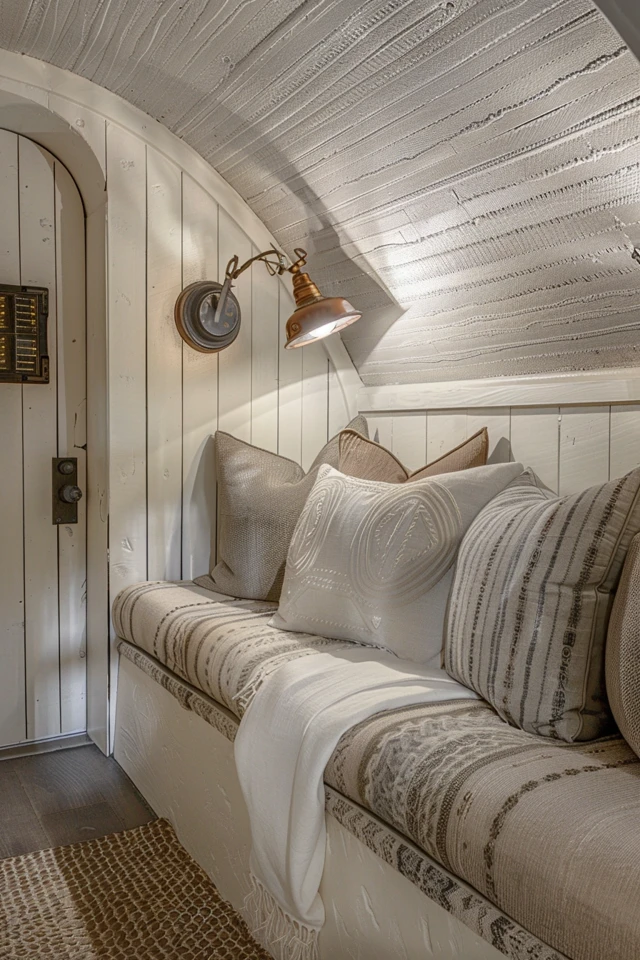
Cozy Storm Shelter Decorating Ideas to Love
When the siren sounds and the sky turns that ominous shade of green, the last thing you want to feel is more anxiety because of your surroundings. For years, I treated storm shelters purely as utility spaces—cold concrete boxes where we waited out the weather. But after designing a safe room for a client with severe storm anxiety, I realized that the environment plays a massive role in how we cope with stress.
A storm shelter doesn’t have to look like a dungeon. By applying standard interior design principles regarding lighting, texture, and scale, you can transform a concrete bunker into a calming retreat. It is about distracting the mind and providing physical comfort during a high-stress event. For a visual dose of inspiration, be sure to check out the Picture Gallery at the end of the blog post.
Whether you have a drop-in unit in your garage, an underground backyard cellar, or a reinforced closet, the goal is the same: safety wrapped in comfort. Below, I’m sharing practical, designer-approved ways to soften these hard spaces without compromising their structural integrity or function.
1. Softening the Shell: Treatments for Walls and Floors
Most storm shelters are delivered as raw concrete or steel shells. They are cold to the touch, visually jarring, and echo loudly. The first step in your design process is addressing this “envelope.” You cannot create a cozy atmosphere if you are staring at gray, unfinished masonry.
However, you have to be realistic about moisture. Underground shelters are naturally damp due to condensation. Standard drywall is often a mistake because it acts like a sponge for moisture, leading to mold. Instead, I recommend high-quality masonry paint or waterproofing sealers in warm, inviting tones. A warm white (like Benjamin Moore’s Swiss Coffee) or a soft sage green can make a small space feel airy rather than claustrophobic.
Flooring Solutions for Damp Spaces
For flooring, avoid standard plush carpet. If your shelter floods or develops condensation, carpet becomes a nightmare. In my projects, I use one of two options:
- Luxury Vinyl Plank (LVP): It is waterproof, durable, and adds a wood-look texture that instantly warms up the room visually. Look for a “rigid core” product.
- Epoxy with Flake: If you want a seamless utility look that is easy to sweep, an epoxy coating is ideal. To make it cozy, layer it with a washable area rug.
Designer’s Note: The Tape Test
Before painting or laying floors in a concrete shelter, tape a 2×2 foot square of plastic sheeting to the floor and wall. Leave it for 48 hours. If you see water droplets underneath the plastic when you peel it back, you have a moisture issue. You must apply a penetrating concrete sealer before adding any decorative finishes.
2. Lighting: The Key to Reducing Panic
Lighting is the single most important element in interior design, but it is critical in a storm shelter. The power usually goes out during a tornado warning. If you are relying solely on a harsh, cold-white camping lantern, the shadows will be sharp and the atmosphere will feel intense.
To create a calm environment without electricity, you need to layer your battery-operated lighting. Do not rely on a single overhead light source, which casts unflattering shadows and makes small rooms feel smaller.
The Three-Layer Battery Strategy
- Ambient Light: Install battery-operated wall sconces. Many retailers now sell “puck light” sconces that look like high-end hardwired fixtures but run on AA batteries. Place these at eye level (roughly 60 to 65 inches from the floor) to wash the walls with light.
- Task Light: Keep high-lumen LED lanterns for when you need to read weather alerts or check supplies. However, choose lanterns with a “frosted” housing rather than clear plastic to diffuse the glare.
- Mood Light: This sounds frivolous, but it helps. LED flameless candles or battery-operated fairy lights strung along the ceiling can significantly lower heart rates, especially for children.
Color Temperature Matters
When buying battery lights, check the Kelvin (K) rating. Avoid “Daylight” bulbs (5000K-6000K), which look blue and clinical. Look for “Warm White” or “Soft White” (2700K-3000K). This warmer hue mimics incandescent lighting and signals relaxation to the brain.
3. Strategic Furniture Layouts for Tiny Footprints
Space planning in a storm shelter is a game of inches. A standard shelter might be 6×8 feet or 8×10 feet. If you put standard folding camp chairs in there, you waste valuable floor space and create a tripping hazard. In a panic, you need clear pathways.
The best solution is almost always perimeter bench seating. By pushing the seating against the walls, you open up the center of the room for legroom, pets, or emergency supplies.
Building or Buying the Right Bench
I recommend benches that double as storage. If you are building custom benches:
- Height: Aim for 18 inches high. This is standard chair height and is easy for elderly family members to stand up from.
- Depth: A depth of 15 to 18 inches is comfortable for sitting without encroaching too much into the room.
- Material: Use marine-grade plywood if the shelter is underground. It resists delaminating in humid conditions.
If you cannot build custom, look for outdoor resin storage benches. They are moisture-proof, wipeable, and provide a place to stash blankets and water bottles inside. Add a custom cushion on top made with outdoor foam to prevent mildew.
Common Mistakes + Fixes
Mistake: Overcrowding the floor with loose items.
Fix: utilize vertical space. Install shallow floating shelves (6 inches deep) high up on the walls for batteries, radios, and snacks. This keeps the floor clear for people.
4. Textiles: Comfort That Resists the Elements
The “cozy” factor comes almost entirely from textiles—pillows, blankets, and rugs. However, you cannot just throw your spare bedroom duvet in a damp shelter and hope for the best. It will smell musty within a month.
To maintain a fresh, inviting shelter, you need to borrow materials from the patio furniture industry. Performance fabrics are your best friend here.
Choosing the Right Fabrics
- Rugs: Use polypropylene rugs. These are sold as “indoor/outdoor” rugs. They do not absorb water, they are stain-resistant, and they can be scrubbed with bleach if necessary. Choose a high-pile or flatweave depending on your comfort preference, but ensure it is synthetic.
- Pillows: Use covers made from solution-dyed acrylic (like Sunbrella or Olefin). These fabrics are soft to the touch but are engineered to resist mold and fading.
- Blankets: This is the tricky part. It is hard to find “outdoor” blankets that are cozy. My strategy is to buy high-quality fleece or wool blankets and store them inside vacuum-seal bags within the shelter. This keeps them dry and dust-free until the moment you need them.
What I’d Do in a Real Project
If I were styling a client’s 8×10 shelter today, I would lay down a large jute-look polypropylene rug to cover the cold concrete. I would place three large 24-inch floor cushions (in outdoor fabric) in the corners. These serve as extra seating for kids or a “bed” if someone needs to lie down.
5. Functional Decor: Hiding the Emergency Gear
A storm shelter is a utility space, so you need water, helmets, first aid kits, and crowbars. But staring at a crowbar while a tornado siren blares isn’t exactly soothing. The goal is to have these items accessible but visually quieted.
Disguise Your Storage
Use opaque bins or woven plastic baskets that look like wicker. Clear plastic totes add to visual clutter. If you have open shelving, group items in matching baskets. Label them clearly with tags so you aren’t digging through a “Snacks” bin looking for “Band-Aids.”
The Distraction Zone
If you have children, designate a specific basket or shelf as the “Distraction Zone.” Fill it with:
- New coloring books and crayons (markers dry out).
- A deck of cards.
- Fidget toys or puzzles.
- Noise-canceling headphones (storms are loud).
Wall Decor
Don’t be afraid to hang art. I often use lightweight canvas prints or even tapestry wall hangings. They add softness and acoustic dampening. Just ensure they are secured with heavy-duty command strips or bolted down so they don’t fall if the walls shake.
Final Checklist: Is Your Shelter Ready?
Before you consider the room “finished,” run through this designer checklist to ensure safety meets style.
- Clearance Check: Can two adults pass each other in the center of the room? If not, remove a piece of furniture.
- Lighting Check: Do you have batteries in all sconces? Is there a backup stash of AA and D batteries easily accessible in the dark?
- Moisture Check: Does the room smell musty? If so, add a bucket of moisture absorber (like DampRid) and check your seals.
- Comfort Check: Sit on the bench for 20 minutes. If your back hurts or your legs go numb, you need better cushions or a different seating height.
- Exit Path: Is the door completely unblocked? Ensure no rugs can slide and wedge under the door sweep.
FAQs
Can I use wallpaper in a storm shelter?
I generally advise against traditional paper wallpaper due to humidity peeling the adhesive. However, “Peel and Stick” vinyl wallpaper works surprisingly well in these environments. It acts as a moisture barrier and is easy to wipe down. Just make sure the concrete is primed and smooth before application.
How do I stop the shelter from smelling like a basement?
Ventilation is usually passive in these spaces. I recommend using charcoal bags or chemical moisture absorbers. Avoid heavy floral air fresheners, which can be overwhelming in a small, enclosed space. An open box of baking soda is a cheap, effective odor neutralizer.
Is it safe to have heavy furniture in a shelter?
It depends on the shelter type. In an above-ground safe room anchored to the slab, heavy furniture is fine. In a drop-in garage shelter, space is tight. Regardless, any tall furniture (like a bookshelf) must be bolted to the wall studs or concrete. You do not want furniture tipping over during a seismic event or vibration.
What is the best way to get a WiFi signal inside a steel or concrete shelter?
Concrete and steel are Faraday cages—they block signals. You likely won’t get cellular data. The best solution is running a hardwired ethernet cable into the shelter if possible, or installing a mesh WiFi node very close to the door/vent. However, always have a battery-operated NOAA weather radio as your primary information source.
Conclusion
Transforming your storm shelter from a cold, concrete box into a cozy retreat is one of the kindest things you can do for your future self. When severe weather strikes, the adrenaline and fear are already high. Stepping into a space that feels managed, soft, and warm can help regulate your nervous system and make the wait bearable.
Start with the basics: seal the concrete to manage the dampness, install warm-toned battery lighting, and invest in comfortable seating. From there, layer in the durable textiles that make the space feel like a home rather than a bunker. Stay safe, and happy decorating.
Picture Gallery


