
Cozy Sunroom Fireplace Ideas for Your Home
A sunroom is often the most loved room in the house during the spring and fall. The natural light creates an inviting atmosphere that is hard to replicate in standard living areas. However, these spaces often sit abandoned once the winter chill sets in because they lack a consistent heat source.
Installing a fireplace transforms this seasonal space into a year-round sanctuary. It provides the necessary warmth to combat the heat loss typical of glass-enclosed rooms. Beyond the practical heat, it creates a focal point that grounds the room and adds architectural interest.
For plenty of visual inspiration on how to style these spaces, make sure you look at the Picture Gallery at the end of the blog post.
1. Choosing the Right Fireplace Type for Sunrooms
The structural makeup of a sunroom dictates what kind of fireplace you can actually install. Unlike a standard living room, a sunroom often has three walls of windows and a unique roofline. This limits your ability to run vertical chimneys or hide heavy venting mechanisms.
Electric Fireplaces
Electric models are the most practical choice for 90% of sunroom renovations. They require no venting, meaning you do not need to cut through your roof or exterior glass walls. You simply need a dedicated electrical circuit.
From a design perspective, electric fireplaces have evolved significantly. Linear, built-in electric units look sleek and modern, sitting flush against a drywall bump-out. They offer the ambiance of a flame without the safety risks associated with real combustion in a smaller, enclosed space.
Ventless Gas Fireplaces
If you have natural gas or propane access, a ventless gas fireplace is a strong contender. These units are exceptionally efficient at heating because no heat escapes through a chimney. This is crucial in sunrooms, which are notoriously difficult to keep warm due to the lack of insulation in the windows.
However, moisture is a consideration. Ventless gas units release water vapor as a byproduct of combustion. In a glass-heavy room, this can lead to condensation on your windows during freezing temperatures.
Wood-Burning Stoves
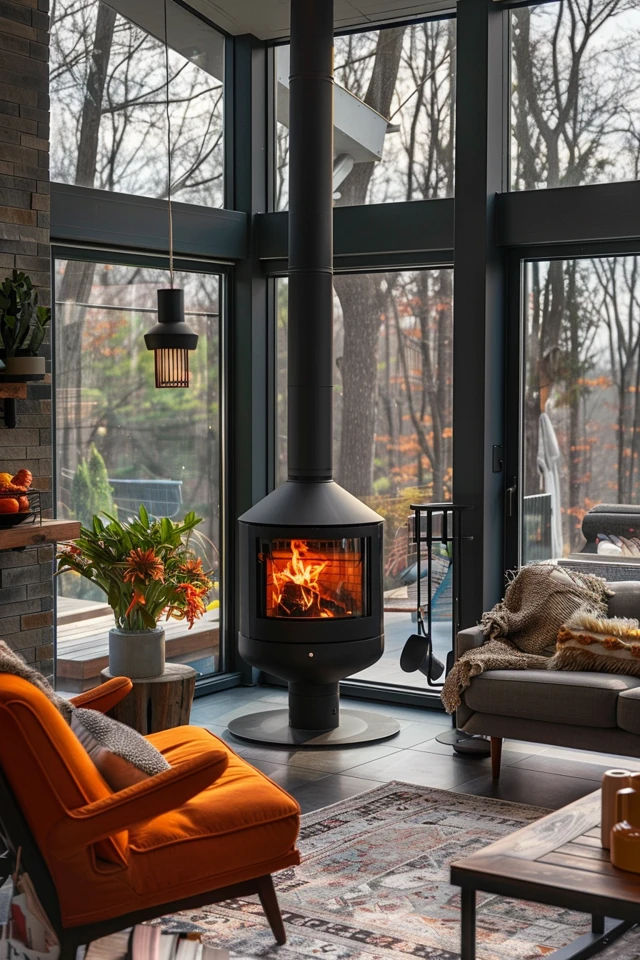
A freestanding wood stove offers the most authentic cozy aesthetic. It fits perfectly with the “cabin in the woods” vibe many sunroom owners desire. The radiant heat from cast iron is also superior for penetrating the air in a drafty space.
The challenge here is the flue. You must have a path for the chimney pipe to exit. If your sunroom has a polycarbonate or glass roof, this installation becomes complex and expensive. You may need to route the pipe through a solid wall instead.
Designer’s Note: Watch the Weight
I learned this lesson on a project in a converted porch. We planned for a heavy stone veneer fireplace, but the existing floor joists were only sized for a standard deck load. A heavy masonry fireplace requires a reinforced foundation or footing. If your sunroom is on a raised platform or deck structure, always consult a structural engineer before choosing heavy stone or cast iron options.
2. Layout and Flow: Positioning for Comfort
Determining where to place the fireplace in a room full of windows requires a strategic approach. You do not want to block your primary view, but you also cannot float a fireplace in the middle of a walkway.
The Corner Angle
Corner placement is often the “Goldilocks” solution for sunrooms. It utilizes the solid wall space where the sunroom attaches to the main house. This keeps the windows unobstructed and allows you to orient furniture toward both the fire and the view.
When angling a fireplace in the corner, ensure you have at least 36 to 42 inches of clearance between the hearth and the nearest piece of furniture. This prevents the space from feeling cramped.
The Low-Profile Linear
If you must place the fireplace against a wall of windows, choose a low-profile design. A linear gas or electric unit can be housed in a knee-wall that stands only 30 to 36 inches high.
This allows the fire to remain below the sightline when you are standing. It keeps the open, airy feel of the sunroom while providing heat at the floor level, where it is needed most.
Furniture Spacing Rules of Thumb
Your furniture arrangement should encourage conversation while keeping a safe distance from the heat source.
- Hearth Clearance: Keep upholstered furniture, ottomans, and rugs at least 3 feet away from the opening of a gas or wood fireplace. For electric units with glass fronts that stay cool, you can reduce this to 18 inches.
- Traffic Lanes: Maintain a walkway width of 30 to 36 inches behind the sofa or between chairs. Sunrooms are often pass-through spaces to the backyard, so flow is critical.
- Coffee Tables: Place your coffee table 14 to 18 inches from the edge of the sofa or sectional. This is close enough to reach a drink but far enough to walk through.
Common Mistake: The “TV Neck”
Many homeowners instinctively want to mount a TV above the sunroom fireplace. In small sunrooms, the seating is often closer to the fireplace than in a living room. Mounting a TV high above a mantel forces viewers to crane their necks. If you must have a TV, place it beside the fireplace or use a mount that pulls down to eye level.
3. Material Selection: Aesthetics vs. Durability
Sunrooms experience extreme temperature fluctuations and high UV exposure. The materials you choose for your fireplace surround need to withstand these conditions without warping or fading.
Stone and Brick
Natural stone and brick are the most durable options for a sunroom. They are immune to UV fading and handle temperature shifts well. Stone also acts as a thermal mass, absorbing heat from the fire and radiating it back into the room long after the fire is out.
If you are renovating on a budget, consider high-quality stone veneer. It provides the look of full-bed stone but weighs significantly less, which is safer for sunroom subfloors.
Tile and Quartz
Large-format porcelain tile creates a clean, contemporary look. It is durable and easy to clean, which is helpful if your sunroom connects directly to the garden where dirt gets tracked in.
Be cautious with dark-colored quartz or man-made composites if the fireplace sits in direct sunlight. Dark surfaces absorb heat, and intense solar gain combined with the heat from the fireplace can sometimes cause discoloration in resin-based materials.
Wood Mantels and Shiplap
Wood brings warmth to the design, but it moves with humidity changes. Sunrooms can be humid in summer and dry in winter. Use acclimated wood or engineered products for mantels and shiplap surrounds to prevent gaps and warping.
What I’d Do in a Real Project:
For a coastal or cottage-style sunroom, I almost always specify a white-painted brick surround with a reclaimed wood mantel. The brick texture adds depth without feeling heavy, and the white color reflects light, keeping the room bright. I avoid dark slate or black granite in sunrooms because they can feel like a “black hole” in such a light-filled space.
4. Styling the Mantel and Hearth
Styling a sunroom fireplace requires a lighter touch than a formal living room. The goal is to complement the outdoors, not compete with it.
The Rule of Scale
Your mantel decor should respect the scale of the fireplace. A common rule is the “pyramid” arrangement. Place a taller item (like a mirror or art) in the center or off-center, and flank it with lower items that step down in height.
However, in a sunroom, you want to preserve sightlines. Avoid tall, opaque objects on the mantel if the fireplace is against a window. Instead, use clear glass vases, low succulents, or horizontal artwork.
Incorporating Nature
Since the room bridges the indoors and outdoors, bring natural elements onto the hearth. A woven basket holding birch logs looks sculptural and adds texture. Even if you have a gas fireplace, the wood accents reinforce the “cozy” psychology.
The Rug Anchor
A rug is essential for defining the fireplace zone. In a sunroom, choose a rug made of natural fibers like jute or sisal, or a high-performance indoor/outdoor rug. These materials resist fading from the sun.
Ensure the front legs of your seating sit on the rug. This visually connects the furniture to the fireplace, creating a cohesive “island” of comfort.
5. Managing Light and Glare
One of the biggest oversights in sunroom fireplace design is the interaction between fire light and window glass.
The Mirror Effect
At night, windows turn into black mirrors. If your fireplace has a glass front, you might get annoying reflections that ruin the ambiance.
To mitigate this, choose “anti-reflective” glass for your fireplace insert if the budget allows. This technology makes the glass nearly invisible and reduces the mirror effect.
Ambient Lighting
Do not rely solely on the fireplace for evening lighting. The contrast between a bright fire and a dark room can cause eye strain.
Layer your lighting. Use floor lamps with warm-colored bulbs (2700K to 3000K) in the corners of the room. This balances the light levels and makes the fire feel warm and inviting rather than harsh.
Window Treatments
If your fireplace is efficient, the sunroom might actually get too warm when you combine the fire with solar heat gain during the day.
Install cellular shades or solar roller shades. These allow you to control the temperature and reduce glare on the fireplace glass without completely blocking the daylight.
Final Checklist: Planning Your Sunroom Fireplace
Before you call a contractor or buy an electric insert, run through this designer checklist to ensure you haven’t missed a critical detail.
- Check the Electrical Load: Does your sunroom have a dedicated 20-amp circuit? Electric fireplaces and space heaters draw a lot of power and will trip standard shared breakers.
- Measure the Depth: If building a surround, how far will it protrude into the room? Use painter’s tape on the floor to visualize the footprint.
- Verify Venting Path: If choosing gas or wood, is there a clear path for the pipe? Watch out for roof overhangs or second-story windows above the sunroom.
- Assess Floor Strength: If choosing stone or masonry, have you checked the joist load capacity?
- Plan for Glare: Have you considered where the sun hits the fireplace location during the late afternoon?
- Coordinate Finishes: Does the stone or tile coordinate with the exterior siding of your house? (Since sunrooms often show the home’s exterior wall).
FAQs
Can I put a fireplace in a 3-season room?
Yes, but moisture is your enemy. In an uninsulated 3-season room, condensation can form on the metal parts of the fireplace, leading to rust. Look for outdoor-rated electric fireplaces or stainless steel gas units designed for outdoor kitchens, as they are built to withstand humidity and temperature swings.
How many BTUs do I need for a sunroom?
Sunrooms have high heat loss due to glass. A standard rule is 30-40 BTUs per square foot for a well-insulated room, but for a glass-heavy sunroom, you may need 50-60 BTUs per square foot. For a 200 sq. ft. sunroom, look for a unit that produces at least 10,000 to 12,000 BTUs if you want it to be the primary heat source. Note that most standard electric fireplaces only output 5,000 BTUs and are supplemental only.
Is it safe to place a sofa near the windows in a sunroom?
Generally, yes, but leave a gap. Keep the back of the sofa at least 6 to 10 inches away from the glass. This protects the fabric from dampness if the windows sweat and allows for air circulation to prevent mold growth on the fabric backing.
What is the best flooring for a sunroom with a fireplace?
Porcelain tile or luxury vinyl plank (LVP) are top choices. They are waterproof, durable, and don’t expand/contract as much as real hardwood. If you want the wood look, go with a high-quality rigid-core LVP. It can handle the heat from the fireplace and the UV rays from the sun without fading.
Conclusion
Adding a fireplace to your sunroom is one of the most rewarding home improvements you can make. It reclaims square footage that would otherwise go unused during the winter months. It turns a bright, summery space into a cozy, intimate retreat for reading, morning coffee, or evening conversations.
By carefully considering the fuel type, respecting the unique layout constraints of a glass-walled room, and selecting durable materials, you can create a space that feels both luxurious and practical. The key is to balance the view of the outdoors with the warmth of the hearth inside.
Picture Gallery


