
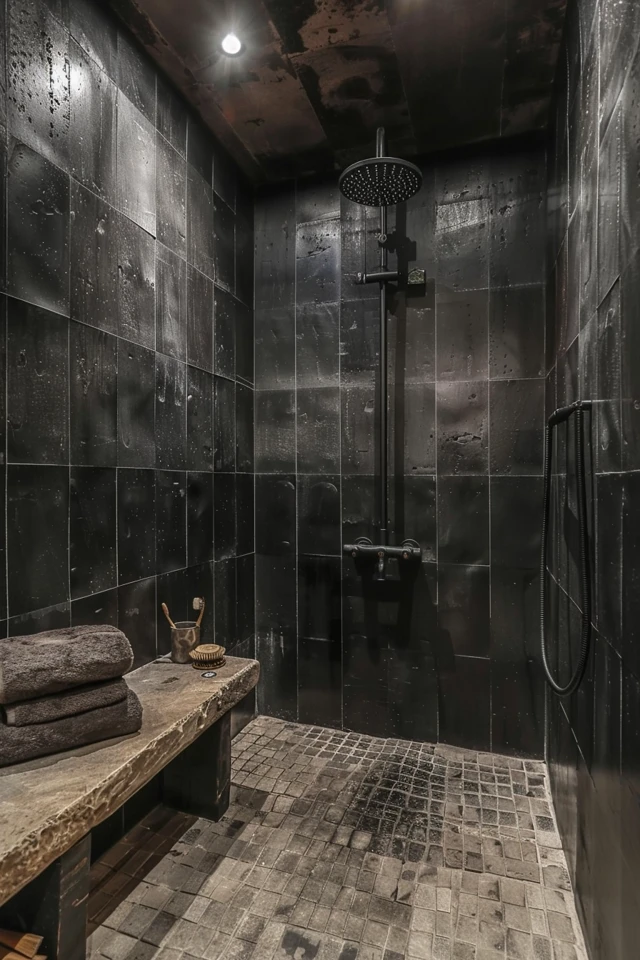
Creating a Chic Oasis with Black Tile Shower Ideas
Introduction
Designing a bathroom with black tile requires a shift in mindset from traditional, bright white sanctuary logic to something much more moody and architectural. When I first propose black showers to clients, I often see a flicker of hesitation followed by intense curiosity. For a comprehensive look at how these concepts come to life, be sure to browse the curated Picture Gallery at the end of this blog post.
The fear is usually that the space will feel claustrophobic or cave-like, but when executed correctly, black tile creates a boundless, infinite depth that white tile simply cannot achieve. It elevates the shower from a utilitarian hygiene station to a boutique hotel experience right in your own home.
However, pulling off this look isn’t just about buying dark ceramics; it requires a strategic approach to lighting, texture, and maintenance realities. In this guide, I will walk you through the practical steps of designing a black tile shower that is both a visual masterpiece and a livable, functional space.
1. Choosing the Right Finish: Matte vs. Glossy
The most critical decision you will make in a black shower isn’t the size of the tile, but the finish. The interaction between light and the tile surface dictates the entire atmosphere of the room.
The Case for Glossy Finishes
Glossy black tiles act like mirrors. In a small bathroom or an ensuite with limited window access, glossy tiles bounce artificial light around the room, making the shower feel larger than it actually is. They also offer a classic, “wet look” that pairs beautifully with polished chrome or nickel fixtures.
However, you must consider the maintenance. Glossy black tile is the most unforgiving surface regarding water spots and fingerprints. If you have hard water, every dried droplet will show up as a white ring.
The Case for Matte Finishes
Matte or honed black tiles absorb light rather than reflect it. This creates a softer, more velvety appearance that feels incredibly modern and spa-like. It is the preferred choice for contemporary, industrial, or minimalist organic designs.
From a maintenance perspective, matte tiles hide water spots better than glossy ones. However, they can hold onto soap scum more stubbornly because of the micro-texture on the surface.
Designer’s Note: The Texture Trap
In my experience, the “safest” and most visually interesting option is often a textured or “Zellige-style” tile. These have an undulating, handmade surface that is usually glossy but irregular. The irregularity scatters light in different directions, which helps camouflage water spots and streaks while still adding brightness to the dark niche.
2. Lighting Strategies for Dark Showers
Lighting a white shower is easy; lighting a black shower is an engineering challenge. Black surfaces absorb lumens, meaning you need roughly 30% to 50% more light output to achieve the same visibility as a lighter room.
Color Temperature Matters
Never use “warm white” (2700K) bulbs in a black tiled shower. The yellow undertones of the light will make the black tile look muddy, brown, or dingy.
I always specify LEDs in the 3500K to 4000K range. This is a crisp, neutral white that renders the true depth of the black without turning it blue or sterile. It ensures that charcoal tones read as charcoal and jet black reads as jet black.
Layering the Light
A single recessed can in the center of the ceiling will create harsh shadows and make the corners feel like a dungeon. You need to wash the walls with light.
Perimeter Lighting: Place recessed lights about 12 to 18 inches away from the tiled wall. This creates a “wall wash” effect that highlights the texture of the tile.
Niche Lighting: Install a waterproof LED channel strip inside your shampoo niche. It creates a focal point and adds a layer of ambient glow.
Toe Kick Lighting: If you have a floating bench, adding lighting underneath adds a dramatic, floating effect and serves as a great nightlight.
Common Mistake + Fix
Mistake: Relying solely on overhead downlights.
Fix: Introduce vertical sconces on the bathroom walls flanking the shower glass, or use an IP-rated chandelier if local codes allow. Bringing light down to face level balances the heavy darkness of the tile.
3. Grout Selection and Spacing Logic
Grout color can completely transform the aesthetic of black tile. This is where you decide if you want a graphic statement or a seamless backdrop.
High Contrast (White or Light Grey Grout)
Using white grout with black tile defines the shape of every single tile. This is excellent for subway tiles, hexagons, or herringbone patterns where the layout is the star of the show. It gives a retro, vintage, or industrial vibe.
However, visually, this makes the space look “busier.” In a small shower, a busy grid can feel overwhelming.
Low Contrast (Charcoal or Black Grout)
Matching the grout to the tile creates a monolithic, seamless look. The individual tile shapes disappear, and the focus shifts to the texture and the volume of the space. This is the secret to making a small shower feel infinite and larger.
Practical Spacing Rules
Wall Tiles: I generally recommend a 1/16-inch grout line for rectified porcelain tiles. This keeps the look tight and clean.
Floor Tiles: If you are using black mosaic on the floor, you need more grout for traction. A 1/8-inch grout line is standard here. The grout acts as a non-slip grip.
Designer’s Note: The “Orange” Grout Problem
If you use white grout in a black shower, be aware that shower products often contain dyes or oils that can stain white grout over time. Iron in hard water can also turn white grout orange. If you want the high-contrast look, use a high-performance epoxy grout. It is more expensive and harder to install, but it is impervious to stains.
4. Material Matters: Porcelain vs. Natural Stone
While the color is the same, the material performance of black porcelain versus black natural stone is night and day.
Natural Stone (Marble, Slate, Basalt)
Black marble (like Nero Marquina) is stunning, featuring white veining that looks like lightning. However, it is a high-maintenance relationship. Acids from shampoos and cleaners can “etch” the stone, leaving dull spots.
Slate provides a wonderful organic, non-slip texture, but low-quality slate can flake or “spall” over time. Basalt is incredibly dense and durable but can be sensitive to oil stains.
If you choose natural stone, you must commit to sealing it every 6 to 12 months.
Porcelain
Porcelain is the workhorse of the bathroom world. Modern printing technology has made porcelain look 99% identical to slate or marble. It is non-porous, does not require sealing, and can be scrubbed with standard bathroom cleaners.
For 90% of my clients—especially those with kids or busy jobs—I recommend porcelain. The visual difference is negligible, but the ease of living is substantial.
Safety and Slip Ratings
When selecting black tile for the shower floor, you must check the DCOF (Dynamic Coefficient of Friction) rating. You want a rating of 0.42 or higher for wet areas.
Alternatively, stick to small-format tiles (mosaics under 2 inches). The frequency of the grout lines provides the necessary grip, regardless of the tile’s surface finish.
5. Balancing the Look: Metals and Accents
A black shower is a blank canvas that dramatically changes based on the metal finish you pair with it. This is where you dial in the “temperature” of the room.
Brass and Gold (Warmth)
This is my favorite pairing. The warmth of brushed brass or unlacquered brass pops incredibly well against black. It feels luxurious, glamorous, and brings some much-needed warmth to a cool-toned black space.
Polished Chrome or Nickel (Cool/Classic)
This creates a very sharp, masculine, or Art Deco vibe. It is high-contrast and very clean. However, it can feel a bit cold if you don’t introduce other warming elements like wood or textiles.
Matte Black (Monochrome)
Black fixtures on black tile is a bold, “murdered-out” look. It is incredibly sleek but can be difficult to use. If the black of the fixture doesn’t perfectly match the black of the tile (one is blue-black, one is brown-black), it can look like a mistake.
The Role of Glass
In a black shower, glass choice is paramount. I almost always insist on clear, frameless glass. You need to let as much light as possible into the shower enclosure. Using frosted or textured glass will block light and make the dark tiles feel oppressive.
Bringing in Life
Biophilic design works wonders here. The vibrant green of a fern or eucalyptus hanging in a black shower creates a stunning visual pop. The contrast between living greenery and dark, inorganic stone is one of the most pleasing aesthetics in interior design.
6. Cleaning and Long-Term Maintenance
I would be doing you a disservice if I didn’t address the elephant in the room: cleaning. Black tile does not show dirt, but it highlights soap scum, limescale, and dust.
The Squeegee Rule
If you install a black shower, you must own a squeegee and use it after every single shower. This prevents water droplets from evaporating on the tile and leaving behind mineral deposits. It takes 30 seconds and saves hours of scrubbing later.
Cleaning Products
Avoid bleach or harsh acidic cleaners, especially if you have natural stone. For black porcelain, a mixture of water and white vinegar is often the best way to cut through the white haze of soap scum without leaving a filmy residue.
What I’d Do in a Real Project: The Maintenance Checklist
1. Install a water softener if the home has hard water. This cuts cleaning time in half.
2. Use a high-quality sealer on grout lines immediately after installation.
3. Choose a handheld showerhead sprayer. It makes rinsing down the walls after cleaning significantly easier.
Final Checklist: Designing Your Black Tile Shower
Before you order materials, run through this designer checklist to ensure you haven’t missed a critical detail.
Check the Undertone: Bring a sample of the black tile into your actual bathroom. Does it look green, blue, or brown in your lighting?
Lighting Audit: Do you have enough lumens? Plan for 4000K LED lighting inside the shower footprint.
Texture Balance: If the walls are flat, make the floor textured. If the walls are glossy, consider a matte floor. Contrast in texture prevents the space from looking like a black hole.
Drainage: Consider a linear drain. With large format black tiles, a linear drain allows you to maintain the large tile look on the floor without cutting it up for a center drain slope.
Storage: Plan your niche size based on your actual shampoo bottles. Measure the height of your tallest product and add 2 inches.
FAQs
Does black tile make a bathroom look smaller?
It can, but it doesn’t have to. Black recedes visually, which can actually blur the boundaries of a room, creating a sense of infinity. To prevent it from feeling small, ensure you have excellent lighting, use floor-to-ceiling glass, and consider keeping the ceiling white to maintain vertical lift.
Is black tile trendy or timeless?
Black and white is the definition of timeless. While specific shapes (like hexagons or large slabs) may trend in and out, the color black itself is a staple of design. It is elegant and versatile. As long as you choose quality materials, it will not look dated.
Can I use black tile if I have hard water?
You can, but you need to be prepared. Hard water leaves white calcium deposits that are highly visible on black surfaces. I strongly recommend a water softener system for the whole house. If that isn’t possible, choose a tile with significant movement and texture (like slate or variegated porcelain) rather than a solid, flat black, as the texture helps hide the deposits.
What color ceiling goes with a black shower?
In most cases, keep the ceiling white. This reflects light down into the shower and keeps the room feeling tall. However, if you have very high ceilings (9 feet or higher) and want a dramatic, cozy effect, you can tile the ceiling black as well. This creates a steam-room or cocoon effect, but requires robust lighting.
Conclusion
Creating a chic oasis with black tile is about embracing drama while managing the practicalities of light and lifestyle. It is a bold design move that pays off by creating a space that feels grounded, sophisticated, and deeply relaxing.
Remember that balance is key. If the walls are dark, keep the fixtures bright or the lighting ample. If the tile is matte, add a touch of sparkle with glass or polished edges. By following these rules of scale, lighting, and maintenance, you can bypass the common pitfalls and end up with a bathroom that feels less like a cave and more like a high-end sanctuary.
Picture Gallery


