
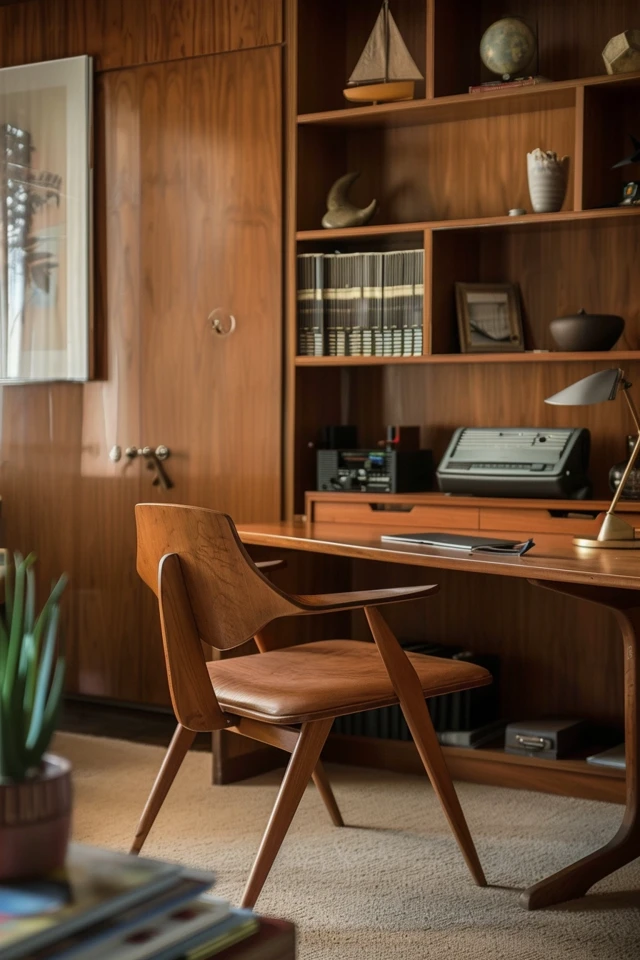
Creating My Ideal Mid-Century Modern Office Design
There is a reason the Mid-Century Modern (MCM) aesthetic has held its ground for over seven decades. It sits at the perfect intersection of warmth, organic silhouette, and absolute utility. When I sit down to design a home office, I am rarely looking for just a pretty backdrop for video calls; I am looking for a space that fosters focus without feeling sterile.
Mid-Century design is inherently optimistic. It was born in an era that looked forward to the future, utilizing new materials like bent plywood and fiberglass to solve everyday problems. If you are looking for visual inspiration to jumpstart your renovation, you can find a curated Picture Gallery at the end of this blog post.
For a workspace, this style offers clean lines that reduce visual clutter and warm wood tones that make the room feel inviting rather than cold. However, pulling this look together requires more than just buying a vintage desk and a geometric rug. It requires careful attention to scale, wood mixing, and lighting layers to ensure the room feels curated, not like a movie set.
1. Establishing the Foundation: Materials and Color Palettes
The backbone of any Mid-Century Modern space is the material selection. In a home office, you want materials that are durable enough for daily use but rich enough to provide character.
The Wood Tone Debate
Teak, walnut, and rosewood are the holy trinity of MCM lumber. In a real project, I never try to match the wood tones perfectly. Attempting to match a vintage teak desk with a brand-new walnut bookshelf often results in a flat, “catalog” look.
Instead, I aim for tonal harmony. If your desk has warm, orange-red undertones (like teak or cherry), look for flooring or shelving that shares that warmth but varies in darkness. If you prefer the cool, dark chocolate tones of walnut, stick to cooler complementary woods like ash or white oak for contrast.
The Color Story
Office spaces need to promote focus, so while I love the vibrant oranges and turquoises of the 1950s, I use them sparingly. My go-to strategy is an “organic neutral” base with one bold accent color.
What I’d do in a real project:
- Walls: bright warm white or a soft greige. I often specify colors like Swiss Coffee or Classic Gray.
- Major Furniture: Dark timber (walnut) or warm timber (teak).
- Accents: Olive green, mustard yellow, or a deep slate blue.
Designer’s Note: The 60-30-10 Rule
A classic interior design rule helps keep the retro vibe from becoming overwhelming. Use 60% neutral background colors (walls, rug), 30% wood tones (furniture, shelving), and 10% accent color (art, desk chair, accessories). This ratio keeps the space feeling modern and airy rather than heavy and dated.
2. The Layout: Function Meets Flow
The layout of a Mid-Century office is dictated by the philosophy that form follows function. The flow of the room should feel open. MCM furniture is often raised on tapered legs, which allows light to pass underneath. This makes small rooms feel larger, but it also means you cannot hide clutter behind bulky furniture bases.
The Power Position
I always position the desk in the “power position” if the room creates it. This means facing the door, usually floating in the room or perpendicular to a wall, rather than staring at a blank wall.
Specific measurements for layout:
- Clearance: You need a minimum of 36 to 48 inches behind your desk chair to push back and stand up comfortably.
- Walkways: Maintain a 30-inch clear path for main traffic areas.
- Desk Size: For a floating layout, aim for a desk that is at least 60 inches wide. Anything smaller than 48 inches will look like a toy furniture piece in the middle of the room.
Dealing with Small Spaces
If you are in a rental or a small bedroom, floating the desk might not be possible. In this scenario, I look for wall-mounted shelving systems. The “Cado” style shelving units are iconic to this era. They utilize vertical rails to hold shelves and drop-down desks.
This clears the floor entirely, making a 10×10 room feel significantly bigger. Just ensure you are drilling into studs. A fully loaded workspace shelf can easily weigh over 100 pounds.
3. Furniture Selection: The Icons and the Alternatives
The biggest challenge in designing an MCM office is balancing the vintage aesthetic with modern ergonomics. We work differently now than they did in 1955. We have monitors, cables, and lumbar requirements that vintage furniture often ignores.
The Chair Conundrum
I will be honest: most vintage wooden chairs are terrible for an eight-hour workday. They lack lumbar support and adjustability. Do not sacrifice your back for the vibe.
Common mistakes + fixes:
- Mistake: Buying a vintage fiberglass shell chair as your primary task chair.
- Fix: Purchase a high-quality modern task chair upholstered in a fabric that suits the era. Look for cognac leather, ribbed backing, or grey tweed. Many high-end ergonomic chair manufacturers now offer “Executive” lines that hide the mechanics and mimic the Eames Aluminum Group profile.
The Desk
If you choose a vintage desk, check the height. Vintage desks often run lower (around 28 to 29 inches) than modern standards (30 inches). If you are tall, your knees might hit the drawer apron.
I recommend looking for a “double pedestal” desk if you need storage. These have drawers on both sides. If you prefer the airy look of a writing desk with hairpin legs, realize you will have zero cable management. You will need to add a floor-mounted cable spine or secure wires down the leg with color-matched ties.
Storage Solutions
The long, low credenza is a staple of this design style. In a real project, I place a credenza behind the desk against the wall. This serves two purposes:
- It creates a secondary work surface for your printer, books, and coffee.
- It provides a beautiful backdrop for video calls, which you can style with art and plants.
4. Lighting Layering: Sputniks, Task, and Ambient
Lighting is where the Mid-Century style truly shines. The era produced some of the most sculptural lighting fixtures in history. However, a single overhead light is never enough for a workspace. You need three distinct layers.
Layer 1: The Statement Overhead
This is your ambient light. In an MCM office, this is often a Sputnik chandelier, a George Nelson Bubble Lamp, or a brass geometric fixture.
Rule of thumb: The bottom of a chandelier should hang at least 7 feet off the floor if you are walking under it. If it is centered over a desk, you can drop it lower to create intimacy.
Layer 2: The Task Light
You need specific light directed at your work surface. The angled architect lamp or a mushroom-cap metal lamp are classic choices. Look for matte black or brass finishes.
Placement: If you are right-handed, place the lamp on your left to avoid casting shadows on your notebook.
Layer 3: Accent Lighting
This is for mood. A tripod floor lamp in the corner or a small table lamp on the credenza adds warmth.
A Note on Color Temperature
Regardless of the fixture style, the bulb matters most.
- Avoid: Daylight bulbs (5000K+). They look blue and clinical, ruining the warm wood tones.
- Avoid: Very warm bulbs (2700K). They are too yellow for reading and induce sleepiness.
- Select: Soft White to Bright White (3000K to 3500K). This is the sweet spot for productivity and color accuracy.
5. Styling and Accessories: The Mad Men Effect
Styling is what takes the room from “furniture showroom” to “lived-in home.” The key to Mid-Century styling is curated restraint. Every object should have some room to breathe.
Window Treatments
Heavy drapes feel out of place here. I prefer sheer white curtains on a simple track, or top-down/bottom-up cellular shades. If you need blackout capabilities, use a simple roller shade in a neutral texture. The goal is to let natural light flood the room, highlighting the grain of your wood furniture.
Rug Sizing and Placement
Rugs ground the furniture. A common error is buying a rug that is too small, making the desk look like an island.
What I’d do in a real project:
- Size: For a standard room, an 8×10 rug is usually the minimum.
- Placement: Ensure the desk and the chair (even when pushed back) stay on the rug. If the back wheels of your chair catch the edge of the rug every time you move, it will drive you crazy.
- Pile: Stick to low-pile or flatweave rugs. High-pile shag rugs are very 1970s, but chair wheels will not roll on them.
Art and Greenery
Plants are non-negotiable in this aesthetic. The architectural shape of a Snake Plant or the large leaves of a Monstera Deliciosa complement the clean lines of the furniture. Place a large plant in a ceramic cylinder pot on a wooden stand to add height to a corner.
For art, large-scale abstract pieces or geometric prints work best.
Hanging height: The center of the artwork should be 57 to 60 inches from the floor. Do not hang art too high. If you are hanging a gallery wall above a credenza, leave 4 to 6 inches of space between the bottom of the frame and the top of the furniture.
Final Checklist for Your MCM Office
Before you start purchasing, run through this list to ensure you have covered the functional and aesthetic bases.
- Layout Check: Do you have 36 inches of clearance behind the desk?
- Ergonomics: Does your chair have lumbar support, even if it looks vintage?
- Lighting: Do you have at least two light sources (overhead and task)?
- Power: Have you planned where the cables will go if you float the desk?
- Wood Tones: Do you have a mix of wood tones rather than a perfect match?
- Rug Size: Is the rug large enough to contain the desk and the chair’s movement?
- Storage: Do you have a place for the printer and ugly office supplies?
Frequently Asked Questions
Can I mix metals in a Mid-Century Modern office?
Absolutely. In fact, you should. The 1950s saw plenty of brass, chrome, and black iron. A black task lamp looks great on a desk with brass hardware. Just try to pick one dominant metal (usually the warmer one like brass) and use the others as accents.
Is it okay to use a standing desk?
Yes. Your health comes first. While there are no “vintage” standing desks, you can find modern standing desks with solid walnut tops and black legs. These blend seamlessly into the style. You can also hide the legs by placing a low screen or plants in front of the desk.
How do I keep it from looking like a museum?
Avoid buying “sets” of furniture. Mix a vintage desk with a modern chair. Add contemporary art rather than vintage ads. Include personal items like books and travel souvenirs. The room should reflect you, not just a specific decade.
What if I have carpet flooring?
Wall-to-wall carpet is common in bedrooms turned offices. If you cannot rip it out, layer a large area rug over it. Use a flatweave rug with a sturdy backing. This defines the zone and provides a better surface for your chair mat.
Final Thoughts on Your MCM Workspace
Creating a Mid-Century Modern office is about more than buying a specific look. It is about embracing a mindset of clarity, function, and warmth. When you strip away the unnecessary ornamentation and focus on quality materials and good light, you create a space that respects your time and energy.
Start with a good layout, invest in a chair that supports your body, and layer in the warm woods and textiles that make this style so enduring. The result will be a workspace that feels timeless and inspiring every time you walk through the door.
Picture Gallery


