
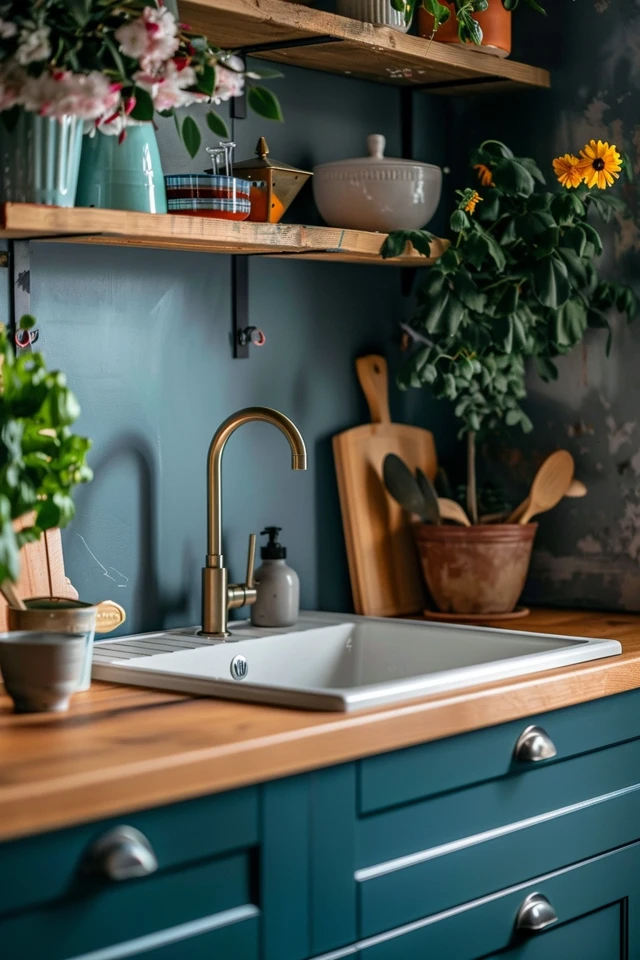
Creative Above Kitchen Sink Cabinet Solutions
The area directly above the kitchen sink is one of the most notoriously difficult spots to design. In many standard builder-grade homes, you are either left with a blank, awkward wall or a cabinet that feels oppressively low while you are trying to wash dishes. It is a prime piece of real estate that balances function, lighting, and aesthetics, yet it is often an afterthought in the renovation process.
When I walk into a kitchen for a consultation, I immediately check the “head clearance” zone around the sink. If you have ever bumped your forehead while leaning in to scrub a stockpot, you know exactly why this spatial planning matters. For plenty of visual inspiration on how to solve this dilemma, check out our curated Picture Gallery at the end of this blog post.
Beyond just avoiding a headache, the space above your sink sets the tone for the entire elevation of that wall. Whether you have a window looking out to the yard or you are facing a solid interior wall, you have options. We are going to look at architectural fixes, storage hacks, and styling tricks that turn this dead space into a focal point.
1. The “Bridge” Shelf: Open Storage with Breathing Room
One of the most effective ways to maintain storage without closing off the space is the bridge shelf. This is essentially a single or double floating shelf that runs between two closed upper cabinets, spanning directly over the sink.
This approach works because it maintains the continuous line of your cabinetry while removing the visual bulk. In a recent project with a small U-shaped kitchen, we removed the heavy cabinet over the sink and replaced it with a white oak shelf. It immediately made the ceiling feel a foot taller.
Structural Considerations
When installing a bridge shelf, you cannot rely on the cabinets on either side to hold the weight unless they are specifically reinforced. The shelf should be anchored into the wall studs. If you are renovating, have your contractor add blocking behind the drywall in this specific area to allow for heavy load styling later.
Styling the Bridge
Because this shelf is directly in the “splash zone,” you need to be strategic about what lives here.
- Everyday items: Stack your daily plates or coffee mugs here. The constant rotation means dust and grease won’t settle.
- Hardy decor: Use ceramic pitchers or glass canisters. Avoid wicker or unsealed wood that absorbs moisture.
- Botanicals: A trailing pothos loves the humidity rising from the sink.
2. The Glass-Front Cabinet Lift
If you absolutely need closed storage—perhaps you have a small kitchen and can’t afford to lose a single cubic inch—you can still use a cabinet. The secret is to change its dimensions and its face.
A standard upper cabinet is usually 30 to 42 inches tall. For the area above the sink, I recommend shortening the cabinet height by at least 6 to 9 inches compared to the flanking cabinets. This creates a “stepped” look that provides physical head clearance.
Material Choices
To keep this shorter cabinet from looking like a heavy box, swap the solid door panel for glass.
- Reeded Glass: Adds texture and obscures the contents slightly, so your Tupperware doesn’t need to be perfectly organized.
- Clear Glass: Best if you are displaying stemware or white china.
- Antiqued Mirror: A great trick for dark kitchens; it reflects light without showing the mess inside.
The “Light Box” Effect
Since this cabinet is higher, use the interior to your advantage. Install an LED strip or puck light inside the top of the cabinet. At night, this glass box glows, acting as ambient mood lighting for the whole kitchen. It turns a storage necessity into an architectural feature.
3. Sconces and Statement Lighting
Sometimes, the best cabinet solution is no cabinet at all. If you have ample storage elsewhere, I strongly advise clients to leave the space above the sink open for lighting. Good task lighting is critical here, but it is also a massive design opportunity.
In design school, we learn about “layering light.” The sink area is often shadowed by the user’s body if the only light source is a recessed can in the ceiling behind them.
Placement Rules
If you are installing wall sconces above a sink:
- Height: Mount them approximately 60 to 66 inches from the floor to the center of the junction box. This keeps the bulb out of your eye line but low enough to cast light on the basin.
- Spacing: If using two sconces, space them at least 30 inches apart to frame the sink area without cluttering it.
- Articulating Arms: I love using swing-arm sconces here. You can pull the light closer when scrubbing vegetables and push it back against the wall when you are done.
Finish Coordination
Your light fixture does not need to match your faucet perfectly. In fact, mixing metals adds depth. If you have a polished nickel faucet, try an unlacquered brass sconce. The warmth of the brass balances the cool tones of the nickel and water.
4. The Architectural Valance
For a more traditional or cottage-style kitchen, a wood valance connecting the upper cabinets can feel very polished. However, we are not talking about the curvy, dated scalloped wood from the 1980s.
Modern valances are clean, linear, and intentional. They serve a dual purpose: they visually connect the cabinetry for a built-in look, and they hide hardware.
Hiding the Mechanics
A simple flat-panel valance is the perfect hiding spot for a roller shade or roman blind mechanism. If you have a window above the sink, mounting a shade inside the window frame can reduce light. By mounting a valance above the window casing, the shade can roll up completely out of the way, maximizing daylight.
The Lighting Rail
A valance is also the easiest place to hide under-cabinet task lighting. You can run a high-output LED strip behind the lip of the valance. This bathes the sink in light without any visible fixtures. It is a streamlined, minimalist approach that works exceptionally well in modern slab-door kitchens.
5. Renter-Friendly and Small Space Solutions
Not everyone can rip out cabinets or hire an electrician to move junction boxes. If you are renting or working with a strict budget, you have to get creative with non-permanent solutions.
The Tension Rod System
This is a favorite hack for small apartments. Install a high-quality tension rod between the two cabinets flanking the sink.
- S-Hooks: Use S-hooks to hang small items like scrub brushes, drying herbs, or coffee mugs.
- Cafe Curtain: Use the rod to hang a half-height curtain. This softens the acoustics of the room and adds a pattern without requiring a drill.
The Pot Rail
If you are allowed to put small holes in the wall (which can be patched later), install a brass or stainless steel pot rail. IKEA makes affordable versions, but you can also find unlacquered brass ones on Etsy.
This moves functional items off the counter. You can hang a small dish rack, a utensil holder, or even small potted succulents. It turns the backsplash into a vertical storage system.
Designer’s Note: The “Splash Zone” Reality Check
I once had a client who fell in love with a wallpaper featuring hand-painted birds. She wanted it installed on the entire sink wall, right down to the countertop. I had to be the bearer of bad news: paper and water do not mix.
The area above your sink is a high-humidity, high-splatter zone. Even with a deep farmhouse sink, water droplets will mist upward.
My Rule of Thumb:
Keep sensitive materials at least 18 inches above the countertop deck.
- If you use wallpaper, install a stone or tile backsplash that goes up at least 10 inches before the paper starts.
- If you use wood shelving, ensure it is sealed with a marine-grade varnish or a high-quality polyurethane. Raw wood will warp and grow mold in this spot.
- Avoid fabric shades that cannot be laundered. A wipeable roman shade or a faux-wood blind is much more practical than silk or linen in a kitchen window.
Common Mistakes + Fixes
Mistake 1: Ignoring the Faucet Arc
I see this happen often in DIY renovations. Homeowners measure the cabinet height but forget that they bought a high-arc professional-style faucet.
The Fix: Always choose your faucet before finalizing your cabinet or shelf height. A gooseneck faucet can easily be 18 to 22 inches tall. You need visual clearance above that arc, or the space will feel cramped.
Mistake 2: The Shadow Trap
Installing a deep cabinet (12 inches or more) too low over the sink blocks the overhead light, creating a shadow exactly where you are trying to work.
The Fix: If you must have a deep cabinet, standard code suggests it be at least 30 inches above the sink surface. I prefer 36 inches for optimal light flow.
Mistake 3: Over-Styling
Cluttering the area above the sink with too many small tchotchkes makes the kitchen feel messy.
The Fix: Follow the “Rule of Three.” Group items in odd numbers. A cluster of three vases looks designed; four random items look like clutter. Leave negative space. The eye needs a place to rest.
What I’d Do in a Real Project: A Mini Checklist
If I were designing your kitchen today, here is the mental checklist I would run through to determine the best solution for above your sink:
- Measure the Width: Is the sink centered? If not, I would use open shelving to visually correct the asymmetry, as shelves are more forgiving than cabinets.
- Check the View: Is there a window? If yes, I frame it with sconces. If no, I treat the backsplash as art—perhaps carrying the quartz up the wall or doing a feature tile.
- Assess Storage Needs: Do we actually need storage here? If the client has a pantry, I always opt for negative space or art over the sink. It makes the kitchen feel larger.
- Verify Lighting: Is there a recessed can light directly above the sink center? If not, adding one or adding wall lights is the priority before any shelving is installed.
- Select Materials: I check the finishes of the main hardware. I usually look for a material that contrasts. If the cabinets are painted, I bring in wood. If the cabinets are wood, I bring in metal or glass.
FAQs: Above Sink Design
How high should a cabinet be above a kitchen sink?
There is no single “code” requirement for this, but standard design practice dictates at least 24 inches to 36 inches of clearance from the countertop to the bottom of the cabinet. This is significantly higher than the standard 18 inches used for other upper cabinets. This prevents head bumps and allows for tall faucets.
Can I put a mirror above my kitchen sink?
Absolutely. This is one of my favorite tricks for windowless kitchens. An antique mirror or a clean, brass-framed mirror reflects light and mimics the feeling of a window. It allows you to see the room behind you while you work, which is great for conversation. Just be prepared to wipe it down frequently.
What is the best depth for a cabinet over the sink?
If you are using a closed cabinet, reduce the depth. Standard uppers are 12 inches deep. For an over-sink cabinet, try to find or customize a unit that is 6 to 9 inches deep. This “shallow pantry” style is perfect for spices or vitamins and keeps the unit from looming over your head.
Is it okay to have no cabinets above the sink?
Yes, in fact, it is trending. Removing the cabinetry above the sink creates a “focal point” and breaks up the monotony of a wall of doors. It allows for artwork, a statement clock, or simply a beautiful expanse of tile. It allows the kitchen to breathe.
Conclusion
The space above your kitchen sink is small, but its impact on the daily rhythm of your home is huge. It is where you start your morning with a coffee pot and end your day washing dishes. It deserves as much design attention as your island or your range hood.
Whether you choose the airy look of a bridge shelf, the utility of a pot rail, or the classic elegance of a glass-front cabinet, the goal is the same: balance. You want a solution that respects the ergonomics of the task while adding a layer of beauty to the room.
Don’t be afraid to mix materials. Let the brass of a sconce talk to the oak of a shelf. Let the glass of a cabinet reflect the tile of the backsplash. The best designs come from these thoughtful intersections of texture and function.
Picture Gallery


