
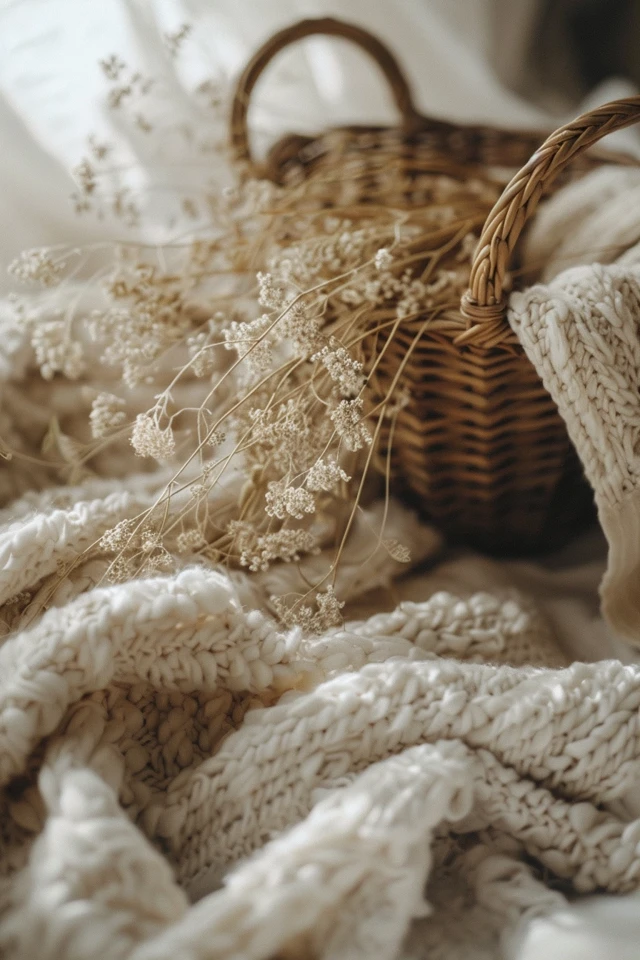
Creative Basket Filler Ideas for Stylish Accents
Baskets are the heavy lifters of interior design, bridging the gap between necessary storage and aesthetic decor. They soften hard architectural lines, introduce organic textures like seagrass or rattan, and hide a multitude of sins when unexpected guests arrive. However, a basket sitting entirely empty often looks unfinished, while one that is haphazardly stuffed looks cluttered rather than curated.
Finding the right balance requires understanding scale, volume, and material contrast. Whether you are styling a massive floor basket next to a fireplace or a shallow woven tray on a coffee table, the contents should feel intentional. For a dose of visual inspiration, be sure to scroll down to the Picture Gallery at the end of this blog post.
The following guide breaks down professional techniques for filling baskets in every room of the house. We will move beyond basic blanket storage into structural fillers, botanical elements, and functional layering that maintains a high-end look.
1. The Art of Styling Soft Goods: Throws and Pillows
The most common use for large floor baskets is storing textiles, but there is a technique to making them look plush rather than messy. Simply tossing a blanket inside often results in a lumpy, unappealing visual. The goal is to create a “spill” effect or a structured roll that highlights the fabric’s texture.
When working with clients, I follow a specific layering order. I place the bulky, less attractive items at the very bottom to build height. I reserve the high-quality textiles—like chunky knits, bouclé, or linen—for the top visible layer.
The “Waterfall” Technique
This method works best for baskets with a lower profile or wide opening.
- Fold your throw blanket lengthwise into thirds so it is a long, narrow strip.
- Place one end deep into the basket.
- Drape the other end over the rim so it spills down the side by about 4 to 6 inches.
- This softens the edge of rigid wicker or wire baskets and adds immediate coziness.
The Vertical Roll Method
If you are using a deep, cylindrical basket (at least 18 inches tall), rolling is more efficient than folding.
- Fold the blanket in half.
- Roll it tightly like a sleeping bag.
- Place the rolls vertically, standing on end.
- Fit 3 to 5 rolls depending on the diameter; they should support each other so they stand straight.
- This creates a beautiful cross-section of textures visible from the top.
Designer’s Note: Managing Volume
A common issue in living rooms is using a basket that is too small for the intended contents. If you have a standard 20-inch square pillow and a heavy wool throw, you need a basket with a diameter of at least 18 to 20 inches. Anything smaller will look like the contents are bursting out, which creates visual tension.
2. Bringing Life to Corners: Large Botanicals and Trees
Large woven baskets are my preferred alternative to ceramic planters for indoor trees. They add warmth and are generally much lighter to move during cleaning. However, a nursery pot never fits a basket perfectly, leading to awkward gaps and leaning trees.
To make a faux or real olive tree look high-end inside a basket, you must engineer the inside. The basket is merely a decorative sleeve; the structure happens underneath.
Stabilizing the Base
- Place the plant in its plastic nursery pot inside the basket.
- If the basket is deep, elevate the plant using bricks or overturned plastic containers so the base of the trunk sits just below the basket rim.
- Fill the empty space around the pot with crushed paper, old towels, or bubble wrap. This prevents the tree from tipping over if bumped by a pet or vacuum cleaner.
The Top Dressing
Never leave the internal mechanics visible. You need a “topper” to hide the plastic pot and the stabilizing fillers.
- Preserved Sheet Moss: This is the cleanest look. Tuck sheets of green moss around the base of the trunk.
- Spanish Moss: Offers a drier, more rustic look that pairs well with olive trees or dried grasses.
- River Rocks: Use these only if the basket is sturdy. Loose rocks can add too much weight to a flimsy seagrass belly basket.
Common Mistakes + Fixes
Mistake: Placing a planter directly on the bottom of a woven basket without a saucer.
Fix: Even faux trees need a plastic saucer. Moisture from cleaning or residual humidity can rot the natural fibers of the basket bottoms, leading to mold on your floors. Always use a heavy-duty plastic liner tray.
3. Coffee Table Styling: Shallow Trays and Bowls
Styling a shallow basket or woven tray on a coffee table or ottoman requires a different mindset. Here, you are creating a vignette, not storing bulk items. The basket serves as a frame to corral smaller objects so they don’t feel like clutter floating on a large surface.
I usually look for trays that are roughly one-third the length of the table. If your coffee table is 48 inches long, a 16 to 20-inch round tray creates balanced proportions.
The Rule of Three
I almost always arrange items within a tray in a triangle formation using three distinct heights:
- Height (Vertical): A vase with greenery, a pair of candlesticks, or a sculptural object. This should be the tallest point.
- Mass (Horizontal): A stack of two or three hardbound books or a small wooden box. This grounds the arrangement.
- Texture (Organic): A string of wood beads, a moss ball, or a small ceramic bowl filled with decorative matches.
Texture Play
Because coffee tables are viewed from close range (usually while sitting), the material quality matters.
- Wood Beads: Drape a strand of oversized wood or bone beads over the edge of the basket. It breaks the horizontal line.
- Seasonal Fillers: In autumn, dried artichokes or mini pumpkins work well. In summer, smooth polished stones or sea glass can fill the negative space.
What I’d Do in a Real Project
For a family room with an upholstered ottoman, I would use a rigid rattan tray rather than a soft rope basket. The rigid tray provides a stable surface for a drink or a remote control, which adds functionality to the soft furniture piece.
4. Fireplace and Hearth: Structural Elements
The hearth is a natural home for baskets, even if you don’t have a working wood-burning fireplace. This area demands fillers that feel substantial and somewhat heavy. Soft pillows can look too flammable or temporary near a hearth; wood and organic hard materials look best.
Birch Logs
This is a classic designer staple for a reason. White birch logs provide instant brightness to dark fireplace cavities.
- Cut logs to a uniform length, usually 12 to 14 inches.
- Stack them vertically if the basket is tall, or horizontally if the basket is wide.
- Ensure the basket is packed tightly enough that the logs don’t shift.
- If you don’t have access to real birch, peeled aspen or even stripped pine works well. Avoid perfectly uniform machine-cut lumber, which looks too artificial.
Pinecones and Kindling
For smaller baskets on a hearth, fill them with large sugar pinecones. These are much larger than standard yard pinecones (often 6-10 inches long) and act as sculptural objects. Alternatively, bundles of fatwood kindling tied with jute twine offer a rustic, pleasant-smelling filler.
Designer’s Note: Scale and Safety
Keep combustible baskets at least 3 feet away from an active open flame. If you use a gas insert with a glass front, you can place baskets closer, generally 12 to 18 inches away. Visually, I prefer the basket height to reach about the middle of the firebox opening to bridge the gap between the floor and the mantle.
5. Entryway and Mudroom: Hiding the Ugly
In high-traffic zones, baskets are purely functional. They hold shoes, dog leashes, mail, and winter gear. The challenge is that these items are visually chaotic. The design trick here is “conceal and distract.”
The “Topper” Method
If a basket holds ugly plastic toys or brightly colored dog accessories, do not fill it to the brim. Leave the top 3 inches empty.
- Place a neutral, folded tea towel or a small, thin throw blanket on top of the clutter.
- This creates a “lid” that looks tidy, while the chaos sits underneath.
Shoe Storage Logic
Wicker and rattan can snag delicate fabrics, but they are great for shoes.
- Use a dense, tight weave for shoes to prevent dirt from falling through to the floor.
- Line the bottom of the basket with a piece of cut felt or a cork placemat. This catches mud and grit and is easy to shake out, protecting the basket fibers.
Umbrella Stands
Tall, narrow baskets make excellent umbrella stands, but they lack weight. A wet umbrella can tip a light basket over easily.
- Place a heavy ceramic pot or a weighted gym weight in the bottom of the basket before adding umbrellas.
- Insert a glass or plastic cylinder vase inside the basket to catch water drips, ensuring the basket itself doesn’t rot.
6. Bathroom Spa Vibes: Towels and Toiletries
Bathrooms often suffer from an abundance of hard surfaces—tile, glass, porcelain, and chrome. Woven baskets introduce necessary warmth and reduce the echo in the room.
Rolled Towels
Hotel-style rolled towels are the standard for bathroom baskets.
- Fold the towel in half widthwise (short end to short end).
- Fold it in half again so it is a long, narrow strip.
- Roll tightly from one end to the other.
- Place rolls vertically in a basket near the tub or shower.
- Rule of Thumb: White towels always look the freshest. Colored towels can fade unevenly and tend to make a bathroom look dated more quickly.
Toilet Paper Storage
Storing toilet paper is a necessity, but plastic packaging is an eyesore.
- Use a rectangular basket that fits on top of the toilet tank.
- Remove the rolls from the plastic and stack them neatly.
- Tuck a small sprig of dried eucalyptus or lavender into the corner of the basket. It scents the paper lightly and adds a pop of color.
Common Mistakes + Fixes
Mistake: Using wire baskets for small toiletries.
Fix: Small bottles, cotton swabs, and makeup brushes will fall through wire grids. If you love the look of wire, line the basket with a canvas insert or choose a basket with a solid wood base and wire sides.
Final Checklist: Before You Style
Use this quick checklist to ensure your basket styling will be successful and long-lasting.
1. Check the Weave
Is the weave smooth or rough? Rough rattan can snag silk pillows or knit blankets. If the basket is rough, use it for logs, shoes, or magazines. Use smooth seagrass, cotton rope, or water hyacinth for textiles.
2. Measure the Clearance
If the basket is going on a shelf, ensure you have at least 2 to 3 inches of clearance between the top of the basket (or its contents) and the shelf above. A tight fit looks jammed and makes it difficult to pull the basket out.
3. Color Coordination
Does the basket color contrast with the floor? A light birch basket on a light oak floor will disappear. Aim for contrast: dark baskets on light floors, and natural/light baskets on dark rugs or slate tiles.
4. The “Fill” Ratio
Avoid under-filling. A basket should look roughly 80% full. If it is only 20% full, it looks like you ran out of items. If you don’t have enough contents, stuff the bottom with a pillow insert or bubble wrap to lift the visible items up.
FAQs
How do I clean dust out of intricate basket weaves?
The vacuum cleaner is your best friend here. Use the soft bristle brush attachment and vacuum the inside and outside of the basket monthly. For deeper cleaning of wicker, you can use a slightly damp microfiber cloth, but ensure the basket dries completely in the sun to prevent mold.
Can I mix different types of baskets in the same room?
Yes, but keep a common thread. I recommend matching the tone (e.g., all warm honey tones) even if the textures differ. For example, a chunky water hyacinth basket pairs well with a finer seagrass weave if they share a similar color palette. Avoid mixing a grey-washed basket with a reddish-orange wicker, as they will clash.
What is the best basket material for homes with cats?
Cats love to scratch natural fibers. Water hyacinth and banana leaf are very soft and shred easily under claws. I recommend tightly woven seagrass or coiled cotton rope baskets for pet owners. They are more durable and less attractive as scratching posts.
How do I reshape a basket that arrived squashed?
If you have a natural fiber basket (like a belly basket) that is misshapen, spray it lightly with water to dampen the fibers. Stuff it tightly with towels to force it into the correct shape, and let it dry completely for 24 hours. It should hold the new shape once dry.
Conclusion
Styling baskets is about more than just finding a place for your things; it is about creating moments of texture and intentionality throughout your home. By choosing the right fillers—whether they are structural birch logs, soft linen throws, or practical entryway storage—you elevate a simple container into a design feature.
Remember to pay attention to scale, ensuring your contents are voluminous enough to fill the vessel, and be mindful of materials to protect your textiles and floors. Start with one basket in a neglected corner or on a bare shelf, apply these layering techniques, and watch how it instantly warms up the space.
Picture Gallery


