
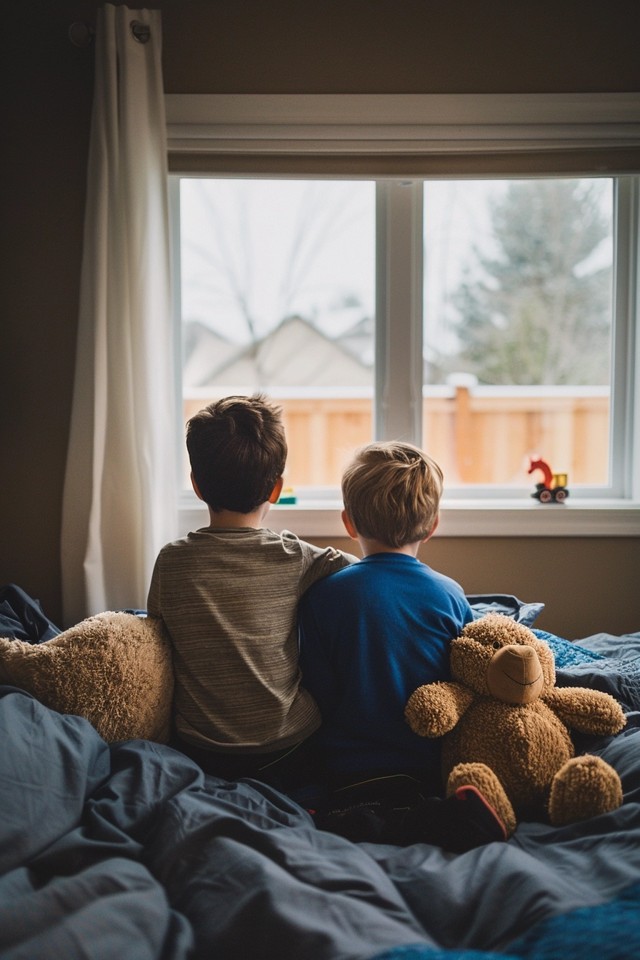
Creative Bedroom Ideas for Two Brothers
Designing a shared bedroom for two brothers is one of the most rewarding challenges in interior design. It requires a delicate balance between fostering a bond between siblings and preserving their individual identities. You are not just fitting two beds into a room; you are creating a functional ecosystem for sleep, play, and study.
The dynamic changes rapidly depending on their age gap and personalities. A room that works for two toddlers will need a complete overhaul when one becomes a teenager. For visual inspiration on how these layouts come together, be sure to check out the Picture Gallery at the end of the blog post.
In this guide, I will walk you through the practical steps of designing a shared boys’ room. We will cover floor planning, durability, and how to negotiate the inevitable territory battles through smart design.
1. Layout Strategies for Shared Spaces
The layout is the backbone of any shared bedroom. Before you buy a single piece of furniture, you need to understand the spatial constraints and the traffic flow. In my projects, I start by measuring the room down to the inch, accounting for door swings and window placements.
The Parallel Layout
This is the most classic arrangement, with two twin beds placed side-by-side. It works best in square or wide rectangular rooms.
- Spacing Rules: You need a minimum of 30 inches between the beds to allow for movement and bed-making. If you can spare 36 inches, that is even better.
- The Shared Nightstand: If space is tight, use a single, substantial nightstand between the beds. It should be at least 24 to 30 inches wide so both boys have surface area for a lamp and a glass of water.
- Symmetry: This layout relies on symmetry for visual calm. Matching headboards and bedding ground the room, while individual art above the beds allows for personality.
The L-Shape Configuration
If the room is small or square, placing beds in an L-shape into a corner opens up the center of the room for play.
- Corner Storage: This arrangement often leaves a “dead zone” in the corner between the headboards. I recommend filling this with a square corner table or a custom storage bin for bedding.
- Headboard Height: Ensure the headboards are the same height to keep the visual lines clean.
- Floor Space: This is the best option for younger boys who need floor space for Legos or train tracks.
Bunk Beds and Lofts
Vertical space is your best friend in tight quarters, but there are strict rules for safety and comfort.
- Ceiling Height: You generally need a ceiling height of at least 8 feet for a standard bunk bed. Ideally, you want 30 to 36 inches of clearance between the top mattress and the ceiling so the child can sit up without hitting their head.
- Rail Safety: The guardrail on the top bunk must extend at least 5 inches above the top of the mattress. Keep this in mind if you plan to add a thick memory foam topper.
- Age Appropriateness: The American Academy of Pediatrics recommends that children under six do not sleep on the top bunk.
2. Zoning for Individual Privacy
Even brothers who are best friends need a break from each other. Zoning is the design technique of creating distinct areas within a single room. This reduces conflict and gives each boy a sense of ownership.
Visual Dividers
You do not always need a wall to divide a room.
- Bookshelves: An open-backed bookshelf placed perpendicular to the wall can act as a room divider. It allows light to pass through while creating a psychological boundary. Anchor the shelf to the wall and floor for safety.
- Curtains: Installing a ceiling-track curtain between beds allows for total privacy when needed. This is excellent for brothers with different bedtimes.
- Headboards with Wings: “Wingback” style headboards offer a subtle acoustic and visual shield, making the bed feel like a cozy alcove.
Designating Territory
Arguments often stem from “stuff” crossing into the other person’s space.
- Color Coding: Use subtle color cues to define zones. For example, one side of the room might feature navy accents, while the other uses forest green.
- Personalized Pinboards: Install a corkboard or magnetic board next to each bed. This gives them a designated place to display their own artwork, medals, or photos without cluttering the shared walls.
- Rug Placement: Use small sheepskin or area rugs beside each bed. This tactile change in flooring signals, “This is my spot.”
3. Selecting Durable Materials and Finishes
Boys’ rooms see a lot of wear and tear. As a designer, I prioritize durability over delicate aesthetics in these spaces. You want the room to look good five years from now, not just on the day of the reveal.
Wall Finishes
Matte paint is trendy, but it is a nightmare for kids’ rooms because it is difficult to clean.
- Sheen Selection: I always specify an Eggshell or Satin finish for walls. It reflects a tiny bit of light but is scrubbable. For trim and doors, go with Semi-Gloss.
- Wainscoting: Installing beadboard or shiplap on the lower third of the wall adds a layer of physical protection against scuffs and dents. Paint this lower section a darker color to hide marks.
- Wallpaper: If you use wallpaper, opt for vinyl-based or “peel and stick” options that are wipeable. Avoid delicate grasscloths.
Flooring and Rugs
The floor is the main play surface. It needs to be soft but resilient.
- Material: Wool is naturally stain-resistant and durable, but it can be expensive. High-quality nylon or polypropylene blends are excellent alternatives that are easy to clean.
- Pattern: Solid color rugs show every piece of lint and every stain. Choose a rug with a heathered look, a geometric pattern, or a tight weave to camouflage daily messes.
- Sizing: A common mistake is buying a rug that is too small. In a shared room, the rug should extend at least 18 to 24 inches beyond the sides of the beds. If the beds are against opposite walls, use two matching runners instead of one large rug.
4. Lighting Plans for Different Schedules
Lighting is often an afterthought, yet it is the most critical technical element in a shared room. If one brother needs to study while the other sleeps, your lighting plan determines if this is possible.
Task Lighting
Overhead lighting is for general use, but task lighting is for living.
- Sconces: Wall-mounted sconces are superior to table lamps in boys’ rooms because they cannot be knocked over. Install them 60 to 66 inches from the floor to the center of the fixture, or low enough to be reached easily from a seated position in bed.
- Directional Reading Lights: Look for fixtures with a focused beam or a “gooseneck” arm. This prevents light from bleeding over to the other brother’s side of the room.
- Dimmers: Every overhead light should be on a dimmer switch. This allows the energy of the room to be dialed down as bedtime approaches.
Nightlights and Safety
Navigating a shared room in the dark can be hazardous.
- Low-Level Lighting: Consider LED strip lighting under the bed frames or along the baseboards. It provides a cool, modern look and acts as a safe path light for bathroom trips.
- Outlet Placement: Ensure there are outlets near each bed for charging devices. If you are renovating, install outlets with integrated USB ports to free up the sockets for lamps.
5. Storage Solutions for Two
Doubling the occupants means doubling the clothing, toys, and gear. A standard closet is rarely enough. You must exploit every cubic inch of storage potential.
The Closet
Standard single-rod closets waste space.
- Double Hanging: Lower the existing rod and add a second one above it. This instantly doubles the hanging space for shirts and pants.
- Vertical Cubbies: Install a vertical shelving unit in the center of the closet to separate the two sides. This creates a clear boundary: Left side for Brother A, Right side for Brother B.
- Floor Bins: Use heavy-duty canvas bins on the floor of the closet for shoes or sports gear. Avoid wire bins, which can snag fabrics.
Furniture with Function
When floor space is premium, furniture must multitask.
- Storage Beds: I rarely use standard bed frames in small shared rooms. Captain’s beds with built-in drawers underneath are essential. They eliminate the dust bunnies under the bed and provide dresser-volume storage.
- Trunks: Place a durable storage trunk at the foot of each bed. It serves as a seat for putting on shoes and a deep bin for bulky items like winter blankets or stuffed animals.
Designer’s Note: The “Noise and Temperature” Factor
In my years of designing family homes, the biggest complaints between brothers sharing a room are rarely about the decor. They are about noise and temperature.
I worked on a project where one brother was a “hot sleeper” and the other was always cold. We solved this not with design, but with bedding layers. We used breathable percale sheets for both (good for the hot sleeper) and added a heavy wool duvet folded at the foot of the bed for the cold sleeper.
Regarding noise, soft surfaces are your friends. Upholstered headboards, heavy curtains, and plush rugs absorb sound. If the room has hard floors and minimal furniture, every whisper will echo. Adding acoustic panels—which can look like cool geometric art—can also help dampen sound significantly.
Common Mistakes + Fixes
Mistake: Designing for their current age only.
Parents often choose “cute” themes like cars or jungle animals.
Fix: Choose a mature “shell.” Paint the walls a sophisticated navy, sage, or warm gray. Bring in the themes through easily swappable items like throw pillows, framed posters, and bedsheets. A 10-year-old won’t want a racecar bed, but he will still appreciate a navy wall.
Mistake: Ignoring the “transition” zone.
Often, beds are shoved against walls, leaving a large empty space in the middle that looks undefined.
Fix: If space allows, pull the beds off the side walls by at least 12 inches. This makes the room feel more like a bedroom and less like a dormitory. It also makes making the bed significantly easier.
Mistake: Buying matching everything.
While symmetry is nice, total uniformity can feel sterile and ignores individual personalities.
Fix: Keep the “big” items matching (beds, dressers, rugs) to anchor the room. Let the boys pick their own distinct table lamps, throw blankets, or chair cushions. This creates a cohesive look that still feels personal.
What I’d Do in a Real Project: Mini Checklist
If I were hired to design a room for two brothers today, this is the exact workflow I would follow:
- Interview the Clients (The Kids): I ask them separately what they hate about their current room. Usually, it’s “he touches my stuff” or “his reading light keeps me up.”
- Audit the “Stuff”: I count how many linear feet of clothing and how many bins of toys we actually need to store.
- Draft the Floor Plan: I place the beds first. I ensure there is a 30-inch clearance for walkways.
- Select the “Indestructibles”: I choose commercial-grade fabrics or performance velvets for headboards and 100% wool or polypropylene for rugs.
- Lighting Layering: I plan for three layers: overhead (ambient), bedside (task), and nightlight (safety).
- The “Cool” Factor: I add one element that makes them proud of the room, like a hidden hamper, a basketball hoop on the door, or a custom display shelf for Lego creations.
Final Checklist
Ready to start your project? Ensure you have covered these bases:
- Measurements: Have you accounted for door swings, radiator locations, and window heights?
- Bed Size: Have you confirmed that two twins (or twin XLs) fit with adequate clearance?
- Storage: Does each boy have his own designated drawer and hanging space?
- Outlets: Are there power sources accessible from both beds?
- Lighting: Do you have individual reading lights to prevent bedtime arguments?
- Window Treatments: Are the curtains or shades blackout lined for better sleep?
- Flooring: Is the rug large enough to anchor the space and soft enough for play?
FAQs
How do I handle a large age gap, like a toddler and a teenager?
Zoning is critical here. The teenager needs a study area and high shelves for his things (out of the toddler’s reach). The toddler needs open floor space. Use a loft bed for the teen with a desk underneath, and a standard low bed for the toddler. This physically separates their activity levels.
What is the smallest room size for two twin beds?
Ideally, you want a room that is at least 10 feet by 10 feet. This allows for two beds and a small walkway. If the room is smaller (e.g., 9×9), you will likely need to use bunk beds or an L-shaped corner arrangement to make it functional.
How do I make the room look cohesive if they have different favorite colors?
Pick a neutral base for the walls and furniture (white, wood, gray, or navy). Let them choose their favorite color for their own bedding or art. Strangely, almost all colors look okay together if they are grounded by neutral, high-quality furniture. Alternatively, agree on a saturation level—like “primary colors” or “pastels”—so the intensity matches even if the hues are different.
Should I let them pick the furniture?
I recommend pre-selecting three options that fit your budget and size constraints, then letting them make the final choice from those three. This gives them agency without risking a purchase that doesn’t fit the room.
Conclusion
Designing a bedroom for two brothers is about more than just aesthetics; it is about diplomacy and engineering. You are building a space that needs to handle high energy, quiet study, deep sleep, and the evolving relationship between siblings.
By focusing on a solid layout, durable materials, and respecting individual territories, you can create a room that minimizes conflict and maximizes comfort. Remember that the room will evolve. The best designs are flexible enough to change as the boys grow from building blocks to video games.
Picture Gallery


