
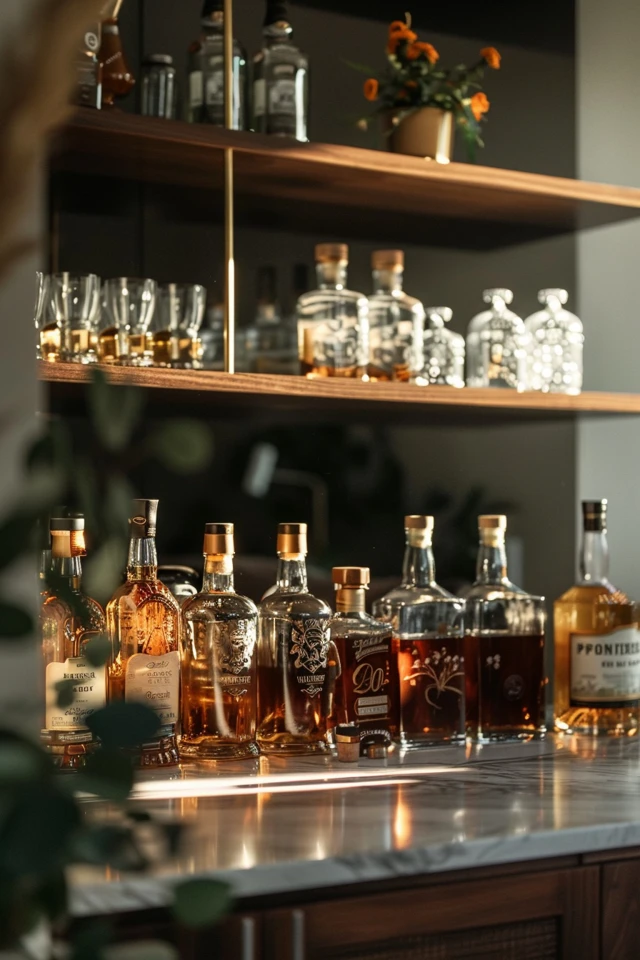
Creative Bourbon Room Ideas to Inspire You
There is something undeniably ritualistic about pouring a glass of bourbon. Whether it is the amber hue of the liquid or the distinct clink of ice against crystal, the experience deserves a setting that matches its sophistication. In my years as an interior designer, I have seen a massive shift from generic “man caves” to curated tasting rooms that rival high-end commercial lounges.
Designing a dedicated bourbon room is not just about shelving; it is about creating an immersive atmosphere where conversation flows as easily as the whiskey. I recall a project in Chicago where a client wanted to convert a small, unused study into a tasting library. By focusing on rich textures and precise lighting, we turned a forgotten corner into the most popular room in the house.
For a dose of visual inspiration, be sure to visit our extensive Picture Gallery included at the very end of this blog post.
1. Defining the Atmosphere: Lighting and Color Theory
The most critical element of a bourbon room is the mood, and mood is entirely dependent on lighting and color. You are not designing a kitchen where high visibility is key; you are designing a space for relaxation and intimacy.
I almost always recommend a dark, moody color palette for these spaces. Think charcoal grays, deep navies, forest greens, or even aubergine. Dark walls recede, making a small room feel infinite rather than cramped, while providing a dramatic backdrop for the amber color of the whiskey bottles.
Lighting must be layered and dimmable. Avoid a single overhead fixture, which casts unflattering shadows and kills the vibe. Instead, rely on architectural lighting and accent lamps.
The Designer’s Rule of Thumb for Lighting:
Aim for a color temperature of 2400K to 2700K (Kelvin). This creates a warm, candlelight-like glow. Anything above 3000K will look too clinical and blue, making your cozy lounge feel like a dentist’s waiting room.
Lighting layers to include:
- Linear LED shelf lighting: Hidden within the millwork to illuminate the bottles from the front or back.
- Wall sconces: Place these at eye level to create a soft perimeter glow.
- Picture lights: Use these above artwork to draw the eye to vertical surfaces.
- Table lamps: Essential for reading labels or tasting notes without ruining the low-light ambiance.
Designer’s Note: The “Glare” Mistake
A common issue I see is placing high-gloss finishes directly opposite a light source. If you use high-gloss lacquer on your shelving (which looks stunning), ensure your LED strips are in a diffuser channel. If you don’t, you will see “dots” of light reflected in the paint, which ruins the seamless look.
2. The Whiskey Wall: Millwork and Display Logic
The focal point of any bourbon room is the collection itself. However, designing the shelving requires more than just aesthetics; it requires structural integrity and specific measurements. Full bottles of liquor are heavy, and standard bookshelves often bow under the weight over time.
When planning your built-ins or selecting a freestanding unit, material thickness matters. I never use shelving thinner than 3/4-inch for liquor storage. If the span of the shelf is wider than 30 inches, I increase the thickness to 1-inch or add a vertical support in the middle to prevent sagging.
Critical Measurements for Shelving:
- Depth: Standard shelves are 12 inches deep. This is usually sufficient for a single row of bottles. If you want to layer bottles (one row in front of another), aim for 15 to 16 inches of depth.
- Height spacing: Most standard whiskey bottles fit within 10 to 12 inches of vertical space. However, many premium bourbons come in oversized boxes or have tall stoppers (like the horse toppers on Blanton’s). I always designate at least one shelf with 14 to 16 inches of clearance for these outliers.
- Lip protection: If you live in an earthquake-prone area or have high traffic, consider a small 1/4-inch lip on the front of the shelf to prevent sliding.
Renters and Small Spaces
If you cannot build custom millwork, look for heavy-duty metal etagere shelving or vintage industrial cabinets. A glass-front lawyer’s bookcase is also a fantastic option for renters; it protects the bottles from dust and adds an instant “library” feel without requiring construction.
3. Seating Layouts for Conversation
A bourbon room is rarely for watching television. It is a space for sitting face-to-face and talking. Therefore, the furniture layout should encourage conversation circles rather than facing a screen or a single focal point.
In a small room (think 10×10 feet), four swivel club chairs arranged around a central round coffee table works beautifully. Swivel chairs allow guests to turn toward the bar to grab a drink and then rotate back to the group.
For larger spaces, you might incorporate a classic Chesterfield sofa. If you do, ensure you pair it with two substantial armchairs opposite the sofa to close the circle.
Spacing Rules to Live By:
- Coffee table distance: Keep the coffee table 15 to 18 inches away from the edge of the sofa or chairs. This is close enough to set down a heavy glass but far enough to walk through.
- Walkways: Maintain a minimum of 30 inches (ideally 36 inches) for major traffic paths. You do not want guests bumping into expensive bottles.
- Side tables: Every seat needs a surface within arm’s reach. No one should have to stand up to put their drink down. If the coffee table is too far, use small drink tables (sometimes called martini tables) next to the chairs.
Common Mistakes + Fixes: The Rug Size
Mistake: Using a rug that is too small, creating a “floating island” look where the furniture sits off the rug.
Fix: Use the “front legs on” rule. Ensure the front legs of all seating pieces are resting on the rug. In an average room, an 8×10 or 9×12 rug is usually required. This grounds the space and improves acoustics.
4. Materiality: Durability Meets Luxury
Bourbon is a tactile experience, and your room should reflect that. I lean heavily on natural materials that patina well over time.
Leather is the gold standard for seating in a whiskey room. Unlike fabric, which absorbs spills and odors, high-quality aniline leather can handle a splash of liquid. In fact, scratches and wear often make leather look better, adding to the “lived-in” speakeasy vibe.
For countertops (if you have a wet bar or serving credenza), be wary of marble. Marble is calcium carbonate, which reacts instantly with acids. A twist of lemon or a spilled acidic mixer will etch the surface, leaving a dull mark.
Recommended Countertop Materials:
- Soapstone: It is non-porous and chemically inert. It creates a beautiful, matte black aesthetic that fits the mood perfectly.
- Quartzite (Natural): Harder than granite and often looks like marble, but is much more resistant to etching.
- Wood (Butcher Block): Walnut or mahogany tops are classic. Just ensure they are sealed with a marine-grade varnish or Waterlox to prevent water rings.
Acoustics Matter
Hard surfaces like glass bottles, wood shelves, and leather chairs bounce sound around. This can make a room echoey and loud. To counter this, introduce soft textures. Velvet drapes are excellent for sound dampening. A thick wool rug is non-negotiable.
5. The Wet Bar vs. The Dry Bar
You do not need plumbing to have a functional bourbon room, but it changes how you design the utility aspect of the space.
The Dry Bar Setup:
If you are working with a dry bar (no sink), you need a designated “landing zone” for preparation. This is usually a sideboard or the middle section of your shelving unit. You will need a high-quality tray to catch spills during pouring. You should also plan for a small under-counter refrigerator or a dedicated ice bucket that is insulated enough to hold ice for several hours.
The Wet Bar Setup:
If you are running plumbing, a prep sink is invaluable. However, keep the sink small; a 15-inch square sink is usually sufficient for rinsing glasses.
The Ice Situation:
For a true bourbon aficionado, ice is a serious topic. Standard refrigerator crescent ice melts too fast and dilutes high-proof whiskey.
- Option A: Install a clear ice maker (like those from Scotsman or Hoshizaki). These produce dense, clear cubes that melt slowly.
- Option B (Budget Friendly): Use large silicon molds to freeze spheres or large cubes in your main freezer, and transfer them to an insulated ice bucket in the bourbon room for the evening.
6. Curating the Accessories and “The Ritual”
The difference between a room that looks like a store display and a room that feels like a home is the accessories. You need to account for the tools of the trade.
Glassware storage is often overlooked. Do you prefer Glencairn glasses for tasting or heavy crystal rocks glasses for cocktails? Glencairns are short and stack awkwardly; they are best kept in a drawer or on a shallow shelf. Rocks glasses look great lined up on a tray.
What I’d Do in a Real Project (The Accessory Checklist):
- Water source: Even in a dry bar, keep a glass carafe of filtered water. Opening up a bourbon with a few drops of water is common, and hydration is key.
- Bitters and tools: If you make Old Fashioneds, you need a designated spot for bitters bottles (which are often sticky) and a mixing glass. A small marble or slate tray works perfectly to contain the mess.
- Books: Stack coffee table books about whiskey distilleries, history, or cocktails. They act as risers for décor and provide reading material for guests.
- Cigar integration: If smoking is permitted, you need ventilation (an exhaust fan or air purifier) and a humidor. If no smoking is allowed, a humidor can still be a beautiful aesthetic object, but keep it away from heat sources like amplifiers or direct sunlight.
Designer’s Note: Managing Clutter
It is tempting to display every empty bottle of “unicorn” whiskey you have ever finished. Resist this urge. A few “fallen soldiers” can be sentimental, but too many empty bottles look like a college dorm room. Recycle the glass or repurpose them as water carafes.
Final Checklist: Planning Your Bourbon Room
Before you buy a single piece of furniture, run through this checklist to ensure the space functions as well as it looks.
- Inventory Check: Count your current bottles and add 30% for future growth. Does your shelving plan accommodate this number?
- Electrical Audit: Do you have outlets where the record player, lamp, or wine fridge will go? Floor outlets are great for floating sofas.
- Sunlight Control: UV light destroys liquor. If the room has windows, invest in UV-blocking window film or heavy blackout drapes to protect your investment.
- Floor Strength: If you are placing a large collection on a second floor, ensure the joists can handle the dead load of hundreds of glass bottles.
- Ventilation: If you plan to smoke cigars or have a small space, consider an air purifier hidden behind a chair.
FAQs
Q: Can I put a bourbon room in a basement with low ceilings?
A: Absolutely. Basements naturally have that subterranean, speakeasy feel. Emphasize the coziness by painting the ceiling the same dark color as the walls. This blurs the line where the wall ends and ceiling begins, actually making the room feel less claustrophobic.
Q: How do I protect wood furniture from alcohol spills?
A: Prevention is best—use coasters. However, for wood surfaces, look for finishes labeled “conversion varnish” or two-part polyurethane. These are much tougher than standard lacquer. If you have an antique piece, have a custom piece of glass cut to protect the top.
Q: I have a small budget. Where should I spend the money?
A: Spend money on the seating and the lighting. You can use IKEA shelving (Billy bookcases with added trim look surprisingly high-end when painted), but cheap lighting feels cheap, and an uncomfortable chair will ensure no one ever sits in the room.
Q: What is the best paint finish for dark walls?
A: I prefer a matte or eggshell finish for dark walls. It absorbs light and feels velvety. However, if you have kids or pets, a satin finish is more wipeable, though it will show more glare.
Conclusion
Creating a bourbon room is about carving out a sanctuary for slow living. It is a place where screens are turned off, records are played, and the complexities of a good spirit are enjoyed without distraction.
Whether you have an entire spare room or just a niche in your living area, the principles remain the same: prioritize mood lighting, ensure your storage is structural and beautiful, and choose materials that age gracefully. By following these design rules, you will create a space that feels authentic, comfortable, and distinctly yours.
Picture Gallery


