
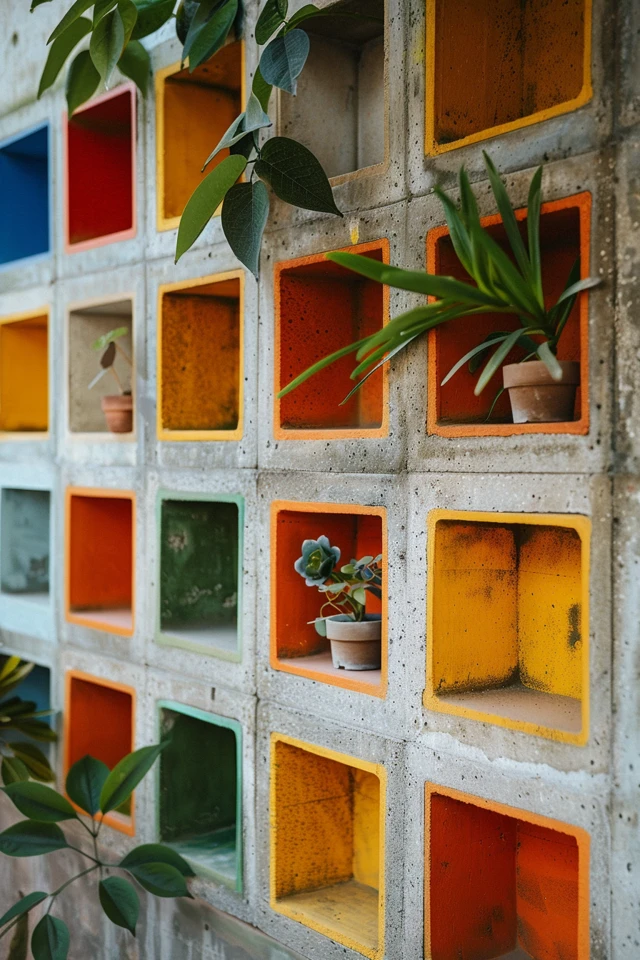
Creative Breeze Block Wall Ideas for Your Home
Breeze blocks are officially back, and they have moved far beyond the retro motels of Palm Springs. Also known as architectural screen blocks, these patterned masonry units offer a perfect blend of form and function. They provide privacy without sacrificing natural light, and they allow airflow while creating a distinct visual boundary.
In my design practice, I am seeing a massive resurgence of interest in these materials for both indoor and outdoor applications. Homeowners love them because they add texture and geometric interest that standard drywall or wood fences simply cannot match. Whether you are looking to create a mid-century modern facade or a boho-chic garden divider, the versatility of these blocks is unmatched.
For a huge dose of inspiration, keep reading until the end because I have curated a stunning Picture Gallery located at the very bottom of this blog post.
1. Creating the Ultimate “Outdoor Room” and Privacy Screen
One of the most effective ways to use breeze blocks is to define zones in your backyard without closing them off completely. Solid masonry walls can make a small yard feel claustrophobic and block cooling winds. Breeze blocks solve this by filtering wind rather than stopping it, which is crucial for comfort on hot days.
Defining the Patio
When designing a patio, I often use a breeze block wall to separate the dining area from the rest of the garden or a pool equipment pad. This creates an “outdoor room” effect.
Scale and Height: You generally do not need a full-height wall here. A “pony wall” height of about 42 to 48 inches is often perfect. It defines the space while allowing you to see over it while standing.
Lighting the Texture: The magic of breeze blocks happens when the sun goes down. I always recommend installing up-lighting at the base of the wall. Place well lights about 12 to 18 inches away from the wall face. This casts dramatic shadows through the geometric patterns and adds depth to your yard at night.
The Outdoor Shower
If you have a pool or live near the beach, an outdoor shower is a luxury. Breeze blocks are the ideal material for this enclosure.
Ventilation: Mold and mildew are enemies of outdoor showers. The open pattern allows the space to dry out quickly.
Privacy Filters: Choose a pattern with a tighter weave (smaller holes) for shower areas. You get the airflow, but you maintain modesty.
Material Pairing: Pair the concrete blocks with warm cedar or teak flooring and brass plumbing fixtures. The contrast between the industrial grey block and the warm wood is a classic designer move.
Designer’s Note: Foundation is Everything
Real-world lesson: A breeze block wall is heavy. A common mistake I see DIYers make is building these walls directly on a patio slab or dirt. These walls usually require a proper concrete footing, often 12 inches deep and 12 inches wide depending on the wall height, reinforced with rebar. If the ground shifts, your beautiful wall will crack along the grout lines. Always consult a structural engineer or a seasoned mason for walls taller than 3 feet.
2. Boosting Curb Appeal with a Front Facade Screen
Your front yard is the first impression your home makes. In many mid-century and modern renovations, we use breeze blocks to create a “courtyard” effect. This is a semi-private zone between the public sidewalk and your front door.
The Entry Courtyard
By placing a breeze block wall about 6 to 10 feet in front of your home’s entry, you reclaim usable space. You can put a couple of lounge chairs and a fire pit there, completely hidden from the street view but still open to the breeze.
Integration: Do not just float the wall in the middle of the grass. Anchor it visually. Connect one side to a planter box or existing column.
House Numbers: A breeze block wall is a fantastic backdrop for modern house numbers. I suggest mounting floating matte black numbers on the solid vertical column that supports the screen blocks. This ensures legibility.
Handling The Edges
One specific detail that separates a pro design from an amateur one is how you handle the edges of the wall. Breeze blocks usually have unfinished sides.
Capping: You must cap the top of the wall to prevent water from sitting inside the block and freezing, which cracks the concrete. A simple flat concrete cap or a custom metal flashing looks best.
Framing: I prefer to frame the block section with solid concrete block (CMU) columns or a wood frame. This hides the rough edges of the pattern blocks and provides necessary structural support.
3. Interior Dividers: Zoning Open Floor Plans
Bringing breeze blocks inside is a bold move that pays off in texture and character. In the era of open-concept living, we sometimes lose the sense of distinct rooms. A screen block wall brings that separation back without blocking light.
The Entryway Foyer
If your front door opens directly into your living room, it can feel abrupt. I often design a floor-to-ceiling breeze block partition to create a dedicated foyer.
Space Requirements: You need at least 36 to 42 inches of walkway clearance on the entry side.
Safety First: For interior walls, you must ensure the wall is anchored to the floor joists and the ceiling framing. You cannot just glue these to the subfloor. They are extremely heavy and a tipping hazard if not reinforced with vertical rebar dropped through the cells.
The Stairwell Screen
Replacing a standard banister with a breeze block screen is a stunning architectural feature. It turns a safety requirement into a focal point.
Finish Coordination: Indoors, raw grey concrete can look too industrial for some tastes. Painting the blocks creates a cleaner look.
Paint Tip: Use a masonry primer first. Concrete creates a lot of dust and sucks up paint. A high-quality masonry primer ensures your topcoat (I prefer a satin finish for wipeability) looks smooth. White is classic, but a dark charcoal or navy blue screen can look incredible against light oak floors.
Common Mistakes + Fixes
The Mistake: Messy mortar joints. Because the block is “see-through,” you see the mortar from both sides. Sloppy application ruins the geometric look.
The Fix: Use a piping bag (like for cake icing) to apply the mortar, rather than a trowel. This keeps the face of the block clean. Use a jointing tool to smooth the mortar slightly concave (inward) to create a clean shadow line.
4. Furniture and Architectural Accents
You do not need to build a full wall to utilize the aesthetic of breeze blocks. I frequently use them as the base for built-in furniture or structural accents. This is a great way to introduce the trend on a budget or in a smaller space.
The Kitchen Island Base
Using breeze blocks to wrap the back and sides of a kitchen island adds incredible texture.
Backlighting: If you are feeling adventurous, install LED strip lighting behind the blocks (using a frosted acrylic sheet as a diffuser). This makes the island glow.
Durability: Concrete is tough. It withstands kicks and scuffs much better than drywall or wood paneling, which is common on island backs.
Bench Seating
In a mudroom or on a patio, stack breeze blocks to form the legs of a bench.
1. Create two columns of blocks (usually two blocks wide by two blocks high).
2. Use a construction adhesive designed for masonry to bond them.
3. Span the top with a thick piece of reclaimed wood or a poured concrete slab.
4. Style with colorful lumbar pillows.
This is a very achievable weekend project that requires zero excavation.
Designing with Plants
Breeze blocks and plants are best friends. The holes in the blocks act as perfect trellises for climbing vines.
Best Vines: Star Jasmine is my go-to. It is not too aggressive, smells amazing, and creates a “living wall” effect.
Planter Integration: Build a low planter box (18 inches high) out of solid brick or stucco, and then start your breeze block wall on top of that planter. This lifts the pattern to eye level and provides a bed for plants to grow up and through the screen.
5. Materials, Patterns, and Costs
Choosing the right block is about more than just the pattern. You need to understand the material constraints.
Ceramic vs. Concrete
Most traditional breeze blocks are made of concrete. They have a rough texture and are structural enough for self-supporting walls (with reinforcement). However, there is a newer trend of ceramic breeze blocks.
Ceramic: These are glazed, shiny, and come in colors like terracotta, turquoise, and black. They are generally for decorative use only and are not load-bearing. Use them for interior partitions or decorative inserts.
Concrete: The standard for exterior walls. They can be painted or left raw.
Pattern Selection Guide
Mid-Century Purist: Look for the “Champagne Bubbles” (circles of varying sizes) or the distinct “Diamond” pattern. These scream 1960s.
Modern Minimalist: Look for the “Square-in-Square” or simple “Horizontal Slats.” These provide linear structure without being overly retro.
Tropical/Boho: The “Clover” or “Flower” patterns add a softness that works well with lush gardens and rattan furniture.
Cost Expectations
Budgeting for these walls can be tricky. The individual blocks are relatively affordable, often ranging from $8 to $15 per block. However, the labor is where the cost lies.
Masonry work is skilled labor. Installing a screen wall takes longer than a solid brick wall because the mason has to keep both sides clean and ensure perfect alignment (since you can see through it, any crookedness is obvious). Expect to pay a premium of 20% to 30% over standard masonry installation rates.
What I’d Do: The Project Checklist
If I were consulting on your project today, this is the exact checklist I would walk you through before you buy a single block.
- Check Local Codes: Many municipalities have strict height limits for front yard fences (often 42 inches). Do not build a 6-foot wall only to get a tear-down notice.
- Verify the Structural Plan: If the wall is over 3 feet high, do you have a plan for vertical rebar reinforcement?
- Calculate Line of Sight: Stand inside your house. Where will the wall block the view? Mark it out with cardboard boxes first.
- Select the Finish: Will you paint it? If so, factor in the cost of a sprayer. Brushing these blocks by hand is a nightmare.
- Plan Drainage: If this is an exterior wall, does water need to flow under it? You may need weep holes at the base.
- Order Extra: These blocks are brittle during shipping. Order 10% to 15% extra for breakage and cuts.
Frequently Asked Questions
Can I hang things on a breeze block wall?
Generally, no. The concrete walls of the block are thin and brittle. Drilling into them can crack the entire unit. If you need to hang art or plants, use “S” hooks that loop over the open web of the block, or anchor into the solid mortar joints, not the block itself.
Do breeze blocks require maintenance?
If left raw, they are very low maintenance but will develop a patina (and potentially moss) over time. If you want them to stay pristine, seal them with a penetrating concrete sealer. If painted, you will need to pressure wash them gently once a year to keep dust out of the crevices.
Can I use breeze blocks for a retaining wall?
No. Breeze blocks are decorative screen blocks. They have almost no lateral strength to hold back soil. If you try to backfill dirt against them, they will snap. Always build a structural retaining wall first, and place the breeze blocks on top or in front as a facade.
Is it expensive to paint breeze blocks?
The paint is cheap; the labor is high. Because of the intricate holes, you cannot roll it. It must be sprayed. If you are DIYing, rent a professional airless sprayer. It will save you days of frustration.
Conclusion
Breeze blocks offer a unique combination of nostalgia and modern utility that few other materials can claim. They solve practical problems—like privacy, airflow, and sun control—while acting as a major architectural statement. Whether you are defining a cozy patio nook or creating a dramatic entryway, the key to success lies in respecting the structural requirements and choosing a pattern that complements your home’s era.
Start small if you are hesitant. Try a bench base or a low planter wall. Once you see the beautiful shadow play these blocks create, you will likely find yourself looking for more places to use them.
Picture Gallery


