
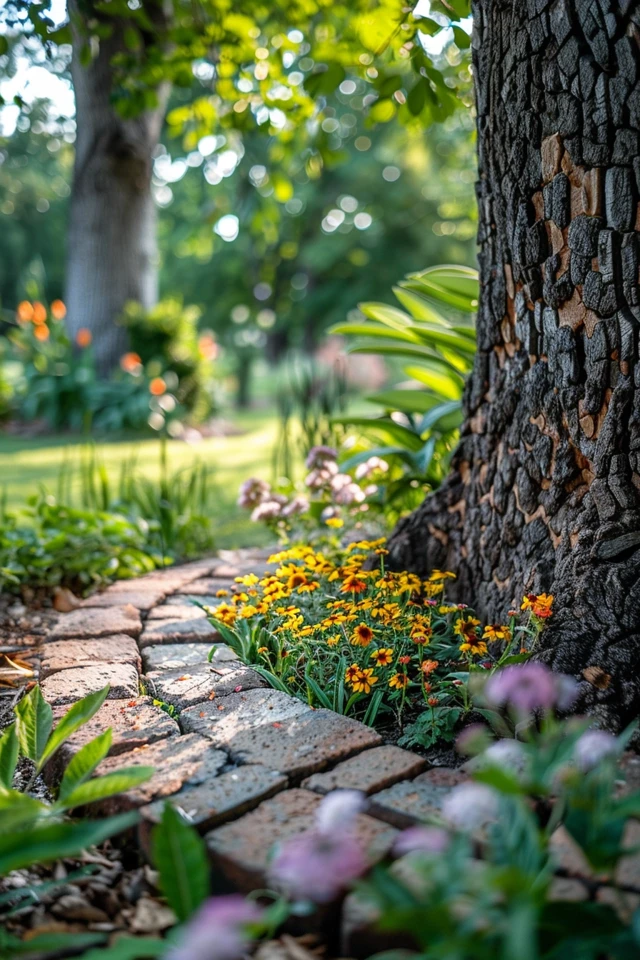
Creative Brick Tree Ring Ideas for Your Yard
Introduction
Landscape design often stops at the patio edge, but the trees in your yard act as the structural columns of your outdoor “room.” Without a defined border, trees can look lost in a sea of grass, or worse, become victims of weed whacker damage. A brick tree ring creates an intentional transition between the lawn and the trunk, instantly upgrading the curb appeal of your home.
I have seen countless DIY landscaping projects where homeowners stack a few stones and call it a day, only to have them sink or topple over a season later. If you are looking for visual inspiration, you can jump right to the Picture Gallery at the end of this post. However, if you want to understand the mechanics of scale, proper drainage, and how to select a brick that complements your home’s architecture, keep reading.
Creating a durable, professional-looking tree ring requires a balance of aesthetic choice and horticultural safety. You are building around a living organism, which presents unique constraints compared to building a retaining wall or a walkway. This guide will walk you through the design principles and practical steps to build a feature that protects your tree and elevates your landscape.
1. Designing for the Tree’s Health (The Foundation)
Before we talk about brick colors or stacking patterns, we must address the most critical aspect of this project: the health of the tree. As a designer, my rule of thumb is function first, then form. If the design kills the tree, the project is a failure.
The biggest mistake I see is creating a ring that is too small or filled too high. Trees have a “root flare,” which is the wider section at the base of the trunk that transitions into the root system. This flare must remain exposed to the air. If you bury it under soil or mulch, the bark will rot, eventually killing the tree.
When determining the diameter of your brick ring, I recommend extending out at least 3 to 4 feet from the trunk for a mature tree. Aesthetically, a wider ring looks more luxurious and proportionate. A tiny 12-inch ring around a massive oak looks like a choker necklace; give the tree room to breathe.
Designer’s Note
In a recent project with a client who had a beautiful 40-year-old Maple, they wanted a high raised bed around the base. I had to talk them down. We compromised on a low-profile, single-course brick border that defined the space without suffocating the root flare. Always check the “drip line” (the outer edge of the branches). While you don’t need to ring the whole drip line, a wider ring always feels more high-end than a narrow one.
2. Choosing Your Brick Layout Style
The orientation of your brick changes the entire vibe of the garden. While the material is standard, the installation pattern allows for creative expression. You generally have three main options: the Soldier Course, the Running Bond, and the Angled or “Sawtooth” edge.
The Soldier Course involves placing bricks vertically, standing on their short ends, side-by-side. This is excellent for flush borders where you want a clean line separating grass from mulch. It creates a visual “stop” for the eye. If you choose this method, you will need to dig a deeper trench (usually 4–5 inches) to ensure the bricks are stable and won’t be kicked over by a lawnmower.
The Running Bond is the classic “brick wall” look, where bricks are stacked horizontally with the joints offset. This is ideal if you are building a raised ring (2 to 3 layers high). It offers a cottage-style, structured look that pairs beautifully with traditional colonial or craftsman homes.
Pro-Level Measurements for Layouts
- Trench Depth: For a flush border, bury the brick halfway. For a raised stack, bury the first course 1 inch below grade.
- Leveling Base: Always use 1 inch of sand or stone dust beneath the brick. Never place brick directly on top of loose topsoil; it will shift.
- Radius Consistency: Use a string tied to the tree trunk to mark your spray paint circle. This ensures a perfect geometric shape.
3. Material Selection and Color Coordination
One of the first things I look at when consulting on an exterior palette is the existing hardscaping. You want your tree ring to feel like it was built at the same time as the house, not added as an afterthought.
If your house is brick, you have two choices: try to match the existing brick exactly, or go for a high contrast. A “near match” usually looks like a mistake. If you cannot find the exact vintage brick used on your home, switch to a tumbled gray cobblestone or a dark charcoal paver.
For homes with vinyl or wood siding, you have more freedom. I often use tumbled red clay pavers for a warm, historic feel. If the home is modern—think black window frames and white stucco—I prefer a sleek, sharp-edged concrete brick in slate gray.
Durability Considerations
- Clay vs. Concrete: Clay bricks hold color better over decades but can chip. Concrete pavers are incredibly durable but can fade slightly in intense sun.
- Frost Cycles: If you live in a northern climate, ensure your bricks are rated for ground contact. Standard wall bricks absorb too much water and will crack during a freeze-thaw cycle.
4. Dry Stack vs. Mortared Joints
The construction method determines the longevity and the maintenance level of your tree ring. There are two camps here: dry stacking and mortaring.
Dry stacking relies on gravity and friction. It is the best method for DIYers and actually preferred for tree health in many cases. Because the joints aren’t sealed, water can easily flow through the bricks, and the structure can shift slightly as roots grow without cracking. If a root pushes a brick up in five years, you simply lift the brick, remove some dirt, and replace it.
Mortaring creates a solid, unified structure. This looks cleaner and more formal. However, it requires a concrete footer (a poured foundation trench) to prevent cracking. I rarely recommend mortared tree rings for mature trees because the inevitable root movement will crack the masonry within a few years.
What I’d Do in a Real Project: The Hybrid Method
I almost exclusively use a modified dry-stack method. I stack the bricks on a leveled sand base without mortar. However, for the top layer, I use a high-strength landscape construction adhesive to glue the top cap bricks to the layer below. This keeps them from being knocked loose by kids or maintenance crews, but the overall structure remains flexible enough to handle ground movement.
5. Handling Slopes and Irregular Roots
Very few yards are perfectly flat. Building a level circle on a slope requires a bit of engineering. If you just follow the terrain, your ring will look tilted and unprofessional.
On a slope, you must “step down” the design. You can bury the uphill side of the ring deeper into the slope and expose more of the brick on the downhill side. This essentially creates a mini retaining wall. Use a torpedo level on every single brick. A level ring on a sloped yard highlights the architecture; a crooked ring just looks sloppy.
When you encounter a large surface root during excavation, do not cut it. Cutting large roots destabilizes the tree and opens pathways for disease. Instead, bridge over it. You can chip away the bottom of a brick to fit over the root, or simply stop the brick pattern, leave a gap for the root, and continue on the other side. This “gap” can be hidden with a low-hanging plant later.
Common Mistakes + Fixes
Even with good intentions, things can go wrong. Here are the issues I see most often and how to correct them.
The Mistake: The “Mulch Volcano.”
This is where mulch is piled high against the trunk in a cone shape.
The Fix: The mulch should look like a donut, not a volcano. Keep the mulch 3 to 4 inches deep in the ring, but taper it down to nothing as it approaches the trunk. There should be a 2-inch gap between the mulch and the bark.
The Mistake: Using Plastic Edging as a Guide.
People often leave the cheap black plastic edging in the ground and put bricks next to it.
The Fix: Remove all plastic. It heaves out of the ground eventually. The brick is the edging. Trust the weight of the masonry to hold the line.
The Mistake: Ignoring Weed Barrier.
Grass will grow through the cracks of your bricks within weeks.
The Fix: Lay a strip of heavy-duty landscape fabric under the bricks (not necessarily under the whole mulch bed, but definitely under the masonry). This prevents grass rhizomes from creeping up between the joints.
6. Selecting the Right Fill and Companion Plants
Once the brickwork is done, the interior design of the circle begins. The texture you choose for the fill makes a significant difference in the overall aesthetic.
For a modern, low-maintenance look, I prefer river rock or slate chips. However, stones heat up in the summer, which can stress some trees. If you use stone, keep the layer thin (2 inches) and ensure the tree is heat-tolerant.
Shredded hardwood mulch is the gold standard. It retains moisture, suppresses weeds, and breaks down to feed the soil. Opt for a dark brown or black dye if you want the green of your plants to pop. Avoid the bright red mulch; it tends to look artificial and distracts from the natural beauty of the brick.
Planting Inside the Ring
You want plants that have shallow root systems so they don’t compete with the tree for nutrients.
- For Shade: Hostas, Ferns, and Coral Bells (Heuchera) add lush texture and color variance without needing deep soil.
- For Sun: If your tree is young and the base gets sun, try creeping phlox or sedum. These spill over the bricks, softening the hard edges.
- Designer Tip: Use the “Thriller, Filler, Spiller” concept even in the ground. The tree is the thriller. Use Hostas as the filler. Use a creeping plant like Vinca or Ivy (if controlled) to spill over the brick edge.
Final Checklist: Ready to Build?
Before you head to the landscape supply store, run through this quick list to ensure you have everything covered.
- Measure the Radius: Measure from the center of the trunk to your desired edge. Calculate the circumference (2 x 3.14 x Radius) to know how many linear feet of brick you need.
- Check for Utilities: Even though you are shallow digging, it is always safer to call 811 or your local utility line locator before putting a shovel in the ground.
- Gather Tools: You will need a flat-head shovel, a rubber mallet, a 2-foot level, a string line, spray paint, and a caulk gun (if using adhesive).
- Base Material: Don’t forget bags of paver sand or stone dust for leveling.
- Brick Count: Buy 10% more bricks than you think you need. You will break some, or you might need to make cuts.
FAQs
Can I use old bricks I found on my property?
Yes, reclaimed bricks add incredible character. However, test them first. Soak one in water and let it freeze (if you have a freezer or it’s winter). If it crumbles, it is an interior brick and won’t last outside.
How high can I safely stack the bricks?
For the health of the tree, I rarely go higher than 12 inches (about 4 courses of brick). If you go higher, you are tempted to fill it with too much soil, which suffocates the trunk.
Do I need to cement the bricks together?
Not usually. A dry stack is often better for the tree as it allows for air circulation and water drainage. If you want stability, just glue the top layer.
Will the tree roots eventually lift the bricks?
Over time, yes. This is nature. The benefit of using brick rather than poured concrete is that you can easily lift the affected bricks, adjust the sand base, and replace them without needing a jackhammer.
Conclusion
Building a brick tree ring is one of the most high-impact projects you can undertake in a weekend. It brings order to your landscaping, protects your valuable trees from maintenance damage, and adds a layer of customized finish to your home’s exterior.
Remember that the best design is one that respects the site conditions. By leaving room for the root flare, choosing materials that harmonize with your home, and installing a proper level base, you are creating a feature that will look professional for years to come. Take your time with the first layer—getting that level is the secret to a perfect finish.
Picture Gallery


