
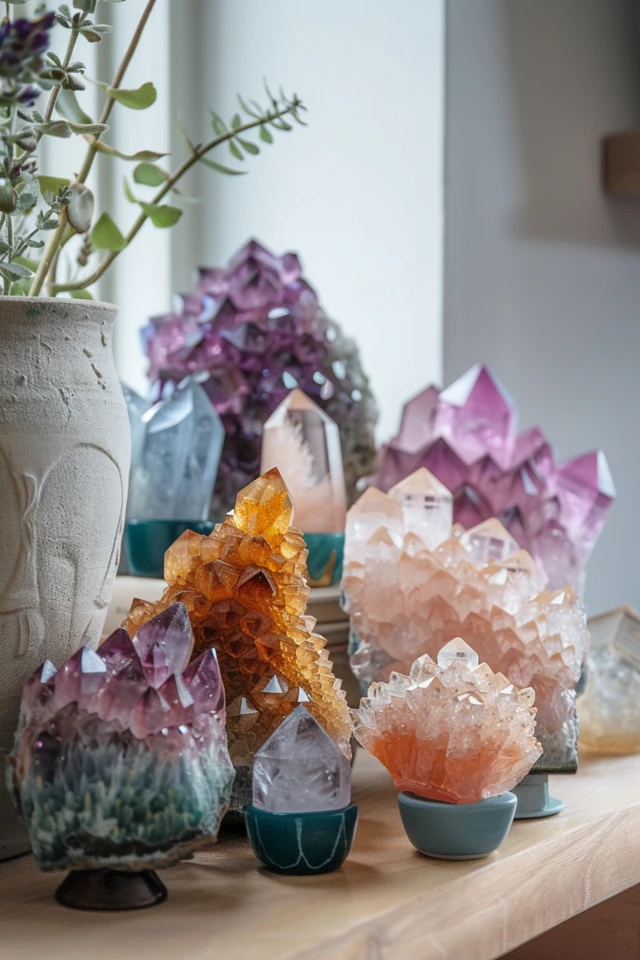
Creative Display Ideas for Crystals – Sparkle Showcase
Crystals have moved far beyond their metaphysical roots to become legitimate staples in modern interior design. Whether you are drawn to them for their grounding energy or simply their geological beauty, incorporating these organic elements into your home requires a thoughtful approach. A haphazard collection can quickly look like clutter, but a curated display elevates a room’s entire aesthetic.
I remember a specific project where a client handed me a box of high-quality geodes, unsure of how to showcase them without making her living room look like a science museum gift shop. By treating each stone as a sculpture rather than a knick-knack, we transformed her space into something sophisticated and deeply personal. To give you plenty of visual inspiration for your own home, I have curated a comprehensive Picture Gallery at the end of this blog post.
In this guide, we will explore the mechanics of display, from lighting requirements to weight distribution. We will look at how to mix raw textures with polished finishes and how to keep your collection safe from pets and daily wear. Let’s turn your crystal collection into a stunning design feature.
1. Structural Integrity: Shelving and Vertical Storage
When displaying crystals, your first consideration must always be weight. Unlike standard decor items, dense minerals like quartz, agate, and amethyst are deceptively heavy. A standard floating shelf from a big-box store often lacks the internal bracketing required to support a large cluster.
For substantial collections, I always recommend built-in joinery or shelving units anchored directly into wall studs. If you are using floating shelves, look for solid wood options with heavy-duty steel mounting brackets.
The Art of Spacing
One of the biggest mistakes I see is overcrowding. To make a shelf look designed rather than stored, you need negative space.
- The 60/40 Rule: Fill only about 60% of the shelf surface with items and leave 40% empty. This allows the eye to rest and appreciate the individual stones.
- Variable Heights: If you have three stones of similar size, use acrylic risers or stack books to elevate one. This creates a triangular visual line that is pleasing to the eye.
- Depth layering: Place larger, rougher pieces in the back and smaller, tumbled or polished points in the front.
Renter-Friendly Options
If you cannot drill into studs, opt for floor-standing units. A metal and glass etagere is an excellent choice for crystals. The glass shelves allow light to pass through the levels, illuminating stones on lower tiers that would otherwise be in shadow.
2. The Science of Lighting Your Collection
Lighting is the difference between a dull rock and a sparkling centerpiece. However, lighting crystals is tricky because different stones react differently to light sources. You want to highlight the internal fractures and clarity without washing out the color.
Kelvin Temperature Matters
For most residential interiors, I specify LED lighting with a color temperature between 3000K and 3500K.
- 2700K (Warm White): Too yellow. It will make clear quartz look muddy and distort the blues in celestite.
- 3000K – 3500K (Soft/Neutral White): The sweet spot. It enhances the natural crispness of the stone while keeping the room cozy.
- 5000K+ (Daylight): Too blue/clinical. This makes a home look like a hospital or a laboratory.
Backlighting vs. Downlighting
Translucent slices, such as agate slabs, look best when backlit. You can achieve this easily with LED strip lighting applied to the back rim of a shelf. For opaque clusters like pyrite or black tourmaline, downlighting is essential to catch the metallic facets.
Designer’s Note: The Sunlight Trap
Many people instinctively place crystals on windowsills to catch the sun. This is a major error for certain minerals.
The Risk: Direct UV exposure will fade the vibrant colors of Amethyst, Citrine, Fluorite, and Rose Quartz over time.
The Fix: Keep colored translucent stones at least 4 to 6 feet away from direct, harsh window light. Reserve windowsills for clear Quartz or Selenite, which are light-stable.
3. Styling Vignettes: Room-by-Room Strategies
Styling is about context. A massive geode that looks great on a dining buffet will overwhelm a bedside table. Here is how I approach crystal placement based on the function of the room.
The Living Room: Coffee Table Styling
The coffee table is prime real estate, but it must remain functional. I use the “tray method” here. Place your crystals inside a low-profile tray alongside other elements. This contains the clutter and makes it easy to move the display when you need surface area for games or snacks.
- Combine Textures: Pair a jagged amethyst cluster with a smooth ceramic vase and a stack of matte-cover books. The contrast makes the crystal pop.
- Scale Check: Ensure the tallest item on the coffee table does not obstruct the view between people sitting on opposite sofas. Keep it under 10-12 inches high.
The Bedroom: Nightstand Serenity
Bedrooms require a calmer visual language. Avoid high-energy, jagged, or chaotic clusters here.
- Smooth Forms: Opt for spheres, palm stones, or polished free-forms. They gather less dust and look softer.
- Color Palette: Stick to soothing tones like blue lace agate, rose quartz, or lepidolite. Avoid jarring reds or bright oranges unless they specifically match your bedding accent colors.
The Bathroom: Humidity Concerns
Bathrooms are great for a spa-like vibe, but humidity is a killer for certain minerals.
Safe: Quartz family (Clear, Rose, Amethyst), Agate, Jasper.
Unsafe: Selenite (it is gypsum and can dissolve/degrade in moisture), Halite, Calcite.
If you style a bathroom, place crystals on a wooden or marble tray to prevent them from sitting in pooled water on the vanity.
4. Enclosed Displays: Shadow Boxes and Curios
If you have a collection of small, fragile, or high-value specimens, enclosed storage is the most practical solution. This is especially true if you have cats, who are notoriously fond of batting small stones off surfaces.
The Modern Curio
Forget the old-fashioned china cabinets. Look for modern, iron-framed glass cabinets. These provide a gallery feel. Because the glass protects the contents, this is the perfect place to display delicate formations like spray Aragonite or needle-like Scolecite that would break during dusting.
Shadow Boxes for Grids
For those who collect small tumbled stones, wall-mounted typesetter trays or partitioned shadow boxes are ideal.
- Color Blocking: Arrange the stones by color spectrum (ROYGBIV) to create a piece of wall art.
- Grid Layout: If you use crystal grids for energy work, you can mount a permanent grid in a deep shadow box frame. Use museum putty to secure the stones to the backing so the design stays vertical.
Common Mistakes + Fixes
Mistake: Using sticky tack or generic mounting tape on porous stones.
Fix: Use museum wax (also called crystalline wax). It holds firmly but comes off cleanly without leaving an oily residue on raw stone surfaces.
5. Managing Large Statement Pieces
Large geodes or cathedral crystals (20lbs+) act as furniture rather than decor. They demand their own space and respect regarding safety.
Floor Displays
A large amethyst cathedral looks stunning on the floor, but it needs elevation to avoid looking like a doorstop.
- Custom Stands: Commission a simple iron or acrylic plinth. Raising the stone 12 to 18 inches off the ground gives it presence and protects it from vacuum cleaners and shoes.
- Corner Anchoring: Place heavy floor pieces in corners where traffic flow is low. This minimizes the risk of someone bumping into them.
Safety Anchoring
If you have a tall, narrow geode on a console table or pedestal, you must secure it. Use a clear museum gel for wider bases. For taller, tippy pieces, I recommend using a discreet wire anchor attached to the wall behind it, similar to how you anchor a bookshelf. This is non-negotiable in homes with children or pets.
Final Checklist: What I’d Do in a Real Project
Before you finalize your display, run through this mental checklist that I use on site installations.
- Weight Test: Have I verified the weight limit of this shelf? (If the shelf creates a “smile” shape, it is overloaded).
- Light Check: Is the light source too hot? (Halogen bulbs can heat up stones; stick to LED).
- Sun Safety: Are my purple and orange stones out of direct sun beams?
- Traffic Flow: Is this crystal poking out into a walkway where it could snag clothing?
- Texture Balance: Have I mixed the crystal with wood, metal, or fabric to soften the look?
- Stability: If I bump the table, does the crystal wobble? If yes, it needs museum wax.
FAQs
How do I clean dust off complex crystal clusters?
Avoid feather dusters, which snag on sharp points. I use a can of compressed air (like you use for keyboards) to blow dust out of crevices. For polished surfaces, a dry microfiber cloth is best. Never use chemical glass cleaners on raw stone.
Can I mix crystals with other decor items?
Absolutely. In fact, you should. A shelf full of only rocks looks like a shop inventory. Mix them with hardcover books, small succulents, brass sculptures, or framed photos. The contrast in materials makes the crystals look more special.
What is the best background color for displaying crystals?
Matte black or charcoal gray is incredible for making clear and white crystals (like Quartz and Apophyllite) pop. White or cream backgrounds are better for dark stones like Tourmaline, Obsidian, or deep purple Amethyst.
I rent my apartment. How can I display heavy pieces?
Focus on low furniture surfaces like sideboards, media consoles, and hearths. Avoid wall-mounted solutions unless you are willing to patch large anchor holes when you move. Heavy-duty bookcases with adjustable shelving are your best friend.
Conclusion
Displaying crystals is about finding the balance between respecting the natural material and integrating it into your daily life. Whether you have a single massive geode or a hundred small tumbled stones, the goal is intentionality. By paying attention to lighting, spacing, and safety, you transform a collection of rocks into a curated gallery that adds texture, sparkle, and personality to your home.
Picture Gallery


