
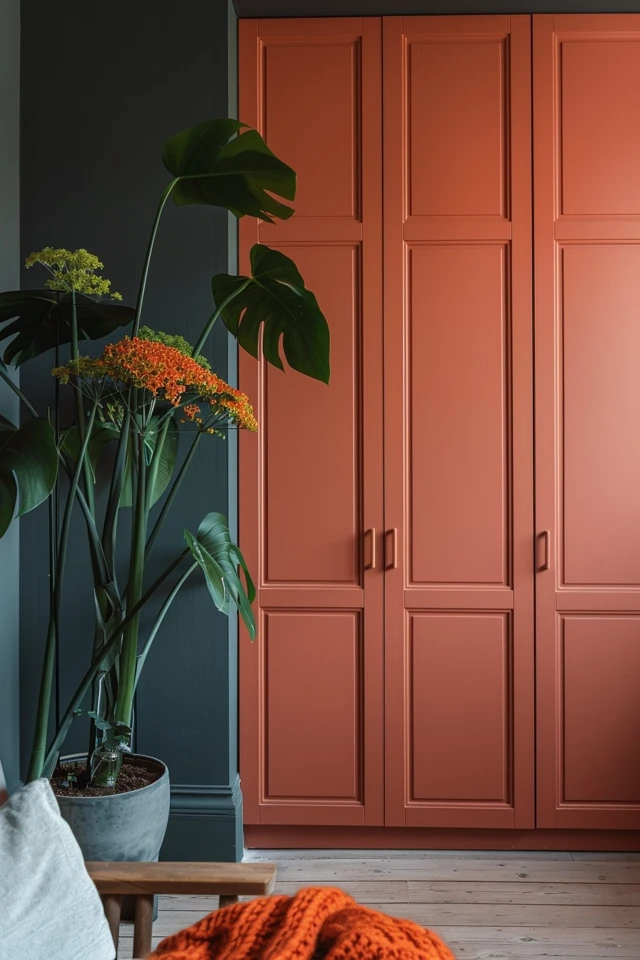
Title: Creative Ideas for Painting Closet Doors
Introduction
Closet doors are often the largest uninterrupted surfaces in a bedroom or hallway, yet they are frequently ignored during renovations. In my years as an interior designer, I have seen countless beautiful rooms dragged down by yellowing, builder-grade sliding doors or battered bi-folds. We spend so much time selecting the perfect wall color and curating furniture, but we leave these massive vertical elements purely utilitarian.
Treating your closet doors as a design feature rather than a background necessity changes the entire architecture of a room. It is a low-stakes, high-impact project that can make a small space feel larger or a boring room feel custom. Whether you have flat hollow-core slabs or dated louvers, paint is the most cost-effective tool to transform them. For a huge dose of visual inspiration, keep in mind that a curated Picture Gallery is at the end of the blog post.
In this guide, we will move beyond basic white paint. I will walk you through professional techniques for preparation, durability, and creative styling. We will cover everything from architectural illusions to bold color blocking, ensuring your closet becomes a highlight of your home.
The Foundation: Prepping Different Materials for Durability
Before we get to the creative designs, we must address the canvas. As a designer, the number one reason I see DIY paint jobs fail is poor adhesion. Closet doors take a beating; they are touched, bumped, and slid open multiple times a day. If you do not prep the surface correctly based on the material, the paint will scratch off within months.
Wooden and Paneled Doors
If you are working with real wood, your main enemy is grain bleed-through and old varnish. You must sand these doors with 120-grit sandpaper to cut the existing sheen. You do not need to remove the old finish entirely, but you need to create “tooth” for the new paint to grab.
After sanding, wipe them down with a tack cloth. Do not use a wet paper towel, as water raises the grain of the wood and creates a fuzzy texture. Always use a stain-blocking primer if you are painting over raw wood or dark stains. This prevents tannins from seeping through your fresh topcoat and turning it yellow.
Laminate and Hollow-Core Doors
Most modern closet doors are not wood; they are a synthetic laminate or a smooth composite. Paint hates sticking to these slippery surfaces. Sanding is still required, but you also need a bonding primer. Look for primers specifically labeled “high adhesion” or “bonding.”
If your doors are the ultra-smooth, plastic-feeling type, I recommend scuffing them with a sanding sponge rather than paper. The sponge contours better to edges and prevents you from gouging the fake wood veneer.
The Challenge of Louvered Doors
Louvered (slatted) doors are visually interesting but a nightmare to paint with a brush. If you try to brush them, you will inevitably get drips in the corners of the slats.
Designer’s Note:
In my projects, we never brush louvered doors. We spray them. If you don’t have a paint sprayer, take the doors off the hinges, lay them flat outside or in a garage, and use high-quality spray paint cans (the kind with the ergonomic trigger). Light, misting coats are the secret. If you try to cover it all in one pass, it will drip.
Visual Trickery: Creating Architecture with Paint
One of my favorite tricks for flat, boring closet doors is using paint to mimic architectural details. This is especially useful in rentals where you cannot add actual molding, or in rooms where you want the look of expensive millwork without the carpentry budget.
The Faux Panel Effect
You can turn a flat slab door into a “paneled” door just using tape and two shades of paint. The concept is simple: you tape off rectangles to mimic the stiles and rails of a traditional door.
Paint the entire door the lighter base color first. Once dry, tape off your rectangle shapes. Paint the area inside the tape a slightly darker shade of the same color. When you peel the tape, the subtle contrast creates the illusion of depth/shadow, making the door look three-dimensional.
The Two-Tone Trim Technique
If you have traditional paneled doors, you can highlight their shape by painting the recessed panels a different color than the raised frames. This works beautifully in nurseries or eclectic spaces.
However, be careful with high-contrast colors (like black and white), as this can look busy. I prefer subtle combinations, like a soft sage green frame with a creamy white center, or charcoal gray with a dove gray center.
Elongating the Room with Verticals
If your ceilings are low (standard 8-foot), painting vertical stripes on your closet doors can trick the eye. I suggest thick stripes—about 6 to 8 inches wide—rather than thin pinstripes, which can vibrate visually.
Common Mistakes + Fixes:
Mistake: Taping stripes without measuring the total width first, resulting in a tiny, awkward stripe at the end.
Fix: Measure the door width in inches. Divide by your desired stripe width. Adjust the stripe width slightly so it divides evenly. For example, on a 30-inch door, do five 6-inch stripes exactly.
Color Blocking and Geometric Designs
If you want the closet to be the focal point of the bedroom, geometric color blocking is the way to go. This moves the door from “architectural feature” to “art piece.” This is particularly effective on sliding doors, as the pattern can shift when the doors overlap.
The Diagonal Dip
This is a modern, playful look that is very hard to mess up. You simply run a piece of painter’s tape diagonally across the door—it doesn’t even have to be corner-to-corner. Paint one side a bold color (like navy, terracotta, or emerald) and leave the other side white or neutral.
This design breaks up the rectilinearity of a room. In a recent project for a teen’s room, we painted a steep diagonal across both sliding doors. When the doors were closed, it formed a massive triangle. It added energy to the room without requiring expensive artwork.
The Arch Motif
Arches are having a major moment in interior design. Painting a solid arch on a flat closet door adds softness to a boxy room. You can paint a single tall arch that mimics a doorway, or a smaller arch in the center.
To get the curve perfect, use the “string and pencil” method. Tape a piece of string to the center point of where you want the arch to curve. Tie a pencil to the other end. Pull the string taut and swing the pencil like a compass.
Bridging the Gap
For closets with double doors (French door style), consider a design that spans across the gap. A large circle centered on the meeting point of the two doors looks fantastic. When you open the doors, the circle splits. It creates a very custom, graphic look.
Measurements that Matter:
When painting a shape across two doors, you must account for the gap. Don’t just paint into the crack. Open the doors and wrap the paint around the edge of the door (the thickness of the door). This ensures that when the doors are slightly ajar, the design doesn’t visually break.
The Monochromatic “Drench”
Sometimes, the most creative idea is to make the doors disappear entirely. In small bedrooms or narrow hallways, white closet doors can chop up the visual space, creating a “stutter” in the wall. This is visually cluttering.
Color Drenching Explained
Color drenching involves painting the walls, the baseboards, the door casing, and the closet doors all the exact same color. This wraps the room in a seamless blanket of color.
This technique is incredibly sophisticated. It makes ceilings feel higher because there are no horizontal breaks at the trim line. It also makes the room feel calmer.
Finish Coordination
While the color remains the same, you should vary the sheen (finish) to create subtle texture and ensure durability.
My Recommended Sheen Protocol:
- Walls: Eggshell or Matte (hides imperfections).
- Closet Doors: Satin or Semi-Gloss (resists fingerprints and is scrubbable).
- Trim/Casing: Satin or Semi-Gloss (matches the doors).
Even though the pigment is identical, the light will hit the semi-gloss doors differently than the matte walls, creating a very rich, velvety look.
Finishing Touches: Hardware and Maintenance
You can execute the perfect paint job, but if you put the old, rusty hardware back on, the project will look unfinished. Hardware is the jewelry of the closet.
Updating Knobs and Pulls
If you are painting the doors a dark color (like charcoal or navy), switch to brass or gold hardware. The contrast is timeless. If you are painting the doors white or light gray, matte black hardware adds a modern, graphic punch.
For sliding doors that usually have those recessed finger cups, you can buy replacements in modern finishes. Do not try to paint the inside of the finger cup; the paint will inevitably chip from fingernails. Buy new inserts—they usually cost less than $10.
Hinges Matter
Nothing ruins a fresh paint job like seeing paint slobbered over the hinges. It is a tell-tale sign of an amateur job.
What I’d do in a real project:
1. Remove the door entirely.
2. Unscrew the hinges from the door and the frame.
3. If the hinges are old brass but you want black, stick them in a cardboard box and spray paint them with a self-etching metal primer and matte black enamel.
4. Let them cure for 48 hours before reinstalling.
5. Alternatively, buy new hinges. They are inexpensive and ensure the door swings smoothly without squeaking.
Cure Time is Critical
The biggest tragedy in closet painting is “blocking.” This happens when you close the door before the paint has fully cured. The paint on the door sticks to the paint on the frame, and when you open it later, it rips a chunk of paint off.
Latex paint feels dry to the touch in an hour, but it takes up to 30 days to fully cure (harden). You don’t need to wait 30 days to close the door, but you must wait at least 24 to 48 hours. Even then, I recommend sticking small felt bumper pads on the inside of the frame to prevent the painted surfaces from touching directly for the first few weeks.
Final Checklist: The Pro Approach
If you are ready to tackle this project, here is the checklist I would use to ensure professional results.
Phase 1: Setup
- Remove doors from hinges (trust me, don’t paint them vertically).
- Remove all hardware (knobs, hinges, strike plates).
- Set up a work zone with drop cloths.
Phase 2: Prep
- Clean doors with a degreaser (TSP or similar) to remove hand oils.
- Sand all surfaces with 120-150 grit sandpaper.
- Wipe away dust with a tack cloth.
- Apply a high-quality bonding primer (especially for laminate).
Phase 3: Paint
- Stir paint thoroughly.
- Use a 2-inch angled sash brush for corners and recessed panels.
- Use a high-density foam roller for flat surfaces (prevents stipple texture).
- Apply the first coat. Let dry according to can instructions.
- Lightly sand with 220 grit sponge between coats for a glass-smooth finish.
- Apply second coat.
Phase 4: Reassembly
- Clean or replace hardware.
- Wait at least 24-48 hours before re-hanging.
- Apply small clear bumpers to the door stop to prevent paint sticking.
FAQs
Q: Can I paint mirrored closet doors?
A: Yes, but you cannot use standard wall paint directly on glass. You must use a primer specifically designed for glass or glossy surfaces (like a shellac-based primer). Alternatively, you can use “frosted glass” spray paint to change the look without making them solid opaque.
Q: What is the best color for closet doors in a small room?
A: Generally, matching the door color to the wall color (the “drench” method) is best for small rooms. It prevents the visual clutter of a contrasting rectangle, making the space feel continuous and larger.
Q: How do I stop the paint from peeling off my metal bifold doors?
A: Metal doors expand and contract with temperature changes. You need a paint that is flexible. 100% Acrylic latex is usually best for this. Avoid oil-based paints on metal doors exposed to heat (like direct sun), as they can become brittle and crack.
Q: My tape peeled the paint off when I did a design. What happened?
A: You likely pulled the tape off when the paint was fully dry. You should peel the tape while the final coat is still slightly wet. If the paint dries over the tape, it forms a film that rips when you pull. If it’s already dry, score the edge of the tape with a razor blade before peeling.
Conclusion
Painting your closet doors is one of the most satisfying weekend projects you can undertake. It requires minimal material investment—usually just a quart of paint and some supplies—but creates a massive shift in how your room feels.
Whether you choose to make them disappear with a monochromatic look or turn them into a geometric statement piece, the key is in the preparation. Respect the process of sanding and priming, and your finish will last for years. Don’t be afraid to take a risk here; unlike a whole room, a closet door is easy to repaint if you change your mind.
Picture Gallery


