
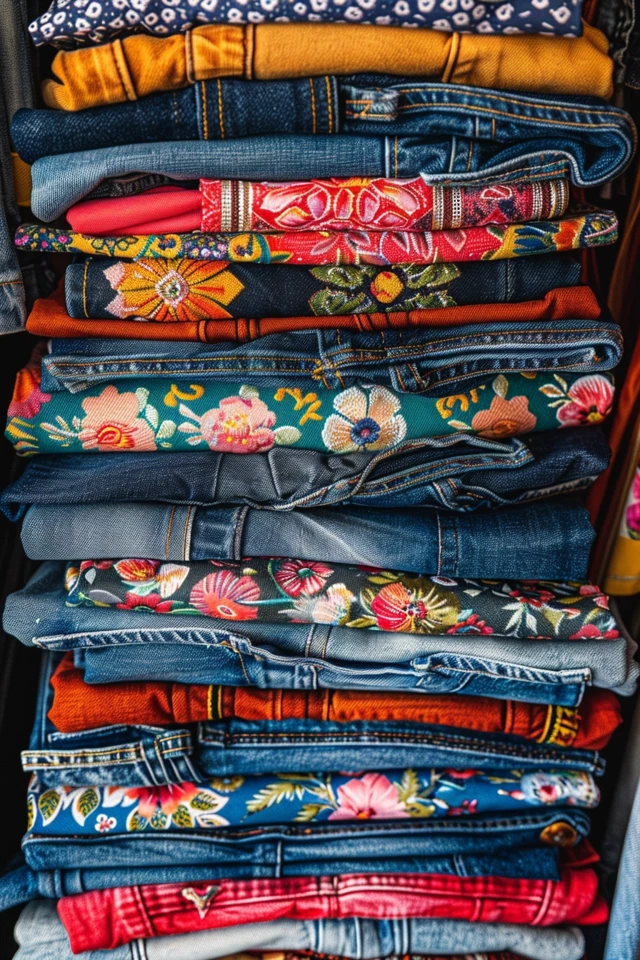
Creative Jeans Organizer Ideas to Declutter Your Closet
Jeans are arguably the hardworking heroes of our wardrobes, yet they are often the most difficult items to store neatly. Because denim is heavy and bulky, it doesn’t drape like silk or stack as easily as wool sweaters. Without a solid system, your favorite pairs likely end up in a chaotic pile on a shelf or cluttering the “chair” in the corner of your bedroom.
As a designer, I see denim storage as a geometry problem. We are dealing with thick seams, varying weights, and rigid fabrics that require specific spatial planning to look good and function well. For visual inspiration on how to execute these layouts, be sure to check out the Picture Gallery at the end of this blog post.
Getting your denim under control isn’t just about tidiness; it is about protecting the investment you have made in your wardrobe. In this guide, I will walk you through professional methods for organizing jeans, ranging from custom millwork strategies to renter-friendly hacks that maximize every inch of vertical space.
1. Analyzing Your Inventory and Space Planning
Before you buy a single bin or hanger, you have to audit your collection. Interior design is 90% planning and 10% styling, and closet organization is no different. You need to know exactly how much linear footage your denim collection requires.
Start by pulling every pair of jeans out of the closet. Group them by fit (skinny, straight, wide-leg) or by wash (light, medium, dark, black). This categorization helps you decide which storage method suits your specific wardrobe best.
For example, wide-leg jeans are often too bulky for standard file-folding in shallow drawers. Skinny jeans, however, compact beautifully. Once sorted, measure the height of a stack of four pairs of jeans. This is your “vertical unit.” Most standard shelves have 12 to 14 inches of clearance, meaning you can safely stack 4 to 5 pairs before the pile becomes unstable.
Designer’s Note: The Sag Factor
One thing that often goes wrong in DIY closet makeovers is ignoring shelf weight limits. Denim is incredibly heavy. A stack of 10 pairs of jeans can weigh upwards of 15 pounds.
If your closet uses particle board shelving spanning more than 30 inches without a center support bracket, those shelves will bow over time. If you are renovating, insist on ¾-inch plywood or solid wood shelving. If you are working with existing wire shelving, add a liner to prevent belt loops from getting snagged on the grates.
2. The Shelf Stack vs. The Vertical File Fold
The two most popular ways to store jeans are stacking them on shelves or file-folding them into drawers. The right choice depends entirely on your available square footage and the visibility you desire.
Mastering the “Retail Fold” for Shelves
If you have ample open shelving or cubbies, the “Retail Fold” is visually pleasing and mimics a high-end boutique. This method requires a standard shelf depth of at least 12 to 14 inches.
To achieve this look, fold the jeans in half lengthwise, tuck the crotch in to create a straight rectangle, and then fold in half or thirds depending on the inseam length. Position the folded edge outward so the messy waistband and hems are hidden at the back of the shelf.
Key Measurements for Shelving:
- Stack Height: Never stack higher than 10 inches. Any higher, and the pile will topple when you pull out the bottom pair.
- Lateral Spacing: Leave at least 1 inch of breathing room between stacks. This prevents friction when removing items.
- Cubby Size: If building custom cubbies, a 12-inch wide by 12-inch high box is the “golden ratio” for denim storage.
The Vertical “File Fold” for Drawers
If you are short on shelf space but have a dresser or deep closet drawers, the file fold is superior. This method, popularized by professional organizers, involves folding the jeans into a small, stiff rectangle that stands up on its own.
You arrange the jeans in rows from front to back, like files in a cabinet. The major advantage here is visibility; you can see every single pair at once without digging to the bottom of a stack. This is ideal for drawers that are at least 8 to 10 inches deep.
Common Mistakes + Fixes
Mistake: Stacking jeans on a high shelf without dividers.
Fix: Install acrylic shelf dividers every 12 to 15 inches. This acts as a bookend for your clothes, keeping the stacks perfectly vertical and preventing them from leaning into neighboring piles of sweaters.
3. Hanging Solutions for Easy Access
Hanging jeans is a fantastic option if you have plenty of rod space but limited shelving or drawers. However, not all hanging methods are created equal, and the wrong hanger can actually damage heavy denim.
The S-Hook Method
This is a trendy, industrial look often seen in streetwear boutiques. You use large metal S-hooks to hang jeans by their rear belt loops. This requires a sturdy closet rod, as the weight is concentrated on a single point.
I love this for casual closets or open wardrobe racks. It is incredibly fast—no folding required. However, it does require vertical clearance. You need about 40 to 45 inches of vertical hanging space to ensure the hems don’t drag on the floor.
The Clip Hanger Technique
For a cleaner, more tailored aesthetic, use sturdy wooden hangers with cushioned clips. Fold the jeans in half vertically so the legs are together, and clip the waistband.
This keeps the jeans wrinkle-free and allows you to color-coordinate easily. Ensure the clips have rubber tips; plain metal clips can leave permanent indentations or rust marks on lighter washes.
Avoiding the “Multi-Tier” Trap
You have likely seen those “space-saving” hangers that hold five pairs of pants on one hook. In my experience, these are a nightmare for daily use.
They become incredibly heavy and bulky, making it difficult to retrieve the pair in the middle. They also take up significant horizontal width, often negating the space you thought you were saving. Stick to single hangers or specialized swing-arm racks that allow easy access to individual pairs.
4. Small Closet Hacks and Renter-Friendly Ideas
Not everyone has a walk-in closet with custom millwork. If you are renting or dealing with a reach-in closet, you need to think outside the standard rod-and-shelf configuration.
Over-the-Door Organizers
Don’t overlook the back of your closet door. Clear shoe organizers are not just for shoes; the pockets are often large enough to hold rolled skinny jeans or leggings.
For heavier denim, look for over-the-door tiered racks specifically designed for towels or pants. These maximize “dead” space without requiring you to drill holes in the walls.
Rolling Carts and External Storage
If your closet is bursting, move the denim out. A sleek, metal rolling cart can serve as a dedicated denim station in your bedroom. Roll or fold the jeans and stack them on the cart’s shelves.
This looks intentional and stylish, especially if you color-code the denim. It turns your clothing into part of the room’s decor. Look for a cart with a low profile so it can be tucked into a corner or under a window when not in use.
Under-Bed Bins for Off-Season Storage
You likely don’t wear your white denim in December or your fleece-lined jeans in July. Rotate your stock. Use long, shallow plastic bins with wheels to store off-season denim under your bed.
What I’d Do in a Real Project:
- Canvas Bins: I prefer structured canvas bins over plastic for open shelves. They breathe better and look softer.
- Labeling: Use clip-on bin labels to mark “Skinny,” “Bootcut,” or “Repair Needed.”
- Vacuum Bags: Avoid vacuum sealing denim for long periods. The hard creases can be nearly impossible to iron out later.
5. Designing a Boutique Display
If you want your closet to feel like a high-end dressing room, lighting and layout are key. The way you display your jeans can make getting dressed feel like a luxury experience rather than a chore.
Lighting Matters
Denim absorbs a lot of light, especially dark washes. A single overhead bulb will leave your shelves in shadow, making it hard to distinguish between navy and black pairs.
Install battery-operated LED strip lights or puck lights on the underside of your shelves. Aim for a color temperature of 3000K to 3500K. This is a clean, bright white that renders colors accurately without feeling like a hospital operating room.
Color Coordination Strategies
Arranging by color is the oldest trick in the book because it works. Organize your jeans from light to dark: white, bleached wash, medium vintage wash, dark indigo, and finally black and gray.
Within those color groups, you can sub-organize by style. This creates a calming visual gradient that reduces visual noise. It stops the closet from feeling cluttered, even if it is full.
The “Active” vs. “Archive” Zone
Place your top 5 most-worn pairs at eye level (between 48 and 60 inches from the floor). This is your “prime real estate.”
Pairs that are sentimental or rarely worn should go on the highest shelves or bottom drawers. Don’t let the jeans you wear once a year occupy the easiest-to-reach spots.
6. Material Selection for Bins and Dividers
The materials you choose for your organizers contribute to the longevity of your clothes. Denim is durable, but it is abrasive. It can scratch delicate surfaces, and rough surfaces can snag the denim.
Wood vs. Acrylic Dividers
I typically specify acrylic dividers for modern closets. They are visually weightless and don’t make the space feel closed in. However, ensure they slide onto the shelf tightly; if they wobble, they are useless against the weight of leaning denim.
For traditional closets, wood dividers are beautiful but ensure they are sanded smooth and sealed. Raw wood can snag cotton fibers.
Baskets and Bins
If you prefer to toss jeans into bins, avoid unlined wicker or rattan. The sharp reed ends will pick at the fabric of your jeans over time.
Opt for felt baskets, fabric-lined wire baskets, or smooth plastic bins. Felt is particularly good because it is sturdy enough to hold its shape but soft enough to protect the garment.
Final Checklist for Denim Organization
Ready to tackle your closet? Follow this order of operations to ensure a successful reorganization project.
- Edit the collection: Try on every pair. If it doesn’t fit or is damaged beyond repair, donate or recycle it.
- Measure the space: Record the depth of your shelves, the height of your drawers, and the length of your hanging rods.
- Choose your method: Decide between hanging, shelf stacking, or drawer filing based on your measurements.
- Purchase supplies: Buy dividers, hangers, or bins. Buy 10% more than you think you need—you can always return the extras.
- Group by wash: Sort your jeans from light to dark on the bed before putting them away.
- Fold or Hang: consistent folding is key. Ensure every pair is folded to the same width.
- Install lighting: Add stick-on LEDs to dark corners to highlight your collection.
FAQs
Q: Should I wash my jeans before storing them for the season?
Yes, absolutely. Even if they look clean, invisible body oils and skin cells can attract moths or cause yellowing over time. Wash them inside out in cold water and dry them completely before placing them in long-term storage bins.
Q: How do I store jeans with thick embellishments or rips?
Jeans with rhinestones, heavy embroidery, or large distressed holes should be hung or stored flat on top of a stack. Folding them tightly can snag the distressing or cause embellishments to pop off. If you must fold them, place a sheet of acid-free tissue paper between the folds.
Q: Can I store denim in plastic bins?
For short-term storage, plastic is fine. However, for long-term storage (more than 6 months), plastic can trap moisture and lead to mildew. If you live in a humid climate, throw a silica gel packet into the bin to absorb excess moisture.
Q: My jeans keep sliding off the hangers. What should I do?
This is common with silky or soft denim blends. Avoid standard plastic tube hangers. Switch to hangers with a velvet or rubberized coating. Alternatively, use the “savile row fold,” where you straddle the legs over the hanger bar to lock them in place.
Conclusion
Organizing your jeans is one of the most satisfying weekend projects you can tackle. It offers an immediate visual payoff and streamlines your morning routine. By respecting the weight and bulk of the fabric and applying simple interior design principles like scale and vertical spacing, you can turn a messy pile into a functional, boutique-style display.
Remember, the best system is the one you can maintain. Whether you choose to file fold in drawers or hang your collection on S-hooks, consistency is the secret to a polished look. Take the time to measure your space, invest in the right support tools like dividers or sturdy hangers, and enjoy the calm that comes with a perfectly organized closet.
Picture Gallery


