
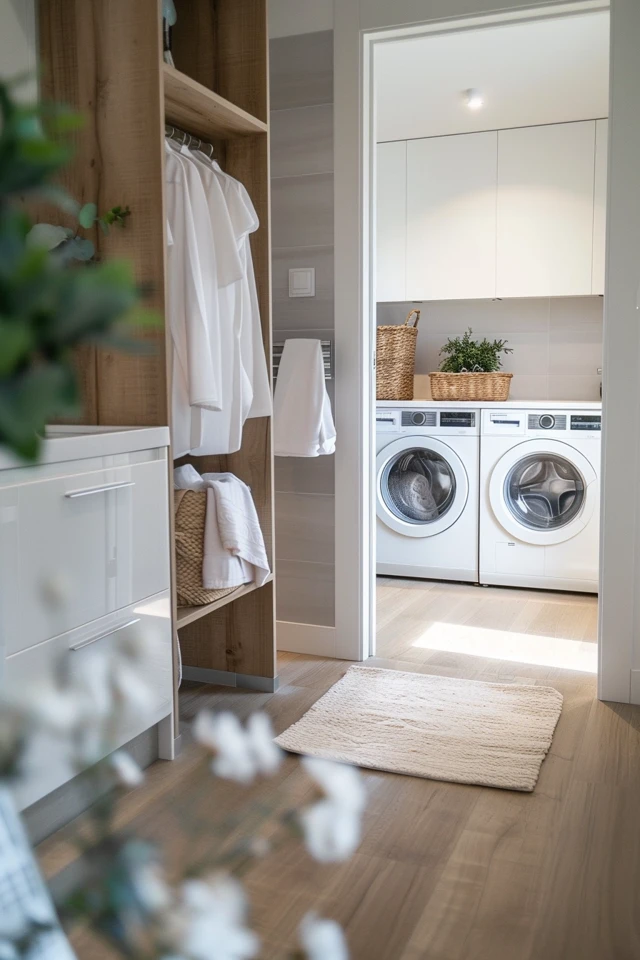
Laundry Room – Creative Bathroom Combos
Combining a laundry room with a bathroom is often born out of necessity, but it has evolved into a deliberate design choice for modern living. Years ago, I worked on a project in a historic row house where the only spot for a second full bath was the existing oversized laundry room. The challenge was making it feel like a spa retreat rather than a utility closet.
The result was surprising; by merging the two, we actually gained space for a luxury shower and a folding station. For those looking for visual inspiration on how these layouts come together, remember that a curated Picture Gallery is waiting at the end of the blog post.
This combination is the ultimate workhorse of the home, but it requires a strict adherence to layout rules and moisture control.
1. Strategic Layouts and Traffic Flow
The success of a laundry-bathroom combo hinges entirely on the floor plan. You are merging a relaxation zone with a high-activity work zone. The first rule of thumb is to separate the “wet work” from the “wet relax” areas.
In a standard 5×8 or 6×9 bathroom, the laundry units usually need to be stacked to preserve floor space. However, if you have a larger footprint, placing machines side-by-side under a continuous countertop creates a more functional workspace.
Critical Measurements
- Clearance Zones: You need a minimum of 36 to 48 inches of clearance in front of a washer and dryer for loading and unloading. Do not overlap this clearance with the swing of the bathroom entry door.
- Toilet Spacing: Never place the toilet directly facing the washing machine if the clearance is under 30 inches. It creates a claustrophobic environment and makes plumbing access difficult.
- Appliance Depth: A standard machine is about 30 to 34 inches deep. However, you must account for an additional 4 to 6 inches behind the machine for dryer vents and water hoses. A “standard” 24-inch deep cabinet will not work.
Designer’s Note: The Access Panel Rule
One lesson I learned the hard way involved tiling over a plumbing access point to create a seamless look. When a shut-off valve failed a year later, we had to demo the wall.
Always install a removable access panel for the water shut-off valves and the dryer vent connection. In a bathroom combo, I prefer to hide this access panel inside an adjacent cabinet or behind a removable backsplash section rather than leaving an ugly plastic square on the drywall.
2. Concealment: Hiding the Machinery
Unless you have stunning designer appliances, most homeowners prefer to hide the washer and dryer when guests use the bathroom. Visual noise contributes to mental clutter, and seeing a bottle of bleach while trying to relax in the bath is not ideal.
Custom Cabinetry (The Gold Standard)
The most seamless look involves building the machines into a “laundry armoire.” This looks like a linen cabinet but opens to reveal the appliances.
- Pocket Doors: These are ideal because they disappear into the wall, offering full access to the machines without blocking the walkway. However, they require significant wall thickness and framing work.
- Retractable “Flipper” Doors: These doors open and slide back into the cabinet carcass. They are excellent for tight spaces but require specialized hardware that can be pricey.
Budget-Friendly Solutions
If custom millwork isn’t in the budget, you can still achieve a polished look.
- The Curtain Method: Use a ceiling-mounted track with a heavy, lined linen curtain. The fabric adds softness to the hard surfaces of a bathroom and improves acoustics. Ensure the fabric is mildew-resistant.
- Bi-Fold Doors: These are common, but be careful. Standard bi-folds often block the soap dispenser drawer on modern front-loaders. Measure the swing radius carefully before purchasing.
Common Mistakes + Fixes
Mistake: Installing doors that form a tight seal around the laundry closet.
Fix: Washing machines need airflow to prevent mold, even when not in use. Use louvered doors, or if using solid doors, leave a 1-inch gap at the bottom and install a passive vent at the top to allow heat and humidity to escape.
3. Managing Moisture and Ventilation
Bathrooms are humid. Laundry rooms are humid. Putting them together creates a moisture load that standard builder-grade fans cannot handle.
If you ignore ventilation, you will peel the paint off the walls and invite mold growth within months.
Ventilation Requirements
You generally need a more powerful exhaust fan than you think. For a combo room, look for a fan rated for at least 110 CFM (Cubic Feet per Minute), regardless of the room size. Ideally, install a fan with a humidity sensor that turns on automatically when moisture levels rise.
The Dryer Venting Challenge
The dryer must vent to the outside, not into the room or the attic.
- Rigid Ducting: Use rigid metal ducting rather than flexible foil hoses whenever possible. Rigid ducts trap less lint and reduce fire risk.
- Run Length: Keep the duct run as short and straight as possible. Every 90-degree turn reduces the efficiency of the airflow and causes the dryer to run hotter.
Designer’s Note: Surface Selection
In a combo room, every surface must be wipeable. I avoid wallpaper in these spaces unless it is a high-grade vinyl specifically rated for bathrooms.
For paint, stick to Satin or Semi-Gloss finishes. Matte or Eggshell paints are too porous and will absorb the moisture, leading to water spots and eventual peeling.
4. Acoustics: Minimizing the Rumble
The biggest complaint I hear about laundry-bathroom combos is the noise. Nobody wants to hear the spin cycle while trying to take a relaxing shower or use the restroom.
Vibration Control
The vibration from a spinning washer transfers through the floor, turning your joists into a speaker system.
- Anti-Vibration Pads: Place thick rubber pads under the feet of the washer. This is a non-negotiable $30 investment that saves your sanity.
- Leveling: Ensure the machine is perfectly level. Even a slight wobble amplifies noise significantly.
Soundproofing the Walls
If the laundry is in a closet within the bathroom, insulate the closet walls with mineral wool (like Rockwool) rather than standard fiberglass. Mineral wool is denser and provides superior sound dampening.
Use a solid-core door for the bathroom entrance. Hollow-core doors block almost no sound. If you are renovating, consider using 5/8-inch drywall instead of the standard 1/2-inch for added mass and sound resistance.
5. Storage and Functionality
In a dual-purpose room, storage must be aggressive. You need space for toiletries, towels, dirty laundry, detergents, and cleaning supplies.
The “Decant” Strategy
To keep the room looking like a bathroom, remove ugly commercial packaging.
- Glass Jars: Store pods, scent beads, and powders in large glass apothecary jars. This turns supplies into decor.
- Baskets: Use uniform woven baskets to hide dryer sheets, stain removers, and miscellaneous items.
Sorting Solutions
Dirty clothes on the bathroom floor ruin the aesthetic instantly.
- Tilt-Out Hampers: If you have the cabinet space, install a tilt-out hamper cabinet. It hides the mess completely.
- Open Hamper Styling: If you must use freestanding hampers, choose structured canvas or woven seagrass with lids. Avoid flimsy mesh bags or plastic bins.
What I’d Do in a Real Project: The Countertop
If you have side-by-side machines, install a countertop over them. This creates a massive surface for folding clothes.
- Material: Use Quartz or solid surface. Natural stone (like marble) is risky because laundry detergents are acidic and can etch the surface.
- Depth: Make the countertop deep enough to cover the hoses in the back. A waterfall edge (where the counter material goes down the side to the floor) creates a very clean, high-end look.
6. Electrical and Plumbing Nuances
This is the technical boring stuff that prevents fires and floods. You must adhere to code, but you also need to design for convenience.
Circuit Loads
A washing machine should be on its own dedicated 20-amp circuit. A hair dryer also draws a massive amount of power.
If you wire the vanity outlets on the same circuit as the washing machine, you will trip the breaker every time you dry your hair while doing a load of laundry. Keep them separate.
Plumbing Safety
- Washing Machine Pan: Always install a drain pan under the washer, especially if the room is on a second floor. Connect this pan to a drain line.
- Auto-Shutoff Valves: I highly recommend installing automatic shutoff valves that sense leaks and cut the water supply instantly. It provides peace of mind for a room that sees heavy water usage.
Final Checklist: The Designer’s Review
Before you commit to a laundry-bathroom combo, run through this checklist to ensure you haven’t missed a critical detail.
- Measure Twice: Have you accounted for the 6 inches of hose space behind the dryer?
- Door Swing: Does the bathroom door hit the washing machine door?
- Ventilation: Is your exhaust fan rated for 110+ CFM?
- Lighting: Do you have task lighting over the folding area and flattering sconces at the vanity?
- Storage: Do you have a dedicated, hidden spot for the laundry hamper?
- Power: Are the vanity outlets on a separate circuit from the washer?
- Flooring: Is the floor tile slip-resistant and waterproof (porcelain or ceramic)?
- Access: Can you easily reach the water shut-off valves in an emergency?
FAQs
Does a laundry-bathroom combo hurt resale value?
Generally, no, provided it is a secondary bathroom or the home is smaller (under 1,500 sq ft). In large luxury homes, buyers usually expect a dedicated laundry room. However, in apartments or cottages, adding laundry function to a bath adds immense value.
Can I put a laundry room in a half-bath (powder room)?
Yes, and this is often a great use of space. Since powder rooms don’t have the humidity of a shower, you have fewer moisture issues. Just ensure the machines are hidden behind doors so guests don’t feel like they are using a utility closet.
What is the best flooring for this room?
Porcelain tile is the winner. It is impervious to water, durable against heavy appliances, and easy to clean. Avoid hardwood, which can warp with leaks, and avoid vinyl plank if it isn’t 100% waterproof quality.
How do I handle the noise if I work from home?
Look for washing machines with “quiet” or “silent” technology ratings (usually under 50 decibels). Schedule laundry cycles for when you aren’t on calls. Solid core doors are your best friend here.
Conclusion
Merging a laundry room with a bathroom is a brilliant spatial solution that requires a balance of aesthetics and engineering. It is not just about shoving a washer next to a toilet; it is about creating a unified workflow where hygiene and housekeeping coexist comfortably.
By focusing on concealment, upgrading your ventilation, and selecting durable materials, you can create a space that feels luxurious rather than utilitarian. The goal is to walk in and see a beautiful bathroom first, and a laundry room second.
Picture Gallery


