
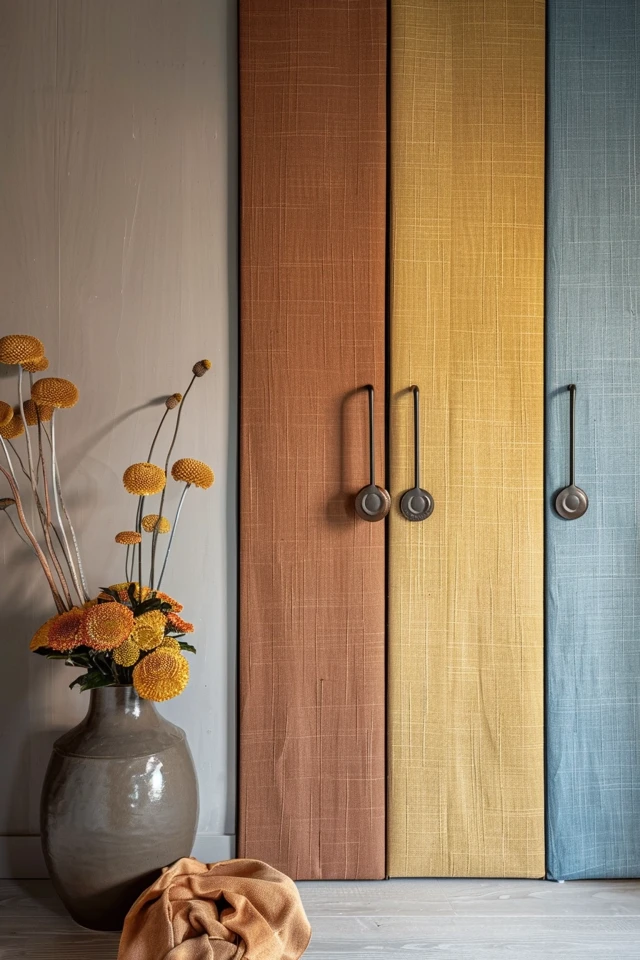
Creative Linen Closet Door Ideas to Refresh Your Space
The linen closet is often the unsung hero of the home. It holds our softest towels, freshest sheets, and essential toiletries, yet its exterior is frequently neglected. Most homeowners settle for the standard, builder-grade door that came with the house, missing a prime opportunity to add character to a hallway or bathroom.
Refreshing your linen closet door can completely change the energy of a transition space. If you are looking for visual inspiration to match these design tips, make sure to browse our extensive Picture Gallery at the bottom of this blog post. Transforming this small footprint into a design feature is one of the most cost-effective ways to elevate your interior aesthetic.
At-a-Glance: Key Takeaways
- Function First: Linen closets require ventilation to prevent musty odors in towels and bedding.
- Space Optimization: Sliding and bifold doors are best for narrow hallways where a swinging door would block traffic.
- Aesthetic Impact: Hardware and paint color can make a basic door look custom-made.
- Hidden Potential: Mirrored or glass-front doors can make a small, dark hallway feel significantly larger and brighter.
- Consistency: While the door can be a statement piece, it should still share a design language with the surrounding trim and architecture.
What This Style Refresh Means (and Who It Is For)
A linen closet door refresh is about more than just a new coat of paint. It is an intentional design choice that signals a well-cared-for home. This project is for the homeowner who feels their hallway is a “dead zone” of blank walls and generic white doors. It is for the renter who wants to add personality without permanent structural changes. It is also for the organizational enthusiast who wants their storage to look as good as it functions.
Choosing a creative door style allows you to bridge the gap between different rooms. For example, a linen closet located between a primary bedroom and a bathroom can act as a stylistic “handshake” between those two spaces. By selecting materials like natural wood, frosted glass, or even high-quality textiles, you are telling a cohesive story about your home’s personality. This refresh is perfect for anyone looking to maximize every square inch of their property’s design potential.
The Signature Look: Ingredients That Make It Work
To move away from a “utility” look and toward a “designed” look, you need to focus on specific ingredients. In my experience as a designer, the difference between a DIY project and a professional-grade installation lies in the details. Here are the core elements that create a signature look for a linen closet.
Ventilation Elements
Linens are organic materials that can trap moisture. Louvered doors, which feature horizontal slats, are the gold standard for linen closets because they allow air to circulate. If you prefer a more modern look, consider decorative metal mesh inserts or cane webbing. These materials provide the necessary airflow while adding a layer of texture that flat panels simply cannot provide.
High-End Hardware
Think of hardware as the jewelry of the door. A standard round silver knob is functional, but a knurled brass lever or a hand-forged iron pull adds a tactile luxury every time you reach for a towel. For bifold doors, upgrading the flimsy stock knobs to oversized back-to-back pulls can make the entire unit feel more substantial and expensive.
Intentional Color and Finish
Don’t feel obligated to match the door to the wall color. A linen closet is a great place to experiment with a “moody” accent color like charcoal, navy, or olive green. If you prefer a classic look, a crisp white door in a semi-gloss finish reflects light and suggests cleanliness. The finish is vital; I always recommend a satin or semi-gloss for closet doors because they are easier to wipe down than flat or eggshell paints.
Layout and Proportions: Designer Rules of Thumb
Before you purchase a new door or start a renovation, you must understand the mathematics of the space. Doorways in hallways are subject to strict “traffic flow” rules. If you ignore these, you will end up with a beautiful door that is a daily frustration to use.
- The 36-Inch Rule: In a hallway, you generally want at least 36 inches of clearance for a swinging door. If your hallway is only 40 inches wide, a standard 24-inch swinging door will leave only 16 inches of space for you to stand while opening it. In this case, a bifold or sliding door is a much better choice.
- The 1/8-Inch Gap: When hanging a new door, aim for a 1/8-inch gap on the top and sides, and a 1/2-inch to 3/4-inch gap at the bottom. The bottom gap is essential for air exchange, especially if the closet doesn’t have its own HVAC vent.
- Hardware Placement: For a standard 80-inch door, the center of the doorknob should be exactly 36 inches from the floor. For vertical pulls, I like to align the top of the handle with the middle rail of a shaker-style door to maintain visual symmetry.
- Scale and Stile Width: If you are choosing a shaker-style door, ensure the “stiles” (the vertical side pieces) are at least 2.5 to 3 inches wide. Anything thinner can look flimsy, especially on taller doors.
Designer’s Note: One of the most common mistakes I see in smaller homes is the use of heavy, solid-core doors for linen closets in very narrow corridors. While solid wood feels luxurious, the weight can cause the hinges to sag over time if the framing isn’t reinforced. If you’re a DIYer, look for “hollow-core premium” doors that offer the look of solid wood without the structural strain.
Step-by-Step: How to Recreate This Look
Whether you are replacing the door entirely or giving your current one a facelift, follow these steps to ensure a professional result.
- Audit Your Clearance: Stand in front of your closet and open the current door. Mark the floor where the door ends. Does it hit a bathroom door? Does it block the path to the bedroom? If so, decide now if you want to switch to a sliding barn door or a bifold system.
- Measure Three Times: Measure the “rough opening” (the space inside the frame) at the top, middle, and bottom. Houses settle, and frames are rarely perfectly square. Use the smallest measurement when ordering a pre-hung door.
- Prep the Surface: If painting, remove all hardware first. Sand the door with 120-grit sandpaper to remove the previous finish’s sheen. This ensures the new paint bonds properly.
- Choose Your “Insert”: if you’re modifying a flat-panel door, consider cutting out the center and adding a material like cane webbing or frosted glass. Use a jigsaw for the cutouts and secure the inserts from the back with decorative molding.
- Install with Precision: When hanging the door, use shims to ensure the door is “plumb” (perfectly vertical). A door that isn’t plumb will either swing shut on its own or stay stubbornly open.
- Upgrade the Trim: Often, the door looks bad because the casing (the trim around the frame) is too thin. Installing a 3.5-inch mitered casing can give a $100 door a $1,000 custom look.
Budget Breakdown: Low / Mid / Splurge
You can refresh your linen closet door regardless of your budget. Here is how I categorize the costs for my clients.
Low Budget ($50–$150)
Focus on “The Power of Paint.” A quart of high-quality cabinet paint and a set of modern brass handles can work wonders. Alternatively, you can remove the door entirely and install a heavy-weight linen curtain on a tension rod. This adds softness to the hallway and is a great solution for renters who can’t change the hardware.
Mid-Range ($200–$600)
This budget allows for a door replacement. You can purchase a high-quality bifold louvered door or a standard shaker-style door. This price range also covers the cost of a DIY barn door kit. You can find beautiful hardware tracks for around $100 and a solid-core door for $200, leaving room for paint and supplies.
Splurge ($800–$2,000+)
At this level, you are looking at custom carpentry. This might include a “hidden” or “jib” door that is flush-mounted to the wall and covered in wallpaper to match the room perfectly. You could also opt for custom-made steel and glass doors for a modern industrial look, or a pair of antique French doors sourced from an architectural salvage yard.
Common Mistakes (and How to Fix Them)
Even with the best intentions, closet refreshes can go wrong. Here are the pitfalls to avoid.
- Mistake: Choosing the wrong swing direction. If the door opens into a high-traffic path, it will constantly be in the way.
Fix: Re-hang the door so it swings “in” toward a wall, or switch to a bifold that takes up half the floor space when open.
- Mistake: Overlooking the interior. A beautiful door that opens to reveal a chaotic mess is a design failure.
Fix: If you are using glass or mesh inserts, you must organize the interior. Use matching baskets, roll your towels “spa-style,” and use uniform labels.
- Mistake: Poor paint durability. Using a “flat” paint on a door that gets touched every day leads to permanent scuffs and fingerprints.
Fix: Always use a dedicated “trim and cabinet” paint. These are formulated to dry harder and resist oils from skin.
- Mistake: Ignoring the “Reveal.” This is the small gap between the door and the frame. If it’s uneven, the door looks DIY.
Fix: Use long hinge screws to “pull” the door toward the frame or adjust the shims until the gap is uniform all the way around.
Room-by-Room Variations
The “right” door depends heavily on where the linen closet is located. Each room has different requirements for moisture, noise, and aesthetics.
The Hallway Linen Closet
In a hallway, the goal is often to make the door disappear or to make it a piece of art. Sliding barn doors are popular here because they don’t impede foot traffic. If your hallway is dark, a mirrored door can act as a giant light reflector, making the space feel much less claustrophobic.
The Bathroom Linen Closet
In the bathroom, moisture is your biggest enemy. Avoid raw wood or cheap MDF (medium-density fiberboard) that isn’t properly sealed, as it will swell and warp. Louvered doors are excellent here to help towels dry out. Frosted glass is also a great choice because it provides privacy for your toiletries while still looking sleek and moisture-resistant.
The Laundry Room Linen Closet
This closet often holds heavy blankets or bulk supplies. Since laundry rooms can be noisy, a solid-core door can help dampen the sound of the machines. If you want a bit of style, consider a “Dutch door” (a door split horizontally in the middle). You can keep the bottom closed to hide floor-level clutter while keeping the top open to easily toss in folded sheets.
Finish and Styling Checklist
Before you consider the project finished, go through this designer’s checklist to ensure every detail is addressed.
- Hinge Coordination: Do your hinges match your doorknob? If you have a black handle and old brass hinges, it will look disjointed. Ensure all metals are consistent.
- The “Silence” Test: Apply small felt bumpers to the inside of the door frame. This prevents that loud “clack” when the door is closed, giving it a soft-close, high-end feel.
- Lighting: Does the closet have an interior light? If not, consider adding a battery-operated motion-sensor LED strip inside the door frame. It makes finding that last pillowcase much easier.
- Trim Paint: Did you paint the “jamb” (the inside of the frame)? When the door is open, the interior frame should match either the door or the wall for a finished look.
- Scent: It’s a linen closet, after all. A cedar block or a small sachet of lavender hanging on the inside of the door adds a sensory layer to your design refresh.
What I Would Do in a Real Project: A Designer’s Checklist
If I were managing this for a client, here is the exact workflow I would follow to ensure success:
- Assess the floor material. If installing a barn door, ensure the floor is level so the door doesn’t slide open on its own.
- Check for wall obstructions. Look for light switches or thermostats that might be covered if you choose a sliding door.
- Select hardware that complements the rest of the floor. If the bedroom doors have lever handles, I would stick with a lever for the linen closet to maintain a “whole-house” feel.
- Verify the weight capacity of the hinges. If switching from a hollow-core to a solid wood door, I would upgrade to three 3.5-inch ball-bearing hinges.
- Coordinate the interior shelf color. I often paint the interior of the closet a lighter shade of the door color to create a “jewelry box” effect when opened.
FAQs
Do linen closet doors need to have vents?
While not strictly required by building codes, ventilation is highly recommended. Linens can hold onto ambient moisture from bathrooms. If a closet is completely airtight, that moisture can lead to a musty smell. Louvers or a healthy gap at the bottom of the door are the best solutions.
Can I use a sliding barn door for a small linen closet?
Yes, but you need “return space.” A barn door requires a section of wall next to the opening that is as wide as the door itself. If you have a 24-inch opening, you need 24 inches of empty wall space for the door to slide over. If you don’t have that, a bifold or “accordion” style is a better alternative.
Should I use glass doors if my closet is messy?
I only recommend clear glass if you are a “pro-level” organizer. For most people, frosted, reeded, or fluted glass is a better choice. It allows light through and looks beautiful, but it blurs the contents so your mismatched towel collection stays hidden.
How do I make a cheap bifold door look more expensive?
The best trick is to replace the standard hardware with something oversized and high-quality. You can also add “moulding” to the flat panels of the bifold to give it a recessed-panel look. Finally, ensure the track is clean and well-lubricated; a door that slides smoothly always feels more expensive than one that sticks.
Conclusion
Refreshing your linen closet door is a small project that yields a massive return on investment for your home’s overall feel. By moving beyond the standard utility door and embracing materials like louvered wood, textured glass, or bold paint colors, you transform a functional necessity into a design highlight. Remember to prioritize ventilation and traffic flow, and don’t be afraid to let your personal style shine through your hardware and finish choices.
With the right proportions and a bit of designer-level attention to detail, your hallway or bathroom will feel more cohesive, organized, and intentional. A well-designed door doesn’t just hide your sheets; it frames your home’s aesthetic and makes the daily task of grabbing a fresh towel just a little bit more pleasant.
Picture Gallery


