
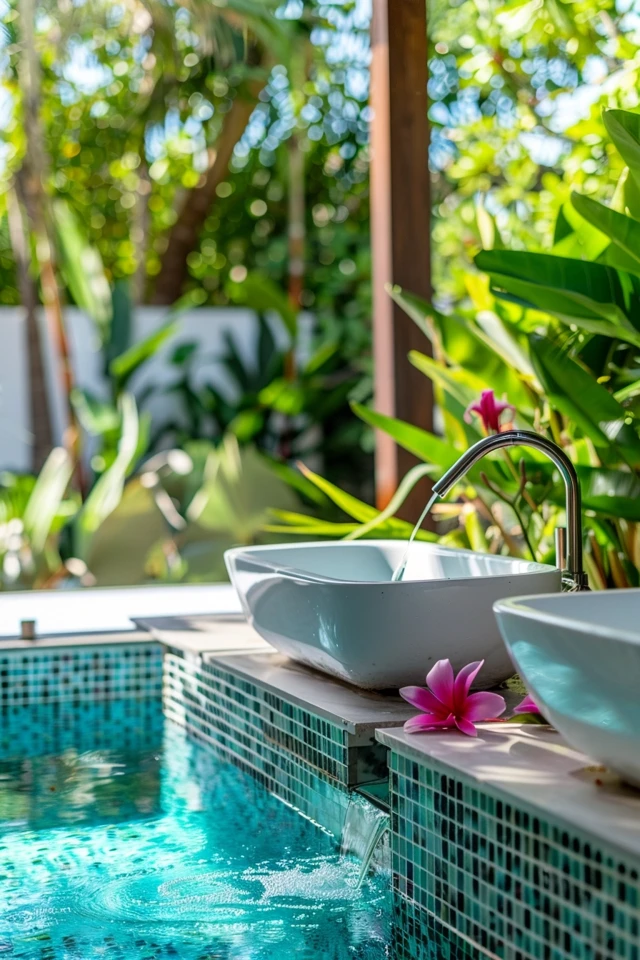
Creative Outdoor Pool Bathroom Inspirations
There is nothing quite like the feeling of a warm summer day spent by the pool, soaking up the sun and enjoying the water. However, that relaxation often ends abruptly when guests need to use the restroom and track chlorinated water through your hardwood floors and living room rugs. This is exactly why a dedicated pool bathroom is one of the most functional upgrades you can make to your outdoor living space.
A well-designed pool bath serves as a bridge between the rugged outdoors and the comfort of the indoors, balancing durability with high-end design. It requires a specific approach to materials and layout that differs significantly from a standard master bathroom or powder room. You need spaces that can handle dripping swimsuits, humidity, and direct sunlight without sacrificing style.
In this guide, we will explore practical design strategies, material selections, and layout hacks to create a space that feels like a luxury resort cabana. Be sure to check out our complete picture gallery at the end of this post for visual inspiration on these pool bathroom concepts. Let’s dive into the specifics of creating a functional and beautiful outdoor oasis.
1. Selecting Materials Built for Exposure and Moisture
The most critical decision in any pool bathroom project is the material palette. Unlike an indoor bathroom where humidity is temporary, a pool bath is often exposed to the elements, temperature fluctuations, and constant standing water.
You must prioritize slip resistance above all aesthetic choices. I always look for floor tiles with a high Coefficient of Friction (COF) or a specific slip rating. In the industry, we look for an R11 rating for outdoor wet areas to ensure safety when barefoot.
Natural stone can be beautiful, but it requires maintenance. If you love the look of travertine or limestone, opt for a honed or tumbled finish rather than polished. Polished stone becomes incredibly dangerous when wet and can etch easily from pool chemicals.
High-quality porcelain pavers are often a better choice for durability. They mimic the look of stone or wood but are impervious to water, resistant to staining, and generally offer better grip. For cabinetry, avoid standard particle board boxes which will swell and rot. Instead, use marine-grade plywood, teak, or high-density polyethylene (HDPE) polymer cabinetry designed for outdoor kitchens.
Designer’s Note: The Grout Factor
A lesson I learned early in my career involves grout discoloration. Standard cement-based grout is porous and will absorb muddy water and pool chemicals, leading to permanent staining within months.
The Fix: Always specify epoxy grout for pool bathrooms. It is stain-resistant, waterproof, and does not require sealing. It costs more upfront, but it keeps the floors looking pristine for years.
2. Layout Strategy: The Wet Path and Transition Zones
The flow of traffic in a pool bathroom needs to be intuitive. You want to minimize the distance a guest travels from the pool deck to the toilet or changing area. If the bathroom is part of the main house structure, it must have direct exterior access.
We create a “wet path” strategy in our floor plans. This means the flooring material from the pool deck should continue seamlessly into the bathroom. A continuous floor plane makes the space feel larger and prevents tripping hazards associated with thresholds.
Space planning here is different than indoor baths. You need more open floor space because people are often entering with towels wrapped around them or carrying pool floats. Aim for a turning radius of at least 60 inches in the center of the room if possible, but never less than 36 inches of clearance between fixtures.
Ventilation is also paramount. These spaces get hot and humid. If you have a shower inside, ensure you install a high-CFM exhaust fan (at least 110 CFM for small spaces) to pull moisture out quickly. Natural cross-ventilation via windows is excellent, but mechanical ventilation is reliable.
Common Mistakes + Fixes
Mistake: Using inward-swinging doors in small cabana baths.
Fix: If the bathroom is small (under 50 square feet), an inward-swinging door can trap a guest inside if they fall, or simply make it hard to move around the toilet. Use a pocket door or an outward-swinging door. If using an outward swing, ensure it has a limiter so it doesn’t slam against the exterior siding in the wind.
3. Fixtures and Hardware: Battling Corrosion
Outdoor environments are harsh on metals. Oxidation and rust can ruin high-end fixtures in a matter of seasons, especially if you live near the coast or use a saltwater pool system. Standard chrome or brushed nickel bathroom fixtures often pit and corrode when exposed to outdoor air and chlorine.
I strictly specify 316-grade stainless steel for outdoor plumbing fixtures. This is “marine grade” steel containing molybdenum, which drastically increases corrosion resistance. If you prefer a warmer tone, living finishes like unlacquered brass are excellent options. They will develop a patina over time, turning brown or green, which adds character and protects the metal underneath.
For the toilet, consider a wall-mounted model. By lifting the bowl off the floor, you make it significantly easier to mop or hose down the entire room. This helps maintain hygiene in a space that sees a lot of foot traffic and dirt.
If you are including a shower, a hand-held sprayer is non-negotiable. It allows guests to rinse off sand, grass, or pool chemicals from their feet and legs without getting their hair wet. Mount the divert valve at a standard height (around 40-44 inches) for easy reach.
Real-World Project Checklist: Winterization
If you live in a climate with freezing temperatures, you cannot treat this plumbing like indoor plumbing.
- Install shut-off valves inside the main conditioned house specifically for the pool bath line.
- Install “blow-out” valves that allow a compressor to clear water from the lines at the end of the season.
- Use frost-proof hose bibs and shower columns if they are exposed on an exterior wall.
4. Lighting and Privacy Controls
Lighting a pool bathroom requires a balance between functionality and ambiance. During the day, you want to maximize natural light to prevent the space from feeling like a damp cave. However, privacy is obviously a major concern.
Skylights are my favorite solution for cabana baths. They flood the room with light without compromising privacy walls. If a skylight isn’t structurally possible, consider clerestory windows. These are long, narrow windows placed high on the wall, usually above 6 feet. They allow light and air in but keep prying eyes out.
For artificial lighting, focus on safety first. All light fixtures in a pool bath should be “damp rated” at a minimum. If the fixture is inside a shower zone or exposed to hose-down cleaning, it must be “wet rated.”
Color temperature matters immensely here. Avoid cool, blue-white daylight bulbs (5000K) which can make wet skin look pallid and the room feel sterile. Stick to a warm white range between 2700K and 3000K. This mimics the warmth of the sun and creates a flattering glow.
Designer’s Note: Sensor Automation
In a pool bath, guests often have wet or sunscreen-covered hands. They do not want to fumble with switches.
The Fix: I install occupancy sensors for both the lights and the exhaust fan. The lights turn on automatically when someone enters, and the fan runs for a set time after they leave to clear humidity. It is a small hygienic detail that clients love.
5. Storage, Styling, and the Resort Vibe
Once the functional shell is built, the styling brings the “resort” feeling to life. The goal is to make the space feel effortless and stocked. You do not want guests running back to the main house for amenities.
Storage needs to be open and accessible. Closed cabinets can trap moisture and smells. I prefer open teak shelving or floating stone vanities with baskets. This allows air to circulate around towels and supplies.
You can never have enough hooks. In a standard bathroom, two hooks might suffice. In a pool bath, you need at least four to six. Place them at varying heights: standard height (60-65 inches) for adults and lower hooks (40-48 inches) for kids. Use oversized, heavy-duty hooks that can hold the weight of a water-logged beach towel.
For decor, bring the landscaping inside. Potted plants that thrive in humidity, like ferns or snake plants, bridge the gap between the garden and the bath. Mirrors should be large to reflect light, but ensure they have a safety backing.
Avoid glass accessories. Soap dispensers, trays, and cups should be made of stone, resin, wood, or metal. Broken glass on a wet tile floor is a disaster scenario we want to avoid completely.
What I’d Do in a Real Project: The Bench Rule
Every pool bath needs a place to sit. Putting on shoes or changing out of a wet swimsuit while balancing on one leg is difficult and dangerous.
- Include a built-in bench or a sturdy, water-resistant teak stool.
- The seat height should be between 17 and 19 inches.
- Place it away from the direct splash zone of the toilet or sink.
Final Checklist for Your Pool Bathroom
Before you break ground or buy tile, run through this summary to ensure you have covered the essentials.
- Slip Check: Is the floor tile rated R11 or specifically textured for wet barefoot traffic?
- Direct Access: Does the layout allow entry from the pool deck without crossing dry interior zones?
- Door Swing: Does the door swing outward or slide into a pocket to save space?
- Material durability: Are you using marine-grade stainless steel and moisture-resistant cabinetry?
- Ventilation: Is the exhaust fan powerful enough (110+ CFM) to combat heavy humidity?
- Drainage: Have you installed a floor drain or linear drain to allow for easy hosing down?
- Lighting: Are fixtures damp/wet rated and set to a warm 3000K temperature?
- Hooks: Have you doubled the amount of towel hooks you think you need?
- Privacy: Are windows placed high (clerestory) or frosted to ensure privacy?
Frequently Asked Questions
How small can a pool bathroom be?
You can fit a functional half-bath (toilet and sink) into a space as small as 20 to 25 square feet. However, if you want a changing area or a shower, you ideally want at least 45 to 60 square feet. This allows enough elbow room to change clothes comfortably without hitting your elbows on the walls.
Does a pool bathroom need air conditioning?
Ideally, yes. While passive ventilation helps, a pool bath can become a mold trap without climate control. If extending the home’s HVAC isn’t possible, a ductless mini-split unit is a highly efficient solution. It also helps dehumidify the space, which preserves your cabinetry and drywall.
Can I just drain the pool bath into the yard?
Generally, no. Most building codes require “black water” (toilet waste) and “gray water” (sink/shower water) to be tied into your home’s main sewer line or septic system. You cannot drain soap and waste into the ground. If the grade is lower than your main line, you will need a sanitary sump pump to lift the waste up to the sewer level.
What is the best paint finish for walls?
Skip the matte and flat paints. They absorb moisture and are hard to wipe down. I recommend a high-quality “bath and spa” paint formulation in a Satin or Semi-Gloss finish. These paints have mildewcides additives that prevent mold growth and create a shell that resists humidity.
Conclusion
Designing an outdoor pool bathroom is about solving problems before they happen. It is about preventing slip-and-fall accidents, managing moisture, and keeping the wet mess out of your main living areas. But beyond the practicalities, it is an opportunity to create a little slice of paradise.
When you choose materials that age gracefully and layout flows that make sense, you add immense value to your property and your lifestyle. Whether you are building a full cabana or converting a small shed, keep the focus on durability and ease of use.
Remember that this space is meant to be enjoyed. It should feel robust enough to handle a pool party of twenty kids, yet elegant enough for a quiet evening swim. With the right planning, your pool bath will become one of the most used and appreciated rooms in your home.
Picture Gallery


