
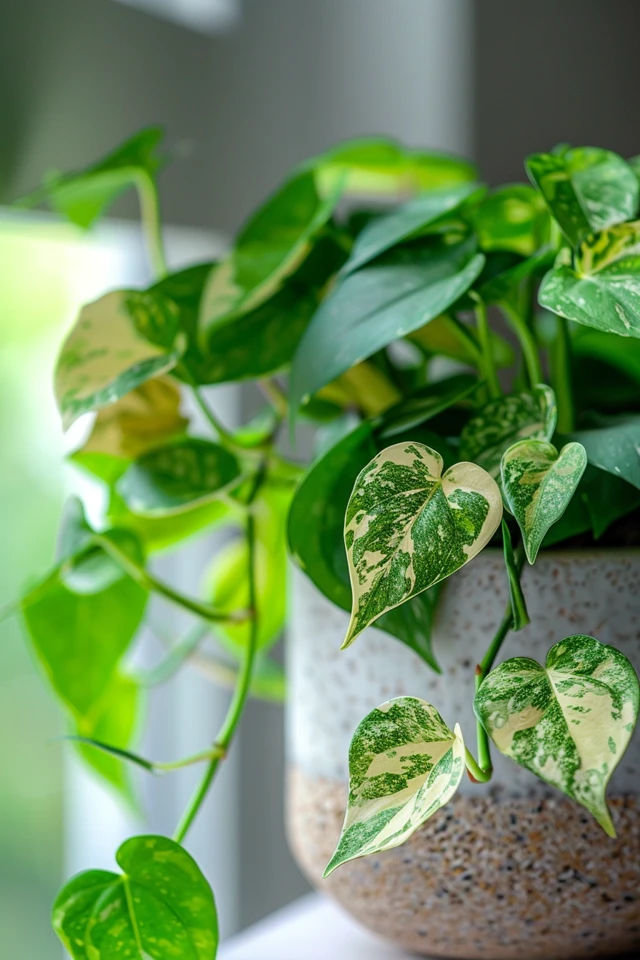
Creative Pothos Climbing Ideas for Your Home Decor
The Golden Pothos, often affectionately called Devil’s Ivy, is frequently the first plant a homeowner buys. It is resilient, grows quickly, and forgives missed waterings. However, many people limit this plant to a simple hanging basket in the corner of a room. As a designer, I see this as a missed opportunity to create a living architectural feature.
When you guide a Pothos to climb, the leaves grow larger and the plant becomes a structural element rather than just an accessory. While reading through these tips, keep in mind that we have curated a stunning Picture Gallery at the end of this blog post to spark your imagination. Treating your vines as a deliberate part of your renovation or styling plan changes the entire energy of a space.
I remember a project where a client had a long, sterile hallway with no room for furniture. We utilized climbing Pothos to create a “green tunnel” effect along the ceiling cornices. It transformed a dead space into a biophilic experience without sacrificing a single inch of floor space.
1. The Invisible Trellis: Creating Floating Greenery
One of the most requested looks in modern organic design is the “floating vine.” This technique makes it appear as though the plant is naturally adhering to the wall without visible hardware. This is perfect for minimalism or Scandinavian-inspired interiors where clutter is the enemy.
To achieve this, avoid using standard tape or large, clunky nails. I recommend using clear adhesive cable clips or small transparent command hooks. These are generally rental-friendly and disappear visually once the foliage grows in.
Designer’s Note: The Tension Trick
A common mistake I see is placing hooks too far apart, resulting in sagging vines that look messy. In my projects, I space supports every 12 to 15 inches. This creates a taut, purposeful line rather than a droopy wave.
Step-by-Step Implementation:
- Map your path: Use painter’s tape to visualize the growth pattern before sticking anything to the wall.
- Clean the surface: Adhesive hooks fail if there is dust or grease on the paint. Wipe with isopropyl alcohol first.
- Create the anchor: Place the pot on a sturdy surface or a wall-mounted planter. The base must be secure before you begin training the vines.
- Guide, don’t force: Gently twist the vine into the hook. If the stem is thick, use a loose zip tie (green or clear) to secure it without crushing the plant tissue.
If you prefer a more industrial or eclectic look, you can use brass nails. Hammer them in halfway and bend the nail head upward to create a catch. The gold tone of the brass contrasts beautifully with the emerald green of the Pothos.
2. Framing Architecture: Windows and Mirrors
Architectural features like windows, doorways, and large mirrors are natural focal points. Framing them with living greenery softens hard edges and adds depth to the room. This is particularly effective in new-build homes that may lack vintage character or intricate molding.
When framing a window, you must consider the lighting conditions. Pothos loves bright, indirect light, but scorching direct sun through glass can burn the leaves. Ideally, use a North or East-facing window for this application.
Common Mistakes + Fixes
Mistake: Letting vines block the light source.
Fix: Train the vines strictly along the casing or molding. I usually leave a 2-inch gap between the vine and the actual glass to prevent temperature shock during winter and to keep the window functional.
For mirrors, the reflection doubles the visual impact of the greenery. I often place a planter on one side of a floor mirror and train the vines up and over the arch. This creates a secret garden vibe that makes a bedroom feel instantly more relaxing.
Measurements to Know:
- Mirror Size: Ensure your mirror is substantial enough. I rarely use this technique on mirrors smaller than 24×36 inches, as the plant can overwhelm the glass.
- Vine Length: You need a mature plant for this. Look for vines that are at least 4 to 6 feet long to start, or be prepared to wait a year for the look to complete.
3. Vertical Dividers and Privacy Screens
In open-concept layouts or studio apartments, defining zones is essential. Instead of buying a standard folding screen or a bulky bookshelf, you can create a living wall divider. This filters light while providing visual separation between a living area and a workspace.
For this application, you need a freestanding trellis or a tension-rod system. I frequently use floor-to-ceiling tension rods tailored for plants. You place a rectangular planter box at the base and run the vines up the vertical supports.
Material Selection:
For a mid-century modern look, choose a wood slat trellis. For an industrial loft, use a metal wire grid. The Pothos will weave itself through the gaps, eventually creating a dense screen.
What I’d do in a real project:
If I were designing a home office nook in a living room, I would use a rolling garment rack or a dedicated plant stand with a high bar. I would hang hanging planters from the top bar and let the vines cascade down, while placing potted Pothos at the bottom to climb up. This “meet in the middle” strategy creates a full screen twice as fast.
This method is also much safer for walls. Pothos aerial roots can attach to drywall and peel paint upon removal. By using a freestanding structure, you protect the landlord’s property while maximizing your vertical greenery.
4. The Ceiling Canopy: Drawing the Eye Up
Low ceilings can make a room feel claustrophobic. One of the oldest design tricks to combat this is drawing the eye upward. While paint and crown molding work, a Pothos ceiling traverse creates a whimsical, greenhouse atmosphere.
To execute this, you need to install hooks directly into the ceiling joists or use high-strength toggle bolts in the drywall. Safety is paramount here; a wet plant pot is heavy, but the vines themselves are relatively light.
Styling the Swag:
Don’t pull the vines tight against the ceiling. Allow for a “swag” or a gentle curve between hooks. This mimics how vines grow in the rainforest canopy and feels more organic.
Design Rule of Thumb: Clearance Heights
If you are traversing vines across a walkway, ensure the lowest point of the swag is at least 80 inches (6’8″) off the floor. Standard door height is 80 inches, so this ensures tall guests won’t get tangled in your decor. If the vines are over a dining table or coffee table, you can drop them lower, to about 60 inches from the floor, to create an intimate dining experience.
Lighting Considerations:
Ceilings are often the darkest part of the room. If your ceiling doesn’t get bounce light from windows, you may need to install a track light or a pendant light with a grow bulb directed at the foliage. Without light, the leaves on the ceiling will shrink and eventually drop, leaving you with bare, stringy stems.
5. Staircase and Railing Integration
Staircases are often transitional spaces that get ignored. Adding climbing Pothos to a banister or railing brings energy to the circulation areas of your home. The contrast of organic leaves against the linear spindles of a staircase is visually striking.
However, this high-traffic area requires strict management. You cannot simply wrap the vine around the handrail. This is a safety hazard, as people need a smooth surface to grip while descending stairs.
The Correct Placement:
Weave the Pothos through the vertical spindles (balusters) or along the outer stringer (the side of the stair structure). Never obstruct the top rail.
Pet and Child Safety Warning:
This is the most crucial constraint for staircases. Pothos are toxic to cats and dogs if ingested. If you have pets that roam the stairs, do not use this method. If you have small children, ensure the plant pots are secured at the top landing or mounted high on the wall, well out of reach of curious hands.
Maintenance Check:
Staircase plants are easy to forget when watering. I recommend using self-watering pots for these locations or setting a recurring calendar reminder specifically for “Staircase Pothos.”
Final Checklist: Executing the Look
Before you start hammering hooks, review this checklist to ensure your project succeeds long-term. This is the exact mental process I use when assessing a client’s space for climbing plants.
- Light Audit: Does the wall or ceiling receive enough indirect light? (You should be able to read a book comfortably in that spot at midday without artificial light).
- Structural Integrity: Are you attaching to drywall, plaster, or wood? Have you bought the correct anchors for that material?
- Watering Access: Can you reach the pot easily? If you need a ladder to water it every week, you will likely stop doing it.
- Traffic Flow: Will the vines snag on clothing, backpacks, or opening doors?
- Pot Size: Is the pot large enough to support a year of growth? Repotting a climbing plant that is attached to a wall is a nightmare. Start with a pot slightly larger than you think you need.
- Aesthetics: Have you chosen a hardware color (hooks/nails) that matches your wall or blends with the plant stems?
FAQs
Will Pothos roots damage my wall paint?
They can. Pothos produce aerial roots to grip surfaces. If they latch onto drywall, they can peel the paper and paint when removed. To prevent this, check the vines monthly and gently detach any aerial roots trying to dig in. Rely on your hooks for support, not the plant’s roots.
How do I water a plant that is trailing across the ceiling?
I recommend using a long-spout watering can or a pump sprayer wand. However, the best preventative measure is to place the pot on a shelf or hook that is accessible, even if the vines travel far away. Never secure the pot permanently; you may need to take it down for deep soaking or pest treatment.
My climbing Pothos looks “leggy” and bare. What do I do?
Legginess is usually caused by low light. The plant stretches to find the sun, increasing the space between leaves (internodes). Move the base plant closer to a light source. To fix the existing vine, you can “keiki paste” (a cloning paste) on the nodes to stimulate new growth, or cut it back to encourage branching.
Can I use artificial lights for wall-climbing Pothos?
Absolutely. In fact, using a warm-white grow light bulb in a standard track light or sconce can turn your climbing vine into a dramatic evening feature. It keeps the plant healthy and creates beautiful shadows on the wall.
Conclusion
Integrating climbing Pothos into your home decor is more than just a gardening task; it is an interior design strategy that adds life, texture, and softness to a room. Whether you choose to frame a sunny window, create a privacy screen, or let vines float across your ceiling, the key is planning.
By using the right hardware, respecting the scale of your room, and considering practical constraints like lighting and safety, you can achieve that lush, “lived-in” designer look. Start with one area, perhaps a corner reading nook or a bare doorframe, and let the plant guide you. As the vines grow, so will your confidence in managing living decor.
Picture Gallery


