
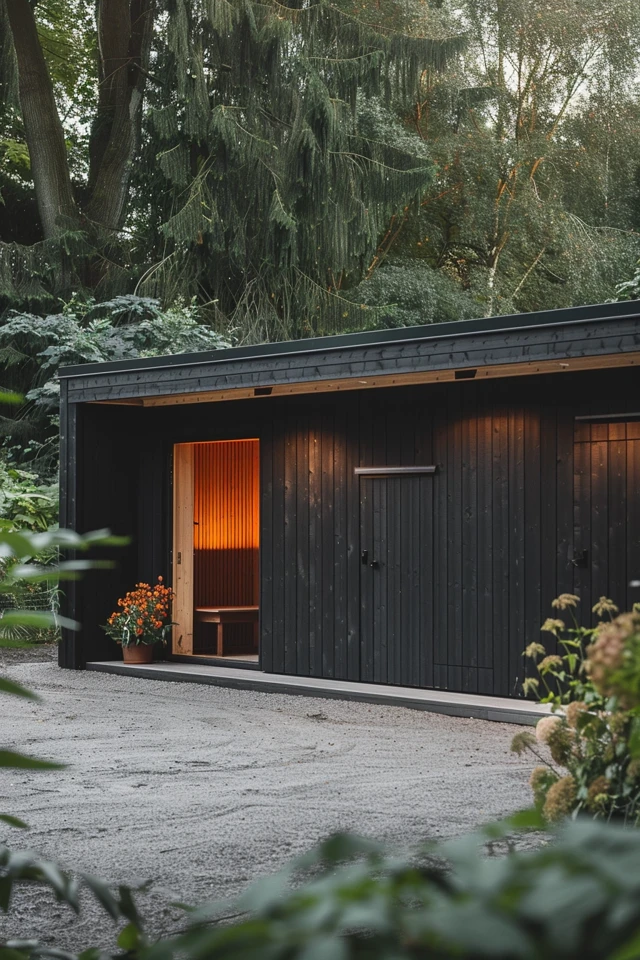
Creative Shed Workshop Ideas for Your Backyard
Turning a backyard shed into a dedicated workshop is one of the most rewarding home improvement projects you can undertake. It frees up your garage, keeps noise and dust out of the main house, and gives you a sanctuary for focus and creativity. Whether you are into woodworking, pottery, jewelry making, or simply need a space for home repairs, the principles of good design apply just as strictly here as they do in a living room.
Many homeowners treat sheds as an afterthought, purchasing a pre-fab shell and immediately filling it with boxes. However, with intentional planning regarding scale, lighting, and insulation, a shed can become a high-functioning extension of your home’s square footage. It requires a balance of rugged durability and ergonomic design to ensure the space is actually usable year-round.
For those looking for visual examples of layouts and finishes, make sure to look at the Picture Gallery at the end of this blog post.
1. Strategic Layout and Zoning Principles
The most common failure in shed workshops is a lack of defined zoning. When working with small footprints—typically between 80 to 120 square feet—every inch must have a specific purpose. In interior design, we use the “kitchen work triangle” concept, and I apply a similar logic here: the triangle of Assembly, Storage, and Waste Management.
Start by placing your primary workbench. Ideally, this should be positioned under a window to capitalize on natural light, but never at the expense of wall storage. A standard standing workbench height is between 36 and 38 inches. If you are taller than 6 feet, push that to 40 inches to prevent back strain. Ensure you have at least 36 inches of clearance behind where you stand. If you plan to move large materials like plywood sheets, you ideally want a 48-inch turning radius in the center of the room.
Zoning also involves vertical hierarchy. Items used daily (hammers, tape measures, drills) should be within the “strike zone”—the area between your knees and shoulders. Heavy equipment sits below, and rarely used seasonal items go high up near the rafters. If you are dealing with a standard 8×10 or 10×12 shed, avoid U-shaped bench layouts unless the shed is wider than 10 feet. A U-shape in a narrow shed creates a claustrophobic “cockpit” that limits your ability to maneuver long workpieces.
Designer’s Note:
A common issue I see is the “perimeter trap.” Homeowners line every wall with deep 24-inch benches, leaving a tiny strip of floor in the middle. Instead, use one deep bench (24-30 inches) for your main station and shallower 12-inch shelves or flip-up tables on the opposite wall. This maintains your circulation path.
Common Mistakes + Fixes:
- Mistake: Blocking the entrance with large tools.
- Fix: Keep the first 3 feet inside the door completely clear. This is your landing zone and makes the space feel larger immediately upon entry.
- Mistake: Ignoring swing radius.
- Fix: If you have casement windows or inward-swinging doors, tape out their swing path on the floor before buying cabinets to ensure no collisions occur.
2. Lighting Plans for Precision and Safety
Lighting a workshop is technical. It is not about ambiance; it is about safety, color accuracy, and reducing eye strain. In a standard room, we might aim for 20 lumens per square foot. In a workshop, you need to target 70 to 100 lumens per square foot. If your shed is 100 square feet, you are looking for a total output of roughly 7,000 to 10,000 lumens.
The placement of fixtures matters more than the brightness. A single center light is the worst possible choice for a workshop because your body blocks the light when you lean over the bench, creating shadows exactly where you are working. You need linear LED strip lights positioned directly above the front edge of your workbench. This casts light down and back toward the wall, illuminating your hands without shadows.
Color temperature is equally critical. For a workshop, avoid “warm white” (2700K) bulbs, which can make finishes look yellow and induce drowsiness. Aim for 4000K to 5000K (Cool White or Daylight). This range mimics natural sunlight and keeps you alert. If you do any painting or staining in the shed, look for bulbs with a high CRI (Color Rendering Index) of 90 or above to ensure you are seeing true colors.
What I’d do in a real project:
- General Lighting: Two 4-foot LED shop lights centered in the ceiling for ambient wash.
- Task Lighting: Articulating arm lamps mounted to the wall (not clamped to the desk, which shakes) for detailed work.
- Switch Placement: Ensure the switch is reachable without stepping fully inside. I often specify motion-sensor switches for sheds so you aren’t fumbling in the dark while carrying materials.
3. Interior Cladding and Insulation
If you want your tools to rust and your paint to freeze, skip insulation. If you want a usable workspace, climate control is mandatory. A raw shed usually consists of studs and exterior siding. To finish the interior, I recommend Rockwool insulation over fiberglass. Rockwool is hydrophobic (repels water), fire-resistant, and offers superior sound deadening—a huge plus if you use power tools and have neighbors close by.
For wall cladding, drywall is the standard choice for a clean look, but it is fragile in a workshop environment. A dent from a swinging board is hard to fix. For a more durable and functional finish, I prefer using 1/2-inch or 5/8-inch ACX plywood or OSB (Oriented Strand Board) painted white.
Plywood walls allow you to mount hooks, shelves, and cabinets anywhere without hunting for studs. Painting the wood white is crucial for light reflectivity. Raw wood walls soak up light, making the space feel like a cave. High-gloss or semi-gloss white paint reflects your expensive LED lighting around the room, making the small space feel airy and professional.
Designer’s Note:
Don’t forget the floor. Concrete slabs are cold and hard on the joints. I rarely recommend bare concrete for a workspace. Interlocking rubber tiles or a high-quality epoxy coating are good options. However, if you are doing heavy assembly, a floating engineered wood floor or a subfloor with plywood provides a little “give,” which saves your back and prevents dropped tools from shattering.
Common Mistakes + Fixes:
- Mistake: Sealing the room too tightly without ventilation.
- Fix: If you insulate, you must ventilate. Install a ridge vent or a through-wall exhaust fan to manage moisture and fumes.
- Mistake: Using dark flooring.
- Fix: Small screws and parts disappear on dark grey or black floors. Choose a light grey or tan floor color to make dropped items easy to spot.
4. Vertical Storage and Organization Systems
In a shed, floor space is premium real estate. Everything that can go on a wall, should go on a wall. However, static shelving is often a mistake because your workflow changes over time. Flexibility is the priority. This is why the French Cleat system is the gold standard for workshops.
A French Cleat consists of plywood strips cut at a 45-degree angle attached to the wall. You can build custom holders for drills, tape, sandpaper, or bins that hook onto these cleats. This allows you to rearrange your entire wall layout in minutes without unscrewing anything. It transforms your walls into a dynamic tool palette.
If you prefer a cleaner aesthetic suitable for a dual-purpose studio (perhaps a workshop that doubles as an office), look into slatwall panels. Used in retail displays, slatwalls are durable, look finished, and take a variety of hooks and baskets. Avoid cheap fiberboard pegboard; it warps with humidity. If you want pegboard, invest in galvanized steel panels.
Storage Depth Rules of Thumb:
- Upper Cabinets: Keep these 12 inches deep or less. Anything deeper creates a “tunnel effect” over your workspace and invites head bumps.
- Open Shelving: Use lip-edges on shelves to prevent jars or tools from vibrating off when heavy machinery is running.
- Ceiling Storage: Use the space between rafters for lumber or PVC pipe storage, but ensure you maintain 80 inches of head clearance in walking zones.
5. Power, Connectivity, and Tech Integration
A single extension cord running from the house is not a long-term solution. It is a fire hazard and creates voltage drops that can damage expensive tools. You need a dedicated sub-panel in the shed, ideally with at least 60 amps of service. This allows you to run lights, a heater or AC unit, and power tools simultaneously without tripping breakers.
Outlet placement requires foresight. In a home, code dictates outlets every 12 feet near the floor. In a workshop, floor outlets are useless because they get blocked by benches. Install outlets 44 to 48 inches off the floor (above bench height). I recommend quad-receptacles (four plugs) every 4 feet along the workbench wall. You will always have more things to plug in than you think: battery chargers, task lights, heat guns, and speakers.
Designer’s Note:
We live in a connected world. If your Wi-Fi router is in the front of your main house, the signal likely won’t reach the backyard shed. Install a mesh Wi-Fi extender or run a hardline CAT6 ethernet cable through the trench with your electrical conduit. Having internet access allows you to look up tutorials, order parts, or stream music while you work, making the space infinitely more usable.
Common Mistakes + Fixes:
- Mistake: Putting outlets directly behind heavy machinery.
- Fix: Place outlets to the side of where stationary tools (like a miter saw) will sit so you can easily unplug them for blade changes.
- Mistake: Ignoring dust collection power needs.
- Fix: If you plan to use a shop vac or dust extractor, give it a dedicated circuit so it doesn’t trip the breaker when your saw turns on.
Final Checklist: What I’d Do in a Real Project
If I were managing your shed renovation, this is the order of operations I would follow to ensure nothing is missed:
- Define the primary activity: Is it woodworking (dusty), electronics (clean), or potting (wet)? This dictates flooring and ventilation.
- Tape the layout: physically use painter’s tape on the floor to mark the bench, tool stands, and door swing. Walk through it.
- Run the trench: Dig once. Put electrical and ethernet in the ground before you close up walls.
- Insulate and Clad: Use Rockwool and plywood. Paint it high-gloss white.
- Install Lighting: Do this before bringing in benches so you can use a ladder easily. Aim for 5000K temperature.
- Build the “Bones”: Install the main workbench and French cleat walls.
- Add Comfort: Install the heater/AC unit and lay down anti-fatigue mats.
- Move in Tools: Only bring in what you use. Avoid using the shed as overflow storage for household junk.
FAQs
Do I need a permit for a backyard workshop shed?
In most US municipalities, sheds under a certain size (often 100 or 120 square feet) do not require a building permit for the structure itself. However, as soon as you add permanent electrical wiring or plumbing, a trade permit is almost always required. Always check your local zoning laws and HOA guidelines regarding height and setbacks from the property line.
How much does it cost to convert a shed into a workshop?
If you already have the shell, a full interior fit-out (insulation, electrical, walls, flooring, cabinetry) typically ranges from $2,500 to $6,000 depending on DIY labor versus hiring pros. The biggest line items are usually the electrical sub-panel trenching and the insulation.
How do I secure my tools in a backyard shed?
Security is a major concern. Use solid-core doors rather than hollow-core. Install a deadbolt, not just a locking handle. Motion-sensor floodlights on the exterior are a great deterrent. I also recommend covering windows with translucent security film—it lets light in but prevents people from seeing expensive tools inside.
Can I use a portable heater instead of installing one?
For occasional use, an oil-filled radiator is safe and effective. However, avoid open-coil space heaters in workshops where sawdust or flammable finishes are present. If you are in the space frequently, a mini-split heat pump is the most efficient and safest option, providing both heat and air conditioning.
Conclusion
Creating a workshop in your backyard is about more than just finding a place to park a saw. It is about intentionally designing a space that fosters focus and respects the work you do. By applying interior design principles—zoning, lighting hierarchy, and material durability—you can transform a simple shed into the most productive room on your property.
Remember that a workshop is a living space. It will evolve as your skills and tools change. Start with a strong foundation of good lighting, ample power, and versatile wall storage, and the space will serve you for years to come.
Picture Gallery
(LEAVE EMPTY, DO NOT ADD ANY TEXT HERE WHATSOEVER)


