
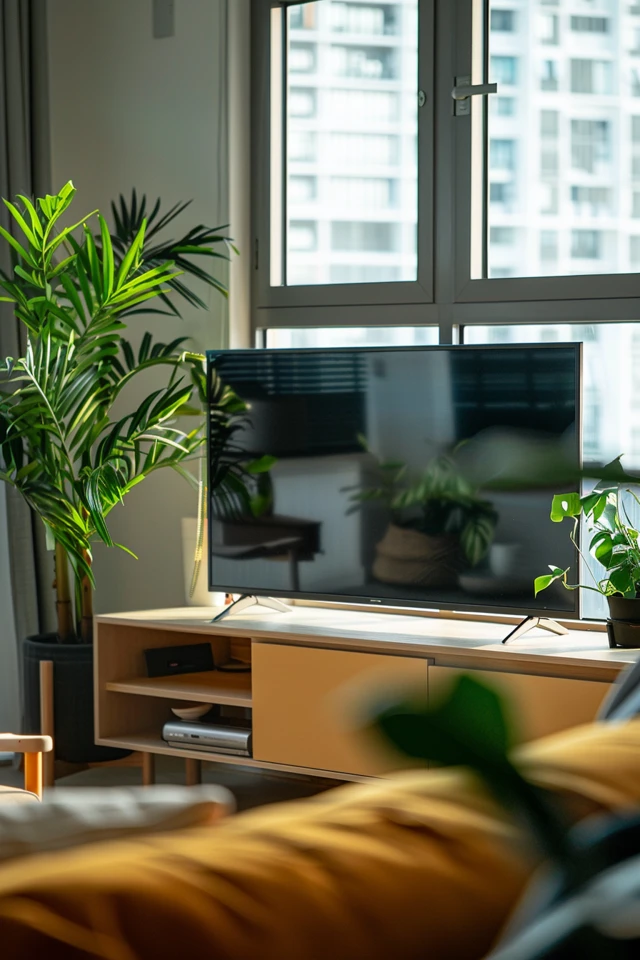
Title: Creative TV Placement: In Front of Window Ideas
Introduction
In the world of interior design, placing a television in front of a window has traditionally been considered a major faux pas. We are taught to prioritize natural light and architectural views above all else, often relegating the TV to a dark, windowless wall. However, in many modern homes, historic apartments, and open-concept spaces, walls are scarce commodities. Sometimes, the “forbidden” spot is actually the most logical choice for flow and functionality.
I have designed countless living rooms where the only viable wall was covered in glass or opening into a dining area. The good news is that breaking this rule can actually result in a sophisticated, layered look if you approach it with intention. It is not about simply plunking a screen in front of a view; it is about balancing technology with natural elements to create a cohesive vignette.
If you are struggling with a tricky layout, fear not. We are going to explore how to make this arrangement look purposeful rather than accidental. For a curated collection of visual examples to inspire your own layout, be sure to scroll down to the Picture Gallery at the end of this blog post.
1. Assessing Light and Orientation
Before you move a single piece of furniture, you need to understand the light in your room. Not all windows are created equal. Placing a TV in front of a north-facing window is significantly easier than placing one facing west, where the setting sun can create blinding silhouettes.
The primary concern here is contrast. If the window is incredibly bright and the TV is dark, your eyes will strain to adjust between the two. This is similar to looking at a headlight in the dark. To combat this, you need to manage the incoming lumens.
Designer’s Note: The Contrast Trap
A common issue I see is homeowners placing a standard LED TV in front of a south-facing window without upgrading the screen brightness. The result is a washed-out image during the day.
The Fix: Check your TV’s settings. Modern TVs have “dynamic” or “bright room” modes. If you are in the market for a new one, look for high “nit” counts (brightness levels) or anti-glare screens specifically designed for bright rooms.
You also need to consider the health of the electronics. Direct sunlight generates heat. If the back of your TV is baking in the sun for four hours a day, you risk shortening its lifespan.
Airflow Rules of Thumb:
- Leave at least 4 to 6 inches of clearance between the back of the TV and the window pane.
- Check the manufacturer’s operating temperature range.
- If the window gets hot to the touch, you absolutely need a window treatment layer between the glass and the device.
2. Selecting the Right Furniture Anchor
The furniture you choose to hold the TV will make or break this look. Because windows usually start 24 to 36 inches off the floor, a standard-height media console often looks clunky. It blocks too much glass and creates a “wall” effect that feels heavy.
In my projects, I prefer low-profile consoles or benches when positioning near glass. You want to maintain as much visible window area as possible to keep the room feeling airy.
Low-Profile Guidelines:
- Height: Aim for a console that is lower than the window sill if possible. If the TV must sit higher, choose a unit with open legs or a floating design to preserve sightlines.
- Width: The console should be wider than the TV by at least 6 to 8 inches on each side. This grounds the TV and prevents it from looking top-heavy against the vertical lines of the window.
- Material: Avoid high-gloss finishes on the console top, as they will reflect the window glare right back at you. Matte wood, stone, or textured finishes work best.
Common Mistake + Fix:
The Mistake: Using a tall, solid cabinet that blocks the lower half of the window completely.
The Fix: Swap it for a “long and low” mid-century style bench. This allows light to pass underneath the furniture, tricking the eye into thinking the window is fully exposed.
For renters who cannot mount hardware, a tripod TV stand is a fantastic, sculptural option. It looks more like an easel or an art installation than a piece of tech gear. This works particularly well in corners with double windows.
3. Window Treatments are Your Best Friend
You cannot have a TV in front of a window without a thoughtful window treatment plan. This is where function meets aesthetics. You need a system that cuts glare during the day and provides privacy at night, all while hiding the unsightly back of the TV from the neighbors.
Layering is the secret sauce here. I rarely rely on a single layer when a TV is involved. You need distinct controls for light diffusion and blackout capabilities.
The “Designer Approved” Window Layering Method:
- Base Layer (Solar Shades): Install a solar roller shade inside the window frame. I recommend a 3% to 5% openness factor. This cuts UV rays and glare but still allows you to see the view during the day. It also protects the back of the TV from heat.
- Soft Layer (Drapery): Frame the window (and the TV) with floor-to-ceiling curtain panels. Even if you never close them, the fabric adds softness and absorbs sound, which improves the audio quality in the room.
- Hardware Placement: Mount the curtain rod as high as possible—ideally 2 inches below the crown molding or ceiling. Extend the rod 10 to 12 inches past the window frame on both sides. This allows the curtains to “stack” on the wall, maximizing the glass when the TV is off.
What I’d Do in a Real Project:
If I were designing a family room with this layout, I would automate the solar shades. There is nothing more annoying than climbing over a media console to pull a chain every time the sun shifts. Motorized shades (even battery-operated ones for retrofits) are a game-changer for hard-to-reach windows.
4. Managing the “Curb Appeal” ( The Back of the TV)
One of the biggest reasons people avoid this layout is the “ugly view” from the street. A black rectangle of plastic and a tangle of wires is not a welcoming sight for neighbors or passersby.
You must treat the back of the TV as part of your home’s exterior presentation. This requires a little bit of creative camouflage.
Camouflage Techniques:
- Plant Screening: Place tall, heat-tolerant indoor plants on the window sill or on the floor behind the TV console. Snake plants or tall succulents work well because they don’t drop leaves and can handle the heat. This creates a green screen that looks beautiful from the outside.
- Finished Back Panels: Some high-end TVs come with textured back panels. If yours is just black plastic, consider applying a removable matte vinyl skin in a neutral color (like white or beige) to blend with your window treatments, though you must ensure you do not cover ventilation grilles.
- The Cafe Curtain: If you have a double-hung window, install a cafe curtain on the lower half. This completely hides the TV back and cables from the street while leaving the top half open for light.
Cable Management is Non-Negotiable:
Nothing ruins a design faster than a rat’s nest of cords silhouetted against a bright window.
- Use Velcro ties to bundle cords tight to the TV stand legs.
- If the console has an open back, staple a piece of black fabric to the back frame to hide the wall outlet and surge protector.
- Use paintable cord covers that run along the baseboard, not up the window trim.
5. Layout and Spacing for Comfort
Putting the TV in front of the window often frees up the rest of the room for better furniture placement. However, you need to ensure the viewing distance creates a comfortable cinema experience, not a front-row neck strain.
Distance Rules:
Ideally, the distance from your sofa to the TV screen should be about 1.5 to 2.5 times the diagonal screen size. For a 65-inch TV, that means your sofa should be roughly 8 to 13 feet away.
In small rooms or apartments, this placement often allows you to float the sofa in the center of the room rather than pushing it against a wall. This creates a cozy, conversational zone.
The “L-Shape” Configuration:
In many living rooms, I place the TV in front of the window and use an L-shaped sectional.
- One wing of the sectional faces the TV/Window.
- The other wing faces into the room or toward a fireplace.
- This layout acknowledges that we don’t just watch TV; we also entertain.
Check Your Reflection:
Sit on your sofa during the day. Can you see your own reflection in the TV screen? If yes, you need to adjust the angle. A tilting wall mount (even if used on a stand) allows you to angle the screen slightly down, which deflects reflections from overhead lights or opposite windows.
Final Checklist: Before You Commit
Run through this list to ensure your window-front TV placement will be a success.
- Measurement Check: Have you measured the width of the window vs. the width of the TV? (The TV should ideally be narrower than the window, or significantly wider if covering the whole wall).
- Glare Test: Have you held a mirror up in the spot during peak sun hours to see how intense the light is?
- Power Source: Is there an outlet nearby, or will you need to run a long extension cord? (Avoid running cords across walkways).
- Window Gear: Do you have solar shades or light-filtering curtains ready to install?
- Furniture Height: Is your console low enough to let light in above the screen?
- Exterior View: Have you stepped outside to see what it looks like from the street?
FAQs
Will the sun damage my TV screen?
Direct, prolonged UV exposure can damage the organic compounds in OLED screens and can cause the plastic casing of any TV to become brittle or discolored over time. This is why a solar shade or UV-blocking window film is mandatory, not optional.
What do I do if the window is my only source of airflow?
If you rely on that window for a breeze, do not block it with a solid console. Use a stand with open legs. Also, ensure the TV is mounted or placed on a swivel base so you can rotate it out of the way when you need to open the sash or crank the handle.
Can I mount the TV to the window frame?
Generally, no. Window casings are often decorative trim and not structural studs. You should never drill a heavy articulating arm into the trim. Instead, use a ceiling mount (anchored to joists) or a floor stand. If you must mount near the window, ensure you are drilling into the jack studs inside the wall, not just the molding.
How do I stop the TV from looking like a black hole at night?
Add bias lighting. This is an LED strip placed on the back of the TV. When turned on, it casts a soft glow against the window treatments behind it. This reduces eye strain and makes the TV look like it is floating rather than disappearing into a void.
Conclusion
Placing a TV in front of a window is no longer a design crime; it is a practical solution for modern living. By respecting the architecture, managing the light, and choosing the right supporting furniture, you can turn an awkward constraint into a stylish focal point.
Remember that your home should serve your lifestyle. If the window is the only spot that makes sense for your Sunday night movie marathons, then that is exactly where the TV belongs. Use layers, keep profiles low, and manage those cables. With these steps, you will create a space that feels intentional, cozy, and professionally designed.
Picture Gallery


