
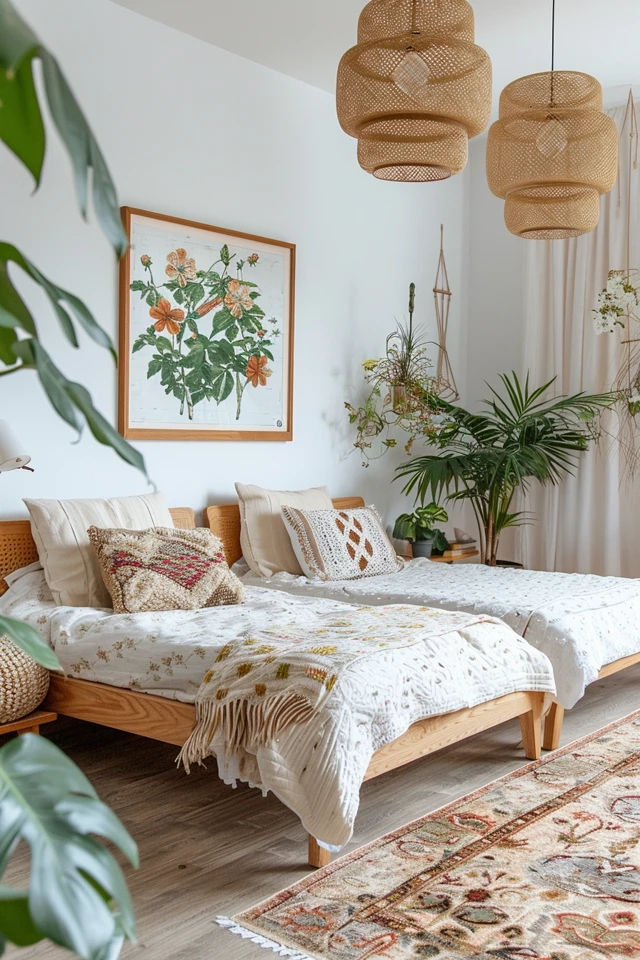
Title: Creative Two Beds in One Room Ideas for Space-Saving
Introduction
Designing a room for two people is one of the most common challenges I face in residential projects. Whether you are accommodating siblings, setting up a vacation rental, or creating a flexible guest room, fitting two beds into a single footprint requires strategic planning. It is a puzzle of geometry, psychology, and comfort.
I recently worked on a project in a historic row house where the clients needed a shared room for a teenager and a toddler. The age gap was a nightmare for scheduling sleep, and the room was barely ten feet wide. We solved it not just with furniture placement, but by creating distinct “zones” that offered visual privacy. For those seeking immediate visual inspiration, look for the curated Picture Gallery at the end of the blog post.
This guide will walk you through the practical steps of placing two beds in one room without sacrificing flow or style. We will look at layouts that maximize floor space and design tricks that keep the room from feeling crowded. My goal is to help you move beyond simple bunk beds and discover a layout that feels intentional and architectural.
Assessing the Layout and Measurements
Before you buy a single piece of furniture, you must understand the constraints of your room. In professional design, we never guess; we tape everything out on the floor.
The most critical measurement in a shared bedroom is the clearance between furniture. You generally need a minimum of 30 inches for a comfortable walkway. If the room is tight, you can squeeze this down to 24 inches, but anything less will result in shin bruises.
Also, consider the door swing and drawer clearances. If you plan to use under-bed storage, you need at least 18 to 24 inches of open floor space beside the bed to fully extend a drawer.
Designer’s Note: The Power of Scale
A common issue I see in DIY projects is choosing beds that are too bulky. In a shared room, avoid “sleigh beds” or frames with heavy, rolled headboards and footboards. These can add 6 to 10 inches to the length of the bed. Instead, opt for platform beds or simple upholstered headboards mounted directly to the wall. This saves precious inches and keeps the visual weight light.
The Traffic Pattern Rule
Map out how people will move through the room. If the beds block the path to the closet or the window, the room will feel chaotic regardless of how beautiful the bedding is.
Prioritize the “drop zone.” This is the area immediately inside the door. Keep this clear of beds to allow for a psychological transition from the hallway into the sanctuary of the bedroom.
Vertical Solutions: Bunks and Lofts
When floor space is at a premium, building up is the most logical solution. However, modern bunk beds have evolved far beyond the clunky pine frames of the past.
In my practice, I prefer built-in bunks or high-quality architectural bunks over free-standing metal frames. Built-ins allow us to utilize awkward alcoves and ensure there are no gaps for pillows to fall through.
If you are renting or cannot build in, look for “L-shaped” bunk configurations. This involves one lofted bed and one freestanding bed underneath, perpendicular to the top one. This creates a more open feel and allows for a desk or dresser to fit under the loft as well.
Critical Vertical Measurements
Safety and comfort rely on height. You need at least 30 to 36 inches of clearance between the top mattress and the ceiling. Without this, the sleeper on top will feel claustrophobic and may bump their head when sitting up.
Common Mistakes + Fixes
Mistake: Ignoring the mattress thickness.
Fix: Many standard mattresses are now 12 to 14 inches thick. For bunks, you specifically need low-profile mattresses (usually 6 to 8 inches) to ensure the safety rail is effective. The rail should sit at least 5 inches above the top of the mattress surface.
Horizontal Layouts: Side-by-Side and Head-to-Head
If you have the square footage, keeping both beds on the floor is often the best choice for longevity. It is easier to make the beds, and it feels more mature for older children or guests.
The classic hotel layout places two twin beds side-by-side with a shared nightstand in the center. This is efficient but requires a specific wall width. Two twin beds (approx. 40 inches each) plus a 24-inch nightstand requires a wall that is at least 104 inches (8.6 feet) long to avoid looking cramped.
If your room is long and narrow, consider the “head-to-head” layout. Place the beds along the same long wall with their headboards touching or separated by a shared joined unit. This opens up the center of the room for play or a desk area.
The Corner “L” Arrangement
Another effective layout for square rooms is placing the beds in a corner, forming an “L” shape. The headboards are placed on adjacent walls, meeting in the corner with a square table between them.
This arrangement maximizes floor space in the center of the room. It is excellent for siblings who get along well, as it facilitates conversation before sleep.
What I’d Do in a Real Project
For an “L” layout, I custom-make a corner unit that serves as a headboard for both beds. This unit opens from the top to store seasonal bedding. It solves the “dead corner” space issue and eliminates the need for two separate nightstands.
Flexible Furniture: Trundles and Murphy Beds
Sometimes a room needs to serve two purposes, such as a home office that doubles as a guest room. In these cases, permanent beds may take up too much real estate.
Murphy beds have made a massive comeback in high-end design. The hardware is balanced and safe, allowing a queen-size bed to vanish into a cabinet that is only 16 to 20 inches deep.
For a room that needs two beds, you can install horizontal Murphy bunks. These fold down from the wall like train sleeper cars. This is an expensive solution but incredible for maximizing space in urban apartments.
The Reality of Trundle Beds
Trundle beds are popular, but I advise clients to use them with caution. A trundle is a rolling mattress stored underneath a standard bed.
Designer’s Note: The Trundle Trade-off
Trundles are excellent for occasional sleepovers but poor for everyday shared rooms. The lower mattress offers zero privacy and requires the floor to be perfectly clear to roll out. If you choose a trundle, you lose the primary storage space under the main bed. Only use this if the room is primarily for one person with an occasional guest.
Zoning and Privacy Strategies
Sharing a room does not mean sharing everything. Everyone needs a sense of territorial ownership, especially children growing into their teenage years.
Lighting is the best tool for zoning. Instead of relying on one overhead ceiling light, install wall sconces or clip-on reading lights for each bed. This allows one person to read while the other sleeps, reducing conflict.
Visual Dividers
If the beds are side-by-side, consider a ceiling-mounted curtain track between them. This is a soft, inexpensive way to divide the space. Even a sheer curtain provides a psychological barrier that signals “this is my space.”
For a more solid division, use an open bookshelf perpendicular to the wall between the beds. This acts as a room divider while providing storage accessible from both sides. Ensure the bookshelf is anchored to the wall and floor for safety.
Common Mistakes + Fixes
Mistake: Matching everything perfectly.
Fix: While symmetry is nice, identical bedding can feel institutional. I prefer to use the same bed frames but different throw pillows or duvet covers in coordinating colors. It gives each sleeper a sense of identity while maintaining a cohesive design.
Final Checklist: The Designer’s Approach
Before you finalize your two-bed setup, run through this checklist. These are the steps I take to ensure a project is viable and livable.
1. Verify Electrical Placement
Do not block outlets with the headboards. If the beds cover the outlets, you cannot plug in lamps or chargers. If moving outlets isn’t in the budget, buy flat-plug extension cords before you push the furniture into place.
2. Check Rug Sizing
Avoid two small “postage stamp” rugs next to the beds. It looks cluttered. Use one large area rug that slides under the lower two-thirds of both beds. This unifies the zone.
3. Audit the storage
Two people means two wardrobes. If the closet is small, the beds must work harder. Prioritize frames with built-in drawers.
4. Test the “Makeability”
Can you easily change the sheets? If a bunk bed is wedged into three walls, changing the duvet is an aerobic workout. If possible, leave a few inches of clearance or use “zipper bedding” for hard-to-reach bunks.
5. Evaluate Ventilation
In a room with two bodies, temperature rises faster. Ensure air vents aren’t blocked by furniture. If using a bunk, a clip-on fan for the top bunk is a thoughtful addition for airflow.
FAQs
What is the smallest room size for two twin beds?
Technically, you can fit two twins in a room that is 9×9 feet, but it will be tight. A 10×10 foot room is the comfortable minimum for a standard side-by-side or corner layout. For anything smaller, you should look at bunk beds.
How do I mix a crib and a regular bed in one room?
Place the “quietest” sleeper furthest from the door. Usually, this means the older child’s bed goes in the back corner, and the crib is nearer the entrance for easy access during the night. Use a heavy curtain or a sound machine to dampen noise between the two zones.
Are metal or wood bunk beds better?
Wood is generally quieter. Metal frames tend to squeak over time as the bolts loosen with movement. If you choose metal, look for welded joints rather than bolted connections. If you choose wood, look for hardwoods like maple or oak rather than soft pine, which dents easily.
How do I coordinate a room for a boy and a girl?
Focus on a neutral base palette—greens, yellows, navys, or greys. Avoid “themed” bedding. Use geometric patterns or solids. Let them express their personality through art prints above their beds, which are easily swappable as they grow.
Conclusion
Fitting two beds into one room is less about compromise and more about creative efficiency. By respecting the rules of scale, prioritizing the traffic flow, and using vertical space wisely, you can create a shared room that feels spacious and serene.
Remember that the success of the room relies on the details: individual lighting, accessible storage, and sturdy furniture. Whether you choose a custom bunk or a classic twin layout, the goal is to give each person a dedicated space to recharge.
Take the time to measure twice and plan your zones. A well-designed shared room can actually strengthen the bond between occupants, provided they aren’t fighting over territory.
Picture Gallery


