
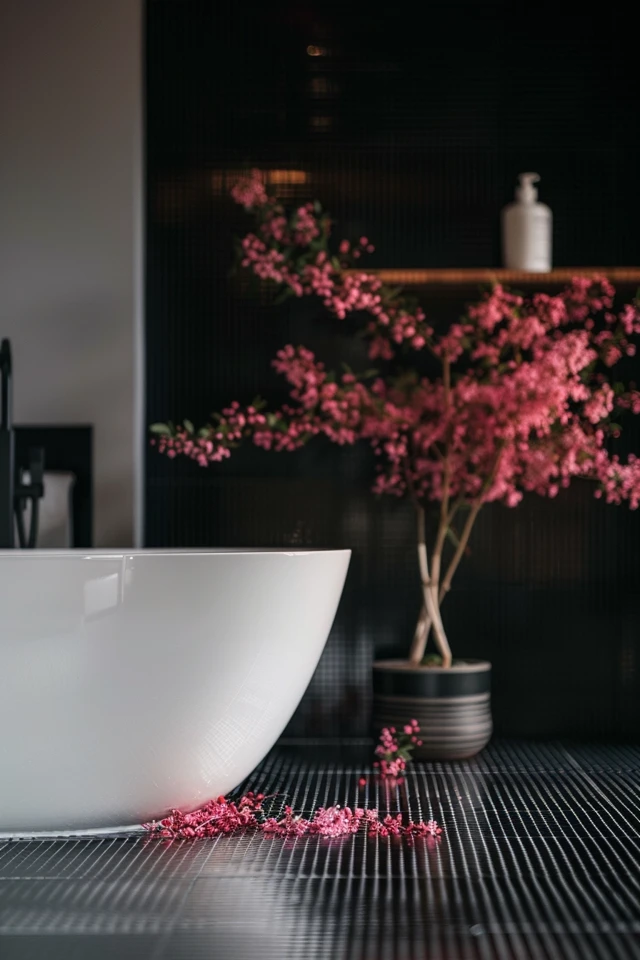
Dark Floor Bathroom Ideas for Modern Homes
There is a specific kind of gravity that anchors a room when you install dark flooring. While light floors feel airy and expansive, dark floors feel grounded, sophisticated, and undeniably modern. In a bathroom setting, a charcoal, slate, or ebony floor provides an immediate visual foundation that makes everything else in the room—from the porcelain tub to the brass hardware—pop with higher contrast.
However, committing to a dark floor can feel intimidating. Clients often worry about the space feeling cave-like or the maintenance reality of showing dust and water spots. These are valid concerns, but they are easily managed with the right design choices regarding lighting, texture, and layout.
In this guide, I will walk you through the practicalities of designing a modern bathroom with dark floors, moving beyond just aesthetics into the real-world functionality of materials and spacing. If you are just looking for inspiration, skip to the Picture Gallery at the end of the blog post to see these concepts in action.
1. Selecting the Right Material for Dark Floors
Not all dark floors are created equal. The material you choose dictates not just the look, but the safety and maintenance level of the bathroom. In wet environments, texture is your best friend.
Porcelain vs. Natural Stone
For most modern homes, I almost exclusively recommend through-body porcelain tile that mimics natural stone. Slate and basalt are beautiful, but they are porous. They require sealing every year to prevent water stains and soap scum buildup.
High-quality porcelain offers the deep, matte look of slate or charcoal stone but is impervious to water. It is also significantly harder to chip. If you drop a heavy bottle of perfume on real slate, the stone might flake; on porcelain, you are safer.
The Slip Factor
This is non-negotiable. Dark glossy tiles look stunning in magazines, but they are a slip hazard in a bathroom.
Always look for a Dynamic Coefficient of Friction (DCOF) rating of 0.42 or greater for wet areas. In my own projects, I look for matte or honed finishes with a slight texture. This “grip” diffuses light, softening the harsh glare that can happen with dark surfaces, and keeps you safe when stepping out of the shower.
Designer’s Note: The “Lint” Reality
Here is the lesson I learned the hard way early in my career. Solid, uniform black tiles show everything. Every speck of dust, every piece of white lint from a towel, and every strand of pet hair will be visible.
To mitigate this, choose a material with movement. Look for a charcoal tile with slight gray veining, a terrazzo style with dark aggregate, or a slate-look tile with variegated tones. This visual noise hides the daily debris between cleanings.
2. Managing Light and Contrast
The biggest fear homeowners have regarding dark floors is that the bathroom will feel small or claustrophobic. This usually only happens if the lighting plan is neglected.
The 60-30-10 Rule Adaptation
To keep a modern bathroom feeling open despite dark flooring, I usually flip the standard color ratios.
- 60% Light: Keep the walls and ceiling bright. Off-white, soft gray, or creamy plaster tones help bounce light around the room.
- 30% Dark: This is your floor. It anchors the space without overwhelming it.
- 10% Accent: This is your vanity wood tone or metal finishes.
Lighting Temperature Matters
Dark floors absorb light rather than reflecting it. You need to compensate with your bulbs.
Avoid cool daylight bulbs (5000K), which can make a dark-floored bathroom feel sterile and clinical. Stick to 3000K to 3500K. This range provides a clean, bright white that still feels warm and flattering.
Placement of Light Sources
Do not rely on a single overhead can light. It casts shadows downwards and makes the floor look like a black hole.
Install sconces at face level by the vanity. If you have the budget, under-vanity lighting is a game-changer with dark floors. An LED strip installed beneath a floating vanity washes the dark floor with a soft glow, highlighting the texture of the tile and making the room feel larger.
3. Balancing Dark Floors with Vanity Choices
The vanity is the furniture piece that bridges the gap between your dark floor and the rest of the room. The contrast here is what defines the style.
Wood Tones for Warmth
If your floor is a cold charcoal or matte black, a natural wood vanity is the perfect counterpoint. White oak, walnut, or teak brings organic warmth that prevents the space from feeling too industrial.
I recommend “floating” the vanity (wall-mounted) when using dark floors. Being able to see the dark tile extend all the way to the wall creates an optical illusion that the floor area is bigger than it is.
Painted Vanities
If you prefer a painted cabinet, you generally have two modern options:
- High Contrast: A crisp white or light gray vanity creates a sharp, graphic look. This is very common in “Modern Farmhouse” or “Scandi-Modern” styles.
- Tone-on-Tone: A dark gray, navy, or black vanity creates a moody, monolithic look. If you go this route, the countertop must be light (like white quartz or Carrara marble) to provide visual separation between the vanity and the floor.
Common Mistake: The “Heavy” Look
Avoid a bulky, dark wood vanity with a solid base sitting directly on a dark floor. It creates a visual black hole where the furniture meets the ground. If you must use a floor-standing vanity, ensure it has legs rather than a solid toe-kick, or choose a lighter color to distinguish it from the tile.
4. Wall Treatments and Transitions
How the dark floor meets the wall is a detail that separates DIY looks from professional designs.
Baseboards and Trim
Do not use the floor tile as your baseboard unless you are tiling the entire wall. It looks commercial.
Instead, use a crisp white wood (or moisture-resistant MDF) baseboard. A standard 5-inch or 6-inch baseboard creates a clean frame for the dark floor. The sharp line between the black tile and white trim is architecturally pleasing.
Grout Selection
This is a highly debated topic, but here is the professional consensus for modern homes. Do not use white grout with black tile.
White grout on a floor will eventually turn gray or yellow from foot traffic and cleaning. It also creates a “checkerboard” grid that can look busy and dated.
The Fix: Choose a grout color that is one or two shades lighter than the tile.
- If the tile is jet black, use a charcoal grout.
- If the tile is dark gray, use a medium gray grout.
This softens the grid, making the floor look like a cohesive surface rather than a collection of squares. It also hides dirt significantly better.
Shower Transitions
If you are continuing the dark floor into a curbless shower, ensure the slope is handled correctly. Large format dark tiles (like 24×24) are hard to slope towards a center drain.
For the shower floor, you often need to switch to a smaller mosaic version of the same dark tile, or use a linear drain which allows you to keep the large tiles. The linear drain is the more modern, seamless choice.
5. Metals and Hardware Coordination
Dark floors act as a neutral canvas, which allows you to play with mixed metals. However, some finishes work better than others.
Brass and Gold
A dark floor loves warm metals. Unlacquered brass, brushed gold, or champagne bronze fixtures sing against a dark background. The contrast is luxurious and adds necessary warmth to the cool tones of the floor.
Polished Chrome and Nickel
For a sharper, more clinical “clean” look, chrome works well. It reflects the other colors in the room and keeps the palette cool. This is a safe, timeless choice for resale value.
Matte Black
Can you use black faucets with black floors? Yes, but proceed with caution.
If you have a black floor, a black vanity, and black faucets, the room loses dimension. Use matte black hardware only if your walls are white and your vanity is a light wood or white. The hardware needs a lighter background to be visible; otherwise, it disappears into the visual weight of the room.
Scale of Hardware
With the visual weight of a dark floor, dainty hardware can feel lost. Use substantial pulls and knobs. I often suggest pulls that are at least 5 to 6 inches long for drawers to balance the visual gravity of the flooring.
Final Checklist: What I’d Do in a Real Project
If I were designing a primary bathroom with dark floors today, this is the exact specification list I would start with to ensure success.
The “Safe Bet” Specification Sheet:
- Floor Material: 12×24 inch matte porcelain tile in “Charcoal” or “Basalt” tone.
- Layout: 1/3 offset brick pattern (avoids the zipper effect of 50% offset).
- Grout: Dark gray (never white), sealed immediately upon installation.
- Walls: Tiled wainscoting up to 48 inches in white subway or slab, or simply painted “Chantilly Lace” or “Simply White.”
- Vanity: Floating white oak cabinet with a white quartz top.
- Rug: A vintage-style runner with warm reds or rust tones to bridge the gap between the dark floor and wood vanity.
- Lighting: LED mirror or sconces at 3000K color temperature.
FAQs
Will dark floors make my small bathroom look smaller?
Not necessarily. Dark floors can actually blur the boundaries of the room, especially if the grout matches the tile. The key is to keep the walls and ceiling very light. If you create a high-contrast “sandwich” (dark floor, white walls, light ceiling), the eye is drawn to the brightness and the room feels spacious.
How do I keep dark bathroom floors clean?
Dark floors show dust, while light floors show grime. To manage dust and water spots, avoid solid black tiles. Choose a tile with texture or color variation (like a stone look). For cleaning, use a pH-neutral cleaner. Avoid oil soaps or waxes, which leave a film that creates a haze on dark tiles.
What rug color works best with dark floors?
Avoid dark navy or black rugs; they will vanish. You want contrast. Light beige, cream, or patterned vintage rugs with warm tones work best. If you need a simple bath mat, crisp white looks hotel-chic but requires frequent washing. A light gray or taupe texture is the most practical choice.
Should the shower wall tile match the dark floor?
You can run the dark floor tile up the back wall of the shower for a dramatic “accent wall” effect. However, I usually advise against tiling all three shower walls in the dark floor tile unless the room is huge and has a skylight. It creates a cave effect. A safer bet is a dark floor with light shower walls.
Conclusion
Choosing a dark floor for your bathroom is a design decision that pays off in style points and longevity. It hides true grime better than white tile, provides a stunning base for wood and brass elements, and gives the home a custom, high-end feel.
The secret to making it work is simply managing the balance. By pairing the dark ground with light walls, choosing the right grout color, and ensuring your lighting is warm and layered, you create a space that feels cozy rather than gloomy. It is a bold move, but in modern interior design, fortune favors the bold.
Picture Gallery


