
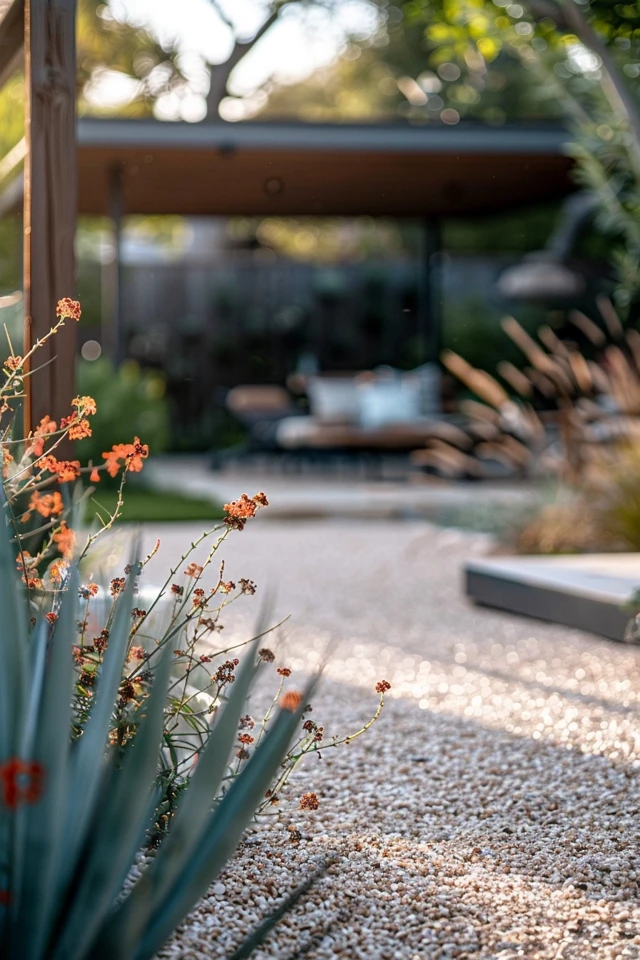
Title: Decomposed Granite – Landscaping Ideas for Your Yard
Introduction
There is a specific sound I love in landscape design. It is the subtle, earthy crunch of footsteps on a well-laid garden path. That sound almost always comes from decomposed granite, often referred to as DG. It provides a texture and warmth that concrete simply cannot replicate.
Decomposed granite is essentially rock that has weathered to the point where it breaks into very small pieces and silt-like particles. In design terms, it bridges the gap between structured paving and raw organic nature. It works just as well in a sleek, modern drought-tolerant yard as it does in a rustic French country garden.
However, using this material requires more than just dumping a truckload of gravel and spreading it out. You have to consider drainage, containment, and how the material travels. For a visual dose of inspiration, make sure to scroll down to the Picture Gallery at the end of this post.
Understanding the Material: Stabilized vs. Loose
Before you plan your layout, you must make a critical decision regarding the type of DG you purchase. This choice dictates how the surface performs over time and how much maintenance it will require.
Loose Decomposed Granite
This is the raw material. It consists of small rocks and “fines” (granite dust). It is the most affordable option and offers excellent drainage because water permeates right through it. I often use loose DG for mulch beds or secondary pathways that don’t get heavy foot traffic.
The downside is migration. Without a binder, the grit sticks to shoes and tracks into the house. In rainy climates, loose DG can turn mushy if the drainage underneath isn’t perfect.
Stabilized Decomposed Granite
For patios, main walkways, and driveways, I almost always specify stabilized DG. This mixture includes a stabilizing binder—usually a non-toxic additive—that is activated by water. Once compacted and cured, it hardens almost like asphalt but maintains the rustic look of stone.
Stabilized DG creates a firm surface. You can roll a wheelchair or a stroller over it without sinking. It significantly reduces dust and erosion, making it the superior choice for high-traffic zones.
Designer’s Note: The “Shoe Test”
I always warn clients about the transition zones. Even with stabilized DG, you will get some grit. Never design a DG pathway that leads directly onto a hardwood floor. Always have a “landing pad” of concrete, stone, or a heavy-duty doormat between the granite and your interior. This saves your wood floors from scratching.
Designing Defined Pathways
Pathways are the most common application for decomposed granite. They guide the eye and the visitor through the landscape. The key to a professional-looking path is the edging.
Because DG is a loose material at heart, it wants to spread. Without a border, your crisp walkway will eventually bleed into your lawn or flower beds, looking messy and neglected.
Edging Materials
- Steel Header: This is my go-to for modern or industrial looks. It is usually 1/8-inch or 3/16-inch thick mild steel. It creates a nearly invisible line that holds the rock firmly in place.
- Pressure Treated Lumber: A 2×4 bender board is a cost-effective, rustic option. It works well in cottage gardens but creates a thicker visual line.
- Concrete Bond Beam: For a very structured look, you can pour a concrete curb. This is expensive but incredibly durable.
Scale and Sizing Rules
When laying out a path, width is everything. A common mistake is making paths too narrow.
- Service Paths: For areas where only one person walks (like around the side of a garage), 36 inches is the absolute minimum.
- Strolling Paths: For a comfortable walkway where two people can walk side-by-side, aim for 48 to 60 inches.
- Curvature: Avoid “wiggly” lines. If you curve a path, make the curves broad and sweeping. A tight snake-like curve looks unnatural and makes installation difficult.
Common Mistake: The “Bath” Effect
Do not dig a trench, fill it with DG, and leave it flat. This creates a bathtub that holds water. The finished height of your DG should be slightly higher than the surrounding soil, or the sub-base must be graded to shed water away from the center.
Creating “Soft” Patio Spaces
Decomposed granite is a fantastic alternative to concrete slabs or pavers for patio areas. It creates a softer, more European aesthetic that feels permeable and relaxed.
Furniture Considerations
One realistic constraint with a DG patio is furniture stability. If you use loose DG, the legs of a heavy wrought-iron chair will sink right into the ground.
To combat this, you have three options:
- Use stabilized DG compacted with a heavy vibratory plate compactor.
- Choose furniture with wide bases or “sled” legs rather than thin points.
- Place a large outdoor rug under dining sets to distribute the weight.
Zoning with DG
I love using DG to define a specific zone within a larger yard. For example, in a large grassy backyard, you can carve out a 12-foot by 12-foot square, border it with steel, and fill it with gold-colored DG to create a dedicated fire pit area.
Fire Pit Layouts
When designing a fire pit zone using granite, remember the spacing rules.
- The Pit: Average fire pits are 36 to 42 inches wide.
- Legroom: You need 18 to 24 inches from the edge of the pit to the front of the chair.
- Circulation: You need at least 30 inches behind the chairs for people to walk.
This means for a standard setup, your DG patio needs to be at least 12 to 14 feet in diameter. Anything smaller feels cramped and dangerous near the fire.
Xeriscaping and Mulch Alternatives
In drought-prone areas like California, Arizona, or Texas, we often replace water-guzzling lawns with xeriscaping. Decomposed granite serves as an excellent top dressing or mulch in these designs.
Color Coordination
DG comes in various colors depending on the local quarry.
- Gold/Tan: Adds warmth. Looks beautiful contrasted against dark green foliage or purple succulents like Aeonium.
- Grey/Blue: Creates a modern, cool tone. It pairs exceptionally well with concrete pavers and minimalist architecture.
- Red/Terracotta: distinct and bold. Use this sparingly, as it can overwhelm a small space.
Plant Health
Unlike wood mulch, DG does not decompose and disappear. It also doesn’t float away in a heavy rainstorm if properly graded.
However, you must be careful with heat. Stone retains heat. If you place sensitive plants in a sea of DG in direct sun, the reflected heat can scorch the leaves. I recommend using drip irrigation directly to the root zones and perhaps keeping a small circle of organic mulch right at the base of delicate plants.
Weed Control
Homeowners often ask if DG stops weeds. It helps, but it is not magic. Wind-blown seeds can settle in the fines and germinate.
To prevent this, I always lay a professional-grade landscape fabric (weed barrier) underneath the rock. Do not use the cheap plastic sheeting; use the heavy felt-like fabric that allows water to pass through.
Driveways and Parking Pads
Can you drive on decomposed granite? Yes, but the installation spec is completely different from a garden path. A driveway takes massive abuse from the weight and torque of vehicle tires.
The Depth Rule
For a walkway, 2 to 3 inches of DG is sufficient. For a driveway, you generally need a 4 to 6-inch base of compacted road base (crushed concrete or larger gravel) followed by 2 to 3 inches of stabilized DG on top.
If you just put DG on dirt and drive on it, you will have ruts within a week. The tires will displace the material, and when it rains, you will have a muddy slurry.
Maintenance Reality
Even a well-installed DG driveway requires maintenance. You will likely need to rake it smooth occasionally and top it off with fresh material every few years. If you want a “zero maintenance” driveway, pour concrete. If you want a charming, crunching entry that feels like a country estate, choose DG and accept the upkeep.
What I’d Do in a Real Project: Mini-Checklist
If I were managing a renovation for a client tomorrow, this is the exact workflow I would ensure the landscape crew follows:
1. Excavation and Grading
Remove organic soil about 3 to 4 inches down. Compact the native sub-soil. Ensure the slope runs away from the house foundation (at least a 2% grade).
2. Weed Barrier Installation
Roll out heavy-duty geotextile fabric. Overlap the edges by at least 6 inches and staple them down. This separates the rock from the dirt below, preventing sinking.
3. Edging Installation
Install the steel edging or bender board before the rock goes in. The edging should sit about 1/2 inch higher than the final rock level to keep it contained.
4. The Base Layer
For patios, lay 2 inches of road base and compact it. This provides a hard spine.
5. The DG Layers
Add the decomposed granite in 1-inch lifts. Do not dump all 3 inches at once. Spread 1 inch, wet it down thoroughly, and run the plate compactor over it. Then repeat. This ensures the material is tight all the way through, not just on top.
6. The Finish
Spray the final surface with water to wash off the dust from the top stones. This reveals the true color immediately.
Common Mistakes + Fixes
Mistake: Placing DG near a pool.
The grit sticks to feet and ends up in the pool filter, causing maintenance nightmares.
Fix: Keep DG at least 10 feet away from the water’s edge, separated by a distinct barrier of grass, wood deck, or concrete.
Mistake: Using it on a steep slope.
Rainwater will wash the fines down the hill, leaving deep ruts.
Fix: For slopes, use “cellular confinement systems” (also called geocells). These are honeycomb-like grids you lay on the ground and fill with DG. The grid holds the rock in place even on an incline.
Mistake: Ignoring drainage.
DG is permeable, but only to a point. During a deluge, it acts like a solid surface.
Fix: If you have a large patio, install a catch basin or a French drain at the low point to handle overflow during storms.
Frequently Asked Questions
Is decomposed granite good for dogs?
generally yes. It is cooler on the paws than black asphalt or concrete. However, if you have a dog that loves to dig, they can make a mess of it. Also, very loose DG can get stuck in the paws of long-haired breeds and track inside.
Does it get muddy when it rains?
Stabilized DG should not get muddy. It sheds water and dries firmly. Loose DG can get “soft” and slightly pasty during heavy rains, but it shouldn’t turn into a mud pit unless it was installed over poor drainage.
How much does it cost compared to concrete?
Decomposed granite is significantly cheaper than poured concrete or pavers—usually about 30% to 50% of the cost. The material itself is cheap; the labor is in the excavation and wheelbarrowing.
Can I put DG over existing grass?
No. The grass will eventually die and rot, causing the ground to sink and the DG to become uneven. You must remove the sod and organic topsoil first to create a stable base.
Conclusion
Decomposed granite is one of the most versatile tools in a landscape designer’s kit. It offers a warmth and texture that instantly makes a yard feel organic and established.
Whether you are building a winding garden path, a Tuscan-style dining patio, or a low-water xeriscape, the success of the project lies in the preparation. Choose the right stabilizer, compact your layers, and always install proper edging.
If you respect the constraints of the material, it will reward you with a durable, beautiful surface that ages gracefully with your home.
Picture Gallery


