
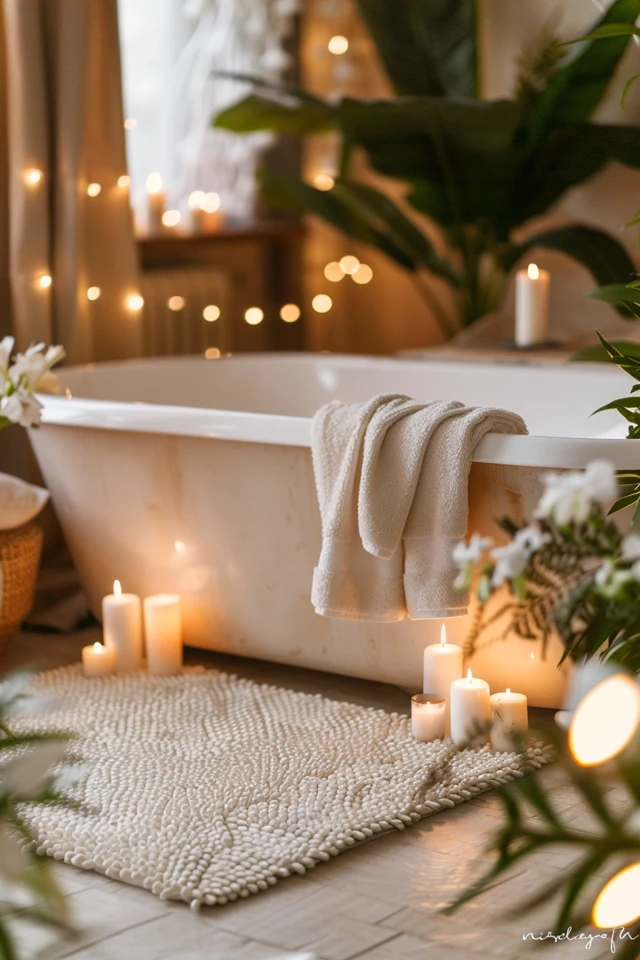
Decorating Around A Bathtub: Enhancing Bathroom Aesthetics
The bathtub is often the architectural centerpiece of a bathroom. It represents the shift from utility to relaxation, transforming a sterile space into a personal sanctuary. However, styling the area around the tub can be surprisingly difficult because you have to balance visual warmth with extreme functionality.
I recall a project where the client had a beautiful, sculptural soaking tub, but the corner looked stark and cold. By introducing warmth through organic textures, appropriate lighting, and water-resistant art, we turned a lonely corner into the most inviting spot in the house. For visual inspiration on how these elements come together, check out the Picture Gallery at the end of this article.
This guide will walk you through the practical layers of decorating around your bathtub. Whether you have a vintage clawfoot, a modern freestanding vessel, or a standard built-in alcove tub, the principles of scale, material durability, and sensory design remain the same.
1. Assessing the Space and Tub Style
Before buying a single accessory, you must understand the constraints of your specific tub layout. The decorating rules change drastically depending on whether your tub is freestanding or built-in.
Freestanding Tubs
If you have a freestanding tub, negative space is your biggest asset. The beauty of these tubs lies in their curves and silhouette. A common error is cluttering the floor around them.
As a general rule of thumb, aim for at least 4 to 6 inches of clearance on all sides of a freestanding tub. This is not just for aesthetics; you need to be able to fit a mop or your arm behind it for cleaning. If you place decor items on the floor, keep them clustered to one side rather than scattering them around the perimeter, which can create a tripping hazard.
Alcove and Drop-In Tubs
For built-in tubs, your decorating “real estate” is vertical. You do not have floor space to work with, so you must utilize the walls, the tub ledge, or niches.
In these setups, the wall treatment becomes the primary decor element. If you are renovating, consider extending your tile wainscoting up to at least 48 inches high around the tub to protect the walls while adding texture. If tiling isn’t an option, use high-quality, mold-resistant paint in a satin or semi-gloss finish to handle the moisture.
2. Surface Styling: Trays, Caddies, and Stools
Once the layout is established, you need surfaces to hold your essentials. This is where function meets style.
The Bath Caddy
A bath caddy acts as a bridge across the tub. It is the perfect place to layer textures. Look for caddies made of teak, bamboo, or acrylic. Avoid untreated metals, as they will rust over time due to the steam rising directly from the water.
When styling a caddy, use the “Rule of Three.” Group three items of varying heights and shapes. For example, place a tall candle, a small stack of washcloths, and a rounded scrub brush together. This creates a balanced, curated look rather than a messy catch-all.
The Side Table or Stool
For freestanding tubs, a small side table or stool is indispensable. It provides a spot for a book, a glass of wine, or a towel.
Designer Rule: The height of your side table is critical. It should be roughly level with or slightly lower than the rim of your bathtub. Standard tub heights are usually between 20 and 24 inches. If the table is too high, it feels imposing; too low, and it is hard to reach while reclining.
Material Selection:
- Ceramic Garden Stools: These are ideal because they are water-impervious, heavy enough not to tip over, and come in various glazes to add color.
- Teak Stools: Teak adds warmth to white-tiled bathrooms and naturally resists rot.
- Acrylic Tables: These work well in small bathrooms because they disappear visually, making the space feel larger.
3. Plants and Greenery in High Humidity
Integrating biophilic design is the fastest way to make a bathroom feel like a spa. However, not all plants survive the unique microclimate of a bathroom.
The area around a bathtub experiences rapid temperature shifts and high humidity. You must choose resilient species.
Best Plants for Bathside Decor
- Boston Ferns: They thrive on moisture and indirect light. Their soft, feathery texture contrasts beautifully with hard tile surfaces.
- Snake Plants (Sansevieria): Indestructible and vertical. These are excellent for tight corners where you have height but no floor width.
- Pothos: A trailing vine that looks stunning when placed on a high shelf or hanging planter, allowing the leaves to cascade down toward the tub.
Placement Tips
If you have a wide tub deck, a small potted succulent works well. For floor plants near a freestanding tub, ensure the pot is heavy. A lightweight plastic pot might get knocked over easily when you step in and out of the bath. I recommend heavy ceramic or stone planters.
4. Wall Decor and Window Treatments
The wall above the bathtub is a focal point that is often neglected. This vertical plane is an opportunity to anchor the room.
Art Selection
You can hang art in a bathroom, but you must be strategic. Moisture can warp paper and canvas.
My Recommendation: Avoid valuable original pieces or paper prints that are not professionally sealed. Instead, opt for canvas prints (which tolerate humidity better) or photographs framed with acrylic glazing rather than glass. Ensure the back of the frame is sealed with paper or tape to keep moisture out.
Hang art slightly lower than you would in a living room. You view this art while sitting in the tub, so the center point should be lower to accommodate that eye level.
Window Treatments for Privacy
If your tub is under a window, privacy is paramount. However, you do not want to block natural light.
Top-Down Bottom-Up Shades: These are the gold standard for bathroom windows. You can lower the top half to let light in while keeping the bottom half covered for privacy.
Cafe Curtains: A cafe curtain covers only the bottom half of the window. Use a fabric like linen or cotton blend that dries quickly. Ensure the rod is rust-resistant.
Frosting: For a sleek, modern look, apply a frosted film to the lower sash of the window. This is an excellent, removable solution for renters.
5. Lighting and Ambience
Lighting dictates the mood. A bathtub requires softer, more atmospheric lighting than the vanity area.
Layering Light
Avoid relying solely on a recessed can light directly over the tub. This creates harsh shadows on your face and can be glaring when you lean back to relax.
Instead, install a dimmer switch. This is the single most effective upgrade for a bathroom. It allows you to transition from bright cleaning light to a soft glow for bathing.
Decorative Fixtures
If building codes allow (check your local regulations regarding “wet zones”), a chandelier or pendant light centered over the tub creates a stunning focal point. The bottom of the fixture must usually be at least 8 feet above the highest point of the tub rim unless it is low voltage or IP-rated for moisture.
For a safer and equally stylish option, consider wall sconces flanking the artwork behind the tub. This introduces ambient light at eye level, which is much more flattering and relaxing.
Designer’s Note: The “Splash Zone” Reality
Here is a lesson I learned the hard way early in my career. I once styled a client’s bathtub ledge with a stack of vintage books and an untreated woven basket. It looked incredible for the photoshoot.
Two weeks later, the client called to say the books were water-damaged and the basket had begun to mold on the bottom because water pooled on the ledge during baths.
The Lesson: Anything placed within arm’s reach of the bather will get wet. Do not style the immediate tub perimeter with items that cannot handle water. Save the books and porous baskets for a shelf that is at least two feet away from the splash zone. If you want the look of books, place them on a raised bath caddy, not the wet ledge.
Common Mistakes + Fixes
Mistake: Using a Standard Area Rug Near the Tub
Regular rugs lack the non-slip backing required for safety, and thick piles take too long to dry, leading to mildew.
The Fix: Use a flat-weave runner made of polypropylene or PET (recycled plastic). These mimic the look of wool but are water-resistant and dry rapidly. Alternatively, use a high-quality cotton bath mat that can be tossed in the washing machine weekly.
Mistake: Ignoring Scale
Placing a tiny piece of art on a large wall above a tub makes the space feel disjointed and cheap.
The Fix: The art (or grouping of art) should fill roughly two-thirds of the width of the tub. If your tub is 60 inches long, your art arrangement should be about 40 inches wide.
Mistake: Over-Styling
Cluttering every ledge with bottles, candles, and sponges makes the bath feel like a storage unit, not a spa.
The Fix: Decant your soaps and salts into uniform glass or ceramic containers. Remove store-branded packaging. Keep only the essentials out; hide the rest in cabinets.
What I’d Do in a Real Project: A Mini Checklist
If I were hired to style your bathtub area tomorrow, this is the exact sequence I would follow:
1. Clear the Decks: I would remove everything from the tub area, including shampoo bottles and old mats.
2. Establish the Layout: I would measure the floor space to see if a side table fits. If not, I would source a bridge caddy.
3. Soft Goods First: I would select a runner rug or bath mat to anchor the floor and add texture.
4. Lighting Check: I would install 2700K (warm white) bulbs in all fixtures to ensure the light is cozy, not clinical.
5. Layer Accessories: I would add a ceramic stool, a natural sponge, and a candle.
6. Add Life: I would place a fern or eucalyptus vase on the stool or window ledge.
7. Safety Check: I would ensure the rug has a grip pad and that no breakable glass is precariously perched on the rim.
Final Checklist
- Clearance: Is there enough room to clean around the freestanding tub?
- Surface: Do you have a table or caddy within arm’s reach?
- Material: Are all accessories water-resistant (ceramic, teak, stainless steel)?
- Greenery: Have you added a plant that thrives in humidity?
- Lighting: is the lighting dimmable or soft?
- Privacy: Are windows covered appropriately for night bathing?
- Safety: Is the rug secured with a non-slip pad?
FAQs
Q: Can I hang a mirror above the bathtub?
A: Yes, a mirror is a great way to reflect light and make a small bathroom feel larger. However, be aware that it will fog up instantly during a hot bath. Ensure it is hung securely on a stud or with heavy-duty anchors, as mirrors are heavy.
Q: How do I decorate a corner bathtub?
A: Corner tubs often have a wide ledge in the back corner. This is an ideal spot for a large, statement planter or a trio of large pillar candles. Do not clutter the entry point where you step in.
Q: Is it safe to put a lamp on a table next to the tub?
A: Generally, no. Corded lamps pose a severe electrocution risk if they fall into the water. If you want lamp-style lighting, use a rechargeable, battery-operated LED lamp designed for outdoor or damp use, or stick to hardwired sconces.
Q: How do I keep the styling practical for kids?
A: If children use the tub, skip the breakable ceramics and candles. Use woven baskets (synthetic or treated) to hold bath toys. A sturdy wooden step stool can double as a side table for parents during bath time.
Conclusion
Decorating around a bathtub is about finding the sweet spot between a visually stunning vignette and a highly functional wet room. By focusing on durable materials, appropriate scale, and layers of texture, you can turn a basic bathroom fixture into a focal point that invites relaxation.
Remember that this space must serve you. If a decorative item gets in the way of your bath, remove it. The ultimate goal is to create an environment where the stress of the day melts away as soon as you step into the water.
Picture Gallery


