
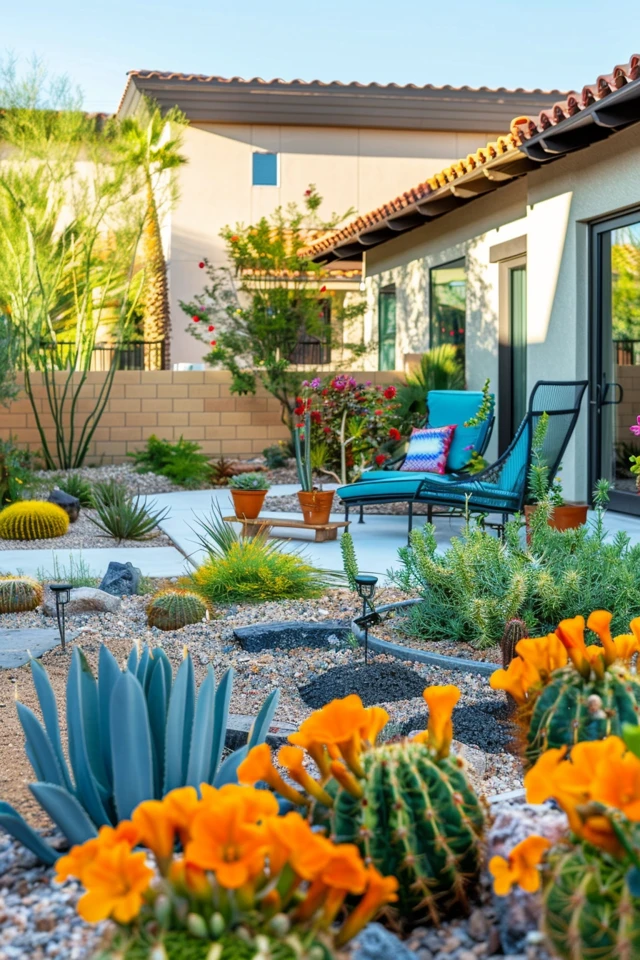
Desert Oasis: Backyard Landscaping Ideas Arizona
Living in the Grand Canyon State requires a specific approach to outdoor design. You cannot simply roll out Kentucky Bluegrass and expect it to survive July without a massive water bill. However, the desert offers a stunning, architectural palette that creates some of the most luxurious backyards in the country.
Designing here is about working with the environment rather than fighting it. We want to capture that resort-style feeling where the indoors flows seamlessly to the outdoors. Don’t forget to look at our curated Picture Gallery at the end of this blog post to visualize these concepts.
I have learned through many projects that Arizona landscaping is a balancing act between heat mitigation and water conservation. It requires smart material choices that won’t burn your feet and plants that thrive in intense UV exposure. Let’s transform your dust bowl into a true desert sanctuary.
1. The Foundation: Hardscaping and Material Selection
In Arizona, the hardscape is the backbone of your design. Because lush lawns are scarce, your patio, walkways, and pool decks become the primary visual elements. The most critical rule here is heat retention.
You must choose materials that stay relatively cool under the direct sun. Dark slate or standard grey concrete absorbs heat and radiates it back at you, making your patio unusable until well after sunset.
Why Travertine is King
Travertine is the industry standard for high-end Arizona backyards for a reason. It is a natural limestone that stays surprisingly cool to the touch, even when it is 105 degrees out.
I always specify a “tumbled” finish for exterior projects. This provides a non-slip texture that is essential around pools. Polished stone is dangerous when wet and reflects too much glare.
Pavers vs. Concrete
If travertine is out of budget, look for light-colored concrete pavers. Lighter tones like sand, beige, or cream reflect sunlight. Avoid stamped concrete if you can; it tends to crack with the extreme expansion and contraction caused by desert temperature swings.
Designer’s Note: Scale and Layout
A common mistake I see is undersizing the patio. In the desert, we live outside for eight months of the year.
My Rule of Thumb:
- Plan for at least 36 inches of walkway clearance around furniture.
- If you have a dining table, you need 36 to 42 inches of space behind each chair so guests can slide out without hitting the edge of the patio.
- For a standard conversation area with a sofa and two chairs, aim for a minimum footprint of 10 feet by 12 feet.
2. Ground Cover: The Artificial Turf vs. Gravel Debate
The classic Arizona backyard usually consists of vast areas of gravel, but that can feel sterile. To add softness and color, homeowners usually debate between artificial turf and localized real grass.
Artificial Turf Pros and Cons
Synthetic grass has come a long way. It looks realistic and requires zero water. It provides that pop of green that psychologically cools down a space.
However, artificial turf gets incredibly hot. I strongly advise against placing it in direct, full-day sun if you have dogs or children. It can actually burn paws.
The Fix:
If you use turf, place it in shaded areas or install a cooling infill system. There are specific silica sand infills that hold moisture and keep the surface temperature down.
Gravel Done Right
Don’t just dump grey rocks everywhere. Use gravel to create texture and zones.
My Preferred Gravel Specs:
- Size: Use 1/2-inch or 3/4-inch screened rock. Anything smaller (like quarter-minus) tracks into the house. Anything larger (like river rock) is difficult to walk on.
- Color: “Madison Gold” or “Desert Gold” warms up the space. Avoid stark white rock, as it creates blinding glare during the day.
Common Mistakes + Fixes
Mistake: Putting gravel directly on dirt.
Fix: You must use a heavy-duty weed barrier fabric underneath. Weeds in Arizona are tenacious and will grow through inches of rock if given the chance.
3. The Softscape: Strategic Desert Plantings
Xeriscaping does not mean just rocks and a single cactus. A well-designed desert garden is lush, colorful, and architectural. The goal is to layer textures.
Trees for Shade and Structure
You need shade trees to lower the ambient temperature of the yard.
Top Picks:
- Palo Verde: Fast-growing with beautiful green bark and yellow flowers. They provide filtered shade which is great for under-planting.
- Mesquite: Provides dense shade but can be thorny. Look for “thornless” hybrids.
- Ironwood: Very slow growing but incredibly durable and sculptural.
Accents and Shrubs
This is where you bring in color. I love using Bougainvillea for massive splashes of pink or red. Just be aware they drop debris, so keep them away from the pool.
For structure, use Agaves and Aloes. The “Whale’s Tongue” Agave is a personal favorite for its oversized, blue-grey leaves.
Planting Rules:
- Grouping: Never plant one small succulent alone. Plant in odd numbers (groups of 3 or 5) to create visual impact.
- Spacing: Research the mature size. An Agave might look cute in a 1-gallon pot, but it can grow to 5 feet wide. Plant it at least 3 to 4 feet away from walkways.
Designer’s Note: Irrigation is Life
In Arizona, your drip system is the lifeline.
What I’d do in a real project:
- Run separate lines (zones) for trees, shrubs, and pots. They have vastly different water needs.
- Trees need deep, infrequent watering. Shrubs need more frequent, shallower watering.
- Bury the lines deep enough so coyotes don’t dig them up looking for water.
4. Managing the Sun: Shade Structures
You cannot enjoy an Arizona backyard in the summer without overhead protection. Shade is not a luxury here; it is a necessity.
Pergolas and Ramadas
A solid-roof Ramada is the best investment for all-day usability. It fully blocks the sun and allows you to install ceiling fans.
If you prefer the open look of a Pergola, be careful. Standard 2-inch spacing between slats might not provide enough relief from the vertical noon sun.
Pro Tip:
Orient the slats of your pergola North-to-South. As the sun moves East-to-West, the slats will cast shade across the area for a longer duration of the day.
Cantilever Umbrellas
For flexibility, large cantilever umbrellas are excellent. Look for Sunbrella fabric, which resists fading.
Warning: Arizona gets sudden, violent monsoon winds (Haboobs) in the late summer. You must bolster your umbrella into the ground or use extremely heavy weighted bases (200lbs+). Always close them when not in use.
5. Cooling Features: Pools and Water
Water features act as a natural air conditioner. The evaporation cools the surrounding air, creating a microclimate.
The Rise of the “Spool”
Land plots in newer Arizona developments are shrinking. The “Spool” (Spa/Pool hybrid) is a massive trend. It is large enough to float in but small enough to heat up quickly in the winter as a hot tub.
Water Features for Noise Control
Block walls are common in Arizona, and they tend to bounce sound around the neighborhood. A fountain or sheer descent waterfall creates white noise that masks traffic or neighbors, making your oasis feel private.
Common Mistakes + Fixes
Mistake: Dark interior pool finishes.
Fix: While dark pools look like lagoons, they absorb heat. In August, your pool water can hit 95 degrees, which is not refreshing. Stick to light blue or white pebble interiors to keep water temperatures manageable.
6. Lighting and Ambiance: Nighttime Living
In the desert, we do our living at night. When the sun goes down, your yard should come alive.
Lighting Temperature
The color of light matters immensely. Avoid “Daylight” or “Cool White” (5000K) bulbs. They look like a parking lot.
The Standard:
Use 2700K to 3000K LED bulbs. This “Warm White” temperature mimics the glow of fire and creates a cozy, resort atmosphere.
Uplighting
Place spotlights at the base of your trees. The architectural structure of a Saguaro or the branching of a Palo Verde looks sculptural when lit from below.
Fire Features
Even in the desert, nights get chilly in the winter (dropping to the 30s or 40s). A gas fire pit extends your patio season by four months.
Measurements:
- Height: The fire pit should be coffee table height (18 to 20 inches).
- Clearance: Allow 48 inches of space between the fire pit edge and seating for legroom and safety.
Final Checklist: Designing Your Arizona Oasis
Before you break ground, run through this summary to ensure you haven’t missed the essentials.
- Check HOAs: Many Arizona communities have strict plant lists. Ensure your choices are approved.
- Drainage: Arizona soil is clay-heavy and drains poorly. Verify your yard is graded away from the home foundation to prevent flooding during monsoons.
- Material Heat Test: Get samples of your pavers and leave them in the sun for two hours. Step on them barefoot. If it hurts, pick a lighter color.
- Zoning: Have you created distinct zones for dining, lounging, and activities?
- View corridors: What do you see from your kitchen window? Ensure the focal point (like a fountain or agave) is aligned with indoor views.
- Pest Control: Ensure plants are not touching the house walls to prevent scorpions and termites from bridging into the home.
FAQs
1. How much does a desert landscape renovation cost?
Costs vary wildly, but hardscaping (pavers/concrete) is the most expensive part. For a full remodel including irrigation, lighting, plants, and pavers, budget ranges often start at $15,000 for small yards and go well over $100,000 for projects with pools and pergolas.
2. Can I grow tropical plants in Arizona?
It is difficult. Queen Palms and Hibiscus struggle in the intense heat and frost. It is better to use “desert adapted” plants that mimic the tropical look, like Tecoma or certain Lantana varieties, which are much hardier.
3. How often should I water my desert trees?
Established desert trees usually need deep watering once every 7 to 10 days in the summer, and once a month in the winter. “Deep” means the water penetrates 3 feet into the soil. Shallow, daily watering encourages weak roots that cause trees to blow over in monsoon winds.
4. Is artificial turf safe for dogs?
Yes, but sanitation is key. Without rain to wash it, urine smells can build up. You must hose it down weekly and use an enzyme cleaner specifically designed for turf.
5. What is the best direction for a backyard to face?
A North-facing backyard is ideal because the house casts shade on the patio in the afternoon/evening. West-facing backyards are the hottest and most difficult to shade.
Conclusion
Creating a backyard oasis in Arizona is about respecting the climate while prioritizing comfort. It is a blend of smart hardscaping, efficient shade, and architectural planting.
When you get the balance right, your outdoor space becomes an extension of your living room. It becomes a place where you can sip coffee on a cool winter morning and enjoy a pool party on a hot summer afternoon.
Start with the hardscape bones, layer in your shade, and finish with lush, drought-tolerant plants. The result will be a low-maintenance, high-impact retreat that feels like a private resort.
Picture Gallery


