
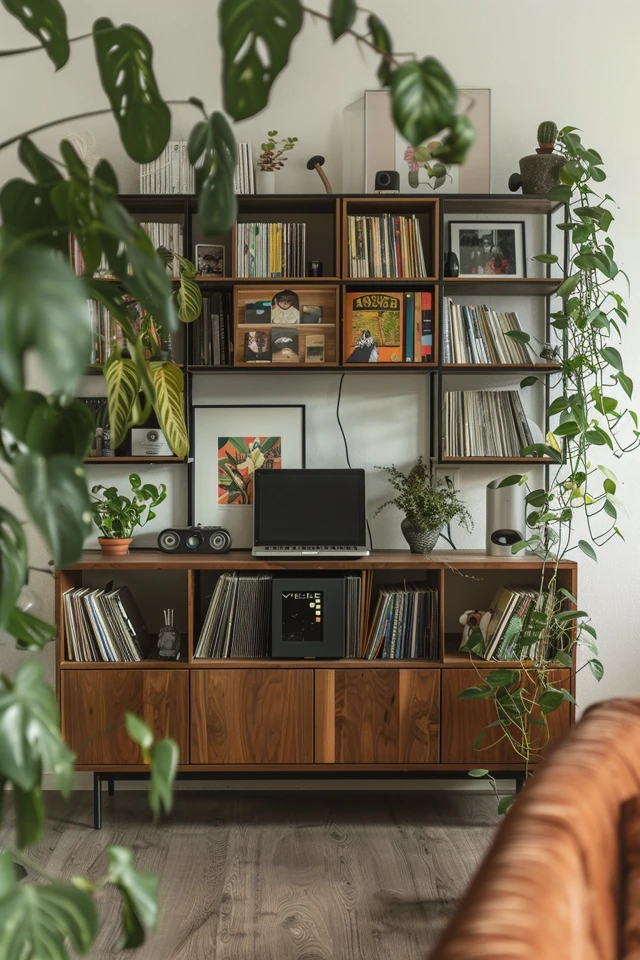
Vinyl Storage – DIY Ideas for Music Lovers
Introduction
There is something inherently ritualistic about playing a vinyl record. The tactile experience of sliding the disc from its sleeve, the faint crackle as the needle drops, and the deliberate act of listening to an album from start to finish offer a grounding escape from our digital world. However, as any collector knows, that rapidly growing stack of wax can quickly turn from a beloved hobby into a logistical nightmare.
When I design spaces for clients who are audiophiles, the conversation inevitably turns to storage. We have to balance structural integrity—because vinyl is incredibly heavy—with an aesthetic that honors the collection rather than hiding it away. You don’t need a custom millwork budget to achieve a high-end look; you just need to understand the physics of the materials and the flow of the room.
Whether you are looking to build a dedicated listening room or just a corner in your living area, these DIY solutions prioritize both form and function. For a visual feast of inspiration, stick around until the end because our curated Picture Gallery is waiting for you.
Understanding Vinyl Dimensions and Load Requirements
Before you cut a single piece of wood or buy a shelving unit to hack, you must understand the math behind vinyl storage. A standard LP cover is roughly 12.375 inches square, but when you account for protective outer sleeves, you really need a clearance of at least 13 inches in height and depth.
The biggest oversight DIYers make is underestimating weight. A single foot of stacked vinyl records weighs approximately 35 to 40 pounds. If you plan to span a shelf more than 24 inches without a central support, standard ¾-inch plywood or MDF will eventually sag. This isn’t just unsightly; it damages your records by creating uneven pressure points.
For any DIY build, I recommend a depth of 14 to 15 inches. This allows the records to sit recessed slightly from the edge, protecting the jacket spines from sun exposure and accidental bumps. If you are building a cabinet with doors, increase that internal depth to 16 inches to accommodate the hardware hinges without crushing your album covers.
Designer’s Note: The “Sag” Factor
In my early years, I once specified a beautiful 36-inch wide floating shelf for a client’s record collection. Within six months, it looked like a smiley face. The lesson? If you are going wider than 24 inches, you must use solid hardwood, reinforce the shelf with a front lip (apron), or add vertical dividers. Vertical dividers are your best friend; they provide structural support and keep your records standing straight up, which prevents warping.
The “Elevated” Crate System
The milk crate is the classic dorm-room storage solution, but we can elevate this concept for a grown-up interior. The goal here is modularity. You want a system that can grow as your crate digging habits continue.
Instead of plastic, build simple cubes using high-quality Baltic Birch plywood. Baltic Birch is a favorite in the design world because the exposed ply edges look architectural and intentional, eliminating the need for edge banding. Cut your panels to create internal dimensions of 13.5 x 13.5 inches.
Stack these wooden cubes horizontally and vertically to create a console. To make it look like a piece of furniture rather than a stack of boxes, build a simple plinth base (a recessed platform) painted matte black. This lifts the bottom row off the floor by about 3 inches, giving the unit a “floating” appearance and protecting the bottom records from vacuum cleaners and dust bunnies.
Common Mistakes + Fixes
Mistake: Stacking cubes without securing them.
Fix: Use binding post screws or simple mending plates on the back to lock the cubes together. This prevents the stack from toppling if you have curious pets or children.
Mistake: Leaving the wood raw.
Fix: Even if you want a natural look, raw wood absorbs oils from your hands. Seal your plywood with a water-based matte polyurethane. It keeps the color light but offers protection.
The Mid-Century Modern Console Hack
Mid-century modern design and vinyl records go hand-in-hand. Real vintage credenzas can cost thousands, but you can achieve this look with a clever DIY hack using stock kitchen cabinets or modular storage units (like the IKEA Eket or Bestå series).
Start with a low, horizontal cabinet unit. The key to the “high-end” look is getting it off the ground. Purchase heavy-duty mid-century style legs (tapered wood or hairpin metal). Because particle board furniture often has a hollow core, you cannot simply screw legs into the bottom.
You must glue and screw a solid wood plate or a strip of ¾-inch plywood across the entire bottom length of the unit first. This distributes the weight. Once your base is reinforced, attach your legs. For a 4-foot unit, four legs are sufficient. For anything longer, add a fifth center leg to prevent that inevitable sag we discussed earlier.
Adding Texture and Warmth
To hide the generic laminate finish, consider wrapping the top and sides in a wood veneer sheet. You can apply these with contact cement and trim the excess with a utility knife.
Alternatively, replace the standard doors with custom DIY fronts. Use speaker cloth (acoustically transparent fabric) stretched over a simple wooden frame for the doors. This hides the clutter of the spines while adding a texture that feels very 1970s Hi-Fi.
The “Browser” Bin Stand
The most enjoyable way to look through records is the way you do it at a record store: flipping through them front-to-back, viewing the cover art rather than reading thin spines. A “forward-facing” bin is a great weekend project.
Construct a V-shaped trough or a simple box on legs. The key ergonomic measurement here is the height. You want the top of the records to sit at roughly 36 to 40 inches from the floor. This allows you to stand and flip comfortably without hunching over.
For the front panel of the bin, use a piece of clear acrylic or glass. This allows the artwork of the first record to act as a display piece. It turns your storage into an ever-changing art installation.
What I’d Do in a Real Project
If I were building this for a client, I would incorporate a “Now Playing” ledge directly into the design. I would extend the back panel of the stand up an extra 2 inches and route a small groove into the top edge. When you pull a record to play, the jacket sits securely in that groove, upright and visible. It’s a small detail that improves the user experience immensely.
Wall-Mounted Display Ledges
Vinyl cover art is iconic, and hiding it all away is a missed opportunity for wall décor. Slim picture ledges are the standard solution, but we can refine this.
Buy raw J-channel molding or construct simple L-shaped ledges using 1×2 and 1×3 lumber. Paint them the exact same color as your wall. This makes the shelf visually disappear, allowing the album art to “float.”
When installing these, spacing is critical. Leave at least 14 inches of vertical space between ledges. This gives you enough room to lift a record up and out of the groove without hitting the shelf above it.
Layout Logic
Don’t just put up one long shelf. Think about composition.
- The Grid: Install three rows of three records for a bold, graphic statement.
- The Linear: Run a single ledge around the perimeter of the room at chair-rail height.
- The Trio: A simple grouping of three above the turntable is often enough to set the mood without cluttering the wall.
Lighting the Listening Station
Lighting is not technically storage, but it makes or breaks the storage area. You need task lighting to read the liner notes and check the vinyl for dust, but you don’t want harsh overhead glares.
Avoid placing your vinyl storage in direct sunlight. UV rays will fade the spines within a year, and the heat can warp the vinyl inside the sleeve.
For your DIY setup, install rechargeable, wireless LED puck lights inside the cubbies. Aim them toward the back of the cabinet to create a soft, backlit glow. This adds depth to the shelving.
For the turntable area, use a small, directional task lamp. A gooseneck lamp with a warm bulb (2700K to 3000K temperature) creates an intimate, jazz-club atmosphere. Avoid cool white or daylight bulbs (5000K+), which can make your relaxing corner feel like a laboratory.
Acoustics and Room Integration
Hard surfaces are the enemy of good sound. If you have built a beautiful plywood storage unit and placed it on a hardwood floor, you might notice the music sounds “bright” or tinny.
Anchor your listening spot with a rug. As a rule of thumb, the rug should be large enough that at least the front legs of your sofa and your storage unit sit on it. This physically connects the zones.
Opt for a wool rug with a thick pile. Wool is excellent at absorbing sound reflections. If your DIY storage unit is large and flat, it acts as a sound reflector. Breaking up the books or records with small felt baskets or plants can help diffuse the sound waves.
Final Checklist: Before You Build
1. Inventory Count: Count your records. Divide that number by 50 (approximate records per foot). This tells you the minimum linear footage of shelving you need.
2. Growth Factor: Multiply your linear footage by 1.5. You need room to grow, and packed shelves look cluttered and make it hard to browse.
3. Weight Calculation: Estimate the total weight. Ensure your floor (and your furniture legs) can handle it.
4. Material Check: Are you using particle board? Stop. Switch to plywood or solid wood for horizontal spans.
5. Hardware: Do you have wall anchors? Tall, heavy units must be anchored to studs to prevent tipping.
FAQs
Can I stack records horizontally?
No. Never stack vinyl records flat on top of one another. The weight creates ring wear on the artwork and can warp the discs at the bottom of the stack. Always store them vertically, like books.
How much clearance do I need for my turntable?
If your turntable has a hinged dust cover, measure the height of the unit with the cover fully open. Usually, you need 16 to 18 inches of vertical clearance. Do not build a shelf directly above the turntable that prevents the lid from opening.
Is MDF okay for vinyl storage?
MDF (Medium Density Fiberboard) is very heavy and prone to sagging over time if the span is too wide. It is also susceptible to moisture damage. High-grade plywood (like Baltic Birch) is lighter, stronger, and holds screws better.
How do I protect the records from the wood?
If your DIY shelves have a rough texture, line the bottom with a thin cork adhesive liner or felt. This prevents the bottom edges of your album covers from scuffing as you slide them in and out.
Conclusion
Building your own vinyl storage is about more than just saving money. It is about creating a home for the music that shapes your life. When you build a custom solution, you control the dimensions, the materials, and the aesthetic. You ensure that your collection is safe, accessible, and displayed with the respect it deserves.
Start with accurate measurements, choose materials that can handle the weight, and don’t forget the lighting. Your listening corner should be a place where you want to spend time—a sanctuary where the analog world takes precedence.
Picture Gallery


