
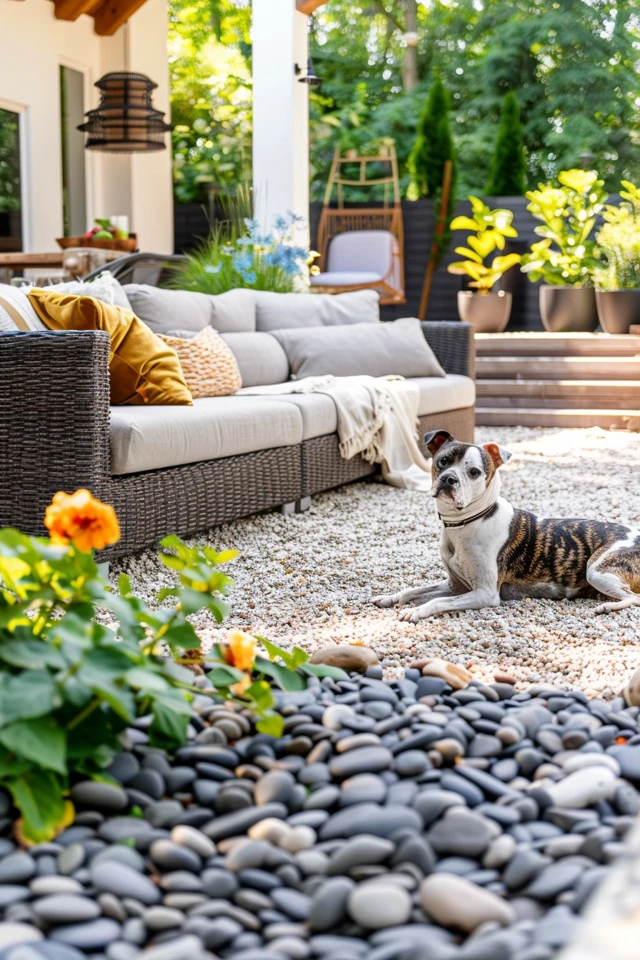
Dog-Friendly No Grass Backyard Ideas Unveiled
Designing a backyard that balances aesthetic appeal with the chaotic reality of dog ownership is one of the most common challenges I face as a designer. We all love our furry friends, but we generally do not love the yellow spots on the lawn, the muddy paws tracked across the living room rug, or the constant maintenance of natural sod.
I once worked with a client who had three Golden Retrievers and a postage-stamp-sized backyard in the city; they were replacing their sod every six months until we finally decided to ditch the grass entirely. For a dose of inspiration before we dive into the details, remember that our curated Picture Gallery is waiting at the end of the blog post.
Going grass-free does not mean your yard has to look like a parking lot or a barren desert. By layering materials, creating designated zones, and understanding how dogs interact with their environment, you can create a sanctuary that is safe for them and beautiful for you.
1. The Hardscaping Foundation: Pavers and Concrete
When you remove grass, you need a primary surface that can handle heavy traffic. In my design projects, I often lean toward concrete pavers or poured concrete slabs as the “flooring” of the outdoor room.
Pavers offer excellent drainage if installed correctly, which is non-negotiable for pet owners to prevent standing water and odors. I recommend using large-format pavers (24” x 24” is a standard versatile size) to minimize the number of joints where weeds can grow or debris can get trapped.
Designer’s Note:
One lesson I learned the hard way involved using smooth, polished concrete in a dog run. As soon as it rained, it became an ice rink, and an older dog actually slipped and pulled a muscle. Always check the slip-resistance rating of your tile or finish; for concrete, ask for a “broom finish” or an exposed aggregate texture to provide grip for paws.
If you are pouring a concrete slab, ensure you have a slope of at least 1/4 inch per foot away from the house. This ensures that when you hose down the patio to clean off urine or dirt, the runoff moves efficiently toward your drains or garden beds.
Common Mistakes + Fixes:
- Mistake: Using dark charcoal or black pavers in a sunny yard.
- Fix: Dark materials absorb heat and can burn paw pads instantly in summer. Stick to light grays, creams, or travertines that reflect sunlight and stay cooler to the touch.
- Mistake: Grouting pavers tight like an indoor bathroom.
- Fix: Leave a 2-4 inch gap between pavers and fill it with stabilized crushed stone or artificial turf strips. This assists with drainage and adds visual interest.
2. The Truth About Gravel and Stone Aggregates
Gravel is often the most budget-friendly alternative to grass, but it is a polarizing material for dog owners. The success of a gravel yard depends almost entirely on the specific type of rock you select.
I steer clear of “crushed” rock for main running areas because the jagged edges are sharp and can injure paw pads over time. Instead, I specify pea gravel or river rock, which are naturally tumbled and round.
Pea gravel is comfortable to walk on, but it creates a shifting surface that can be difficult for furniture stability. It works best in “potty zones” rather than the main dining area.
What I’d do in a real project:
- Layer the base: I never put gravel directly on dirt. I lay down a heavy-duty, permeable weed barrier first, then a 2-inch layer of “road base” (compacted dirt and rock), followed by 2-3 inches of the decorative gravel.
- Containment is key: Dogs run and kick. Without solid steel or wood edging (at least 3 inches high), your gravel will end up in your flower beds and on your patio.
- Sanitation strategy: Gravel allows urine to drain instantly. To maintain it, I recommend spraying the area with an enzymatic yard cleaner once a week during peak summer months to break down proteins that cause odors.
Another option is “Decomposed Granite” (DG), particularly stabilized DG. When installed with a stabilizer binder, it hardens almost like concrete but maintains a rustic, earthy look. It does not track as much as loose gravel and is excellent for pathways, though the grit can still attach to wet paws.
3. Artificial Turf: Choosing the Right Product
Artificial turf has come a long way from the plastic-looking carpets of the 1990s. However, as a designer, I am extremely picky about which turf products I will put in a home with pets.
You must look for “Pet Turf” specifically. Standard turf usually has a latex backing that requires holes for drainage; over time, urine gets trapped between the holes, creating a smell that is nearly impossible to remove.
Pet-specific turf uses a fully permeable backing (often called “flow-through” technology) that allows liquids to pass through any point of the mesh. This is critical for hygiene.
Key Specs to Look For:
- Pile Height: Aim for 1.0 to 1.5 inches. Anything longer creates drag when you are trying to scoop solid waste, making cleanup messy.
- Face Weight: Look for 60-80 ounces. This indicates a dense, lush grass that will stand up to heavy paws running back and forth.
- Infill: Never use black crumb rubber infill (it gets dangerously hot). Use an antimicrobial coated sand or a zeolite infill, which creates a chemical reaction to neutralize ammonia in urine.
Real-World Constraints:
In high-heat regions like Arizona or Texas, even the best turf can get hot. I always advise clients to keep a hose nearby to “flash cool” the surface before letting dogs out at midday, or ensure the turf area is shaded by a pergola or tree canopy.
4. Decking and Elevated Platforms
Building a deck is a fantastic way to cover uneven ground or tree roots without major excavation. For dog owners, the debate usually lands between natural wood and composite decking.
Composite decking (like Trex or TimberTech) is incredibly durable. It won’t splinter, which is a major safety plus for dog paws, and it is resistant to scratching. However, like stone, it can retain heat.
Natural wood (cedar or redwood) stays cooler but requires annual sealing to prevent it from absorbing urine odors. If you choose wood, you must be diligent about sanding down splinters and replacing rotting boards immediately to prevent injury.
A Designer’s Layout Trick:
If you have a small yard, use decking to create levels. Dogs love to perch and survey their territory. I often design a low-profile deck (6-12 inches off the ground) as a “lounging zone” with outdoor rugs, keeping the lower level for “business” and play.
When selecting outdoor rugs for the deck, avoid jute or sisal. They are absorbent and impossible to clean. Go for 100% polypropylene rugs; you can bleach them, hose them down, and they dry in the sun in minutes.
Measurements that matter:
- Railing gaps: Ensure vertical balusters on deck railings are no more than 4 inches apart (standard code), but for small dogs, I prefer 3 inches to prevent heads from getting stuck.
- Stair rise: Keep stair risers around 6-7 inches. Steep stairs can be hard on the joints of breeds prone to hip dysplasia or dachshunds with long backs.
5. Softscaping: Mulch and Plant Choices
Just because there is no grass doesn’t mean there is no nature. You need plants to soften the hard edges of pavers and fences. However, the ground cover in your planter beds is just as important as the plants themselves.
The Mulch Debate:
Never use Cocoa Bean Mulch. It smells like chocolate, which attracts dogs, but it contains theobromine and is highly toxic (potentially fatal) if ingested.
Instead, use Cedar chips or “playground chips.” Cedar has natural oil that helps repel fleas and ticks, adding a layer of functionality to your design. It is safe if a dog chews on a large piece, though ingestion should always be discouraged.
Hardy Plant Selection:
Dogs will trample delicate flowers. I focus on “architectural” plants that are tough and bounce back.
- Ornamental Grasses: Liriope or Mondo Grass are excellent, non-toxic border plants that can handle being stepped on.
- Shrubs: Boxwoods provide structure but can be sensitive to urine burn. I prefer tough natives like Rosemary (safe and smells great when brushed against) or Boston Ferns for shady spots.
- Toxic Alert: Before planting anything, cross-reference the ASPCA toxic plant list. Common landscaping plants like Sago Palm, Azalea, and Oleander are dangerous.
Final Checklist: The “Pet-Proof” Audit
Before you break ground or buy materials, run your plan through this checklist. This mimics the final review I do for my own clients.
- Shade Strategy: Do you have a shade sail, umbrella, or tree covering at least 30% of the yard? Dogs overheat faster than humans.
- Water Access: Is there a designated spot for a water bowl that won’t get knocked over? I love installing a wall-mounted pot filler faucet outside for easy refills.
- Escape Routes: Check the fence line. If you can fit your fist under the fence, a motivated terrier can dig under it. Bury chicken wire or place heavy river rocks along the fence base.
- Surface Temperature: Have you chosen light-colored materials? If not, do you have a cooling system (misters or hose) ready?
- Texture Variety: Did you mix textures? A yard with only concrete is boring. A mix of wood, stone, and turf provides sensory enrichment for the dog.
- Lighting: Do you have motion-sensor lights? This is helpful for those late-night potty breaks so you can see where to pick up waste.
FAQs
1. How do I stop my yard from smelling like a kennel?
The secret is drainage. If urine sits on top of a non-porous surface, it smells. Use permeable bases (gravel, sand joints) and use an enzymatic cleaner regularly. For turf, a zeolite infill is essential.
2. Is gravel bad for my dog’s paws?
Large, jagged gravel (crushed granite or
57 stone) can be painful. Small, round pea gravel is generally comfortable. However, some dogs refuse to walk on unstable surfaces. Test a small bag of gravel before covering your whole yard.
3. Can I have a garden without grass?
Absolutely. Use raised garden beds. I recommend building them at least 24 inches high. This keeps dogs from running through your vegetables and prevents male dogs from marking your basil plants.
4. What is the best option for renters?
If you can’t renovate, use interlocking deck tiles or roll-out bamboo fencing to cover ugly dirt patches. Mulch is also a cheap, removable fix to cover mud. Outdoor rugs are your best friend for covering concrete patios.
Conclusion
Ditching the grass was the best decision I made for my own backyard, and it has been a life-saver for dozens of my clients. It shifts the focus from weekend mowing and weeding to actually enjoying the space with your pet.
By choosing durable hardscapes like pavers, comfortable aggregates like pea gravel, or high-tech pet turf, you solve the mud problem instantly. The key is to respect the constraints of the materials—keeping them cool, keeping them clean, and ensuring they are safe for curious paws.
Your backyard should be a retreat, not a source of stress. With these no-grass strategies, you can design a space that looks high-end but functions like a dog park.
Picture Gallery


