
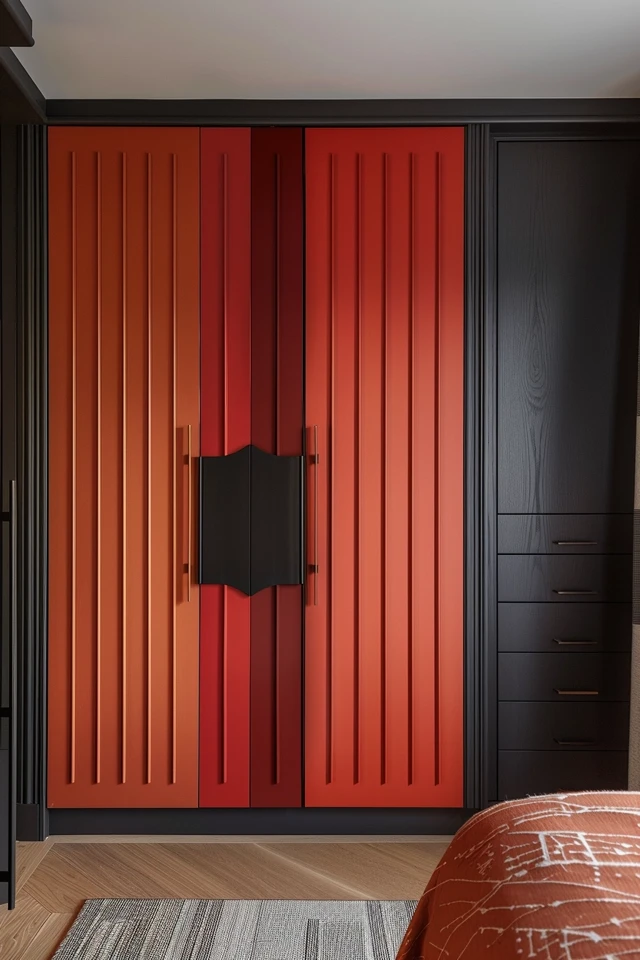
Double Closet Door Ideas for Stylish Storage
Double closet doors are often the largest architectural element in a bedroom or hallway, yet they are frequently treated as an afterthought. Many homes still feature basic, builder-grade bi-folds that offer little in the way of style or sound insulation. Upgrading these doors is one of the highest-impact changes you can make to a room’s visual flow without tearing down walls.
When selecting the right system, you have to balance the swing radius with the available floor space. A stunning set of French doors is useless if they hit the foot of your bed every time you open them. If you are looking for visual inspiration, don’t miss the curated Picture Gallery located at the very end of this blog post.
In my design projects, I treat closet doors like cabinetry rather than just entryways. This means focusing heavily on the hardware, the finish quality, and how the door style complements the room’s trim work. Whether you are dealing with a reach-in wardrobe or a laundry nook, the right doors can make a standard closet feel like a custom built-in.
1. The Classic Appeal of French Doors
French doors, also known as swinging doors, are the gold standard for accessibility and aesthetic value. Because both doors swing outward into the room, they provide full access to the interior of the closet at once. This makes them ideal for reach-in closets where you need to see your entire wardrobe at a glance.
However, the mechanics of French doors require specific spatial planning. You generally need a clear swing radius of at least 24 to 36 inches, depending on the width of the door slabs. If you place a bench or a rug within that zone, the doors will bind.
Designer’s Note: One issue I often see is poor latching on double doors. Standard passage latches don’t always work well here. I recommend using “ball catches” installed at the top of the door frame. This allows you to pull the doors open without turning a knob, creating a smoother user experience. Just ensure the tension is adjustable so they don’t pop open on their own.
When choosing the style, consider the visual weight of the door. A solid panel door offers excellent sound dampening, which is great if the closet houses a noisy HVAC unit or washing machine. Conversely, glass-paneled doors can make a small room feel significantly larger by extending the sightlines.
If you choose glass, think about visual clutter. Clear glass requires an impeccably organized closet. For most clients, I suggest:
- Reeded or Fluted Glass: This distorts the view enough to hide slightly messy clothes but still reflects light.
- Antiqued Mirror: This adds a glamorous, vintage touch and bounces light around dark corners without being too sharp.
- Frosted Glass: A safe, modern choice, though it can sometimes look a bit commercial if not framed in wood.
2. Modern Sliding and Bypass Systems
Sliding doors, often called bypass doors, are the most practical solution for tight quarters. Because they slide along a track within the door frame, they require zero floor clearance. This is a lifesaver in small guest rooms or narrow hallways where a swinging door would block traffic.
The downside to standard bypass doors is that you can only access half the closet at a time. This can be frustrating in shared closets where two people are trying to get dressed simultaneously. To mitigate this, triple-track systems are available that allow three doors to stack behind one another, opening up two-thirds of the space.
Common Mistakes + Fixes:
- The Mistake: Using cheap aluminum floor guides. These plastic or thin metal clips often break and scratch the doors.
- The Fix: Upgrade to a continuous floor track or a heavy-duty fin guide. This keeps the doors from wobbling back and forth as they slide.
- The Mistake: Ignoring the overlap.
- The Fix: Ensure your doors overlap by at least 1 to 2 inches in the center. If they meet edge-to-edge without overlap, you will see a gap of light and dust will enter the closet.
For a more contemporary look, I often specify “barn door” style hardware for double closets. Unlike bypass doors, barn doors slide over the wall outside the closet. This allows for full access to the interior, similar to French doors, but without the swing radius.
However, you must measure your wall space carefully. A double barn door setup requires wall space on either side of the opening equal to the width of the doors. This means you cannot place artwork, light switches, or electrical outlets on those sections of the wall.
3. Elevating the Bi-Fold Door
Bi-fold doors have a bad reputation because the standard builder-grade versions are flimsy and prone to falling off their tracks. However, high-quality bi-folds are actually incredibly efficient. They offer better access than sliders (about 90% of the opening is revealed) and use half the swing space of French doors.
The secret to high-end bi-folds is in the material and the track. Avoid hollow-core hollow vinyl or thin composite doors. Look for solid wood or solid-core MDF doors. The weight actually helps the door glide smoother and prevents it from jumping the track.
What I’d do in a real project:
- Replace the Hardware: Discard the standard small wooden knob that comes with the door.
- Placement: Instead of placing the knob in the center of the panel (the standard spot), place it in the center of the lead door, closer to the hinge. This creates better leverage and looks more like custom millwork.
- Trim Work: Add a chunky casing around the opening. Bi-folds often have large gaps at the top and bottom. A wider header trim can visually minimize that gap.
If you are renting and cannot replace the doors, painting them is your best option. A monochromatic look, where the doors, trim, and walls are painted the same color in a satin or semi-gloss finish, makes the cheap texture of the doors disappear. This technique, often called “color drenching,” is very effective for camouflaging dated architectural elements.
4. Texture and Materiality: Beyond Standard Paint
Closet doors are a massive vertical surface area, making them perfect for introducing texture. In a bedroom with mostly drywall and flat furniture, the closet doors can act as a feature wall. One of my favorite techniques is applying natural materials to the door insets.
Cane and Rattan Webbing:
Replacing the center panels of a door with cane webbing is not just an aesthetic choice; it is functional. The open weave allows for airflow. This is critical for linen closets or coat closets where fabrics need to breathe to avoid smelling musty. I recommend a tight radio weave for a modern look, or a hexagon weave for a more bohemian or traditional vibe.
Upholstered Doors:
In luxury primary suites, upholstered doors add softness and immense sound dampening. You can wrap a lightweight panel in faux leather, linen, or velvet and mount it to the face of a flat slab door. Use decorative nailheads (clavos) to frame the fabric. This is excellent for nurseries where sound control is paramount.
Architectural Molding:
You don’t need to buy expensive paneled doors to get a classic look. You can apply picture frame molding to flat slab doors.
- The Rule of Thirds: Generally, I create two boxes on the door. A smaller box at the top and a larger box at the bottom, separated by a “rail” that aligns with the door handle height (usually 36 inches from the floor).
- Spacing: Leave about 3 to 4 inches of space between the edge of the door and your molding. This ensures the hardware doesn’t overlap the trim.
5. Technical Considerations: Sizing and Installation
Before ordering any doors, you must understand the difference between the “rough opening” and the “finished opening.” The rough opening is the framing studs inside the wall. The finished opening includes the door jambs (the wood frame the door hangs on).
Most standard interior doors come in heights of 80 inches (6’8″) or 96 inches (8’0″). If you have 9-foot ceilings, using standard 80-inch doors leaves a large, awkward gap of wall space above the door. In this scenario, I always recommend upgrading to 96-inch doors. It draws the eye upward and makes the ceiling feel even higher.
Floor Transitions:
A detail that ruins many DIY installations is the floor transition. The closet flooring often differs from the bedroom flooring (e.g., carpet inside, hardwood outside). The closet doors should sit directly above the transition line. If the doors are set too far back or forward, you will see the wrong flooring peeking out when the doors are closed.
Lighting Integration:
If you are installing new jambs, consider adding a jamb switch. This is a small button installed in the hinge side of the frame that automatically turns on the interior closet light when the door opens. It is a small electrical cost that feels incredibly luxurious in daily use.
Final Checklist: The Designer’s approach
If I were auditing your closet door plan today, this is the checklist I would run through to ensure success.
- Clearance Check: Have I taped out the swing radius on the floor? Does it hit the nightstand or block the entry into the room?
- Hardware Consistency: Do the hinges match the handles? If I chose matte black levers, did I accidentally buy satin nickel hinges?
- Door Weight: If using a sliding track, is the header (the structural beam above the door) strong enough to hold solid core doors? Drywall anchors are not enough.
- Handle Height: Are the handles positioned at 36 inches from the finished floor? This is the ergonomic standard.
- Return Air: Does the room have a dedicated air return? If not, the closet doors may need to be undercut (shortened slightly at the bottom) to allow air to circulate when the central AC is running.
- Paint Finish: Am I using a durable finish? Semi-gloss or satin is preferred for doors as they handle fingerprints better than eggshell or matte.
FAQs
What is the standard width for double closet doors?
Standard widths usually start at 48 inches (two 24-inch panels) and go up to 72 inches (two 36-inch panels). Custom sizes can go wider, but once a single door panel exceeds 36 inches, it puts significant stress on the hinges and becomes heavy to operate.
Can I convert bi-fold doors into French doors?
Yes, this is a very popular renovation. However, you cannot just hang new doors on the old bi-fold track. You must remove the track and install new hinges on the side jambs. You may also need to install a “stop” (a small strip of wood) at the top of the frame so the doors don’t swing inward.
How do I fix doors that stick in humid weather?
Wood swells with humidity. If your doors stick in the summer, check the reveal (the gap) around the door. You need about 1/8-inch of clearance. You can use a hand planer or a belt sander to shave down the rubbing edge. Be sure to seal the raw wood with paint or varnish immediately to prevent moisture from entering again.
Should closet doors match the bedroom entry door?
They should coordinate, but they don’t have to be identical. For example, your entry door might be a solid 6-panel door, while your closet doors are louvered or glass. However, the trim style (casing) and the finish (paint color) should match to keep the room cohesive.
Conclusion
Double closet doors present a unique opportunity to blend utility with high design. They are substantial enough to set the tone for a room, yet functional enough that their operation impacts your daily routine. Whether you opt for the classic elegance of French doors, the space-saving efficiency of sliders, or a textured custom creation, the success lies in the details.
Remember that hardware placement, swing clearance, and material quality are just as important as the style itself. By treating your closet doors as a piece of permanent furniture rather than a temporary fixture, you increase both the value of your home and the enjoyment of your space.
Picture Gallery


