
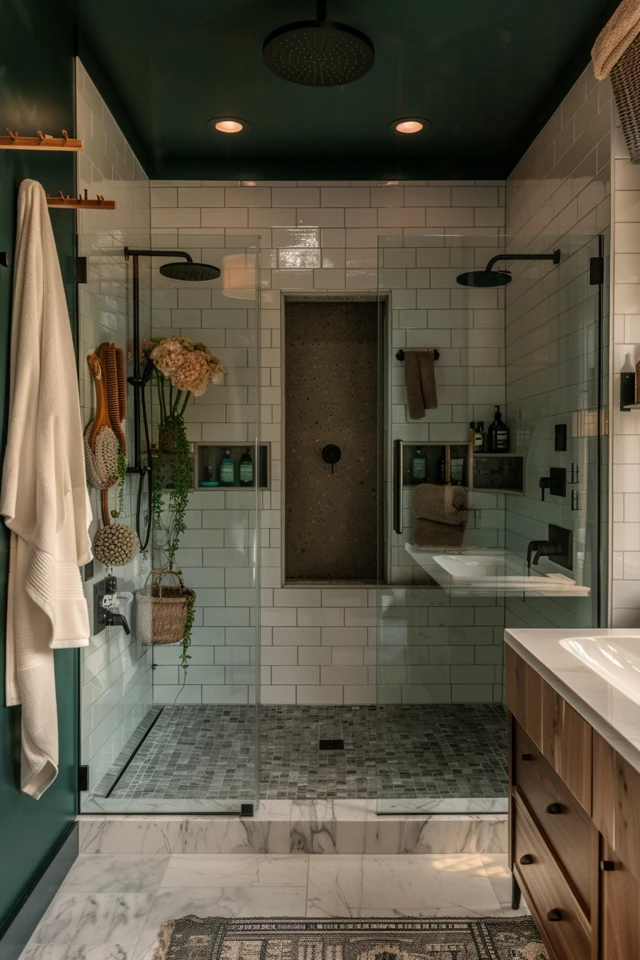
Double Shower Ideas for a Luxe Bathroom Upgrade
For years, the pinnacle of bathroom luxury was the oversized jetted tub. It sat in the corner, gathering dust, used perhaps twice a year. Today, that trend has shifted dramatically.
Modern homeowners are trading unused tub square footage for massive, spa-like double showers. It makes sense for the way we actually live. A spacious double shower offers efficiency for busy couples and a daily dose of luxury that doesn’t require filling a 60-gallon basin.
However, designing a shower for two is not as simple as just installing a second showerhead. It requires careful planning regarding plumbing capacity, spatial ergonomics, and moisture management. For even more visual inspiration on layout and material combinations, make sure to check out our curated Picture Gallery included at the very end of this article.
1. Planning the Footprint: Dimensions and Layouts
The most critical mistake I see in bathroom renovations is underestimating the space required for two people to shower comfortably. You cannot simply squeeze a double shower into a standard 30-inch by 60-inch tub footprint. It will feel claustrophobic and utilitarian, closer to a locker room than a spa.
Minimum Dimensions
For a functional double shower, you need a minimum width of 60 inches, but 72 inches is the sweet spot. The depth should be at least 42 inches, though 48 to 60 inches is preferable. If you plan to go doorless, you need even more depth to prevent water splashing into the dry zones of the bathroom.
The “Zone” Concept
In my design projects, I treat a double shower as two distinct zones that share a central space. You have three main layout options:
- Opposing Walls: Showerheads face each other on opposite short walls. This creates the most separation between users but requires a very wide shower (at least 60 inches) so the spray patterns don’t overlap in the middle.
- Side-by-Side: Both heads are on the long wall. This is excellent for plumbing consolidation but requires roughly 30 to 36 inches of width per person to avoid elbow bumping.
- Center Ceiling + Wall Mount: One user utilizes a wall-mounted unit, while the other uses a large ceiling-mounted rain head. This is great for square layouts.
Designer’s Note: The “Elbow Test”
When taping out your floor plan, have two people stand in the proposed space and pretend to wash their hair. If elbows touch walls or each other, the layout fails. Always account for dynamic movement, not just static standing.
2. Plumbing Infrastructure and Water Management
A double shower puts double the demand on your home’s plumbing system. Nothing ruins a luxury experience faster than a drop in water pressure or temperature when the second valve is turned on.
Supply Lines matter
Standard residential water lines are often ½-inch diameter. This is sufficient for one showerhead. However, running two rain heads and potentially body sprays simultaneously usually requires upgrading your supply lines to ¾-inch pipes. This ensures high volume and consistent pressure.
Drainage Capacity
A standard 2-inch drain can handle roughly 6 to 9 gallons per minute (GPM). If you install two high-flow heads (2.5 GPM each) plus body sprays, you are approaching the limit. I almost always specify a linear drain for double showers. Not only do they handle higher water volume, but they also allow for a single-slope floor, which lets us use large-format tiles instead of small mosaics.
Valve Placement
This is a detail amateur renovations often miss. Do not place the control valves directly under the showerhead. You want to be able to turn the water on and let it warm up without getting blasted by cold water.
Common Mistakes + Fixes
- Mistake: Placing controls where you have to step fully inside to reach them.
- Fix: Offset the valves to the entry wall or use a digital interface accessible from the dry side.
- Mistake: Running out of hot water after 10 minutes.
- Fix: Verify your water heater capacity. A double shower may require upgrading to a tankless system or adding a dedicated tank.
3. Enclosure Styles and Glass Selection
The glass enclosure defines the aesthetic of the room. It is the boundary between the wet and dry worlds, and it impacts how warm the shower feels.
The Frameless Look
This is the current gold standard. Using ⅜-inch or ½-inch thick tempered glass eliminates visual clutter and makes the bathroom feel larger. However, keep in mind that frameless glass requires very precise wall plumbness. If your walls are even slightly out of square, you will have gaps.
Steel Grid and Crittall Styles
For a more industrial or modern farmhouse look, black steel-grid glass is popular. Real steel frames are heavy and expensive. A practical alternative I use often is glass with the grid printed or applied to the outside surface. This leaves the interior glass smooth for easy squeegeeing.
The Doorless “Wet Room” Entry
Eliminating the door entirely is the ultimate luxury move. It removes the most high-maintenance part of the shower (hinges and seals). To make this work, you generally need a “drying zone” within the shower footprint. This usually requires a depth of at least 5 to 6 feet.
What I’d Do in a Real Project:
If the budget allows, I prefer a “pony wall” (half wall) on one side rather than floor-to-ceiling glass. This allows us to hide a niche for shampoo bottles so they aren’t visible from the main vanity area, and it provides a sturdy anchor for a floating bench.
4. Material Selection: Safety Meets Style
In a double shower, you have twice the floor area, meaning slip resistance is twice as important. This is where safety codes collide with design dreams.
Floor Materials
Polished marble slabs look incredible in photos, but they are slip hazards when wet and soapy. For shower floors, I rely on two strategies:
- Small Scale Mosaics: The high frequency of grout lines provides natural traction. Penny rounds, hexagons, or 2×2 squares work well.
- Textured Porcelain: If you want a seamless look, look for large tiles with a high Coefficient of Friction (COF) or a DCOF rating greater than 0.42. Many manufacturers make “grip finish” tiles specifically for wet areas.
Grout Choices
With a large double shower, you have a lot of grout to clean. I exclusively recommend epoxy grout or high-performance urethane grout for showers. Unlike traditional cement-based grout, these do not absorb water, are highly resistant to staining, and don’t need sealing.
Slab Walls vs. Tile
Cleaning grout on walls is a chore. A fantastic luxe upgrade is using solid surface slabs (quartz or porcelain) for the walls. You can book-match the veining for a dramatic art-piece effect. It eliminates 90% of the grout lines, making the shower much easier to maintain.
5. Lighting, Seating, and Niches
Once the layout and plumbing are set, the accessories determine the actual user experience. These elements should be planned during the framing stage, not added as an afterthought.
The Bench
A bench is non-negotiable in a luxury double shower. It’s used for shaving legs, relaxing, or placing products.
Standard height: 17 to 19 inches.
Depth: 12 to 15 inches.
Avoid wood-topped benches unless you are prepared for high maintenance. A solid piece of quartz or granite that overhangs the bench structure (with a drip edge) is the most durable choice.
The Niche
In a double shower, one small niche isn’t enough. You need storage for two sets of products. I prefer a long, horizontal niche spanning the width of the main wall.
Height Rule: Ensure the niche is at least 12 to 14 inches tall to accommodate economy-sized pump bottles.
Lighting
A single recessed can in the center casts unflattering shadows. I recommend perimeter lighting or two smaller recessed lights positioned roughly over where users will stand.
Tip: Ensure all fixtures are “wet rated” or “shower rated.” For a true spa vibe, install a waterproof LED strip inside the niche or under the floating bench.
Designer’s Note: The Steam Option
If you are going this far, consider adding a steam generator. However, know that a steam shower requires a completely enclosed space (glass going all the way to the ceiling) and a sloped ceiling (2 inches per foot) so condensation runs down the wall rather than dripping on your head.
Finish & Styling Checklist
The construction is done. Now, you style it to feel like a hotel. Here is the checklist I use to finish a project:
- Teak Mat: If you didn’t build a bench, a high-quality teak stool adds warmth and function.
- Towel Hooks: Install hooks within reach of the door but out of the spray zone. Heated towel warmers are a major plus.
- Uniform Bottles: Decant mismatching shampoos into matching amber or glass pump bottles. It instantly reduces visual noise.
- Eucalyptus Bundle: Hanging fresh eucalyptus from the shower head releases essential oils in the steam.
- Squeegee Storage: Buy a squeegee that matches your plumbing finish and give it a dedicated hook. If it’s easy to reach, you’ll actually use it.
FAQs
Does a double shower hurt resale value if I remove the tub?
In a primary suite (master bath), generally no. Most buyers today prefer a luxury shower over a tub they won’t use. However, you should keep at least one bathtub somewhere in the house (like a guest bath) for families with small children.
Are open double showers cold?
They can be. Without a door, steam escapes rapidly. To mitigate this, we often install a heat lamp in the ceiling near the drying area or use heated floors that extend into the shower itself.
How much does a double shower renovation cost?
It varies wildly by region and finishes, but generally, expect to pay 30% to 50% more than a standard shower renovation due to the extra plumbing labor, increased tile square footage, and custom glass costs.
Can I use two different finishes for the shower heads?
I advise against it. Mixing metals can work in a room (e.g., black faucet, brass lights), but within the shower enclosure, hardware should match for a cohesive look.
Conclusion
Upgrading to a double shower is an investment in your daily quality of life. It transforms a mundane routine into a restorative ritual. By focusing on the unsexy details first—pipe sizing, drainage pitch, and spatial clearance—you ensure the beautiful finishes you select will perform perfectly for years to come.
Remember that luxury is ultimately about function. A shower that looks beautiful but has low pressure or slippery floors will never feel luxurious. Plan the infrastructure, respect the measurements, and you will create a space that rivals any five-star hotel.
Picture Gallery


