
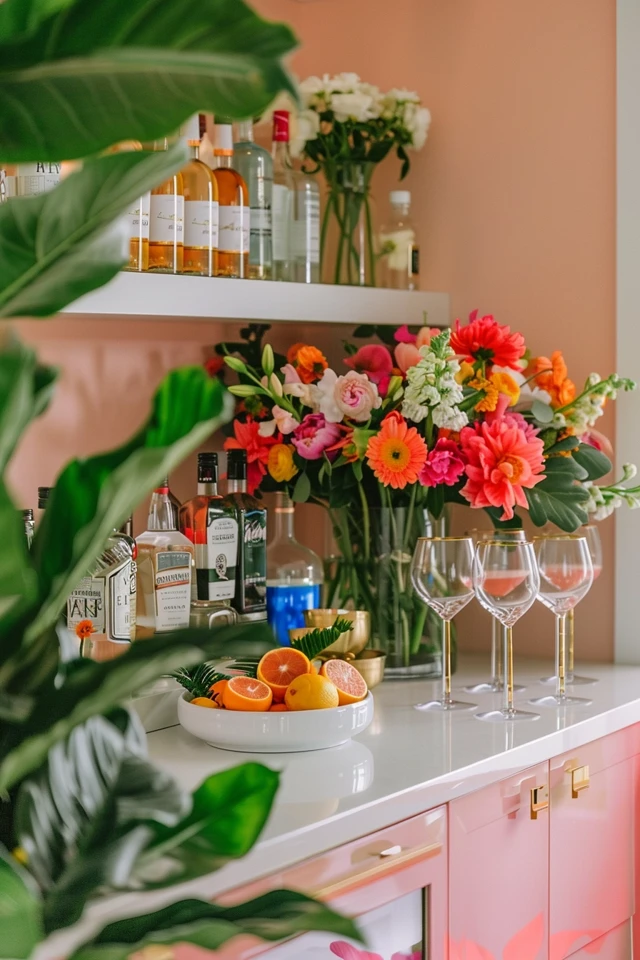
Dry Bar Ideas for Stylish Home Entertaining
As our homes continue to evolve into multifunctional spaces, the way we entertain has shifted. We are moving away from formal, stiff gatherings toward casual, fluid evenings where guests feel at ease helping themselves to a drink. This shift has given rise to the popularity of the dry bar.
Unlike a wet bar, which requires plumbing for a sink, a dry bar is simply a dedicated station for preparing beverages and storing glassware. It is less expensive to install and can be tucked into surprisingly small footprints. If you are looking for visual inspiration, you can find a curated Picture Gallery at the end of this blog post.
I often recommend dry bars to clients who want to free up kitchen counter space. When you move the beverage station out of the main “work triangle” of the kitchen, you prevent guests from congregating in front of the oven or refrigerator. It creates a secondary destination in the home, effectively spreading out the party and improving traffic flow.
1. Finding the Perfect Location and Layout
The beauty of a dry bar is its versatility regarding location. Since you do not need to worry about running water lines or drainage, you can utilize “dead” space that might otherwise go unused. However, placement requires strategic thinking about traffic flow and proximity to seating.
The Living Room Niche
In many older homes, there are recessed niches next to fireplaces that are too shallow for modern media consoles. These are ideal for built-in dry bars. If you have an alcove that is at least 15 to 24 inches deep, you have enough space for standard base cabinetry.
The “Spandrel” (Under the Stairs)
The triangular space beneath a staircase is often wasted or filled with clutter. By installing custom cabinetry here, you can create a moody, tucked-away bar. Because of the sloped ceiling, this area naturally lends itself to open shelving rather than heavy upper cabinets.
The Dining Room Buffet
If you have a large dining room, consider converting a sideboard or buffet area into a permanent dry bar. This keeps wine and spirits close to the dinner table. Ensure you have at least 36 to 42 inches of clearance between the front of the bar and the back of your dining chairs so guests can slide out comfortably.
Pass-Through Spaces
Wide hallways or the transitional space between a kitchen and living room are excellent candidates. A shallow console or built-in unit (even just 18 inches deep) can function perfectly here. Just ensure the walkway remains at least 36 inches wide to prevent bottlenecks.
2. Cabinetry Logic: Dimensions and Storage
Designing the cabinetry for a dry bar requires a different approach than a standard kitchen. The items you are storing—tall liquor bottles, delicate stemware, and small tools—have specific dimensional requirements.
Standard Dimensions
For a comfortable work surface, the standard countertop height is 36 inches, matching kitchen counters. If you want a “bar height” feel for leaning or standing, you can go up to 42 inches, but 36 is most practical for pouring drinks.
Depth Considerations
Standard kitchen base cabinets are 24 inches deep. However, for a dry bar in a living area, 24 inches can feel bulky. I often use semi-custom cabinets reduced to 18 or 21 inches in depth. If you plan to install a beverage refrigerator, check its specifications first. Most under-counter fridges require a full 24-inch depth for the unit plus the plug, though some shallow-depth models exist.
Drawer vs. Door Storage
I always advise clients to prioritize drawers over doors with shelves.
- Shallow top drawers: Use these for corkscrews, muddlers, napkins, and coasters. A 4-to-5-inch deep drawer is sufficient.
- Deep bottom drawers: These are excellent for storing standing liquor bottles. Verify the internal clearance is at least 12 to 14 inches to accommodate tall bottles of vodka or whiskey.
Designer’s Note:
One of the most common issues I see is “door clash.” If you place a dry bar in a corner, you must use a “filler strip” (usually 1.5 to 3 inches wide) between the wall and the first cabinet. Without this filler, the cabinet door or drawer will scrape against the wall when you open it.
3. Selecting Materials That Survive the Party
A dry bar is a high-traffic zone that faces specific hazards: red wine spills, acidic citrus juice, and alcohol. The materials you choose must be able to withstand these elements better than a standard side table.
Countertops
While marble is stunning, it is composed of calcium carbonate, which reacts instantly with acid. A spill of margarita mix or a slice of lemon will “etch” the surface, leaving a dull mark. For a worry-free dry bar, I recommend:
- Quartz: Non-porous and resistant to staining and etching.
- Quartzite: A natural stone that is harder than granite and looks like marble but is far more durable.
- Soapstone: Ideally suited for moody, dark bars. It is chemically inert, so acids won’t bother it.
Backsplash Options
Because there is no sink, you don’t technically need a waterproof backsplash, but it protects the wall from splashes while pouring.
- Antiqued Mirror: This is my secret weapon for small dry bars. It reflects light, making a dark nook feel twice as big, and adds a glamorous, speakeasy vibe.
- Wallpaper: Since there is no splashing water from a faucet, you can use a high-end wallpaper here. Vinyl or coated wallpapers are wipeable and safe for this application.
Flooring Protection
If your dry bar is in a carpeted living room, consider the floor immediately in front of it. You might want a small, low-pile runner rug to catch drips. Avoid high-pile shags here, as they are difficult to clean if sticky mixers are spilled.
4. Lighting: Setting the Mood
Lighting is the difference between a storage cabinet and a design feature. A dry bar is rarely used in broad daylight; it comes alive in the evening. Therefore, the lighting plan should be atmospheric, not clinical.
Color Temperature
Stick to warm light. I specify 2700K or 3000K LED bulbs. Anything cooler (4000K or 5000K) will look blue and sterile, resembling a dentist’s office rather than a lounge.
Layers of Light
- Under-Cabinet Lighting: If you have upper cabinets or floating shelves, install LED tape light channels underneath them. This provides task lighting for pouring drinks without the glare of overhead bulbs.
- Puck Lights: If you have glass-front upper cabinets, recessed puck lights inside the cabinet highlight your glassware collection beautifully.
- Sconces: Wall sconces mounted above the bar add character. Since you don’t have a sink mirror to work around, you can position them lower for a cozy glow.
Electrical Planning
If you are building new, ask your electrician for a “switch loop.” This allows you to control the under-cabinet lights from a wall switch rather than fumbling for a tiny toggle on the fixture itself. Also, ensure you have outlets above the counter for appliances like blenders or an espresso machine.
5. Styling and Stocking for Function
Once the construction is done, the styling brings the bar to life. The goal is to balance aesthetics with accessibility. You want it to look curated, not cluttered.
The Rule of Three
When styling open shelves, group items in odd numbers. For example, a stack of three cocktail books, a grouping of three unique bottles, or a set of three decanters. This is naturally more pleasing to the eye than even numbers.
Trays are Essential
Use a decorative tray on the countertop to corral the “loose” items. Place your ice bucket, shaker, and bitters bottles on the tray. This creates a designated zone for tools and keeps the rest of the counter clear for glass placement.
Glassware Display
If you have open shelving, group glasses by type. Place the shortest glasses (rocks glasses) on the lower shelves and taller stems (wine, champagne flutes) on higher shelves. This draws the eye upward and prevents the arrangement from looking top-heavy.
Common Mistakes + Fixes
Mistake: Forgetting Ventilation
Many homeowners slide a beverage fridge into a standard cabinet opening without checking the venting requirements.
The Fix: Most under-counter units vent from the front (the toe kick). However, some vent from the back. If yours is a back-vent unit, it needs air space behind and around it, or the motor will burn out. Always buy the appliance before finalizing the cabinetry.
Mistake: Ignoring Electrical Placement
Installing outlets directly in the center of the backsplash can ruin the visual flow, especially if you are using a beautiful slab or mirror.
The Fix: Use “plugmold” strips tucked up underneath the upper cabinets so the outlets are invisible. Alternatively, install outlets horizontally near the countertop deck to keep them discreet.
Mistake: Overcrowding the Surface
Filling the counter with too many permanent decor items leaves no room to actually make a drink.
The Fix: Leave a clear 18×18 inch square of empty counter space as your “work zone.” This is the minimum space needed to set down a glass and pour from a bottle.
What I’d Do in a Real Project: A Mini Checklist
If I were designing a dry bar for your home tomorrow, here is the exact sequence of decisions I would make to ensure success:
1. Check the depth: I would measure the wall to ensure we have at least 18 inches of depth. Anything less requires custom, shallow cabinets.
2. Audit the inventory: I would count your bottles and measure the tallest one. I would then adjust the shelf heights inside the cabinets to ensure that specific bottle fits standing up.
3. Select the appliance first: I would choose the beverage center or wine fridge immediately to get the precise rough-opening dimensions for the carpenter.
4. Choose a “living finish” or “bulletproof”: I would ask if you mind patina. If you hate scratches, we go with Quartz. If you love a worn-in look, we might do unlacquered brass hardware and soapstone.
5. Plan the electrical path: I would determine where the power for the fridge and lights is coming from to avoid opening up too much drywall.
Final Checklist: From Concept to Cocktail
Use this checklist to manage your dry bar project.
- Measure the space: Confirm width, depth, and height.
- Set the budget: Allocate funds for cabinetry, countertop, appliances, and labor.
- Select appliances: Buy the wine fridge or beverage center.
- Plan electrical: locations for fridge outlet, countertop outlets, and lighting.
- Choose cabinetry: Decide on paint grade or stain, door style, and hardware.
- Select countertop: Visit a stone yard to pick a durable slab or remnant.
- Install: Cabinets go in first, then templates for stone, then stone installation.
- Finish electrical: Install trim for lights and faceplates.
- Stock: arrange bottles, glassware, and tools.
FAQs
What is the difference between a wet bar and a dry bar?
A wet bar includes a sink and running water (plumbing), allowing you to wash glasses and dump ice. A dry bar consists only of cabinetry, counter space, and appliances without any plumbing. Dry bars are significantly cheaper and easier to install.
How much does a custom dry bar cost?
This varies wildly by region and finishes. However, a modest built-in dry bar using semi-custom cabinetry and a stone remnant usually starts around $2,500 to $4,000. High-end custom millwork with luxury appliances can easily exceed $10,000.
Can I use a regular mini-fridge in a cabinet?
Generally, no. Standard mini-fridges are freestanding units meant to release heat from the back and sides. Putting them inside a cabinet creates a heat trap that will kill the fridge. You must buy a “zero-clearance” or “built-in” capable unit that vents from the front toe kick.
Does a dry bar add value to a home?
Yes, specifically in the “bonus” or entertainment areas. While it doesn’t have the same ROI as a kitchen remodel, buyers appreciate dedicated storage and entertainment features. It implies a lifestyle of leisure and hospitality that is very attractive in the real estate market.
Conclusion
Creating a dry bar is one of the most rewarding small projects you can undertake in your home. It transforms an underutilized corner into a hub of hospitality. Whether you are mixing a complex cocktail or simply pouring a glass of sparkling water, having a dedicated space elevates the experience.
Remember that function must come first. The most beautiful bar is useless if you cannot fit a wine bottle in the drawer or if the counter etches the first time you squeeze a lime. By following the rules of scale, lighting, and material selection outlined above, you can build a space that is as durable as it is stylish.
Start by looking at the “dead zones” in your living or dining room. That empty alcove or cluttered corner might just be the future highlight of your next dinner party.
Picture Gallery


