
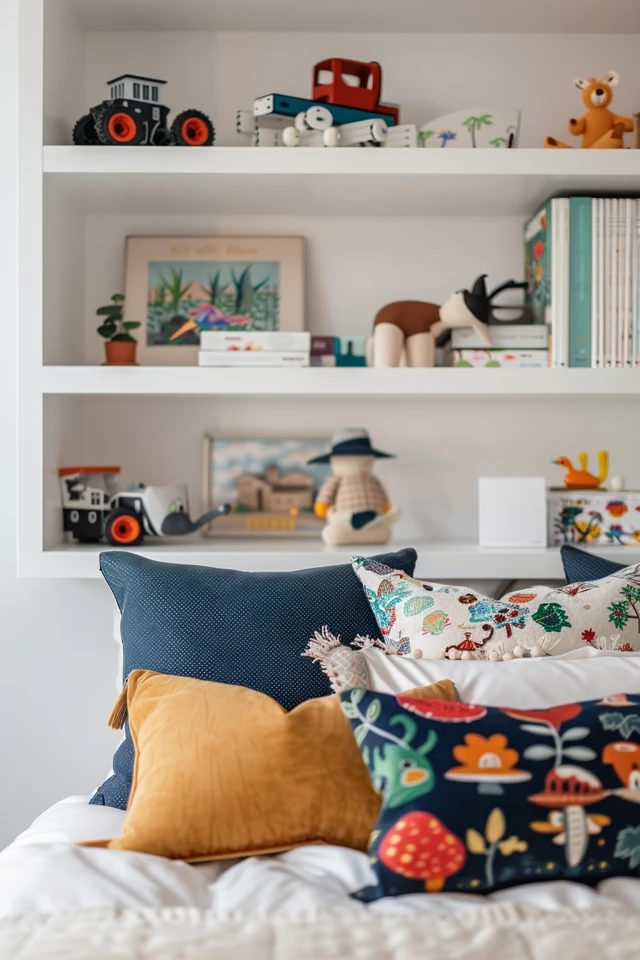
Dual-Purpose Magic: Playroom Guest Room Ideas
Combining a high-energy playroom with a restful guest bedroom sounds like a paradox. On one hand, you need durable surfaces, accessible storage, and open floor space for building blocks or train tracks. On the other hand, you want your mother-in-law or visiting friends to feel relaxed, welcome, and comfortable, rather than feeling like they are sleeping in a toy store.
The good news is that these two functions actually complement each other better than you might think. Guest rooms sit empty for the majority of the year, making them prime real estate for daily play. The secret lies in “hidden function”—design choices that allow the room to switch modes in under ten minutes.
In this guide, I will walk you through the exact layout strategies, furniture selections, and styling tricks I use to create these dual-purpose spaces for clients. For a quick dose of inspiration before you start planning, check out the curated Picture Gallery at the end of this post.
1. Mastering the Floor Plan: Zoning and Flow
The biggest mistake homeowners make in a playroom guest room is pushing all furniture against the walls without a strategy. While open space is great for play, it often makes a guest room feel unanchored and uninviting. The layout needs to prioritize floor space for kids while maintaining designated walkways for adults.
In a standard 10×12 or 12×14 room, I recommend “perimeter loading” your heavy case goods (dressers and wardrobes) while keeping the center clear. However, you must maintain a clear walkway of at least 30 to 36 inches around the bed when it is in use. If the bed blocks the path to the door or the bathroom, the room fails functionally.
Consider the “sightlines” from the doorway. When you look into the room, the focal point should be a piece of art, a window treatment, or a beautiful daybed—not a plastic bin of toys. If you can place the primary toy storage on the wall same as the door, it remains out of sight upon entry, instantly making the room feel more “adult.”
Designer’s Note: The Window constraint
In my years of designing, the most common layout error I see is blocking the window with tall storage or a Murphy bed. Natural light is crucial for both play and waking up pleasantly. Always keep heavy furniture on interior walls and leave the window wall for lower items like a bench, a low bookshelf, or simply open space with nice drapery.
2. Sleeping Arrangements That Save Space
The bed you choose dictates 80% of the room’s functionality. In a dedicated guest room, a queen bed is king. In a dual-purpose playroom, a permanent queen bed is a space-killer. You have three primary options, and the right choice depends on your frequency of guests.
The Murphy Bed (Wall Bed)
This is the gold standard for a reason. Modern Murphy beds can house a standard 10-to-12-inch thick coil mattress, offering genuine comfort. When closed, it looks like a sleek cabinet.
- Pros: Reclaims 100% of the floor space; allows for a real mattress.
- Cons: Expensive; requires installation into studs; cannot be moved easily.
- Clearance Rule: You generally need 85–90 inches of projection space when the bed is down. Measure this twice.
The Sleeper Sofa
If this room is used 90% for play and TV watching, and only 10% for sleep, a sleeper sofa is a solid choice. However, comfort is often the tradeoff.
- Pros: Provides seating for parents while kids play; softer aesthetic.
- Cons: Mattresses are thin; changing linens is a hassle.
- Pro Tip: Buy a high-quality memory foam topper and store it in the closet. It transforms a torture rack into a cloud.
The Daybed with Trundle
This is my favorite option for narrow rooms. It acts as a sofa for reading stories but can sleep two people separately (one on the top, one on the trundle).
- Pros: No mechanism to break; uses standard twin mattresses.
- Cons: Doesn’t work for couples who want to sleep in the same bed.
3. Storage Strategies for “Toy Zero”
To make a guest feel welcome, you must achieve “Toy Zero”—a state where no toys are visible. This doesn’t mean the toys are gone; it means they are concealed. Open shelving is the enemy in a dual-purpose room because it creates visual noise.
You need closed storage. I almost exclusively use cabinetry with doors or deep drawers for these projects. If you are using bookshelves, fill the bottom two shelves with opaque bins (wicker, felt, or wood) to hide the small plastic clutter.
The Vertical Rule
Utilize the full height of your walls. Install floor-to-ceiling cabinetry if the budget allows.
- Bottom 30 inches: Designated for kids. Heavy items, building blocks, and bins they can reach.
- Middle section: Books and display items (mix of kid and adult decor).
- Top section: Guest supplies. Extra pillows, blankets, and seasonal storage that kids cannot access.
Common Mistakes + Fixes
Mistake: Using transparent plastic bins.
Fix: While clear bins are great for organization, they look messy. Switch to uniform canvas or woven baskets. This instantly upgrades the aesthetic from “preschool” to “boutique hotel.”
Mistake: Over-stuffing the closet.
Fix: Guests need a place to hang clothes. Keep at least 12 inches of hanging rod space empty and provide 5-10 empty hangers. Don’t make them move your winter coats to hang a dress.
4. Kid-Proof Materials That Look Grown Up
Durability does not require sacrificing style. In fact, many high-end “adult” fabrics are now engineered to withstand red wine, which means they can certainly handle grape juice.
Upholstery
Look for “performance” fabrics. Crypton and high-performance velvets are practically indestructible. They resist staining, don’t pill easily, and can be cleaned with water and mild soap. Avoid pure linen (which wrinkles and stains) or loose-weave cottons (which snag on toy cars).
Rug Selection and Sizing
The rug is where the kids will spend most of their time. It needs to be soft but low-pile enough that a tower of blocks won’t topple over.
- Material: 100% Wool is naturally stain-resistant and cleans beautifully. Alternatively, washable rugs (like Ruggable) are excellent for high-traffic play zones.
- Sizing: Go as big as possible. A common error is a “postage stamp” rug floating in the middle. Ideally, the rug should stop 12 to 18 inches from the walls. This anchors the room and dampens sound—crucial for a playroom.
Wall Finishes
Flat or matte paint is a nightmare for playrooms because you cannot wipe it without burnishing the finish. Specify an Eggshell or Satin finish for the walls. These sheens reflect a tiny bit of light but allow you to scrub off crayon marks or scuffs with a magic eraser.
5. Styling and Lighting: Setting the Mood
Lighting changes the function of a room instantly. For play, you need bright, even overhead lighting so pieces aren’t lost in shadows. For guests, you need soft, warm, ambient lighting.
Layer Your Lighting
Do not rely on a single ceiling fixture.
- Ambient: A semi-flush mount fixture provides general light. Aim for 3000K LED bulbs, which are bright but not blue/sterile.
- Task: If there is a reading nook or a desk, add a focused task lamp.
- Mood: Bedside lamps are non-negotiable for guests. If using a Murphy bed with no side tables, install sconces on the wall flanking the bed.
Sophisticated Decor
Avoid “themed” decor. Instead of a Spiderman rug, use a red and blue geometric rug. Instead of cartoon posters, frame vintage maps or botanical prints that happen to be colorful.
This approach creates a space that feels youthful and energetic but doesn’t scream “playroom.” It allows the room to age with the child. A neutral backdrop (warm whites, greiges, or soft sage greens) allows the toys to provide the pop of color without overwhelming the senses.
What I’d Do in a Real Project: Mini Checklist
If I were consulting on your home today, here is the order of operations I would follow:
- Measure precisely: I would map out the swing of every door and drawer to ensure no collisions.
- Select the “Hero” sleeper: I would secure the bed choice first, as it dictates the remaining floor space.
- Plan closed storage: I would source a sideboard or wardrobe that hides everything.
- Anchoring: I would ensure every single piece of tall furniture is anchored to the wall. This is non-negotiable for safety.
- Drapes: I would install blackout curtains. Kids nap, and guests like to sleep in. Light control is vital for both.
Final Checklist: Ready for Guests?
Before your first guest arrives, run through this quick reset checklist to transition the room from “Play” to “Stay.”
- The Sweep: All loose toys go into their designated opaque bins.
- Clear Surfaces: Wipe down the nightstand or side table. It should be empty for the guest’s phone and water glass.
- The Bed: If using a sleeper sofa, pull it out and make it up with fresh, high-thread-count sheets before they arrive. Don’t make them do it.
- Closet Check: verify there are empty hangers and clear floor space for a suitcase.
- Tech Check: Leave a slip of paper with the Wi-Fi password on the nightstand.
- Lighting: Turn on the bedside lamps and dim the overheads to create a welcoming glow.
FAQs
What if the room is too small for a Murphy bed or sleeper sofa?
If the room is tiny (e.g., 8×10), consider a high-quality air mattress with a built-in frame. Modern air beds have improved significantly. Alternatively, look at “chair beds” (sleeper chairs) that fold out into a twin size. This allows you to host a single guest comfortably without dominating the room.
How do I protect the walls from scuffs?
Beyond using scrubbable paint, consider installing wainscoting or beadboard on the lower third of the wall. Wood paneling is much harder than drywall and can take a beating from toy cars. Paint it a semi-gloss color for a durable, stylish armor.
Is it okay to keep a changing table in the room?
If possible, try to integrate the changing station into a dresser that doesn’t look like baby furniture. A removable changing topper on a standard dresser is best. When guests come, remove the pad and store the diapers in a drawer. If that isn’t possible, just ensure the diaper pail is emptied and removed from the room to avoid odors.
Conclusion
Creating a dual-purpose playroom and guest room is about respecting both inhabitants. The child deserves a space to explore and imagine, and your guest deserves a space to rest and recharge. By prioritizing closed storage, selecting the right convertible bed, and using durable yet sophisticated materials, you bridge the gap between chaos and calm.
Remember that this room works hardest when it is flexible. It allows your home to adapt to your current season of life—whether that’s a season of building forts on a Tuesday or hosting family for the holidays. With the right planning, you don’t have to choose between a happy kid and a happy guest. You can have both.
Picture Gallery


