
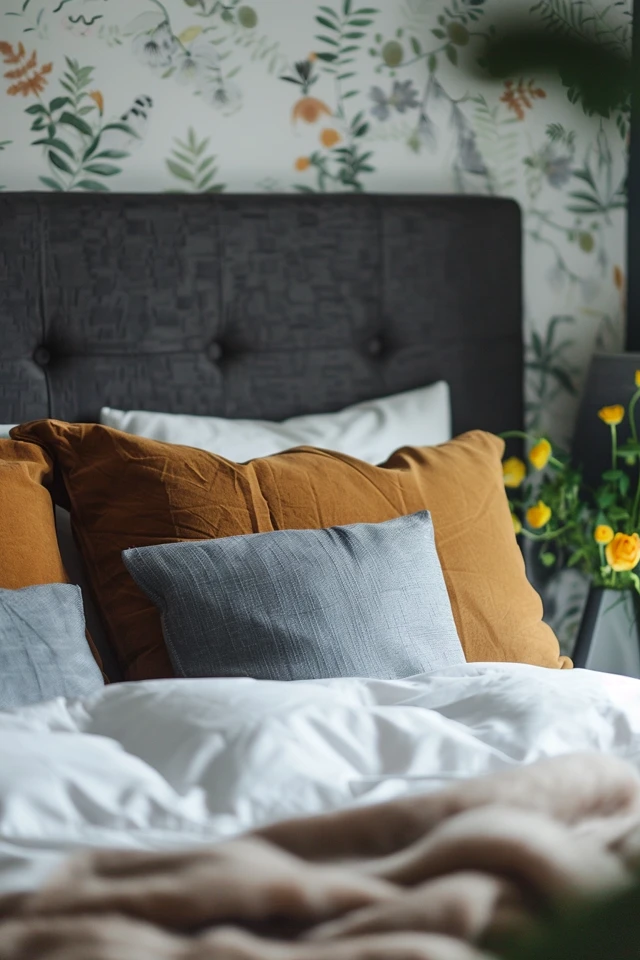
Elegant Dark Grey Headboard Bedroom Inspirations
A dark grey headboard is one of the most versatile anchors you can choose for a bedroom. In my years of designing residential spaces, I have found that clients often shy away from dark furniture because they fear it will make a room feel small or gloomy. The reality is quite the opposite. A charcoal, slate, or graphite headboard provides a grounding element that allows everything else in the room to shine, from crisp white linens to warm brass accents.
I recall a specific project for a couple in a compact city apartment. They were convinced they needed a beige bed to “keep things airy.” We compromised on a deep, storm-grey velvet upholstered frame. Once we installed it against a soft off-white wall and layered in textural bedding, the room immediately felt more expensive and intentional. The dark focal point actually made the walls recede, creating an illusion of more space.
If you are considering this look for your own sanctuary, this guide will walk you through the practical steps of styling, sizing, and selecting the perfect supporting elements. If you are looking for visual examples to spark your creativity, scroll to the Picture Gallery at the end of the blog post.
1. Selecting the Right Material and Undertone
Not all dark greys are created equal. The success of your bedroom design hinges entirely on the fabric or finish you choose. In interior design, we look closely at the “undertone” of the grey. Some greys read blue or purple (cool), while others lean towards brown or olive (warm).
If your room gets a lot of north-facing light, which is naturally blue and cool, a cool grey headboard might look sterile. In this case, choose a warm charcoal with brown undertones to balance the temperature. Conversely, in a south-facing room bathed in warm sunlight, a slate grey with blue undertones can look incredibly sophisticated and crisp.
Material choice dictates the “vibe” more than the color itself.
- Velvet: This is my go-to for adding luxury and depth. Velvet absorbs light, making the grey appear richer and deeper. It is perfect for a glam or transitional look.
- Linen or Tweed: These fabrics offer texture and a more relaxed, organic feel. They often feature a heathered appearance, meaning the fabric is a mix of light and dark threads. This hides lint and pet hair much better than solid velvet.
- Leather or Faux Leather: This creates a sleek, masculine, or modern industrial aesthetic. It is easy to wipe down but can feel cold against the skin in winter.
Designer’s Note: Durability Matters
In a real project, I always check the “double rub” count of the upholstery fabric. This measures how much wear a fabric can take before showing damage. For a headboard, you are resting your head and back against it nightly.
Look for a fabric rated for at least 15,000 double rubs. If you have a cat that likes to perch on top of the headboard, look for tight-weave microfiber or commercial-grade fabrics rated for 50,000+ rubs. Avoid loose linen weaves if you have pets with claws, as they will pull the threads instantly.
2. Managing Contrast and Wall Color
The most common question I get regarding dark furniture is, “What color should I paint the walls?” You generally have two successful routes: high contrast or moody immersion.
The High Contrast Approach
This is the classic hotel look. You pair the dark grey headboard with white or very light neutral walls. This highlights the silhouette of the bed and makes it the star of the show.
However, avoid stark, clinical white paints. They can make a dark grey headboard look harsh. Instead, opt for creamy whites or greiges. If you are renting and stuck with standard “landlord white” walls, this approach works naturally without painting.
The Moody Immersion Approach
This is for those who want a cozy, cocoon-like feel. You paint the wall behind the bed (or the whole room) in a shade of grey that is slightly lighter or slightly darker than the headboard.
The trick here is ensuring there is enough difference in Light Reflectance Value (LRV) so the headboard doesn’t disappear into the wall. If your headboard is a dark charcoal, try a mid-tone grey wall. The lack of sharp contrast blurs the boundaries of the room, which is excellent for sleeping.
Common Mistakes + Fixes
Mistake: Using a wall color with a clashing undertone. For example, placing a blue-based slate grey headboard against a beige wall with yellow undertones. The result looks muddy and unintentional.
Fix: Always bring a fabric swatch of your headboard to the paint store. compare it against paint chips in natural daylight, not just under the store’s fluorescent lights. If the headboard is cool, stick to cool wall colors. If it’s warm, stick to warm neutrals.
3. Bedding: The Layering Equation
A dark headboard is a visual “black hole” (in a good way) because it absorbs attention. To prevent the bed from looking like a dark heavy block, you must lighten up the bedding.
I rarely recommend matching the bedding to a dark grey headboard. It looks heavy and uninviting. Instead, think in layers of three.
Layer 1: The Sheets
Crisp white sheets are the gold standard here. They provide a clean, bright border between the dark headboard and the rest of the bedding. This “cuff” of white breaks up the heaviness. If white is too high-maintenance for your lifestyle (kids or pets), a very light silver grey or a pale patterned sheet works well.
Layer 2: The Duvet or Comforter
This is where you can introduce texture. A duvet cover in a lighter shade of grey, white, or even a soft oatmeal color bridges the gap between the headboard and the sheets. If you want color, muted tones like dusty blue, sage green, or blush pink look incredible against dark grey.
Layer 3: The Throw and Pillows
This is where you add personality. If your headboard is solid grey, use a throw blanket with a pattern or a chunky knit texture at the foot of the bed.
What I’d Do in a Real Project: The Pillow Formula
For a Queen bed with a dark grey headboard, here is my styling checklist:
- 2 Euro Shams (26″ x 26″): Place these against the headboard. Choose a fabric that contrasts with the headboard (like white or a light print). This prevents the “floating headboard” look.
- 2 Standard Sleeping Pillows: Stacked or propped in front of the Euros.
- 1 Lumbar Pillow (14″ x 36″): Placed front and center. This can be a dark color or a bold pattern to tie the headboard color back into the mix.
4. Lighting: The Secret to Elegance
Dark furniture requires strategic lighting. A dark grey headboard will not reflect light the way a wood or white bed does. If your lighting is poor, the corner of the room where the bed sits will feel like a void.
Sconces vs. Lamps
I love using wall sconces with dark headboards. Metals like brushed brass, polished nickel, or matte black look stunning against charcoal fabric.
If you are renting or don’t want to hire an electrician, plug-in sconces are a fantastic solution. Position them so the bulb is approximately 60 to 66 inches from the floor, depending on your ceiling height. This keeps the light pool focused on your reading material, not the ceiling.
If you prefer table lamps, ensure the lamp base contrasts with the headboard. A dark grey lamp base will disappear against a dark grey headboard. Go for ceramic white, glass, or metallic bases.
Rules of Thumb: Kelvin Temperature
Never ignore the color temperature of your bulbs. For a bedroom with dark grey elements, use bulbs between 2700K and 3000K (Warm White).
Anything higher (4000K-5000K) is “Daylight” and will make your dark grey headboard look blue, harsh, and commercial. Warm light softens the dark fabric and makes the texture of velvet or linen pop.
5. Nightstands and Proportions
The visual weight of a dark grey headboard is significant. If you pair it with spindly, tiny nightstands, the bed will look like it is crushing the furniture next to it. You need nightstands that can hold their own.
Scale and Mass
Look for nightstands that are substantial. A chest-of-drawers style nightstand usually works better than a table with thin legs. If you do choose a table with legs, make sure the top is wide (at least 24-28 inches for a King bed) to balance the scale.
Material Coordination
You have a lot of freedom here.
- Warm Wood (Walnut/Oak): This adds necessary warmth to the cool grey. This is the most popular choice for a balanced, welcoming room.
- Black: This creates a very moody, modern, monochromatic look. If you do this, ensure the nightstand has hardware (knobs/pulls) that catches the light so it doesn’t vanish.
- Mirrored or White Lacquer: This brings a touch of glam and high contrast, perfect for brightening up a smaller room.
Designer’s Note: Height Alignment
A common functional mistake is nightstand height. Your nightstand should be level with the top of your mattress or up to 2 inches higher.
If your nightstand is lower than the mattress, it looks visually awkward next to a tall, dark headboard, and it is uncomfortable to reach for a glass of water. Measure your mattress height (including the box spring) before buying tables.
Final Checklist: Getting the Look Right
Before you finalize your design, run through this quick checklist to ensure your dark grey headboard will work in your space.
- Check the Undertone: Have you compared the grey fabric swatch to your paint and flooring in natural daylight?
- Measure the Height: If you have low ceilings (8 ft), a very tall headboard might overwhelm the room. Aim for a headboard height of 48-54 inches for standard ceilings.
- Anchor with a Rug: Does your area rug extend at least 18 inches (for Queen) or 24 inches (for King) on the sides and foot of the bed? A dark bed needs a large rug to “sit” on, or it will feel top-heavy.
- Lighten the Linens: Do you have lighter sheets or contrasting Euro shams ready to break up the dark block of color?
- Cord Management: Because dark headboards draw the eye, messy cords behind nightstands become very visible against light walls. secure cords to the back of the nightstand legs.
FAQs
Does a dark grey headboard show dust?
Yes, dark fabrics can show light-colored dust and lint. If this concerns you, avoid solid velvet. Choose a heathered grey linen or a tweed weave. The variation in the thread colors disguises dust effectively. For velvet, a quick weekly pass with a lint roller is usually sufficient.
Can I use a dark grey headboard in a small room?
Absolutely. The key is to keep the bedding light and the nightstands uncluttered. A dark headboard adds depth, which can actually distract the eye from the small footprint of the room. Just avoid a footboard if the room is tight; stick to a headboard-only setup to keep the traffic flow open.
What metal finishes work best with dark grey?
Dark grey is a neutral that plays well with almost everything.
- Brass/Gold: Adds warmth and a luxury feel. Best for counteracting cool greys.
- Matte Black: Creates a modern, minimalist look.
- Polished Nickel/Chrome: Enhances the cool tones. Best for ultra-modern or Art Deco styles.
Conclusion
Choosing an elegant dark grey headboard is a design decision you are unlikely to regret. It offers a sophisticated foundation that can evolve with your style. Whether you swap out throw pillows for the seasons or change your wall color down the road, the grey headboard remains a steadfast, stylish constant.
By paying attention to the undertones, layering your bedding with texture, and ensuring your lighting is warm and inviting, you can create a bedroom that feels both dramatic and deeply restful. It is all about balance—letting the dark tones ground the space while lighter elements keep it breathing.
Picture Gallery


