
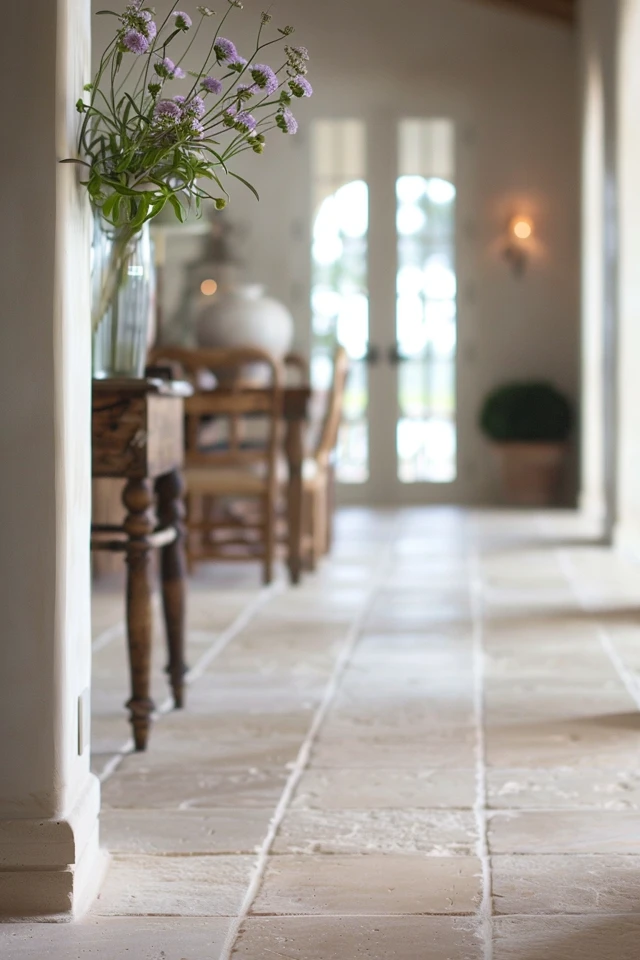
Elegant French Country Tile Floor Designs
There is something undeniably grounding about walking onto a floor that feels like it has been there for centuries. French Country design is not just about toile fabrics or antique hutches; it starts from the ground up with robust, texture-rich flooring that prioritizes imperfect beauty over sterile precision.
In my years designing homes, I often tell clients that your floor is the largest canvas in the room. If you choose the right materials—tumbled stone, warm terracotta, or soft limestone—the rest of the design naturally falls into place because the foundation dictates the atmosphere.
Whether you are renovating a farmhouse kitchen or adding character to a new build, this guide covers the essential layouts and materials you need to know to capture that Provencal charm. For a massive dose of inspiration, be sure to scroll all the way to the bottom for our curated Picture Gallery.
1. The Holy Trinity of Materials: Terracotta, Limestone, and Travertine
The secret to authentic French Country flooring is selecting materials that age gracefully. We are looking for “living finishes” that develop a patina over time rather than looking worn out.
Terracotta (The Classic Choice)
True French terracotta, often called “tomette,” is characterized by its deep, rusty red and ochre hues. Unlike the bright orange Saltillo tile often found in Spanish design, French terracotta tends to be earthier and denser.
In a high-traffic kitchen, I prefer using reclaimed terracotta tiles. Because they have already survived decades of use, they are incredibly durable and offer instant character. If buying new, look for “hand-molded” options rather than machine-cut tiles to ensure slight size variations that add to the charm.
Limestone (The Elegant Choice)
If you want a lighter, airier feel, limestone is the gold standard. French limestone usually comes in soft beiges, creams, and greys.
For a family home, I strongly advise against polished limestone. It scratches easily and shows every water spot. Instead, specify a “tumbled” or “brushed” finish. This texturing hides crumbs and dust, making it much more forgiving for households with pets or children.
Travertine (The Practical Alternative)
Travertine serves as a budget-friendly alternative to limestone while offering a similar aesthetic. The key is to avoid the filled-and-honed look that was popular in the early 2000s.
Look for “unfilled” travertine with chiseled edges. The natural pits and voids in the stone can be filled with grout during installation, creating a rustic, old-world surface that looks significantly more expensive than it is.
2. Mastering the Layout: Patterns That Define the Style
You can buy the most expensive stone in the world, but if you lay it in a straight, sterile grid, you lose the French Country soul. The pattern is just as important as the material.
The Versailles Pattern (The French Pattern)
This is the most iconic layout for this design style. It consists of four different tile sizes (typically 8×8, 8×16, 16×16, and 16×24 inches) arranged in a repeating puzzle-like module.
This layout eliminates long, straight grout lines, which helps the floor look more organic and less engineered. It creates movement in the room and is excellent for hiding walls that aren’t perfectly square—a common issue in older homes.
Herringbone and Chevrons
For narrow spaces like hallways, mudrooms, or laundry rooms, I love using brick-shaped terracotta tiles in a herringbone pattern.
Designer’s Rule of Thumb: When using herringbone, pay attention to scale. In a small powder room, a 2×8 inch brick works well. In a large entry hall, scale up to a 4×12 inch tile to prevent the floor from looking too busy or cluttered.
Checkerboard on the Diagonal
A classic black-and-white checkerboard is timeless, but for a French twist, soften the contrast. I often use a cream limestone paired with a soft grey stone rather than stark black.
Laying this pattern on a diagonal (diamond shape) expands the visual size of the room. It draws the eye outward to the corners, making narrow kitchens feel significantly wider.
3. Grout and Installation Details That Make or Break the Look
The grout line is where many DIY projects or inexperienced contractors fail. In modern design, we want tiny, invisible grout lines. In French Country design, the grout is a feature.
Grout Width
Do not aim for 1/16-inch grout lines here. I recommend a minimum of 1/4-inch to 3/8-inch spacing for rustic stone or terracotta. The wide joint accommodates the irregular edges of the tiles and adds to the historic feel.
Grout Color Selection
Never use bright white grout. It creates a harsh grid that fights against the natural warmth of the stone.
My Go-To Colors:
- For Terracotta: Medium grey or warm taupe. Avoid red-tinted grouts; you want contrast, not a color match.
- For Limestone: Sand, beige, or a light warm grey (like “Alabaster” or “Antique White”).
The “Over-Grout” Technique
For an authentic farmhouse vibe, ask your installer about “over-grouting” or a “smeared grout” technique. This involves leaving a thin layer of grout on the edges of the stone, making the floor look like it has been walked on for a hundred years. Note: This must be done carefully, or it just looks messy. Request a mock-up board before they touch your actual floor.
4. Practical Considerations: Comfort, Maintenance, and Durability
French Country floors are beautiful, but they are also hard surfaces. Here is how to make them livable for modern families.
Temperature Control
Stone and tile are cold. If you live in a northern climate, I consider radiant underfloor heating mandatory for these materials, especially in bathrooms.
If radiant heating is not in the budget, you must plan for large area rugs. In a living room, ensure the front legs of all furniture sit on the rug to anchor the space and provide thermal comfort.
Slip Resistance
Kitchens and mudrooms get wet. High-gloss tiles are a safety hazard. When shopping, look for the tile’s dynamic coefficient of friction (DCOF) rating. You want a rating of 0.42 or higher for safety.
Tumbled stone and unglazed terracotta naturally have good grip. If you choose a porcelain lookalike, ensure it has a matte, textured finish designed for floor use.
Sealing and Stain Management
Natural stone is porous. Red wine, olive oil, and coffee can leave permanent marks if the stone is not sealed properly.
Designer’s Note: I always recommend a high-quality penetrating sealer. Unlike a topical sealer that sits on top like a plastic film, a penetrating sealer soaks into the pores to repel liquid while keeping the natural look of the stone. You will need to reseal high-traffic areas every 1–2 years.
5. Blending with Other Elements: Wood Transitions and Baseboards
How your tile meets the wall and other floors is a subtle detail that signals high-quality design.
The Baseboard Connection
Avoid standard contractor-grade quarter-round molding. It looks cheap against elegant stone.
Instead, install the tile first, then install the baseboard on top of the tile. This creates a clean, professional junction. If you must use a shoe molding, match it to the wood of the baseboard, not the floor, and choose a tall, architectural profile.
Wood-to-Tile Transitions
In open-concept homes, you will often transition from a tiled kitchen to a wood-floored living area. Avoid metal transition strips.
Ideally, the subfloors should be adjusted so the tile and wood are flush (level) with each other. The gap can be filled with a flexible caulk that matches the grout color, or a thin strip of the wood flooring running perpendicular to the transition (a “header” board).
Common Mistakes + How to Fix Them
Mistake: Ignoring Subfloor Strength.
Real stone and terracotta are heavy. If your subfloor has flex or bounce, the grout will crack within months.
The Fix: Before laying tile, reinforce the subfloor with a cement backer board or a decoupling membrane (like Schluter-Ditra). This prevents movement from transferring to the tile.
Mistake: Using Patterned Porcelain with High Repeats.
If you use a porcelain tile that looks like stone, cheap brands have the same “print” on every 4th or 5th tile. When laid out, the repetition is obvious and looks fake.
The Fix: Buy from reputable brands that boast “30+ faces” or high variation technology. Always pull tiles from 3 or 4 different boxes simultaneously during installation to mix up the pattern.
Mistake: Not Accounting for Thickness.
Terracotta tiles can be up to 1 inch thick, while standard tile is 3/8 inch. This can trap your dishwasher or make doors scrape the floor.
The Fix: Check all appliance clearances and door swings before purchasing materials. You may need to shave down the bottom of interior doors.
Real Project Checklist: What I Do
If I were managing your French Country flooring project, this is the exact order of operations I would follow:
1. Sample in Position: Order 3-4 full-size samples. Place them on the floor (not a table) and look at them in morning, noon, and evening light.
2. Dry Lay: Before a single drop of mortar is mixed, have the installer lay out about 50 square feet of tile dry. This lets you approve the color mix and the pattern layout.
3. Pre-Seal (For Terracotta): If using raw terracotta, dip-seal or brush-seal the tiles before installation. If you don’t, the grout color will stain the porous tile face during installation.
4. Grout Mock-up: Ask the installer to grout a small sample section on a scrap board. Grout colors often dry lighter than the sample stick implies.
5. Final Seal: Apply the final coat of sealer 72 hours after grouting to lock everything in.
Frequently Asked Questions
Is terracotta flooring expensive?
Authentic French reclaimed terracotta is very expensive (often $15-$30 per square foot). However, new machine-made terracotta or high-quality porcelain lookalikes can be found for $5-$10 per square foot.
Does stone flooring chip easily?
Natural stone is tough, but not invincible. If you drop a heavy cast-iron skillet, you might chip a tile. However, in French Country design, a chip is considered “patina” and adds to the character. It is much less noticeable on rustic stone than on a pristine white ceramic tile.
Can I install this over existing linoleum?
Technically yes, if the linoleum is fully adhered, but I rarely recommend it. It is always better to demo down to the subfloor to ensure a stable, crack-free bond.
How do I clean rustic stone floors?
Avoid acidic cleaners like vinegar or lemon juice, as they can etch limestone and eat away at sealers. Use a pH-neutral cleaner specifically designed for natural stone.
Conclusion
Choosing a French Country tile floor is an investment in atmosphere. It shifts the tone of your home from “new and temporary” to “established and enduring.”
While the materials—terracotta, limestone, and travertine—require a bit more thought regarding installation and maintenance than standard vinyl, the payoff is immense. You gain a floor that doesn’t just look good in photos, but feels substantial underfoot and ages beautifully alongside your family.
Remember to embrace the imperfections. A slightly wider grout line, a varied color palette, or a tumbled edge is exactly what gives this style its warmth.
Picture Gallery


