
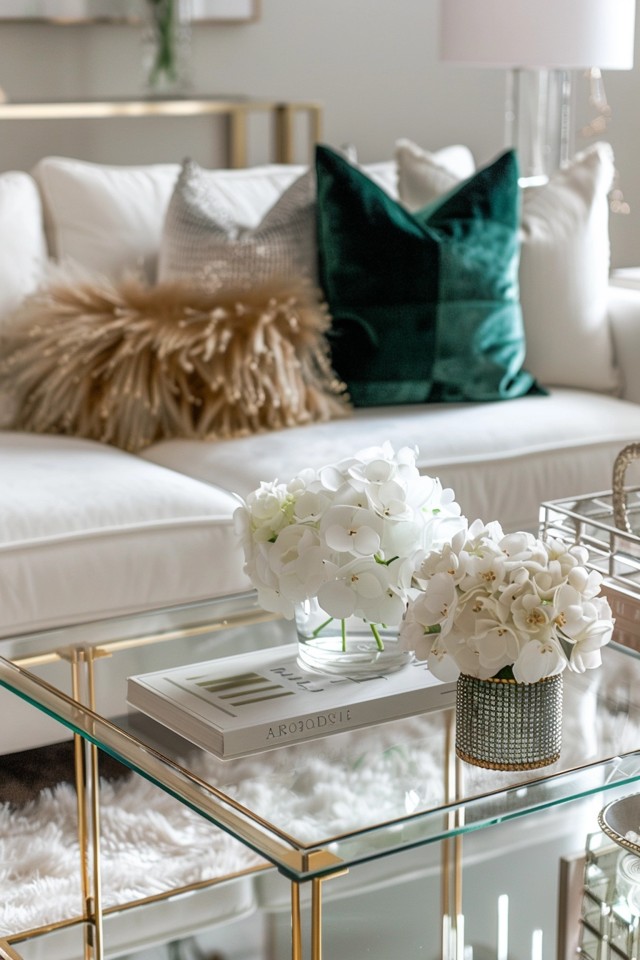
Elegant Glam Living Room: Crystal Decor
There is a fine line between a living room that feels elegantly glamorous and one that feels like a showroom for costume jewelry. I learned this lesson early in my career when a client insisted on crystal everywhere—from the chandelier to the curtain rods to the coasters. The result was a space that felt cold, fragile, and visually overwhelming.
Real elegance comes from balance, contrast, and knowing exactly where to place those shimmering accents to catch the light. When done correctly, crystal decor acts as the “jewelry” of the room, elevating the foundational furniture without competing for attention. It creates depth, reflects natural light, and adds a layer of sophistication that few other materials can achieve.
In this guide, I will walk you through how to curate a glam living room using crystal elements grounded in practical design principles. If you are looking for visual inspiration, we have curated a stunning Picture Gallery at the end of the blog post.
1. The Crown Jewel: Selecting the Right Crystal Lighting
Lighting is the most impactful way to introduce crystal into a living room. It serves as the focal point and sets the tone for the entire space. However, picking a chandelier is about more than just finding the sparkliest option at the store.
Scale is the most common failure point I see in DIY glam designs. A fixture that is too small looks cheap, while one that is too large can make the room feel claustrophobic. You need to rely on the math of the room to get this right.
Designer’s Rule of Thumb for Sizing:
To find the ideal diameter for your chandelier, add the length and width of your room in feet. The sum in inches is your target diameter.
- Example: A room that is 14 feet by 18 feet.
- Calculation: 14 + 18 = 32.
- Result: Look for a chandelier with a diameter of approximately 32 inches.
Height Clearance and Placement
In a living room where people will be walking underneath the fixture, the bottom of the crystal droplets must be at least 7 feet (84 inches) from the floor. If you have standard 8-foot ceilings, this limits you to flush mounts or semi-flush mounts rather than tiered chandeliers.
If you are hanging the fixture over a coffee table, you can drop it lower. In this scenario, the bottom of the fixture should be about 60 to 66 inches from the floor. This creates an intimate zone around the seating area but still allows for clear sightlines across the room.
The “Dimmable” Requirement
Never install a crystal fixture without a dimmer switch. Crystal relies on refraction to sparkle. At full blast, LED bulbs can make crystal look flat and glaringly bright. The glamour happens at 50% to 70% brightness, where the facets can break the light into warm prisms.
2. Hard Finishes: Crystal Hardware and Architectural Details
If a massive chandelier feels too committed or expensive, architectural hardware is your secret weapon. This is a high-impact, low-effort upgrade that works particularly well for renters who cannot rewire ceilings.
Cabinet and Media Console Hardware
Swapping out standard knobs for crystal or cut-glass pulls instantly upgrades IKEA or big-box furniture. When choosing these, pay attention to the base metal (the part that touches the wood).
Ensure the metal base matches the other metals in the room (brass, chrome, or matte black). If your curtain rods are gold, get crystal knobs with gold bases. This creates a cohesive “red thread” that ties the room together.
Drapery Hardware
Crystal finials on curtain rods are a classic glam touch. However, they need visual weight to balance them out. Use a curtain rod that is at least 1-inch in diameter.
Thin, telescoping rods with heavy crystal ends will bow in the middle and look flimsy. The drapes themselves should be substantial—think velvet or lined linen—to stand up to the grandeur of the hardware.
Designer’s Note: The “Touch Test”
Cheap acrylic often masquerades as crystal in photos. In person, however, acrylic is warm to the touch and scratches easily. Real crystal or glass is cold to the touch and creates a sharper reflection. For items you touch daily, like knobs, invest in real K9 glass or crystal. For items high up, like curtain rods, high-quality acrylic is an acceptable compromise.
3. Tabletop Styling: The Rule of Reflection
Accessories are where you can have the most fun, but they are also where clutter happens. The goal is to create vignettes, not a collection of trinkets.
The Coffee Table Strategy
The coffee table is prime real estate for crystal because it sits low and anchors the seating area. I prefer using a “grounding tray” to contain crystal items.
- Step 1: Start with a large tray made of a contrasting material like leather, dark wood, or matte metal. Do not use a mirrored tray for crystal items; it creates a confusing “infinity mirror” effect.
- Step 2: Place a crystal bowl or vase on the tray.
- Step 3: Fill the bowl with something organic, like moss balls, orchids, or even simple wooden beads. This softens the hard edges of the glass.
Bookshelf Styling
When placing crystal objects on shelves, backlighting is essential. Crystal disappears in dark corners. If you have built-ins, consider adding LED strip lighting to the underside of the shelves.
If wiring isn’t an option, place crystal objects near the front edge of the shelf where ambient room light can hit them. Pair them with matte objects, such as leather-bound books or concrete sculptures, to provide the necessary contrast.
Common Mistakes + Fixes
Mistake: Placing crystal objects on glass tables.
Fix: This creates a “floating” effect where the object gets lost. Always place crystal on a solid surface—wood, marble, or lacquered color—to define its shape.
4. Softening the Glare: Textiles and Balance
A room full of hard, shiny surfaces will feel like an operating room. To achieve the “Glam” look rather than the “Ice Palace” look, you must introduce soft, light-absorbing textures.
The 60-30-10 Texture Rule
In a glam living room, balance your finishes using this ratio:
- 60% Matte/Soft: Velvet sofas, wool rugs, linen drapes, matte wall paint.
- 30% Sheen: Silk pillows, satin paint on trim, polished wood, leather.
- 10% Sparkle: Crystal chandeliers, glass decor, metallic accents.
Rug Selection
If you have a crystal chandelier and glass tables, your rug needs to be the anchor. Avoid high-sheen viscose rugs that look shiny. instead, opt for a thick wool plush or a shag rug.
The density of the wool absorbs sound and light, grounding the airy feeling of the crystal. Ensure the rug is large enough that the front legs of all furniture pieces sit on it. This usually means an 8×10 or 9×12 rug for standard living rooms.
Color Palette Considerations
Crystal is neutral, so it works with any color. However, “Glam” typically leans toward two specific palettes:
1. Champagne & Cream: Warm metals, beige velvets, and clear crystal. This is timeless and cozy.
2. Jewel Tones: Sapphire or Emerald velvet sofas, chrome metals, and crystal. This is high-drama and modern.
Avoid mixing crystal with rustic styles like farmhouse shiplap or distressed chalk paint. The clash in formality rarely works well.
5. Maintenance and Practicality
Living with crystal requires an acknowledgement of maintenance. Dust is the enemy of sparkle. A dusty crystal chandelier doesn’t just look dirty; it actually dims the light output of your room.
The Cleaning Schedule
You cannot simply dust crystal with a feather duster. That just moves the dust around.
- Weekly: Use a microfiber cloth on tabletop items.
- Monthly: Clean accessible glass lamps and knobs with glass cleaner.
- Annually: Deep clean the chandelier.
The “Drip Dry” Myth
Many products claim you can spray a chandelier and let it drip dry. I strongly advise against this. The runoff can damage the electrical sockets or the finish on the metal frame.
What I’d Do in a Real Project (Cleaning Hack)
For chandelier cleaning, I use the “white glove” method.
1. Mix a solution of one part isopropyl alcohol to three parts distilled water in a spray bottle.
2. Put on a pair of white cotton gloves.
3. Spray the solution onto the gloves (not the fixture).
4. Gently rub each crystal with your gloved fingers. The alcohol evaporates instantly, leaving no streaks.
Safety with Kids and Pets
Crystal is heavy and breakable. If you have toddlers or large dogs, tabletop crystal is a risk.
Secure it: Use a product like Museum Wax (also called Quake Hold). A pea-sized amount under a crystal vase will lock it to the table so it cannot be knocked over by a wagging tail.
Go High: Focus your budget on lighting and curtain hardware, keeping the breakables out of reach.
Final Checklist: The Designer’s Cheat Sheet
Before you start buying decor, run through this checklist to ensure you are building a cohesive room.
Planning Phase
- Check the Math: Did you measure the room length and width to determine chandelier size?
- Check the Height: Do you have 7 feet of clearance for a hanging fixture?
- Check the Wiring: Do you have a dimmer switch installed?
Shopping Phase
- Material Mix: Are you balancing the crystal with velvet, wool, or wood?
- Hardware Match: Does the metal base of your crystal knobs match your lamps or curtain rods?
- Weight Check: Are your curtain rods thick enough (1 inch+) to support crystal finials?
Styling Phase
- Anchor the Decor: Are you using trays to group small items?
- Contrast Surfaces: Are you placing crystal objects on solid surfaces, not glass tables?
- Safety First: Have you applied Museum Wax to tabletop breakables?
FAQs
Can I mix gold and silver metals in a room with crystal?
Yes, absolutely. Crystal is essentially clear, acting as a bridge between metals. However, pick one dominant metal (e.g., gold) for 70% of the finishes and use the other (e.g., silver/chrome) for 30%. Ensure the “base” metal of your crystal fixtures matches one of these two.
Is crystal decor outdated?
Only if you use “faceted ball” shapes exclusively or pair them with heavy, dark Victorian furniture. To keep it modern, look for crystal with linear shapes, rectangular prisms, or irregular “rock crystal” textures. Pair these with streamlined, contemporary furniture to keep the look fresh.
How do I fix a scratched acrylic or crystal surface?
For real glass or crystal, you generally cannot buff out deep scratches without professional equipment. For acrylic (Lucite), you can use a plastic polish kit like Novus. This is why I recommend real glass for high-traffic surfaces like coaster sets or coffee table tops.
What is the difference between K9 crystal and regular glass?
K9 crystal contains lead (or lead-free optical agents) that increases the refractive index. This means it bends light more effectively, creating rainbows and sparkles. Regular glass will shine, but it won’t create that prismatic effect. If you want the “glam” look, check the product description for K9 or “lead crystal.”
Conclusion
Creating an elegant glam living room is about restraint as much as it is about indulgence. By focusing on correct scale, layering soft textures against hard surfaces, and prioritizing lighting, you can design a space that feels luxurious rather than cluttered.
Remember that crystal is a tool for manipulating light. When placed correctly—under a dimmer, near a window, or against a matte wall—it expands the visual space of your room and adds a timeless sparkle. Start with the lighting, add tactile fabrics, and finish with curated accessories.
Picture Gallery


