Elegant Glam Living Room Decor Ideas
Indulge in a living room that exudes elegance with our glam decor ideas. Transform your space into a chic and luxurious retreat.
I distinctly remember a client named Sarah who came to me with a Pinterest board full of crystal chandeliers and mirrored furniture. She wanted a “glam” living room, but she was terrified it would end up looking like a showroom rather than a home. Her biggest fear was that her two Golden Retrievers and toddler would ruin the aesthetic within a week. We worked together to prove that you can have luxury without sacrificing livability.
Elegant glam is not about covering every surface in glitter or velvet. It is about the intentional balance of high-shine finishes with soft textures, and rigid structures with flowing lines. It requires a disciplined color palette and a strict adherence to scale. When done correctly, the room feels expensive and curated, yet inviting enough to sit down and relax.
Whether you are renovating a forever home or styling a rental apartment, the principles of glam design remain the same. If you are looking for visual inspiration, you can see the full Picture Gallery at the end of this blog post. Let’s break down exactly how to achieve this look with professional precision.
1. Establishing the Foundation: Palette and Architecture
The biggest misconception about glam decor is that it requires bold, shouting colors. In reality, the most elegant spaces often rely on a monochromatic or neutral base. This allows the textures and metallic accents to do the heavy lifting.
Start with the 60-30-10 rule. Sixty percent of the room should be a dominant base color, usually a warm white, cream, or soft dove gray. Thirty percent is your secondary color, perhaps a charcoal, navy, or blush pink. The final ten percent is your metallic accent—gold, brass, or chrome.
Wall Treatments and Finishes
Plain drywall can feel flat in a glam setting. Adding architectural interest is the fastest way to elevate the perceived value of the room. Picture frame molding is a staple in this design style because it adds shadow and depth.
If you are a homeowner, installing applied molding is a weekend project that offers a massive return on investment. If you are renting, you can achieve a similar effect with peel-and-stick wall trim or by utilizing large-scale art to mimic the vertical lines.
For paint finishes, avoid standard flat paint in high-traffic glam areas. It absorbs light and looks dull. Opt for an eggshell or satin finish. These reflect a tiny amount of light, contributing to that overall glow, and are much easier to wipe down.
2. Furniture Selection: Silhouette and Materiality
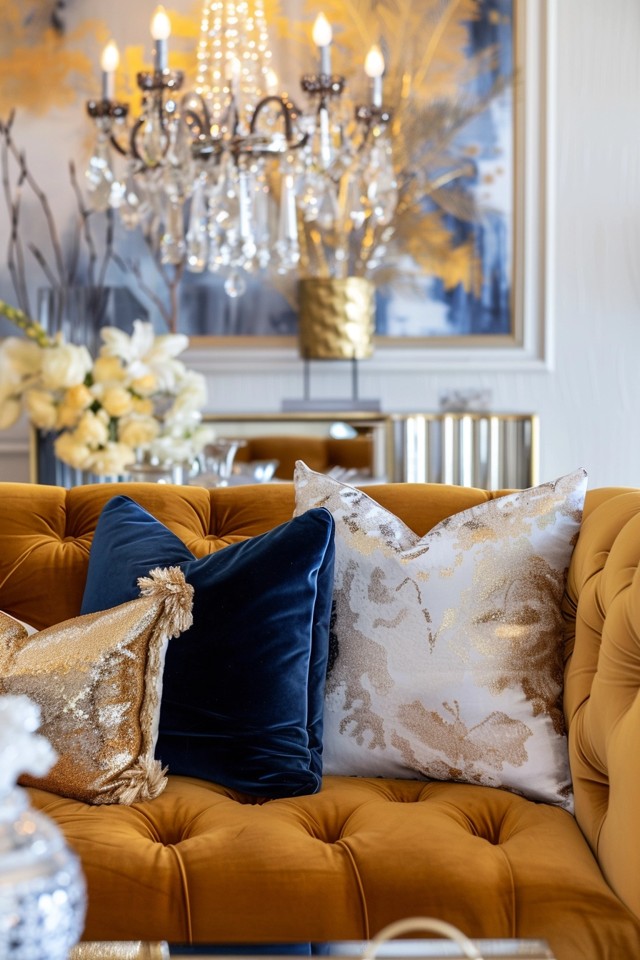
In glam interiors, furniture acts as sculpture. You want pieces that have distinct, tailored silhouettes. A slouchy, overstuffed sectional generally does not fit this vibe. Instead, look for tight-back sofas or pieces with button tufting, like a classic Chesterfield.
The Velvet Debate
Velvet is the fabric of choice for glam living rooms. It absorbs dye beautifully, resulting in rich, deep colors. However, many people worry about durability.
If you have kids or pets, do not buy cotton velvet. It stains easily and creates “crush” marks. Instead, specify “performance velvet” or high-rub-count polyester velvet. These synthetics mimic the look and feel of silk velvet but can be cleaned with water and mild soap. I have used performance velvet on white sofas for clients with dogs, and it holds up incredibly well.
Acrylic and Lucite
To keep the room from feeling heavy, incorporate “ghost” furniture. Acrylic coffee tables or console legs are perfect for smaller spaces. They provide surface area without visual weight.
However, be aware that acrylic scratches easily. I usually recommend glass tops for coffee tables and reserving acrylic for legs or side chairs that see less abrasion.
Spacing Rules of Thumb
Regardless of how beautiful the furniture is, the layout must function. Here are the measurements I use in every project:
- Coffee Table Distance: Keep 14 to 18 inches between the edge of the sofa and the coffee table. This is close enough to set down a drink but wide enough to walk through without shins hitting the edge.
- Walkways: Main traffic paths need to be 30 to 36 inches wide. If you crowd the room, it loses its elegance immediately.
- Conversation Circle: No seat should be more than 8 to 10 feet away from another seat. If your room is huge, create two separate seating zones rather than pushing all furniture to the walls.
3. Lighting: The Jewelry of the Room
If there is one element you should splurge on in a glam living room, it is lighting. In this aesthetic, light fixtures are not just utilities; they are the focal points. You need to layer your lighting to avoid the “interrogation room” effect caused by a single overhead bulb.
The Chandelier
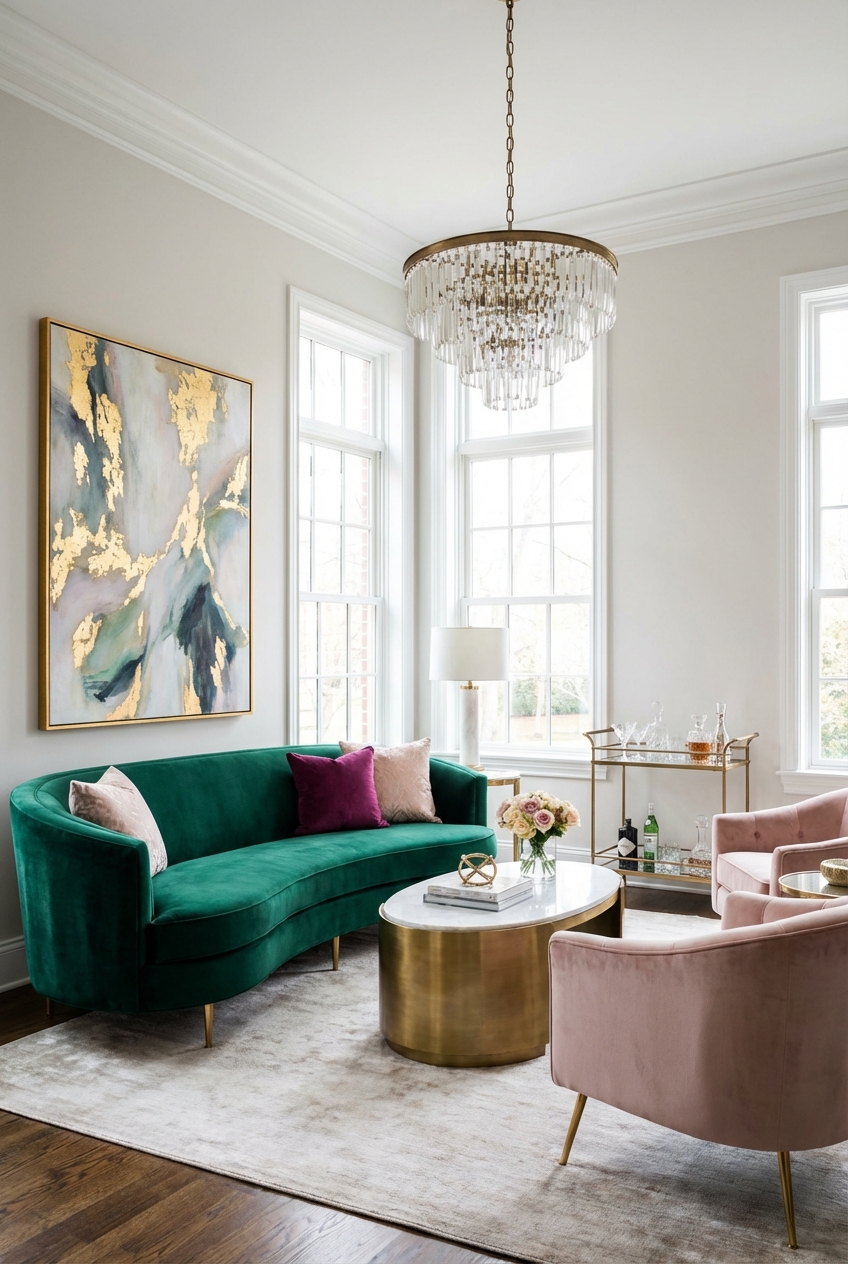
A crystal or brass chandelier is standard. Scale is critical here. A common mistake is buying a fixture that is too small for the room. Add the length and width of the room in feet; that number in inches should be the approximate diameter of your chandelier. For example, a 12×14 room needs a fixture roughly 26 inches wide.
Hang the fixture so the bottom is at least 7 feet off the floor if people are walking under it. If it is centered over a coffee table, you can drop it lower to create intimacy, but ensure it doesn’t block the view of the television or guests.
Sconces and Lamps
Wall sconces add verticality and polish. If you cannot hardwire them, use plug-in sconces with cord covers painted to match the wall color. Mount these at eye level, roughly 60 to 66 inches from the floor to the center of the fixture.
Table lamps should be substantial. Look for bases made of glass, mercury glass, or ceramic with a metallic glaze. The shade should be a crisp drum shape. Tapered shades can sometimes lean too traditional or farmhouse for a modern glam look.
Common Mistakes + Fixes
Mistake: Using cool white or “daylight” bulbs (5000K). This makes a glam room look like a dental clinic. It flattens gold tones and makes velvet look harsh.
Fix: Replace every bulb in the room with 2700K (warm white) or 3000K (soft white) LEDs. This temperature enhances warm metals and skin tones.
4. Textiles: Rugs and Window Treatments
Soft furnishings are where you introduce comfort. A glam room without layers feels sterile. You need to soften the hard edges of glass tables and metal lamps.
Rug Sizing and Materials
The rug defines the zone. The number one rule is that the front legs of all furniture in the seating group must sit on the rug. Ideally, all legs should be on it. For an average living room, an 8×10 is usually the minimum size. A 5×7 rug floating in the middle of the room makes the space look cheap and disjointed.
For materials, viscose and bamboo silk look stunning because they have a high sheen. However, I must warn you: viscose is terrible with water. Even a spilled glass of water can ruin the pile permanently. If this is a high-traffic family room, opt for a polyester blend or a high-quality wool with a tight loop.
Curtains: High and Wide
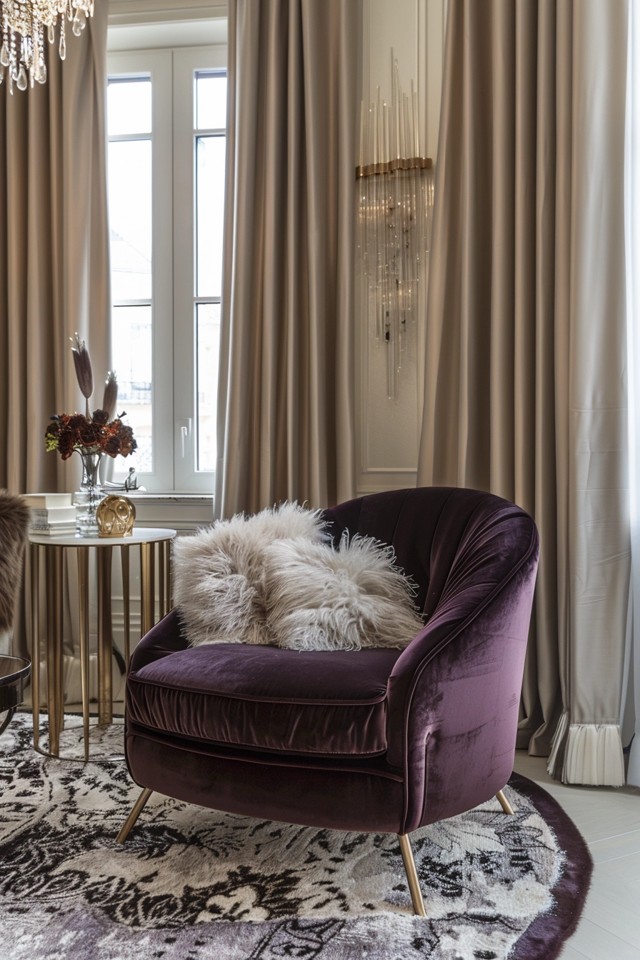
Custom drapery is expensive, but you can fake the look. Buy curtain rods that extend 10 to 12 inches past the window frame on each side. This allows the curtains to stack against the wall when open, exposing the full glass and making the window look huge.
Mount the rod 4 to 6 inches below the ceiling or crown molding, regardless of where the window frame is. This draws the eye up and makes the ceiling feel higher.
Stick to solid silks, faux silks, or velvets. Patterns on curtains can be tricky in glam design; solids allow the fabric’s sheen to speak for itself. Ensure the curtains “kiss” the floor or puddle slightly (about 1 inch) for a romantic look. Floating curtains that stop 2 inches above the floor look like high-water pants.
What I’d Do in a Real Project: Textile Checklist
- Sofa: Performance velvet in a solid neutral (cream or charcoal).
- Pillows: Two 22-inch squares in a geometric jacquard, two 20-inch squares in faux fur, and one lumbar in a metallic finish.
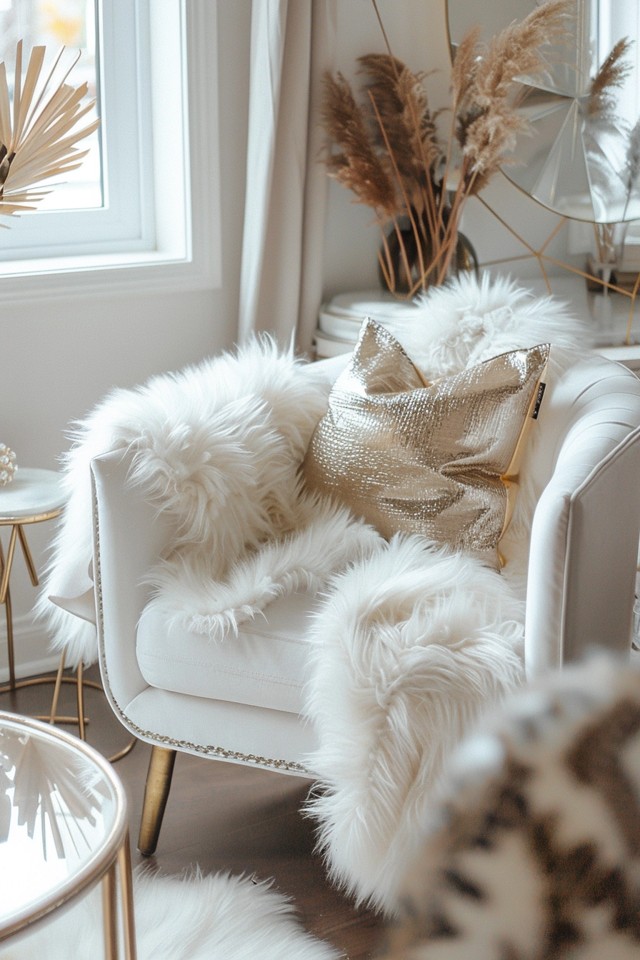
- Throw: A heavy faux fur or cashmere throw draped casually over the arm.
- Rug: A distressed oriental style in muted tones or a geometric trellis pattern rug.
5. Metals, Mirrors, and Styling
The final layer is where the “glam” truly comes together. This involves metals, mirrors, and accessories. The goal is to bounce light around the room.
Mixing Metals
You do not have to stick to just gold or just silver. In fact, mixing metals makes a room feel more curated and less like a catalog set. Pick a dominant metal (e.g., polished brass) for roughly 70% of your finishes (chandelier, curtain rods, coffee table). Use a secondary metal (e.g., polished nickel or black chrome) for the remaining 30% (cabinet hardware, lamp bases).
Mirrors
Mirrors are functional art. A large floor mirror leaning against a wall can double the visual size of a small room. When hanging a mirror over a fireplace or console, ensure it reflects something beautiful, like a chandelier or artwork, rather than a ceiling fan or a cluttered corner.
Styling Accessories
When styling coffee tables and bookshelves, remember the rule of three. Group items in odd numbers. A stack of three coffee table books, a tray with a candle, and a small sculptural object creates a balanced vignette.
Avoid clutter. Glam is about sophistication. Too many small trinkets look messy. It is better to have one large crystal vase than twelve small knick-knacks. Use trays to corral smaller items like remotes or coasters. A mirrored or lacquer tray instantly elevates these mundane objects.
Final Checklist for Your Glam Living Room
Before you start buying, run your plan through this checklist to ensure you stay on track:
FAQs
- Can I do glam style in a small apartment?
- Absolutely. In fact, glam works well in small spaces because mirrors and transparent furniture (acrylic/glass) help the room feel larger. Focus on one large statement piece, like a chandelier or a tufted sofa, and keep the rest of the lines clean. Use vertical space with floor-to-ceiling curtains to trick the eye.
- Is gold or silver better for a glam living room?
- Both work, but they create different moods. Gold and brass are warmer and tend to look more vintage or “Hollywood Regency.” Silver and chrome are cooler and lean towards “Modern Glam.” Currently, warm brass is very popular, but polished nickel is a timeless bridge between the two.
- How do I make my room look expensive on a budget?
- Focus on size and symmetry. A large rug makes a room look more expensive than a small one. A pair of matching lamps looks more high-end than a single mismatched one. Change out hardware on IKEA furniture to crystal or brass knobs. Finally, ensure your curtains are hung high and wide.
Conclusion
Creating an elegant glam living room is a exercise in balance. It requires the confidence to mix bold metallic finishes with the restraint to keep the color palette controlled. It is about prioritizing how the room feels just as much as how it looks.
Remember that you do not need to buy everything at once. Start with the “bones”—the paint, the rug, and the sofa. Once those are in place, you can take your time hunting for the perfect vintage mirror or the right crystal lamp. Good design takes time, but by following these rules of scale and texture, you will end up with a space that feels both luxurious and livable.
Picture Gallery
Five photographs · drag or swipe