
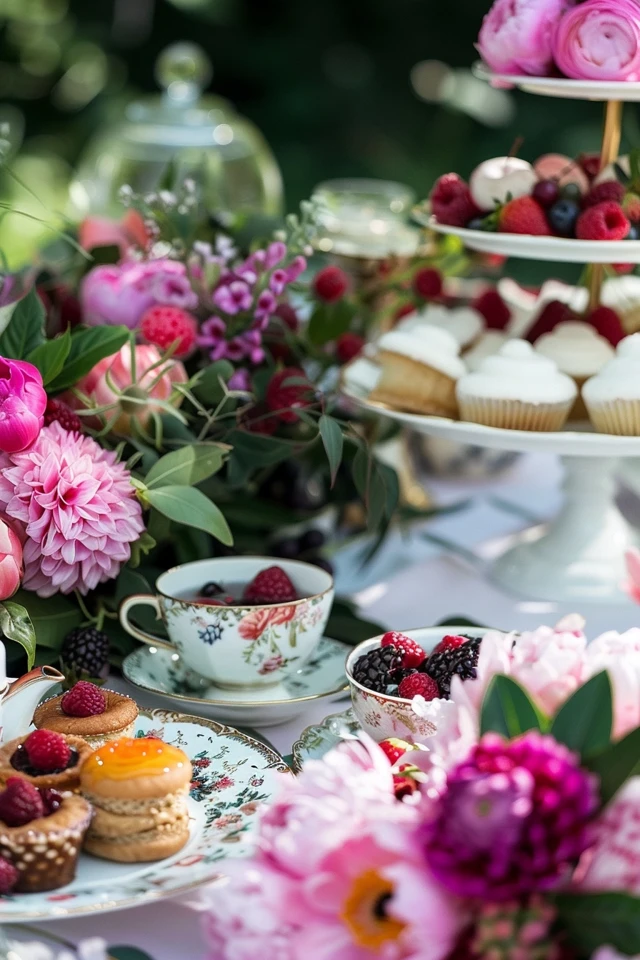
Elevate Your Gatherings: High Tea Party Ideas for Adults
There is a distinct shift in the air when you receive an invitation to a high tea. Unlike a casual dinner party or a chaotic brunch, a high tea suggests intention, elegance, and a slower pace of conversation. If you are looking for visual inspiration to guide your planning, be sure to browse the curated Picture Gallery located at the end of this blog post.
As an interior designer, I love high tea because it allows us to play with scale and detail in ways that a standard dinner service does not. It is an opportunity to bring out the heirloom china, mix textile patterns, and rethink the flow of your living or dining space. However, hosting an adult high tea requires more than just buying scones; it requires a thoughtful approach to layout and logistics.
In this guide, I will walk you through the design principles I use to stage these gatherings for clients. We will cover everything from calculating table clearances to selecting the right linen weight, ensuring your event feels sophisticated rather than stuffy.
1. Designing the Layout and Traffic Flow
The success of a high tea relies heavily on how people move through the space. Unlike a sit-down dinner where guests remain stationary, tea often involves movement—guests reaching for tiers, pouring refills, or transitioning from a standing reception to seated conversation.
If you are hosting in a dining room, strict measurements are your best friend. You need a minimum of 36 inches of clearance behind every chair to allow guests to slide out comfortably without hitting a wall or a sideboard. If you have servers (or if you are serving), try to aim for 48 inches on the service side of the table.
For smaller spaces or apartment living, consider a “lounge style” tea. This involves using the coffee table as the anchor. However, the standard coffee table height (16–18 inches) is often too low for comfortable dining. If you go this route, offer plenty of side tables or garden stools so guests can set down their saucers safely.
Designer’s Note: The Rug Rule
One of the most common layout failures I see is a rug that is too small. When a guest pulls their chair out to sit, the back legs should not fall off the rug. This creates an uneven surface that is annoying and potentially dangerous with hot liquids involved. ensure your rug extends at least 24 inches beyond the edge of the table on all sides.
Common Mistakes + Fixes
- Mistake: Placing the food buffet in a dead-end corner.
- Fix: Pull the serving station away from the wall to allow flow on both sides, or place it at the head of the room to create a clear destination.
- Mistake: Cluttering the table surface so there is no room for teacups.
- Fix: Use vertical tiered stands to save footprint, and always test the setting with a full place setting before guests arrive.
2. The Tablescape: Layering Textures and Patterns
A high tea table is the perfect canvas for maximalism, but it must be controlled. The goal is to create visual depth without overwhelming the eye. I always start with the base textile. For an adult gathering, skip the plastic or thin cotton; opt for heavy washed linen or a damask weave.
The “drop” of your tablecloth is crucial for that luxurious feel. For a formal look, a 15-inch drop is standard. If you want high drama, go for a floor-length cloth (a 29 to 30-inch drop), but be aware that this can get tangled in guests’ feet if the area is tight.
When mixing patterns—such as a floral tablecloth with geometric china—vary the scale. If the tablecloth has a large, sweeping print, choose china with a tight, small pattern or a solid border. This prevents the “dizzying” effect that happens when two similar scales compete for attention.
A Note on Table Width
Standard dining tables are 36 to 40 inches wide. Once you add a centerpiece and two place settings facing each other, real estate is scarce. If your table is narrow (under 38 inches), avoid a wide runner. Instead, use round placemats to define the individual space, leaving the center open for the tiered stands.
What I’d Do in a Real Project:
- Base: A neutral oatmeal linen tablecloth (floor length).
- Layer: Vintage lace runner for texture, not color.
- China: Mismatched vintage sets unified by a common color (e.g., all have gold rims).
- Napkins: Knotted, not folded, placed at 45-degree angles for a relaxed, modern touch.
3. Indoor vs. Outdoor: Landscape Integration
Taking high tea into the garden is a classic move, but it presents unique design challenges. The most immediate issue is ground stability. Standard dining chairs with thin legs will sink into grass or soft soil.
If you are hosting on a lawn, you must use a rigorous ground covering or rent specific flooring. Alternatively, use outdoor rugs made of polypropylene that are dense enough to distribute weight. If staying on a patio or deck, ensure the pavers are even. A wobbly table is a disaster waiting to happen when towering stands of pastries and pots of hot tea are involved.
For landscaping, you don’t need to replant your whole yard. Use potted plants to create a temporary “room.” Place tall potted boxwoods or ferns behind the chairs to create a sense of enclosure and intimacy. This also blocks wind, which is the enemy of a good tea party.
Lighting the Outdoors
If your tea transitions into the early evening, lighting is mandatory. Avoid harsh floodlights. String bistro lights at a height of 8 to 9 feet to clear tall guests while creating a ceiling effect. Use battery-operated LED tapered candles on the table to prevent wind from blowing them out.
Designer’s Note: The “Sun Glare” Factor
Never position a table so that half your guests are staring directly into the sun. If you can’t avoid the angle, install a cantilever umbrella. As a rule of thumb, an umbrella should extend 2 feet beyond the table edge to provide adequate coverage for seated guests.
4. Lighting and Ambiance for Interiors
If you are indoors, lighting sets the mood. High tea is traditionally a daytime event, so natural light is your primary source. Position your table near the largest window, but manage the glare with sheer drapery. You want diffused, soft light, not hard shafts of sunlight that melt the butter.
If the day is overcast or you are hosting in a darker room, layer your artificial light. Your chandelier or pendant light should hang 30 to 36 inches above the table surface. This height creates an intimate pool of light without obstructing views.
Adding wall sconces or table lamps on a sidebar creates a “perimeter glow” that makes the room feel larger and warmer. Always put your overhead fixtures on a dimmer. For a tea party, I usually set dimmers to about 75% brightness—bright enough to see the beautiful food, but soft enough to flatter faces.
Common Mistakes + Fixes
- Mistake: Relying solely on recessed “can” lighting.
- Fix: Turn off the overhead cans and rely on eye-level lighting (lamps and candles) to avoid casting shadows on guests’ faces.
- Mistake: Using scented candles at the dining table.
- Fix: Never compete with the aroma of the tea. Use unscented beeswax tapers only.
5. Functional Styling: Centerpieces and Service Ware
The centerpiece at a high tea has a strict height limit. To ensure guests can converse without craning their necks, keep floral arrangements under 12 inches tall. I prefer using three to five small “bud vases” scattered down the table rather than one massive bouquet. This allows room for the tea stands and pots.
When it comes to the tea service itself, mix metals. It is perfectly acceptable to mix silver teapots with gold-rimmed china. In fact, mixing metals adds a curated, collected-over-time aesthetic that feels very high-end.
For those in small spaces or renting, do not feel pressured to buy a three-tier stand. You can create height by using cake stands of different diameters or even stacking sturdy books (covered in a napkin) to elevate a platter. The design principle here is “verticality”—creating levels makes the table look abundant and professional.
The “Elbow Room” Calculation
For a formal setting, allot 24 inches of table width per person. This gives enough room for the cup, saucer, bread plate, and cutlery without guests bumping elbows. If your table is too small, reduce the guest list or set up a secondary seating area. Comfort is the ultimate luxury.
Final Checklist: The Day Before
Before your guests arrive, run through this designer-approved checklist to ensure the space functions as well as it looks.
- Sit in every chair: actually sit down. Is the sun in your eyes? Does the table wobble? Is the chair too low for the table?
- Check the linens: Iron your tablecloths. Creases kill the illusion of elegance. If the cloth is already on the table, use a handheld steamer.
- Test the traffic lanes: Walk from the kitchen to the table with a full tray. Is there a rug edge you trip on? A tight corner? Clear the path.
- Bathroom check: Your guests will use it. Ensure there are fresh hand towels, a full soap dispenser, and perhaps a small floral arrangement.
- Temperature control: If indoors, lower the thermostat by 2 degrees before guests arrive; bodies and hot tea will heat up the room quickly.
- Music ambiance: Create a playlist that is instrumental and low-tempo. Volume should be low enough that it doesn’t compete with conversation.
FAQs
Q: Can I host a high tea on a coffee table?
A: Yes, but you need to adjust for ergonomics. Standard sofas are often too deep and low for eating comfortably. Provide firm throw pillows for back support so guests can sit upright. Alternatively, encourage guests to sit on floor cushions on the other side of the table if your knees allow.
Q: How do I mix and match china without it looking messy?
A: The secret is a “unifying thread.” This could be a color (e.g., all blue and white patterns), a material (all fine bone china), or a motif (all floral). If the patterns are wild, keep the tablecloth solid white or cream to ground the look.
Q: What is the best fabric for napkins?
A: 100% linen or cotton. Avoid polyester blends; they are non-absorbent and slide off laps. A standard dinner napkin size (20×20 inches) is preferred over a small cocktail napkin for high tea, as guests are managing crumbs and jams.
Q: How do I handle seating for a large group in a small home?
A: Don’t be afraid to split the party. You can have four people at the dining table and three people at a bistro set or a styled card table nearby. As long as everyone is in the same room and the sightlines are open, it works.
Conclusion
Hosting a high tea for adults is about more than just caffeine and cake. It is an exercise in thoughtful design, where layout, lighting, and textiles come together to create an environment of comfort and connection. By paying attention to the functional measurements—like rug sizes and table clearances—and layering in personal touches through mixed china and soft lighting, you create an experience that feels effortless.
Remember that the most beautiful interior is one that functions well. When your guests can move freely, sit comfortably, and converse easily, the design has done its job. Don’t stress about having perfectly matching sets; focus on the flow, the textures, and the warmth of the welcome.
Picture Gallery


