
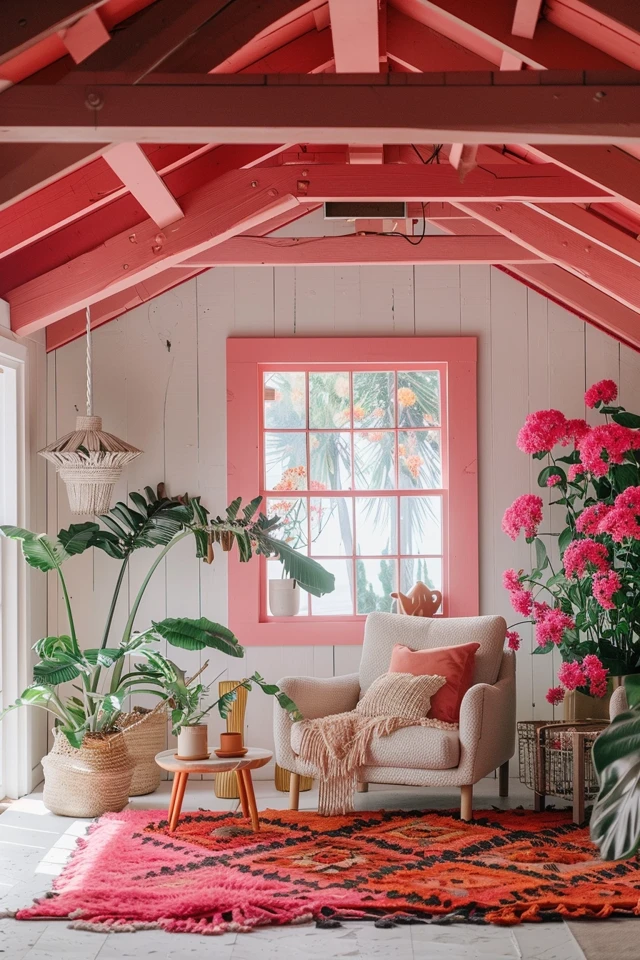
Elevate Your Home with Vaulted Ceiling Painting Ideas
Walking into a room with vaulted ceilings immediately changes your perspective. The volume creates a sense of grandeur and airiness that standard eight-foot ceilings simply cannot match. However, that extra vertical space often leaves homeowners feeling overwhelmed about how to decorate or paint it effectively.
Without a cohesive plan, a vaulted room can feel like a cavernous gymnasium rather than a cozy living space. The height can swallow your furniture, making the layout feel disjointed and the atmosphere cold. Painting this architectural feature is the single most effective way to bring the scale back to a human level.
I have curated a stunning Picture Gallery at the end of this blog post to spark your imagination before you pick up a brush.
But before we get to the visuals, we need to discuss the strategy behind the color. Let’s dive into how you can use paint to manipulate light, scale, and atmosphere in your high-ceilinged home.
Understanding Your Architecture: The “Canvas”
Before you select a swatch, you must identify the specific type of vault you possess. Not all high ceilings behave the same way when painted, and the angles dictate where your color should start and stop.
A standard “cathedral” ceiling usually features two equal sloping sides that meet at a central ridge. This symmetry makes it easier to create focal points. Conversely, “shed” ceilings slope in only one direction, which can create awkward shadows if you aren’t careful with color placement.
The most challenging aspect of painting vaults is usually the transition line. This is the point where the vertical wall meets the sloped ceiling. In some homes, this is a crisp 90-degree angle, while in others, it is a rounded bullnose corner.
Designer’s Note: The Transition Trap
In my projects, the biggest error I see is forcing a hard paint line on a rounded bullnose corner. It never looks straight. If your drywall corners are rounded, I almost always recommend painting the wall and the ceiling the same color. If you must contrast, install a piece of molding at the transition point to give the paint a physical ledge to terminate against.
Strategy 1: The “Envelope” Technique
One of the most modern and sophisticated ways to handle a vaulted ceiling is to paint the walls and the ceiling the exact same color. We call this “enveloping” or “color drenching” the room.
When you use the same color on vertical and sloped surfaces, you eliminate the visual break at the roofline. This blurs the boundaries of the room, making the space feel expansive yet infinite. It prevents the eye from getting stuck on awkward angles or uneven drywall taping lines.
This technique works particularly well in bedrooms or dens where you want a cozy, wrapped feeling. If you choose a moody color like navy or charcoal, the ceiling height virtually disappears, creating a cocoon effect. If you choose a warm white, the room feels like an airy gallery.
Common Mistakes + Fixes
Mistake: Using different sheens for the wall and ceiling when using the same color.
Fix: If you envelope the room, use a Matte or Flat finish for everything. If you use Eggshell on the walls and Flat on the ceiling, the light will hit them differently, and they will look like two different colors.
Strategy 2: The Contrast Cap
If your goal is to highlight the architecture rather than hide it, contrasting the ceiling color is the right move. This is traditional, but it requires careful attention to the “visual weight” of the room.
Painting a vaulted ceiling darker than the walls will visually lower the ceiling. This is an excellent trick for rooms that feel too sterile or cavernous. A warm taupe or soft grey on the ceiling brings the peak down, making the furniture arrangement below feel more intimate.
Conversely, keeping the ceiling bright white while painting the walls a saturated color celebrates the height. It draws the eye upward and emphasizes the volume of the air above you. This is ideal for smaller footprint rooms that have high ceilings, as it prevents the space from feeling like a tunnel.
What I’d do in a real project:
- If the peak is under 12 feet: I generally keep the ceiling lighter than the walls to avoid a claustrophobic feeling.
- If the peak is over 15 feet: I am bold with darker ceiling tones to bridge the gap between the sofa and the rafters.
- For the rug: I ensure the rug is large enough to ground the space. In a vaulted room, a 5×8 rug looks like a postage stamp. I almost always specify a 9×12 or larger to match the scale of the ceiling.
Handling Beams, Trusses, and Skylights
Many vaulted ceilings feature structural or decorative beams. These are the jewelry of the room. How you paint them determines whether the style leans rustic, industrial, or farmhouse.
If you have high-quality wood beams (oak, cedar, or reclaimed timber), leave them stained. The warmth of the wood cuts through the vastness of the drywall. However, if the beams are rough construction-grade pine or previously painted, you have two main options.
Option A: High Contrast
Paint the ceiling white and the beams black or charcoal. This creates a graphic, rhythm to the room. It guides the eye across the space and distracts from less attractive elements like ceiling fans or vents.
Option B: Monochromatic Texture
Paint the beams the exact same color as the ceiling but in a different sheen. For example, use flat navy paint on the drywall and semi-gloss navy on the beams. The color remains consistent, but the light catches the beams, adding subtle architectural interest without visual clutter.
Designer’s Note: The Skylight Shaft
Do not forget the “tunnel” leading up to your skylights. I always paint the inside of the skylight well the same color as the ceiling, not the walls. This helps reflect maximum light down into the room. If you paint the shaft a dark wall color, it absorbs the sunlight before it hits your living space.
Lighting and Sheen: The Technical Details
Vaulted ceilings are unforgiving when it comes to drywall imperfections. Because the surface area is so large and often backlit by high windows, every bad tape joint or nail pop will show up if you choose the wrong finish.
The Golden Rule of Sheen: Always use Flat or Ultra-Matte paint for vaulted ceilings. Never use Eggshell, Satin, or Semi-Gloss on the large drywall spans.
Glossy finishes reflect light. On a high ceiling, this reflection creates “glare spots” that ruin the color integrity. Flat paint absorbs light, hiding the waves and bumps in the drywall. It creates a velvety, smooth appearance that looks much higher-end.
Lighting Placement
The biggest functional failure in vaulted rooms is lighting that hangs too high. A chandelier mounted 12 feet in the air does nothing for the people sitting below.
Measurements for Success:
- Clearance: The bottom of your chandelier should be at least 7 feet off the floor in walking areas.
- Over Tables: If the fixture is over a coffee table or dining table, it should hang 30 to 36 inches above the table surface, regardless of how high the ceiling is.
- Chain Length: Ensure you order extra chain and wire. Standard fixtures come with 3-6 feet of chain; for a vault, you often need 10-12 feet.
Execution: Safety and Logistics
We have covered the aesthetics, but we must discuss the reality of painting these heights. This is not a standard Saturday afternoon DIY project. The logistics of reaching a 16-foot peak are dangerous and difficult.
If you are renting scaffolding, factor that into your budget. You will need a mobile scaffold tower to safely cut in the edges at the peak. Extension ladders are risky on interior floors because they can slip on hardwood or sink into carpets.
Tools of the Trade
If you are determined to do this yourself, stop using a standard 9-inch roller. You need an 18-inch roller cage and cover. The larger surface area allows you to cover the ceiling faster and with fewer lap marks.
You will also need a heavy-duty extension pole that locks firmly. Flimsy poles flex when fully extended, making it impossible to apply even pressure. This results in a patchy paint job that looks professional from one angle and terrible from another.
Designer’s Note: Calculated Costs
When hiring pros, expect a “vault surcharge.” Painters typically charge 30% to 50% more for vaulted ceilings due to the scaffolding setup, hazard pay, and the physical difficulty of the work. This is normal and justified. Do not compare the quote to a standard bedroom paint job.
Final Checklist: The Vaulted Painting Plan
Before you head to the paint store, run through this checklist to ensure you have accounted for every variable in your tall space.
1. Assess the Light
- Check the room at three times of day: morning, noon, and night.
- High ceilings often have different shadows near the peak.
- Buy a sample pot and paint a large poster board. Tape it near the ceiling (use a ladder safely) to see how the color looks at height.
2. Define the Transitions
- Locate where the wall ends and the ceiling begins.
- If you have rounded corners, commit to the “Envelope” strategy or install trim.
- Decide on the treatment for vents, speakers, and smoke detectors. (Tip: Spray paint them to match the ceiling color before installation).
3. Select the Finish
- Ceiling drywall: Flat/Matte (Non-negotiable).
- Beams/Trim: Satin or Semi-Gloss for durability and contrast.
- Walls: Matte or Eggshell (Matte is trendy, Eggshell is easier to wipe).
4. Plan the Logistics
- Measure the peak height exactly.
- Verify if you need an 8-foot ladder, a 12-foot ladder, or scaffolding.
- Cover the entire floor with drop cloths; paint splatters travel further from high heights.
FAQs
Does painting a vaulted ceiling black make the room look smaller?
It makes the room feel vertically shorter, but not necessarily smaller in square footage. It creates a perception of intimacy. Ideally, you want to balance a black ceiling with lighter walls and plenty of natural light or layered floor lamps to keep the room from feeling like a cave.
Should I paint the ceiling fan to match the ceiling?
Yes, unless the fan is a design statement (like a vintage wood propeller fan). If it is a standard white plastic fan, it is visual clutter. I frequently recommend replacing white fans with matte black or bronze if you have beams, or painting them out to disappear against the ceiling color.
How do I clean a vaulted ceiling once it is painted?
This is the downside of flat paint—it is hard to scrub. Fortunately, ceilings don’t get touched by sticky hands. Use a high-reach duster with a microfiber head to remove cobwebs. Avoid wet sponges on flat paint, as they can leave permanent shiny streaks.
Can I paint a vaulted ceiling with a sprayer?
Yes, and pros often do. However, for an inhabited home, the prep work is intense. You have to mask off every inch of the floor, windows, and furniture to protect against overspray. Rolling is usually safer and cleaner for a furnished home renovation.
Conclusion
Painting a vaulted ceiling is a bold commitment that yields massive rewards. It transforms a house that feels like a generic builder-grade box into a custom, architectural home. Whether you choose to wrap the room in a moody hue or brighten the rafters with a warm white, the key is confidence and preparation.
Remember that the height is your asset. Don’t be afraid to emphasize it or manage it to suit your lifestyle. By following the rules of sheen, scale, and transition, you will create a space that feels grand yet grounded.
Now that you are armed with the technical know-how, it is time to get inspired. Browse through the gallery below to see these strategies applied in real homes.
Picture Gallery


