
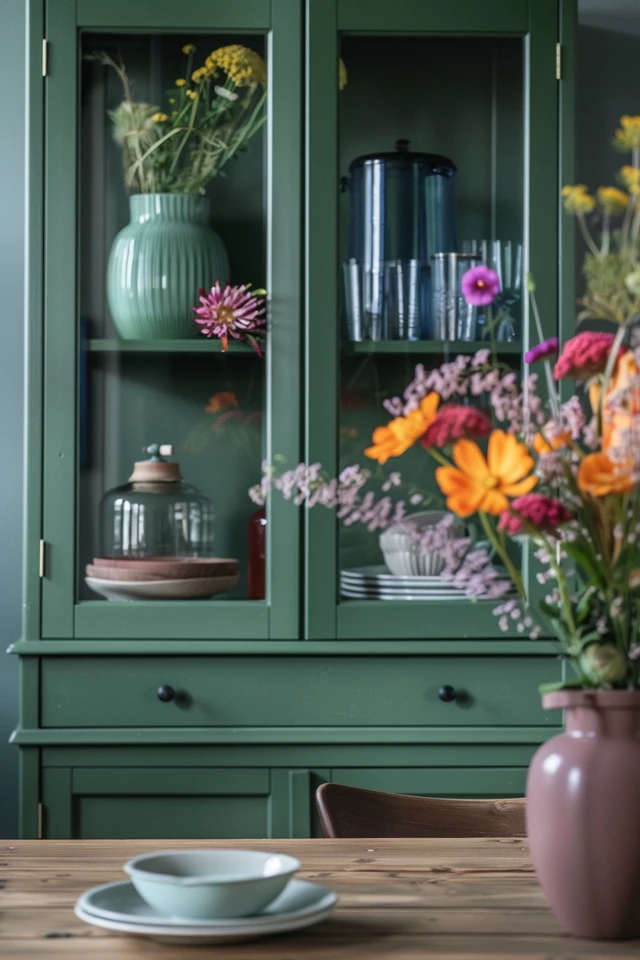
Elevate Your Space: Top of China Cabinet Decorating Ideas
The space between the top of a china cabinet and the ceiling is one of the most debated zones in interior design. It is often referred to as the “dead zone,” a dusty no-man’s-land that can make a room feel unfinished if left bare, or cluttered if filled without intention. I have seen beautiful dining rooms fall flat simply because this vertical real estate was ignored or mishandled.
When styled correctly, this area draws the eye upward, accentuating ceiling height and adding a layer of sophisticated curation to your home. It provides a unique opportunity to display larger pieces that might overwhelm a coffee table or sideboard. If you are looking for visual examples of these concepts, remember that our curated Picture Gallery is located at the end of this blog post.
However, styling this ledge requires a different approach than styling a bookshelf or a mantle. You have to account for viewing angles, light accessibility, and the sheer scale of the furniture below it. In this guide, I will walk you through the exact methods I use to style this tricky spot, ensuring your china cabinet looks integrated and intentional.
1. Assess the Gap: Scale and Proportion Rules
Before buying a single vase or basket, you must measure the distance between the top of your cabinet and the ceiling. This measurement dictates everything. In my projects, I follow a strict clearance rule to decide if we should decorate that space at all.
If you have less than 12 inches of space, my professional advice is usually to leave it empty. Cramming small items into a narrow gap creates visual tension and looks messy. It casts shadows that make the ceiling feel lower. If you have between 12 and 18 inches, you have a “sweet spot” for horizontal items or low-profile collections.
If you have vaulted ceilings or a gap larger than 2 feet, you must think big. Small trinkets will disappear. You need objects with substantial volume and height to bridge the gap. The goal is not to fill every inch of air but to create a connection between the furniture and the architecture of the room.
Designer’s Note: The “Breathing Room” Rule
A lesson I learned early in my career involved a client with 9-foot ceilings and a massive vintage hutch. We packed the top with baskets that touched the ceiling molding. It looked like the furniture was suffocating. Always leave at least 2 to 3 inches of negative space between the top of your decor and the ceiling. This “breathing room” prevents the arrangement from looking wedged in.
2. Mastering the Visual Triangle
The most reliable composition technique for high surfaces is the visual triangle. This is a fundamental design principle where you arrange objects so that their varying heights create a triangular shape. This guides the eye naturally and prevents the display from looking like a flat lineup of soldiers.
Start with an anchor piece. This should be your tallest or widest item, placed slightly off-center or dead center depending on the symmetry of the cabinet doors below. From there, step down in height with smaller items on either side.
If your cabinet is very wide, you might need multiple triangles. For a six-foot-wide cabinet, I often create two distinct groupings on the left and right, leaving the center relatively open or bridged by a low, long item. This asymmetrical balance feels organic and less rigid than a perfect symmetrical layout.
Common Mistakes + Fixes
- Mistake: Using items of all the same height.
- Fix: Vary your heights drastically. Pair a tall pitcher with a stack of books and a low bowl.
- Mistake: Lining items up in a single row.
- Fix: Create depth. Push large plates or art to the back wall and layer smaller, chunkier items in front.
3. Selecting the Right Objects: Texture and Weight
Because the top of a china cabinet is usually viewed from below, the objects you choose need to have visual weight. Delicate crystal or small figurines are useless here; you won’t see their details from the floor, and they will just look like clutter.
Focus on bold silhouettes and solid materials. I frequently use large ironstone platters, oversized woven baskets, and substantial ceramic pottery. Texture is your best friend in this location. The rough weave of a basket or the glaze of a ceramic vase adds interest without needing intricate patterns.
Consider the color palette of the room. If your dining room is dark and moody, bright creamware or metallic objects will pop against the shadows. If your room is light and airy, use wood tones or darker ceramics to ground the space and draw the eye up.
What I’d Do in a Real Project: A Quick Checklist
- Review the floor: If there is a wool rug, I might use a wooden dough bowl on the cabinet to balance the warmth.
- Check the hardware: If the cabinet has brass handles, I might incorporate a vintage brass pot or tray on top to create cohesion.
- Test the visibility: I stand back at the entrance of the room. If I can’t identify the object immediately, it is too small.
4. Lighting and Greenery for High Spaces
One of the biggest challenges with high-up decor is the lack of light. These corners are often shadowy, which can make your beautiful decor disappear. To combat this, you need to be strategic with finishes and potentially add light sources.
Ceramics with a high-gloss glaze are excellent because they catch and reflect ambient light from chandeliers or windows. Mirrors can also work, but be careful with angles so you aren’t reflecting the ceiling fan or a vent. If you have an outlet nearby (or are willing to hide a battery pack), a small uplight placed behind a large vase can create dramatic, moody focus in the evening.
Greenery brings life to this high altitude, but it comes with maintenance realities. Unless you have a skylight directly above, real plants will struggle. This is one of the few places where I enthusiastically recommend high-quality faux botanicals.
Look for faux trailing plants like pothos or ivy. Let the vines drape over the edge of the cabinet. This softens the hard right angle of the furniture and visually connects the top decor to the cabinet itself.
Designer’s Note: The “Dust Bunny” Reality
Real talk: nobody likes climbing a ladder to dust. When selecting greenery or intricate baskets, remember that you will need to take them down twice a year for a deep clean. If you have severe allergies, stick to smooth surfaces like glass vases or ceramic bowls that can be easily wiped down with an extendable duster.
5. The Art of the Collection
The top of a cabinet is a fantastic stage for collections that are too bulky for shelves. This approach works particularly well because repetition creates a strong visual impact. A single white pitcher looks lonely; a grouping of five white pitchers in varying sizes looks like an intentional design installation.
I have successfully styled cabinets using collections of:
- Vintage globes (great for a study or library).
- Wooden antique hat molds.
- Large soup tureens.
- Woven picnic hampers (adds great storage for seldom-used linens).
When displaying a collection, avoid perfect spacing. Group items in clusters. For example, if you have five vases, group three on one side and two on the other. This tension is more visually appealing than spacing them out evenly like fence posts.
If you are a renter or move frequently, using the top of the cabinet for functional storage disguised as decor is a smart move. Vintage suitcases or matching lidded boxes can hold off-season decor or paperwork while looking stylish. Just ensure the containers are opaque; clear plastic bins belong in the garage, not the dining room.
Final Checklist: Before You Step Off the Ladder
Once you think you are finished, leave the ladder in place and walk to the other side of the room. Design looks different from a distance. Use this checklist to ensure the look is polished:
- Check for Overhang: Ensure no items are perilously close to the edge. I use a distinct “three-finger rule”—keep items three fingers’ width back from the edge for safety.
- Verify Balance: Does the left side feel heavier than the right? You might need to swap a dense object for a lighter one.
- Look for Tangents: Ensure the top of your tallest object isn’t barely touching the ceiling molding. It should either overlap significantly (if layering) or have clear clearance.
- Anchor Safety: If you live in an earthquake-prone area or have active pets, use museum wax (quake hold) to secure breakables to the cabinet top.
Frequently Asked Questions
How do I clean the decor on top of a tall cabinet?
I recommend using a microfiber duster on an extendable pole for weekly or monthly maintenance. This prevents heavy buildup. Twice a year, usually during spring cleaning and before the holidays, take everything down for a wash with warm soapy water. This keeps colors bright and prevents that sticky dust film from forming.
Can I put art on top of a china cabinet?
Absolutely. Leaning artwork is a chic, modern way to style this space. It works best if you layer objects in front of the art to keep it from looking like you just stored a painting up there. Make sure the scale is right; the frame should be substantial enough to be read from the floor.
What if my ceilings are standard 8-foot height?
With standard ceilings and a tall cabinet, you likely have a very small gap (6 to 10 inches). In this case, less is more. I would suggest finding low, horizontal items like a long, shallow dough bowl or a stack of coffee table books laid flat. Alternatively, leaving it empty is a perfectly valid and often cleaner design choice.
How do I hide cords if I use lights?
If you use plug-in uplights, tape the cord down along the back edge of the cabinet top, then run it down the back of the cabinet leg. Use cord clips to keep it tight against the wood so it isn’t visible from the side. Smart bulbs or battery-operated puck lights are easier alternatives that eliminate the cord problem entirely.
Conclusion
Styling the top of your china cabinet is an exercise in balance and scale. It is about seizing an opportunity to draw the eye upward and expand the visual footprint of your room. Whether you choose a minimalist approach with a few large baskets or a curated collection of vintage pottery, the key is intentionality.
Don’t be afraid to experiment. Put items up, live with them for a few days, and take them down if they don’t feel right. Design is a process of trial and error. By following the rules of scale, grouping, and texture outlined here, you can turn that awkward “dead zone” into one of the most interesting focal points in your home.
Picture Gallery


