
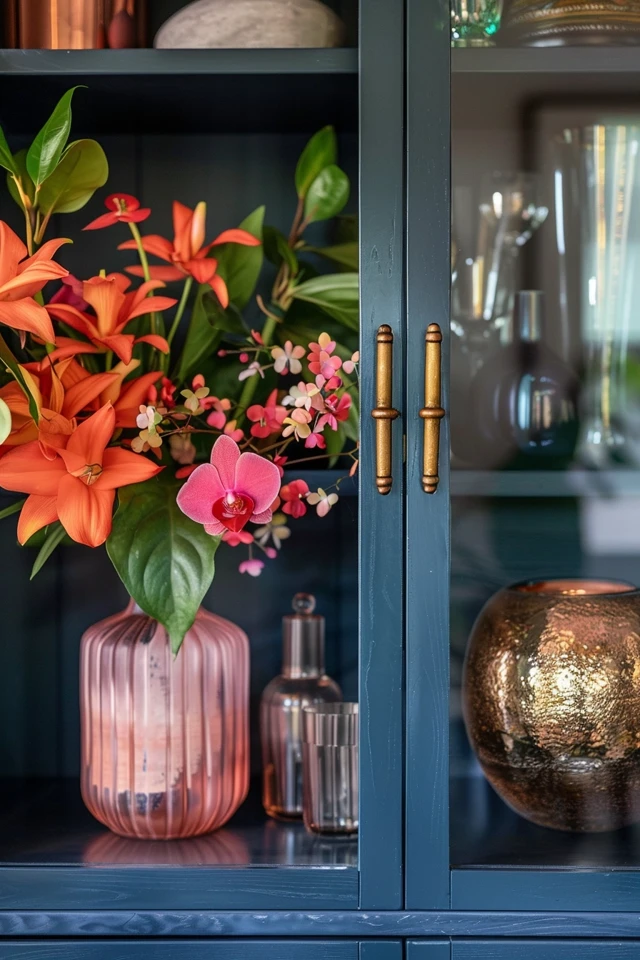
Elevate Your Space: Top of China Cabinet Decorating Ideas
One of the most frequent questions I receive during a dining room consult is what to do with that awkward, dusty gap between the top of a china cabinet and the ceiling. It is a prime example of vertical real estate that often goes ignored or, worse, becomes a dumping ground for miscellaneous items. When styled correctly, the top of a cabinet can lift the eye, make your ceilings feel higher, and complete the room’s narrative.
In my years designing dining spaces, I have found that this area requires a specific balance of visual weight and negative space. You do not want it to look cluttered, but leaving it completely bare can sometimes make a room feel unfinished or “bottom-heavy.” The goal is to create a vignette that feels intentional and curated, rather than an afterthought.
For those looking for visual inspiration, I have curated a stunning Picture Gallery at the end of this blog post that showcases these principles in action. By the time you finish reading, you will have the toolkit needed to transform that empty shelf into a design feature. Let’s look at how to style this space with confidence and precision.
1. Mastering Scale and The Visual Triangle
The biggest mistake homeowners make when styling high surfaces is choosing items that are too small. From the floor, a standard 5×7 picture frame or a small vase looks like clutter. To make an impact at that height, you need to prioritize scale.
As a general rule of thumb, objects placed on top of a cabinet should be substantial enough to be identified clearly from the other side of the room. I usually recommend items that are at least 10 to 12 inches tall. If you are working with higher ceilings, you may need to go even larger, aiming for pieces in the 15 to 20-inch range.
The arrangement of these items is just as important as their size. I rely heavily on the “visual triangle” method. This involves establishing a high point—usually your tallest object—and tapering down to lower objects on either side. This leads the eye comfortably around the display rather than forcing it to scan a flat, straight line.
Designer’s Note: The Breathing Room Rule
If you have standard 8-foot ceilings, you need to be careful not to wedge items against the plaster. I always leave at least 2 to 3 inches of “breathing room” between the top of the décor and the ceiling. If your item touches the ceiling, the space will immediately feel cramped and unintentional. If you have less than 6 inches of space total, it is often better to leave the top empty to avoid a claustrophobic look.
Common Mistakes + Fixes
- Mistake: Lining up objects of equal height like soldiers.
- Fix: Vary your heights. If you have three vases of the same size, place one on a stack of books or a sturdy riser to create elevation differences.
- Mistake: Using too many small knick-knacks.
- Fix: Group small items into a single unit, like a wire basket or a low tray, or remove them entirely in favor of one large statement piece.
2. Leveraging Texture with Baskets and Ceramics
Because the top of a china cabinet is usually high up, you cannot rely on intricate details to carry the design. Instead, you must rely on texture and silhouette. This is where natural materials like woven seagrass, heavy ironstone, or rough-hewn pottery shine.
Baskets are a favorite tool of mine for this application because they serve a dual purpose. Aesthetically, they add warmth and organic texture that softens the hard lines of a wooden cabinet. Functionally, they provide concealed storage for items you rarely use, such as holiday table linens, extra placemats, or specialized baking gear.
When selecting ceramics, look for high-contrast finishes. If your cabinet is dark mahogany or walnut, choose cream, white, or light gray pottery to ensure the pieces pop against the background. If you have a painted white cabinet, consider terracotta, dark bronze, or slate-colored vessels to create necessary depth.
Safety and Practicality
In earthquake-prone areas or homes with active pets and kids, safety is a priority, even for high-up items. I always use museum wax (also known as earthquake putty) to secure breakable ceramics to the cabinet top. It is invisible, removable, and prevents catastrophic slides caused by vibrations from heavy footsteps or door slams.
What I’d Do in a Real Project
- Step 1: Measure the depth of the cabinet top. Ensure any basket or vase base is at least 2 inches smaller than that depth to prevent overhang.
- Step 2: Select three large identical baskets for a symmetrical look, or a collection of 5 distinct pottery pieces for an eclectic look.
- Step 3: Place the heaviest items near the outer edges where the cabinet structure is strongest (the vertical support legs). center spans on vintage cabinets can sometimes sag under excessive weight.
3. Incorporating Art and Layered Frames
Art isn’t just for walls. Leaning artwork against the wall on top of a china cabinet is a sophisticated way to draw the eye upward and add personality to a dining room. This technique works particularly well in rentals where you might be hesitant to drill holes into high areas of the wall.
The key to leaning art is layering. A single frame can look lonely or accidental. I prefer to anchor the vignette with one large, substantial piece—perhaps a landscape or an abstract print—and then layer a slightly smaller frame overlapping the front of it. This creates depth and a “collected” feel.
If your cabinet is floating in a room (not against a wall), this strategy changes. You obviously cannot lean art against nothing. In this scenario, you might use an easel to display a piece, but generally, sculptural objects work better for free-standing units.
Curating the Content
Since this art will be viewed from a distance, avoid prints with tiny text or intricate sketches that require close inspection. Bold brushstrokes, high-contrast photography, or graphic prints work best. The subject matter should complement the dining atmosphere—botanicals, landscapes, and architectural sketches are safe, timeless bets.
Designer’s Note: The Color Connection
Ensure the colors in the art tie back to the rug or the upholstery in the room. If you have a blue Persian rug, a piece of art with similar indigo tones placed high up on the cabinet creates a vertical connection that makes the whole room feel cohesive.
4. Bringing Life with Greenery and Botanicals
Biophilic design—connecting interiors with nature—is essential for making a house feel like a home. The top of a cabinet is a fantastic place for greenery, specifically trailing plants that can break up the boxy geometry of the furniture.
However, we must be realistic about maintenance. Watering a plant that requires a step ladder to reach is a chore that most homeowners will eventually neglect. For this specific location, I almost exclusively use high-quality faux plants or preserved greenery.
If you are blessed with great natural light near the cabinet and are committed to real plants, Pothos or Heartleaf Philodendron are the gold standard. They are drought-tolerant and their vines cascade beautifully. If you go the faux route, invest in “real touch” latex versions and “plant” them in real soil or moss to sell the illusion.
Styling the Vines
Don’t just let the vines hang straight down in a clump. Gently drape them over the edge of the cabinet, guiding them slightly to one side. This asymmetry feels more organic. Be mindful of the length; you want the vines to break the visual line of the cabinet top, but you don’t want them interfering with the cabinet doors below.
Common Mistakes + Fixes
- Mistake: Using a pot that is too small for the greenery volume.
- Fix: The pot should look capable of supporting the root system of the plant size you are displaying. A giant fern in a teacup looks fake and unbalanced.
- Mistake: Visible plastic stems.
- Fix: Always fluff the foliage. Bend the wire stems to mimic natural growth patterns (which are rarely perfectly straight) and cover the base with preserved Spanish moss.
5. Lighting the Vignette
Lighting is the unsung hero of interior design. You can have the most beautiful antique pottery collection, but if it sits in a dark shadow near the ceiling, it adds nothing to the room. The space above tall furniture is notoriously dark because standard lamp light is directed downward or outward, not up.
If you are renovating, installing a recessed gimbal light in the ceiling directed at the cabinet is the ultimate luxury solution. However, for most retrofits, we need easier options. Battery-operated LED puck lights or small uplights placed behind large objects can create a dramatic silhouette effect.
Another option is to place a small, stylish lamp on top of the cabinet if you have a nearby outlet. This works best in libraries or studies where the aesthetic is more “cluttered academia.” Just be sure to manage the cord.
Cord Management
Nothing ruins a high-display vignette faster than a black power cord dangling down the side of a beautiful wood cabinet.
- Solution A: Run the cord down the back of the cabinet and tape it securely so it doesn’t flap.
- Solution B: Paint the cord the same color as the wall behind it.
- Solution C: Stick to battery-operated uplights with remote controls.
Final Checklist: The Designer’s Approach
Before you start buying decor, run through this quick checklist. This is the exact mental process I use when standing in a client’s dining room.
1. Assess the Gap
Measure from the cabinet top to the ceiling.
- Under 6 inches: Leave it empty. It’s too tight.
- 6–12 inches: Use low, horizontal items like books or shallow bowls.
- 12–24 inches: This is the sweet spot. Use vases, art, and baskets.
- Over 24 inches: You need substantial height. Think large oversized urns or tall botanical stems.
2. Check the Context
Look at the rest of the room. Is it already busy?
- If the room has patterned wallpaper and busy rugs, keep the cabinet top simple (e.g., three identical white pitchers).
- If the room is minimal, use the cabinet top to add complexity and texture.
3. Select the Anchor
Choose one main object that will carry the weight of the design. This is usually placed off-center or dead center depending on your symmetry preference.
4. Layer and Edit
Add your secondary items. Step back 10 feet. Take a photo with your phone. Looking at a photo often reveals spacing issues you miss with the naked eye. Remove one item—we usually add too much initially.
Frequently Asked Questions
How do I keep the top of the cabinet clean?
Dust is inevitable, especially high up near HVAC vents. I recommend using a microfiber duster on an extendable pole for weekly maintenance. Twice a year, take everything down for a wash. Because of this, I advise against using items with intricate crevices that trap grease and dust, especially if the cabinet is near a kitchen.
Can I put books on top of a china cabinet?
Absolutely. Stacks of large coffee table books work well to add height to other objects. You can also line them up vertically with heavy bookends. Just ensure the books are large enough to be seen; standard paperbacks will disappear visually. Focus on linen-bound hardcovers in neutral tones.
What if my china cabinet has an arched top?
Arched or scrolled tops are beautiful but difficult to style. In 90% of cases, I leave arched tops empty. The architecture of the wood is the decoration. Placing items on the curved shoulders usually looks precarious and cluttered. Let the woodwork speak for itself.
Does the decor have to match the dishes inside?
It should coordinate, but it doesn’t need to match perfectly. If you have fine floral china inside, rustic burlap baskets on top might feel like a disconnect. However, mixing materials is good. If you display glass inside, use solid pottery on top to provide visual weight and contrast.
Conclusion
Decorating the top of a china cabinet is an exercise in balance. It is about acknowledging the architecture of your room and enhancing it without creating visual noise. Whether you choose a minimalist row of ironstone pitchers, a lush display of trailing greenery, or a curated collection of woven baskets, the goal is intention.
Remember that design is not static. The top of your cabinet is a great place to rotate seasonal decor, swapping out elements for the holidays or as your taste evolves. Start with the measurements, respect the scale, and don’t be afraid to leave some negative space. By treating this area as a key part of your design plan rather than a storage shelf, you elevate the entire feeling of your home.
Picture Gallery


