
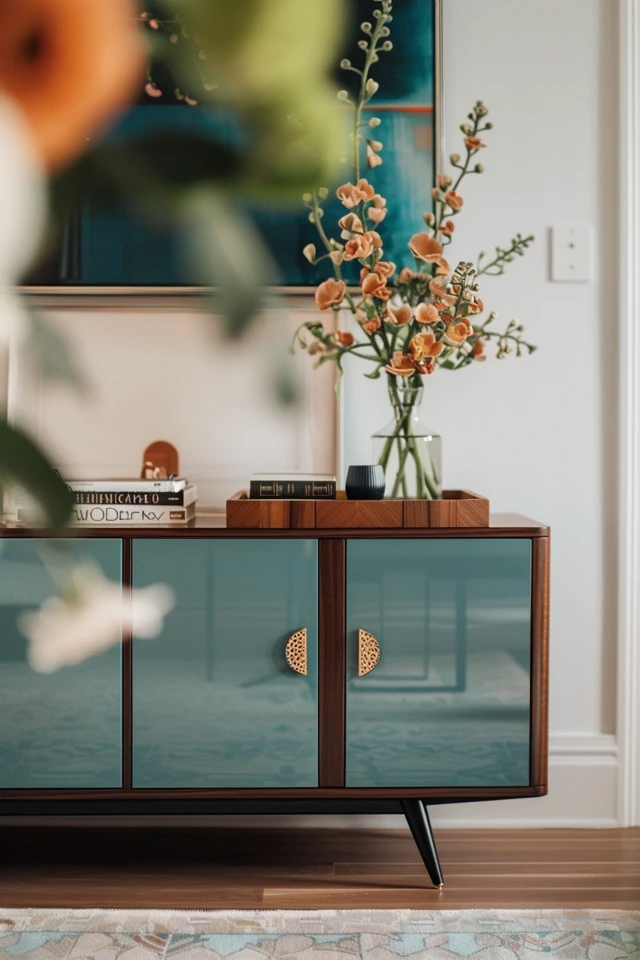
Title: Dining Room Sideboard – Elevate Your Space with These Ideas
Introduction
The dining room sideboard is often the unsung hero of home entertaining. While the dining table commands the center of the room, the sideboard—also known as a buffet or credenza—does the heavy lifting regarding storage and service. In my design practice, I view this piece as the anchor that completes the room’s perimeter, offering a crucial opportunity to introduce texture, color, and personality.
A well-chosen sideboard solves multiple problems at once. It provides a designated landing zone for serving dishes during large meals, hides away seasonal linens and silverware, and offers a prime surface for decorative vignettes. However, selecting the right one requires balancing architectural scale with functional needs. For visual inspiration on how these pieces come together in real homes, be sure to view the extensive Picture Gallery at the end of this blog post.
I recall a project where a client had a beautiful, expansive dining table but felt the room echoed and felt cold. The solution wasn’t a rug or drapes, but a substantial, solid wood sideboard filled with their grandmother’s china. It instantly grounded the space, improved the acoustics by reducing echo, and gave the eye a beautiful resting place. Let’s dive into how you can achieve this balance in your own home.
1. Mastering Scale and Placement
The most common failure point in dining room design is incorrect scaling. Before you fall in love with a finish or style, you must understand the math of your floor plan. A sideboard that is too deep will choke the traffic flow, while one that is too small will look like a toy next to a substantial dining table.
The Golden Rules of Clearance
You need a minimum of 36 inches of clearance between the edge of your dining table and the front of your sideboard. If you frequently entertain or have a high-traffic household, try to push this to 42 or even 48 inches. This allows a guest to pull out a chair and sit comfortably while someone else walks behind them to access the buffet.
Height Matters
The ideal height for a sideboard is generally between 30 and 36 inches. This is standard counter height or slightly higher. If you plan to use the surface for serving food buffet-style, a height of 34 to 36 inches is ergonomically perfect. It prevents guests from having to stoop too low to scoop a serving.
Length Relative to the Table
Visually, your sideboard should relate to your table length. A good rule of thumb is that the sideboard should be at least two-thirds the length of the dining table. If the sideboard is tiny compared to a 10-foot table, the room will feel unbalanced. Conversely, if the sideboard is longer than the table, it can work, provided the room is large enough to handle that much visual weight.
Designer’s Note: The Door Swing Disaster
In my early years, I once specified a gorgeous, deep cabinet with wide-swinging doors for a narrow dining room in a city brownstone. It looked perfect on the floor plan. However, once the table was populated with chairs and guests, the cabinet doors couldn’t open fully without hitting the chair backs.
The Lesson: If you have less than 40 inches of clearance, avoid hinged doors. Opt for sliding doors or a piece with primarily open shelving or drawers. This ensures you can access your napkins and platters even when guests are seated.
2. Material Selection and Durability
The finish of your sideboard dictates the mood of the room. It also determines how durable the piece will be against hot plates, water rings, and scratches. In a dining room, mixing materials is usually more effective than matching them perfectly.
Breaking Up the “Set” Look
Avoid buying the “dining suite” where the table, chairs, and sideboard are all the exact same wood tone. This tends to look generic and flat. If you have a heavy walnut dining table, consider a painted sideboard in charcoal, navy, or cream. Alternatively, a metal or stone-topped console can add an industrial or modern edge to a traditional wood table.
Top Material Considerations
If you plan to serve food directly from the sideboard, the top material is critical.
- Stone or Quartz: Indestructible against heat and water. Perfect for families or frequent entertainers.
- Solid Wood: Beautiful and warm, but requires coasters and trivets. You must be vigilant about spills.
- Lacquered or Painted: wipeable, but prone to scratching if you drag heavy ceramic platters across it.
- Glass: adds a light, airy feel to small spaces but shows every fingerprint and dust mote.
Rental and Apartment Constraints
For renters, I often recommend modular sideboards or two matching smaller chests placed side-by-side. This offers flexibility; if you move to a home with a different layout, the two chests can be separated into different rooms (like nightstands or hall consoles). Heavy, built-in styling is great for homeowners, but flexibility is king for renters.
3. Internal Storage and Organization
The exterior determines the look, but the interior determines the utility. A sideboard is useless if it doesn’t fit your specific inventory. Before shopping, take stock of exactly what needs to be stored.
The Drawer vs. Cabinet Debate
Ideally, you want a mix of both. Shallow top drawers are essential for silverware, napkin rings, serving spoons, and taper candles. Deep lower cabinets are necessary for oversized items like soup tureens, cake stands, and stacks of chargers.
Adjustable Shelving is Mandatory
Never buy a storage unit with fixed shelves unless you have measured your tallest vase and confirmed it fits. Adjustable shelves allow you to maximize vertical space. I often remove one shelf entirely to accommodate a client’s tall liquor bottles or a stack of 12 dinner plates.
Specialty Features to Look For
- Felt-lined drawers: These protect silver from tarnishing and keep cutlery from sliding around.
- Cord management: If you plan to put a lamp on top or hide a Sonos speaker inside, look for holes in the back panel.
- Wine racks: Some sideboards come with built-in grids. Ensure these are removable in case your needs change.
Common Mistakes + Fixes
Mistake: Buying a piece with legs that are too spindly for the weight of the contents.
Fix: China is heavy. A stack of 12 stoneware plates adds up fast. Ensure the piece has a center support leg if it is over 60 inches long, or choose a piece with a plinth base (no legs) for maximum weight distribution.
Mistake: Forgetting about baseboards.
Fix: If you want the piece flush against the wall, check if the back legs are inset or if the top overhangs the back. Otherwise, the gap caused by the baseboard will annoy you and trap dust.
4. Styling the Surface: The Vignette
Styling the top of a sideboard is where you get to have fun. This is a dedicated surface for display that doesn’t need to be cleared off as frequently as the dining table. The goal is to create a composition that feels collected, not cluttered.
The Rule of Three and Triangles
Arranging objects in odd numbers creates visual harmony. I often use a “triangle” composition. This involves one tall object (like a lamp or vase with branches), a medium object (a framed photo or sculpture), and a low, flat object (a stack of books or a tray). This guides the eye up and down rather than across a flat line.
Anchor the Wall
The wall space above the sideboard is just as important as the surface itself. You generally have two options here: a large mirror or a piece of art.
- Mirrors: These are excellent for small dining rooms as they bounce light and make the space feel larger.
- Art: This is a great place for a statement piece. The art should be roughly 50% to 75% of the width of the sideboard. If it’s too small, it will look lost.
Functional Decor
Incorporate items that are actually used for dining. A beautiful ceramic bowl filled with seasonal fruit, a tray with your crystal decanters, or a pair of heavy candlesticks are all practical yet decorative. Leave some negative space; you don’t want the surface so full that there is no room to set down a serving platter during dinner.
5. Lighting and Ambiance
Lighting transforms a piece of furniture from a storage unit into a focal point. In a dining room, overhead lighting (the chandelier) is often focused on the table. The sideboard offers an opportunity to introduce perimeter lighting, which is much more flattering and cozy.
Table Lamps
A pair of matching table lamps on either end of a long sideboard is a classic, high-end look. It provides symmetry and soft, eye-level light. Ensure the lamps are tall enough (28-32 inches) so they don’t look dinky next to a large mirror or artwork.
Sconces
If your sideboard is narrow and you don’t want to sacrifice surface area for lamp bases, wall sconces are the answer. Hardwired sconces look the most polished, but plug-in options with cord covers can work in a pinch. Mount them so the bulb is roughly 60 to 66 inches from the floor, flanking the art or mirror.
Picture Lights
For a moody, gallery-like atmosphere, install a picture light over the artwork above the sideboard. This casts a focused glow on the art and spills minimal light onto the serving surface, creating drama without glare.
What I’d Do in a Real Project: Mini Checklist
When sourcing a sideboard for a client, I follow this strict order of operations:
- Tape it out: I use blue painter’s tape on the floor to outline the proposed dimensions. Then I walk around it with the dining chairs pulled out.
- Inventory check: I count exactly how many linear feet of shelf space the client needs for their specific china set.
- Source the rug: I decide if the sideboard sits ON the rug (rare) or OFF the rug (standard). If off, I ensure the rug ends at least 6 inches before the sideboard feet to keep the floor visually clean.
- Check outlets: I locate the nearest outlet for lamps. If it’s behind the sideboard, I plug in an extension cord before moving the heavy furniture into place.
Final Checklist
Before you make a purchase, run through this quick summary to ensure you haven’t missed a critical detail.
- Clearance: Do I have at least 36 inches between the open sideboard doors/drawers and the dining table chairs?
- Height: Is the piece at least 30 inches tall to serve comfortably as a buffet?
- Depth: Is the depth (standard is 18-22 inches) appropriate for the room size without blocking walkways?
- Storage: Do the interior shelves adjust to fit my tallest vase or stacked plates?
- Safety: If I have young children, can this piece be anchored to the wall to prevent tipping?
- Aesthetics: Does the finish complement (not match perfectly) the dining table?
- Lighting: Have I planned for lamps, and do I have access to a power outlet?
FAQs
Can I use a dresser as a sideboard?
Absolutely. In fact, vintage dressers often offer better construction and deeper drawers than modern sideboards. The key is the height; ensure the dresser is at least 30-32 inches tall so it doesn’t look like bedroom furniture. You may also want to change the hardware to something more formal or polished to elevate the look.
Should the mirror above the sideboard match the sideboard wood?
I prefer that it does not. If you have a wood sideboard, try a metal frame (brass, black iron, or silver) for the mirror. If you have a painted sideboard, a wood mirror can bring warmth back into the vignette. Contrast creates interest.
How do I protect a wood sideboard when serving hot food?
If you don’t want to cover the beauty of the wood with a tablecloth, invest in a custom-cut piece of glass for the top, or use high-quality trivets. For a more subtle approach, use a table runner during parties. It defines the “serving zone” and provides a layer of heat protection where the dishes sit.
What is the difference between a sideboard, buffet, and credenza?
Today, the terms are used interchangeably. Historically, a “buffet” has longer legs, a “credenza” has no legs or very short legs (often with sliding doors), and a “sideboard” often has cabinets to the floor. For your purposes, focus on the dimensions and storage configuration rather than the terminology.
Conclusion
The dining room sideboard is an investment piece that should last for years, if not decades. It bridges the gap between the utility of a kitchen and the comfort of a living room. By focusing on scale first, mixing materials second, and styling third, you can curate a space that feels professionally designed and effortlessly functional.
Remember that your home should serve you, not the other way around. Whether you choose a sleek modern console or a heavy antique buffet, the right piece will make hosting easier and your daily life more organized. Take your measurements, check your clearance, and choose a piece that brings you joy every time you walk past it.
Picture Gallery


