
Elevate Your Space with Foyer Ledge Decorating Ideas
The foyer is the handshake of the home. It sets the tone for everything that follows, yet it is often plagued by awkward architectural features. One of the most common and confusing elements is the foyer ledge. This might be a high shelf above a closet, a recessed niche, or a half-wall separating the entry from the living room.
For many clients, these ledges become accidental storage for dust bunnies or a graveyard for forgotten knick-knacks. The challenge is balancing visual interest with practicality. You want to fill the void without creating visual clutter that makes the entry feel chaotic.
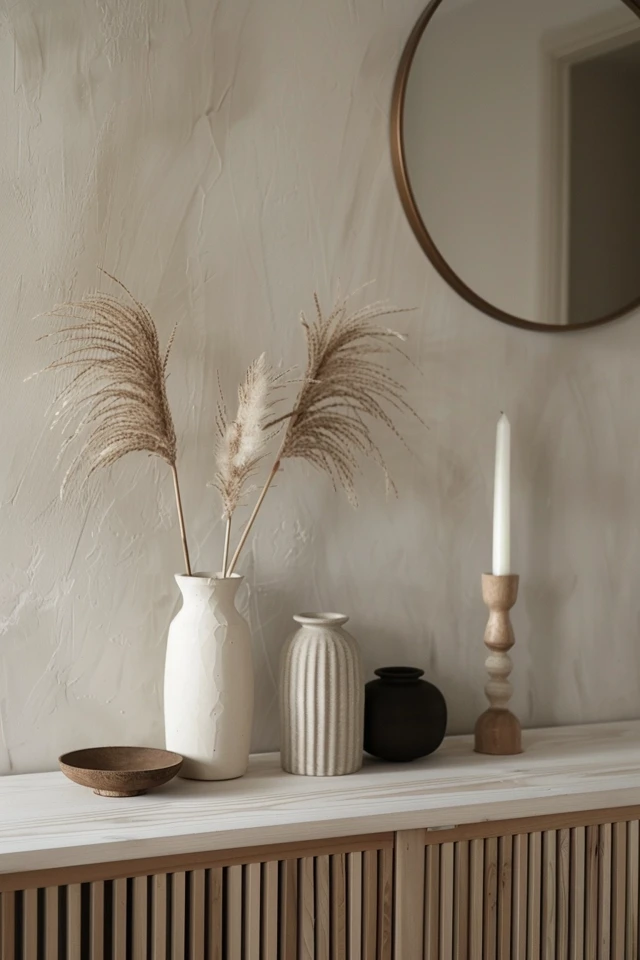
To help you visualize these concepts, I have curated a specific Picture Gallery at the end of the blog post that showcases these styling techniques in real homes. In this guide, we will break down exactly how to style these tricky spaces. We will cover scale, lighting, safety, and the “less is more” philosophy that keeps high ledges looking polished rather than messy.
1. Mastering the High Architectural Ledge
High ledges located above entry doors or closets are notoriously difficult to decorate. They are often dark, hard to reach, and disconnected from the rest of the room’s eye-level design. The biggest mistake homeowners make here is using items that are too small.
The Law of Scale
When an object is placed 8 or 10 feet in the air, it visually shrinks. A vase that looks substantial on your dining table will look like a thimble on a high foyer ledge. You must overscale your decor.
I recommend using objects that are at least 18 to 24 inches tall for any ledge situated above a door frame. If you have vaulted ceilings soaring 12 feet or higher, you might need decor that reaches 30 inches or more. Large woven baskets, oversized ceramic vessels, and tall structural branches are your best friends here.
Designer’s Note: The “Soldier” Error
One specific lesson I learned early in my career involved a client who lined up six identical vases in a row on a high ledge. It looked like a store display, not a home.
To prevent this, use the rule of groupings. Cluster items in odd numbers—usually groups of three or five. Vary the heights within that cluster. For example, pair a tall, thin vase with a shorter, rounder pot and a medium-height sculptural object. This creates a triangle shape that keeps the eye moving.
Maintenance and Safety
Common Mistake: Putting delicate glass or heavy items near the edge of a high ledge.
The Fix: Use museum wax. This is a clear, sticky putties that anchors breakables to the surface. It is essential if you live in an earthquake zone, have slammed doors nearby, or just want peace of mind.
Furthermore, consider dust. Do not place intricate items with lots of crevices up high. You will not clean them often enough. Stick to smooth surfaces like glazed ceramics or metal that can be easily wiped down with an extendable duster once a month.
2. Styling Half-Wall and Pony Wall Ledges
A half-wall ledge usually separates the entryway from a sunken living room or a dining area. Unlike high architectural shelves, these are at eye level and within reach. This makes them prime real estate for daily interaction, but also prone to clutter drop-off (keys, mail, sunglasses).
Functional Styling
Because this surface is horizontal and accessible, you have to zone it. Use a decorative tray to catch the “life debris.” If you give keys a home, they look intentional rather than messy.
For the decorative aspect, treat a half-wall like a console table. You generally have a depth of about 4 to 6 inches on a standard framed wall, or up to 10 inches if it is capped with a nice piece of wood or stone.
Measurements and Spacing
If your half-wall is long (over 4 feet), do not try to fill every inch. Leave “negative space” or breathing room at the ends. A good rule of thumb is to leave at least 6 to 8 inches of empty space on either side of your arrangement.
If the wall is narrow, a singular statement piece works best. A tall, slender lamp or a sculptural floral arrangement creates a focal point without blocking the view into the next room.
Visual Flow Considerations
Remember that a half-wall is visible from two rooms. The decor needs to look good from the front and the back. Avoid picture frames with easel backs that look messy from the rear.
Instead, opt for sculptural objects, bowls, or double-sided frames. Plants are excellent here because they look attractive from every angle. Just ensure the pot is finished on all sides.
3. Lighting Dark Ledges and Niches
Foyers are often dim, and recessed ledges or high shelves can become “black holes” in the evening. Lighting these spaces transforms them from dead zones into architectural features.
Uplighting for Drama
For high ledges, the best way to add volume without adding physical clutter is light. If you are in the construction phase, hardwire an outlet up there.
If you are renting or working with an existing home, use battery-operated can lights or LED puck lights. Place them behind a large plant or vase and aim them up toward the ceiling. This washes the wall with light, making the ceiling feel higher and the space brighter.
Sconces and Picture Lights
For eye-level niches, install a picture light above art or flanking sconces.
- Height placement: Sconces generally look best when the center of the bulb is roughly 60 to 66 inches from the floor.
- Spacing: If flanking a mirror or art in a niche, allow at least 4 inches of clearance between the frame and the light fixture.
Color Temperature
Always match the color temperature of your ledge lighting to the rest of the house. I stick to 2700K (warm white) or 3000K (soft white). Anything higher than 3000K will look blue and sterile, resembling a dentist’s office rather than a welcoming home.
4. Biophilic Design: Using Plants on Ledges
Plants add life, texture, and color. They soften the hard lines of drywall and architectural molding. However, putting plants on ledges requires a specific strategy regarding light and water.
The High Ledge Dilemma
Do not put a real plant on a 10-foot-high ledge unless you have a ladder you enjoy climbing weekly. It is unrealistic and dangerous.
This is the one instance where I advocate for high-quality faux greenery. Look for “real touch” latex plants rather than fabric ones, which collect dust. Faux trailing pothos or ivy works beautifully cascading over the edge of a high shelf, breaking up the horizontal lines.
Eye-Level Plant Styling
For accessible ledges, real plants are fantastic.
- Low Light: If your foyer is dim, use Snake Plants (Sansevieria) or ZZ plants. They are sculptural, architectural, and virtually unkillable.
- Bright Light: If you have a transom window, a small fiddle leaf fig or a rubber tree can add height.
The “Pot-in-Pot” Trick
Keep your plant in its plastic nursery grow pot and place that inside your decorative ceramic planter. This ensures proper drainage. When you water, you don’t ruin the furniture or the drywall ledge. It also makes it lighter to move if you need to carry it to the sink for a deep soak.
5. Art and Mirrors: Leaning vs. Hanging
Using artwork or mirrors on a ledge adds depth and personality. The casual elegance of a leaning frame is very popular in modern design, but it requires correct layering.
The Layering Technique
Start with a large anchor piece. This should be the tallest item. Lean it against the back wall. Then, overlap a smaller frame slightly in front of it, off-centered.
What I’d do in a real project: I often mix media. I might lean a large vintage oil painting (or a print on canvas) as the back layer. Then, I will place a smaller black-and-white photograph in a modern metal frame in front. This mix of old and new creates tension and interest.
Scale of Art
The artwork should fill roughly two-thirds of the width of the ledge space or niche. If the art is too small, it looks lost. If it is too big, it feels cramped.
If you are using a mirror, ensure it reflects something pleasant—like a light fixture or a window—rather than a view of the coat closet or a bathroom door.
Safety for Leaners
If you lean art, you must secure it. A slam of the front door can cause the frame to slide forward and crash. Use a small piece of double-sided foam tape or museum wax on the bottom corners of the frame where it touches the ledge. This keeps it locked in place.
Final Checklist: The “Designer’s Eye” Review
Before you consider your foyer ledge finished, run through this quick checklist. I use this on every project to ensure the styling feels complete but not chaotic.
- The Squint Test: Step back to the front door and squint your eyes. Does one side feel heavier than the other? Aim for visual balance, not perfect symmetry.
- The Texture Mix: Do you have at least three different textures? (e.g., woven basket, glass vase, matte ceramic).
- The Height Check: Do your objects vary in height? Avoid the “flat line” effect where everything is the same size.
- The Negative Space: Is there empty space? If the ledge looks full, remove one item. Breathing room is luxurious.
- The Color Thread: Do the colors on the ledge tie into the rug or art in the adjacent room? Cohesion creates flow.
Frequently Asked Questions
How do I clean high foyer ledges?
I recommend an extendable electrostatic duster or a microfiber wand with a telescoping pole. For deep cleaning, unfortunately, a sturdy A-frame ladder is necessary once or twice a year. Design your high ledges with minimal objects to make this task easier.
Can I leave a high ledge completely empty?
Yes! In modern or minimalist architecture, negative space is a valid design choice. If the architecture itself is interesting (like a curved niche or beautiful molding), you do not need to fill it. However, if it looks like a builder’s mistake, simple uplighting can make it feel intentional without adding decor.
What if my ledge is very narrow (under 4 inches)?
Focus on wall-mounted decor rather than surface decor. Install a piece of art or a flat mirror on the back wall of the niche. You can also use lean “ledge picture frames” which are specifically designed for narrow depths. Avoid bulky vases that will overhang the edge.
Is it okay to put family photos on a foyer ledge?
Generally, I advise against small family photos on high, distant ledges because nobody can see them properly. They work better on eye-level half-walls or console tables where guests can appreciate the details. For high spots, stick to graphic art or abstract shapes.
Conclusion
Decorating a foyer ledge is about solving a puzzle of scale and accessibility. These awkward spaces, whether looming high above the door or dividing your living room, offer a unique opportunity to add character to your home.
By focusing on larger-scale items, grouping objects in odd numbers, and ensuring proper lighting, you can turn a “dead zone” into a design feature. Remember the practical constraints—don’t put high-maintenance plants where you can’t reach them, and secure anything that might fall.
Start with one focal point, layer in your textures, and step back frequently to check your work. Your foyer is the first impression of your home; with these adjustments, it will feel curated, welcoming, and intentionally designed.
Picture Gallery


