
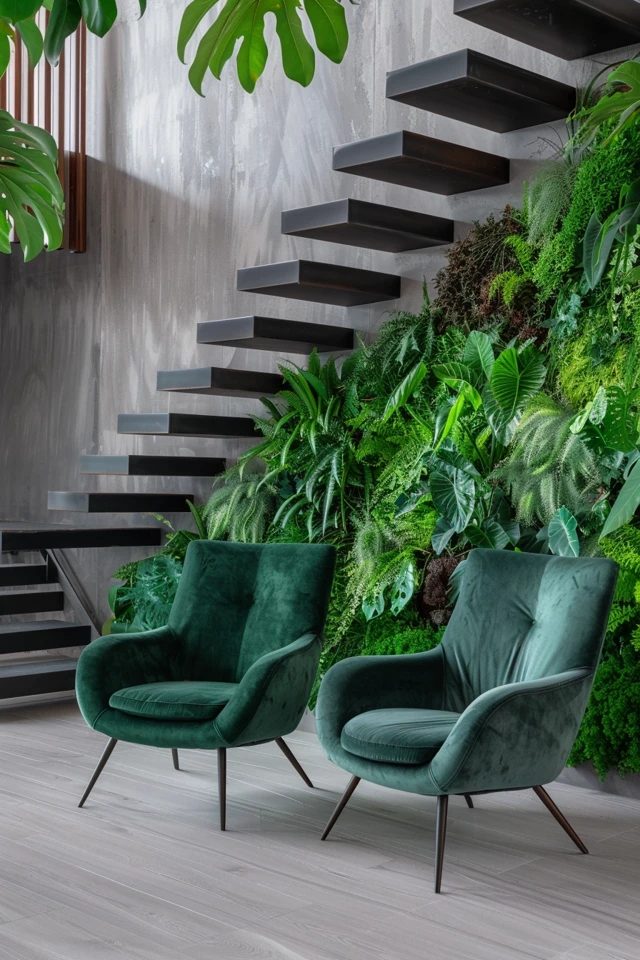
Elevate Your Space with Stairs Accent Wall Ideas
The staircase is often the most neglected architectural feature in a home. It serves a purely functional purpose—getting you from one floor to another—but it also represents the largest uninterrupted vertical space in your house. When I walk into a client’s home, the stairwell is usually a blank, echoing void that disrupts the flow of design between levels.
Transforming this area requires a specific approach because you are dealing with challenging angles, varying heights, and serious safety considerations during installation. A well-executed stair accent wall does more than add color; it guides the eye, reduces noise, and connects the upstairs and downstairs aesthetics cohesively.
Whether you are looking for a weekend DIY paint project or a full-scale architectural renovation, there is a solution for every skill level. For plenty of visual inspiration, make sure to check out the curated Picture Gallery at the end of this blog post.
1. Architectural Molding and Board and Batten
One of the most timeless ways to elevate a stairwell is through applied millwork. Board and batten, picture frame molding, or shiplap adds physical depth that paint simply cannot achieve on its own. In narrow stairwells, this texture creates interest without encroaching on the walkable width.
The most common application I recommend for stairways is a grid-style board and batten. This involves installing vertical battens and horizontal rails to create square or rectangular shapes. This style works exceptionally well in transitional and modern farmhouse interiors.
For a more traditional look, picture frame molding (wainscoting) installed below the chair rail is elegant and durable. This is particularly useful in homes with children or pets, as the molding protects the drywall from scuffs and dents.
Pro Rules for Spacing
- The Golden Rule of Spacing: For board and batten, aim for spacing between 12 and 16 inches apart. Anything wider looks sparse and cheap; anything narrower looks cluttered.
- Height Matters: If you aren’t taking the molding to the ceiling, the top rail should sit at roughly 36 to 42 inches from the nosing of the stair tread. This aligns with standard handrail heights.
- Thickness: Use 1×4 inch boards (which are actually 3.5 inches wide) for the most substantial look. 1×2 strips often look too flimsy on a large wall.
Handling the Angles
The most difficult part of stair molding is the transition where the horizontal rails meet the angle of the stairs. You must measure the angle of your staircase (usually between 32 and 37 degrees) using an angle finder. All your vertical boards must remain perfectly plumb (straight up and down), while your bottom rail should follow the slope of the skirt board.
Designer’s Note: The Skirt Board Essential
I often see DIYers apply molding directly above the stair treads without a skirt board. A skirt board is the long piece of trim that runs diagonally along the wall right against the steps. Without it, your vertical battens have nowhere to “land,” and gaps become impossible to clean. If you don’t have a skirt board, install a 1×8 or 1×10 board along the slide first before adding vertical details.
2. The Curated Gallery Wall
A gallery wall on a staircase is a classic choice, but it is also the easiest to mess up. The goal is to create a collection that feels collected and organic, yet organized. The challenge lies in the fact that the floor is constantly rising, meaning your eye level changes with every step you take.
The biggest mistake I see is hanging art too high. People tend to stand on a step and hang the picture at their standing eye level. However, when you view the wall from the bottom of the stairs, those pictures will look like they are floating near the ceiling.
Step-by-Step Layout Guide
- Find Your Center Line: Measure 60 inches up from the front nose of several stair treads (bottom, middle, and top). Use painter’s tape to mark this continuous diagonal line up the wall. This is your anchor line.
- Anchor Pieces: Place your largest frames along this center line. They should be spaced evenly.
- Fill in the Gaps: Work outward from the center line with smaller frames.
- Spacing Consistency: Maintain a gap of 2 to 3 inches between frames. In a stairwell, tighter spacing usually looks better than wide spacing, which can feel disconnected.
Safety and Practicality
In a narrow staircase (36 inches wide or less), bulky frames are a hazard. I always recommend using low-profile frames and securing them at all four corners using command strips or security hardware. This prevents pictures from tilting every time someone stomps down the stairs.
Common Mistakes + Fixes
- Mistake: Using glass in a high-traffic zone.
- Fix: Swap glass for high-quality acrylic (plexiglass). If a frame gets knocked off the wall while moving furniture, acrylic won’t shatter into dangerous shards on the steps.
- Mistake: Glare from overhead lights.
- Fix: Stairwells often have a chandelier or recessed cans. Use matte photo paper or non-glare acrylic to ensure the art is visible from the bottom landing.
3. Statement Wallpaper and Murals
Wallpaper is the most effective way to add pattern and personality to a stairwell. Because stair walls are often two stories high, they offer a massive canvas that can handle large-scale prints that might overwhelm a smaller powder room.
When selecting a pattern, scale is everything. A tiny, repetitive print can look busy and dizzying when plastered across a 15-foot high wall. Instead, opt for murals or wallpapers with a large vertical repeat. This draws the eye upward and emphasizes the ceiling height.
Material Matters
Stairwells are high-traffic funnels. People trail their hands along the walls, and bags scrape against them.
- Vinyl Wallpaper: This is the gold standard for stairs. It is scrubbable and durable.
- Peel-and-Stick: Great for renters, but be warned: applying peel-and-stick on a 15-foot wall is incredibly difficult because you cannot slide the paper into place like you can with traditional paste.
What I’d Do in a Real Project
If I am designing a stairwell for a client with kids or dogs, I avoid grasscloth wallpaper. Cats love to scratch it, and it creates dust. Instead, I would specify a commercial-grade vinyl with a fabric texture embossed into it. You get the look of linen without the fragility.
Handling the “Waterfall” Effect
If your stair wall transitions directly into the upstairs hallway without a break, you have a decision to make. You can either wrap the wallpaper into the hallway or install a piece of vertical trim to create a hard stop. I prefer wrapping it into the hallway for continuity, provided the hallway isn’t too long.
4. Texture: Stone, Brick, and Wood Slats
If you want drama and acoustic control, look toward dimensional materials. Stairwells act as sound tunnels, amplifying noise between floors. Adding texture breaks up sound waves and quiets the home.
Wood Slat Walls
Vertical wood slats (often oak or walnut) over a black felt backing are incredibly popular right now. This look is modern, warm, and acoustically superior. The vertical lines emphasize height, while the wood tone brings warmth to what is often a dark space.
Installation Tip for Slats
You do not need to slat the entire wall. A “half-wall” installation behind the railing can be stunning. However, ensure the wood is sealed properly. Unfinished wood will absorb oils from hands and look grimy within a year.
Stone and Brick Veneer
Thin brick veneer or split-face stone creates an industrial or rustic vibe. This is a heavy commitment—literally and figuratively. You must ensure your drywall is securely fastened to the studs, as the added weight of the stone can cause bowing if not properly supported.
Lighting Textured Walls
Texture is useless without light. If you install stone or slats, you must install wall-grazing light fixtures.
- Step Lights: Install recessed lights in the skirt board or the wall roughly 12 inches above the steps. This casts long shadows upward, highlighting the texture.
- Up-lighting: If you have a landing, place a floor can light to shoot a beam up the textured wall.
5. Paint Blocking and Color Drenching
Paint is the most accessible tool, but you don’t have to settle for a single solid color. Color blocking allows you to manipulate the visual proportions of the space.
The Two-Tone Approach
If your stairwell feels like a deep, dark silo, try painting the bottom third of the wall a dark, grounding color (like charcoal, navy, or forest green) and the top two-thirds a light, airy white. This lowers the visual center of gravity and makes the space feel cozier.
Use the angle of the stairs as your guide. You can snap a chalk line parallel to the handrail and paint the diagonal split. This is a very dynamic, modern look.
Color Drenching
For a moody, boutique hotel vibe, paint the walls, the trim, the skirt board, and even the ceiling in the same color. This technique, called color drenching, blurs the boundaries of the room. It works exceptionally well in stairwells with awkward angles or uneven drywall, as the lack of contrast hides imperfections.
Sheen Selection Checklist
- Flat/Matte: Hides drywall seams and bumps. Best for the upper reaches of the wall that no one touches.
- Eggshell/Satin: The minimum sheen for any wall area within reach. You need to be able to wipe off fingerprints.
- Semi-Gloss: Strictly for trim, railings, and skirt boards. Do not use this on the main walls, or you will see every flaw in the plaster.
Final Checklist: Before You Start
Before you buy a single gallon of paint or roll of wallpaper, run through this final check to ensure your project runs smoothly.
- Access Plan: How will you reach the highest point? Do you have an articulating ladder (like a Little Giant) that can stand safely on uneven steps? If the ceiling is over 12 feet, consider renting scaffolding.
- Lighting Audit: Is the current lighting adequate? Once you add an accent wall, you draw attention to the area. If it’s dim, the effect is lost. Replace bulbs with high-CRI LEDs before starting.
- Handrail Removal: Can you remove the handrail? It is infinitely easier to wallpaper or paint if the handrail is off. Check the brackets to see if they can be unscrewed.
- Sample Test: Paint large swatches (2×2 feet) and look at them at different times of day. Shadows in stairwells can turn a nice gray into a purple mess very easily.
- Traffic Control: If this is the only staircase in the house, how will you manage traffic during the project? You may need to work in stages to keep the stairs passable.
FAQs
What is the best color for a dark enclosed staircase?
Avoid stark bright white, which can look gray and dingy in low light. Instead, opt for warm off-whites (like Swiss Coffee) or go the opposite direction with a rich, saturated color like teal or slate blue. Dark colors actually blur the corners and make small spaces feel infinite rather than cramped.
How do I decorate a narrow staircase without making it feel smaller?
Avoid protruding objects. Skip the chunky gallery frames and shelves. Use flat treatments like wallpaper, wainscoting, or a mural. If you must hang art, use slim frames and matting to keep the visual weight light.
Is it expensive to add wainscoting to stairs?
It depends on the material. DIY board and batten using MDF strips is very affordable, often costing under $200 for materials. However, hiring a trim carpenter is expensive because of the labor involved in calculating and cutting the complex angles. Expect to pay significantly more for labor than materials.
Can I put a mirror on a stair landing?
Yes, and you should! A mirror on the landing reflects light from the upstairs or downstairs windows, effectively doubling the brightness in the stairwell. Just ensure it is secured firmly so vibration from footsteps doesn’t rattle it.
Conclusion
Your staircase accent wall is an opportunity to turn a transition zone into a destination. By considering the scale, lighting, and durability of your materials, you can create a feature that feels intentional and architectural.
Whether you choose the warmth of wood slats, the elegance of molding, or the boldness of wallpaper, remember that safety and precision are your best friends in this vertical space. Take the time to measure twice, secure your ladders, and plan your layout before making permanent changes.
Picture Gallery


