
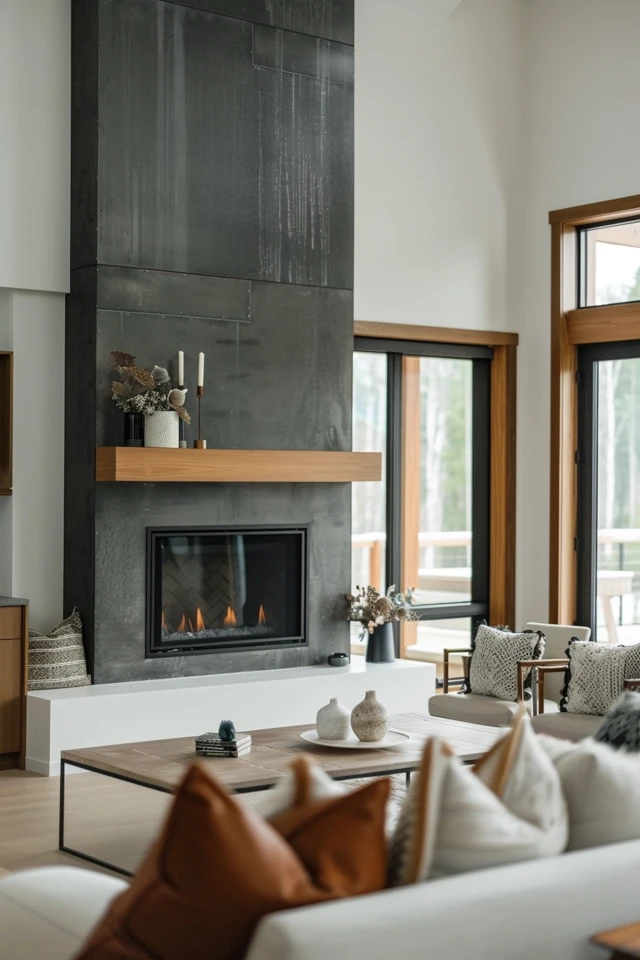
Elevate Your Space with Two Story Fireplace Ideas
Walking into a home with a double-height living room always creates a moment of awe. The sheer volume of the space feels luxurious and open, but it also presents a very specific design challenge. The fireplace, which should be the heart of the room, often feels dwarfed by the massive vertical wall, or conversely, it can feel like a monolithic elevator shaft if not designed correctly.
When I work with clients on these “great rooms,” the goal is always to bridge the gap between human scale and architectural scale. You want the fireplace to feel cozy when you are sitting on the sofa, but dramatic when you view it from the entryway or the second-story landing. It requires a delicate balance of texture, lighting, and proportion.
If you are looking for visual inspiration, we have curated a stunning picture gallery at the end of this blog post. Until then, let’s dive into the structural and stylistic strategies that make a two-story fireplace truly work.
1. Mastering Scale and Proportions
The most common mistake I see in double-height rooms is a fireplace surround that is too narrow. If your ceiling is 18 to 20 feet high, a standard 5-foot wide fireplace cladding will look like a thin toothpick running up the wall. It feels unstable and visually underwhelming.
To fix this, you must expand the horizontal footprint. In a room with ceilings this high, I typically aim for the fireplace cladding (the stone, tile, or millwork) to be at least 6 to 8 feet wide. If the firebox itself is standard size, we use non-combustible filler material to bulk up the sides before applying the finish.
Another trick is to taper or step the design. You might have a wide hearth and surround at the bottom 10 feet (the “living zone”), and then a slightly narrower chimney breast that extends to the ceiling. This mimics traditional masonry architecture and feels more grounded.
Designer’s Note: The Rule of Thirds
In photography and art, the rule of thirds creates balance. In a two-story room, I mentally divide the wall height into three zones:
- The Ground Level (0–9 ft): This is where the furniture, the mantle, and the firebox live. Detail here should be intricate because people are close to it.
- The Middle Ground (9–14 ft): This connects the lower living space to the architectural void. Large-scale art or textured treatments work best here.
- The Upper Reach (14 ft+): This area should generally remain simpler. If you put too much clutter or small decor up here, it draws the eye up and makes the room feel chaotic.
2. Material Selection for Vertical Impact
Choosing the right material is about more than just color; it is about weight and texture. When you run a material up 20 feet, the texture becomes a dominant architectural feature of the house.
Natural Stone and Stone Veneer
This is the classic choice for a reason. Rough-cut stone catches the light and creates shadows, which adds warmth to a large, echo-prone room.
- Pro Tip: If you are renovating, check your floor joists. Real stone is incredibly heavy. For a retrofit, I almost always recommend a high-quality manufactured stone veneer. It creates the same look at a fraction of the weight and doesn’t require reinforcing the foundation.
Large Format Tile
For a modern aesthetic, large porcelain slabs or tiles (24×48 inches or larger) look stunning. The key here is minimizing grout lines. You want the eye to travel up smoothly without getting stuck on a grid pattern.
- Finish Coordination: Avoid high-gloss finishes on a two-story wall. The glare from recessed lighting or tall windows can be blinding and show every imperfection in the installation. Stick to matte, honed, or textured finishes.
Millwork and Shiplap
If you are on a budget or prefer a farmhouse/coastal look, wood paneling is effective. Vertical shiplap draws the eye up, while horizontal shiplap widens the look of the fireplace.
- The Cost Factor: Millwork is significantly cheaper than stone, but remember the painting labor. You will need scaffolding to paint a two-story feature, so factor that rental into your budget.
3. Managing the “Void” with Flanking Built-ins
A tall fireplace standing alone in the middle of a wall can feel isolated. To anchor it, we almost always design built-ins on either side. However, the height of these built-ins is a subject of great debate.
Do not build shelves to the ceiling.
This is a hill I am willing to die on. If you have 20-foot ceilings, do not install open bookshelves all the way to the top.
- Maintenance Nightmare: You will never dust the top shelves.
- Styling Impossible: You will run out of meaningful decor and end up filling it with random filler items that look cluttered.
The Correct Approach
I recommend installing cabinetry or open shelving that stops at a standard ceiling height, usually 8 or 9 feet (aligned with the top of the first-story windows).
- The Space Above: Leave the wall space above the built-ins empty, or install picture lights and a single piece of large art on either side. This allows the fireplace to be the star while the built-ins provide the supporting role.
4. Lighting the Double-Height Feature
Lighting a two-story room is notoriously difficult. If you only rely on recessed cans in the 20-foot ceiling, the light will dissipate before it reaches the floor, and the fireplace will look like a dark shadow in the evening.
Wall Grazing
If you have a textured stone fireplace, install “grazing” lights in the ceiling close to the wall. These lights shine down the face of the stone, highlighting the texture and creating drama.
Sconces
Sconces bring the light down to a human scale. I often place large-scale sconces on the fireplace face or the flanking walls at about 60 to 66 inches from the floor. This creates a cozy “zone” of light for reading or conversing, ignoring the dark void above.
Chandelier Placement
A central chandelier is essential for lowering the visual ceiling. The bottom of the chandelier should hang roughly 8 to 9 feet off the floor (depending on the fixture size), centering the room and distracting from the overwhelming height.
5. Practical Constraints: TV Placement and Heat Management
In the real world, the fireplace wall is often the only place for a television. In a two-story room, the temptation is to mount the TV higher to fill the vertical space. Please resist this urge.
The Neck-Breaker Position
Your TV should be at eye level when seated. If your mantel is 60 inches high, mounting a TV above it is ergonomically painful.
- The Fix: If you must mount the TV over the fireplace, use a “mantel mount” that pulls down and out. Alternatively, build the firebox low (flush with the floor) so the mantel can sit at 48 inches, allowing a more comfortable TV height.
Heat Management
Heat rises. In a double-height room, the warm air from your furnace (and the fireplace) shoots straight to the second-story ceiling, leaving you freezing on the sofa.
- The Solution: A ceiling fan is functional, not just decorative. It pushes the trapped warm air back down to the living level. If you hate the look of fans, ensure your HVAC return vents are properly placed near the ceiling to cycle that hot air back through the system.
Final Checklist: What I’d Do in a Real Project
Before you commit to a contractor or a DIY strategy, run through this checklist. This mirrors the process I use during the design development phase.
1. Check the scale.
Use blue painter’s tape to outline the proposed fireplace width on the wall. Step back to the furthest corner of the room. Does it look spindly? If so, add 12 inches to each side.
2. Plan the electrical early.
If you want sconces on the stone or an outlet for a TV, the rough-in electrical must happen before the stone veneer goes up. Retrofitting wire behind stone is expensive and messy.
3. Verify the mantel depth.
If you are using a two-story stone facade, the stone can be 2 to 3 inches thick. Ensure your mantel is deep enough (at least 8–10 inches) so it doesn’t disappear into the stone work.
4. Select the right grout.
For stone, the grout color can change the entire look. A high-contrast grout makes it look busy; a matching grout makes it look monolithic. Ask your installer for a “mock-up board” before they touch the wall.
Common Mistakes + Concrete Fixes
Mistake: Using standard 12×12 tiles on a 20-foot wall.
The Fix: The grid pattern will look like a graph paper notebook. Switch to large format slabs or a staggered brick pattern to break up the grid.
Mistake: Undersized Art.
The Fix: Hanging a standard 24×36 inch canvas above the mantel in a two-story room looks like a postage stamp. You need art that is at least 48 to 60 inches tall. If that is out of budget, group a gallery wall of 6 to 9 smaller frames to create one large visual shape.
Mistake: Ignoring the sides of the chimney breast.
The Fix: If your fireplace projects into the room, don’t just put stone on the front and drywall on the sides. Wrap the material around the corners. It looks finished, substantial, and expensive.
FAQs
How do I clean a two-story fireplace?
For high stone or tile, you generally only need to dust it once or twice a year. Use an extendable duster with a microfiber head. For windows or mirrors high up, safety is key. If you are uncomfortable on a tall ladder, hire professional cleaners annually. It is cheaper than a hospital visit.
Can I paint a two-story brick fireplace?
Yes, and it is the most high-impact, low-budget transformation available. Use a masonry primer first. For a solid look, use latex paint. For a “limewash” effect that shows some texture, buy specialized mineral-based limewash paints. Be warned: once you paint brick, it is nearly impossible to go back to raw brick.
How much does a two-story fireplace remodel cost?
This varies wildly by region and material. However, scaffolding rental alone can add $500–$1,000 to the job. A full stone veneer installation typically starts at $8,000 and can easily go over $20,000 depending on the stone quality and demolition requirements.
What is the best rug size for a large great room?
In a room with high ceilings, a small rug looks like a bathmat. You likely need a 10×14 or 12×15 rug. All the front legs of your furniture should sit on the rug to ground the seating area and stop it from “floating” in the cavernous space.
Conclusion
Designing a two-story fireplace is an exercise in bravery. You are dealing with massive scale and significant budget, so the pressure to get it right is high. However, when you respect the proportions, layer your lighting, and choose materials that have enough visual weight to hold their own, the result is breathtaking.
Remember that the goal isn’t just to fill the wall; it is to create a backdrop for your life. Whether you choose sleek modern tile or rugged fieldstone, the fireplace should make your large room feel like a home. Take your time with the layout, tape it out, and don’t be afraid to go big—the room demands it.
Picture Gallery


