
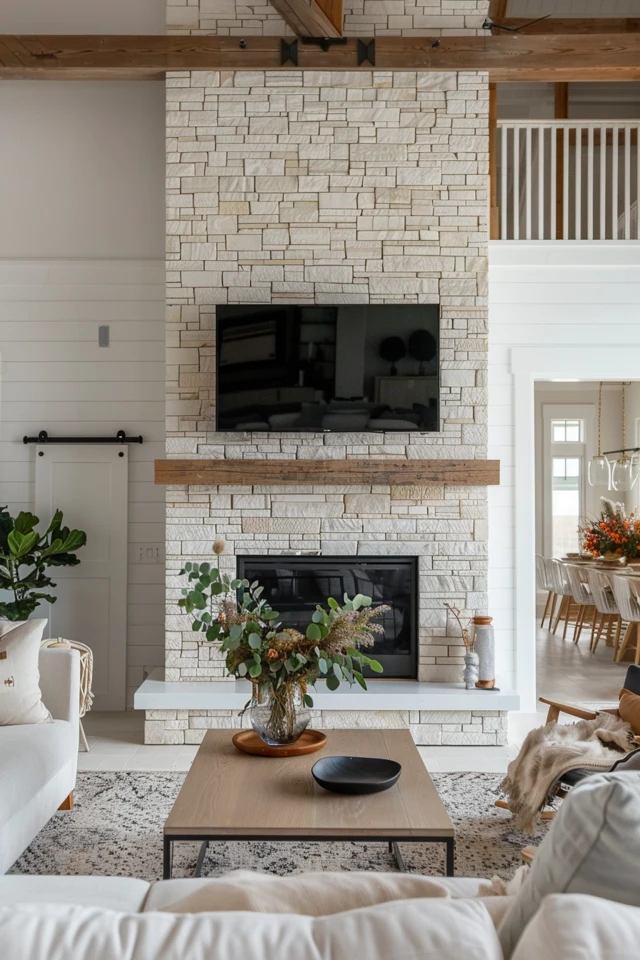
Elevate Your Space with Two Story Fireplace Ideas
There are few architectural features that command attention quite like a two-story fireplace. When you walk into a great room with double-height ceilings, your eyes are immediately drawn upward. It creates a sense of grandeur and volume that standard living rooms simply cannot replicate. However, designing for this vertical scale presents a unique set of challenges that can intimidate even seasoned homeowners.
The most common issue I see in these spaces is a disconnect between the human scale of the furniture and the massive scale of the architecture. If you treat a twenty-foot fireplace wall the same way you treat a standard eight-foot wall, the result often feels disjointed or underwhelming. You have to bridge the gap between the cozy area where you sit and the soaring void above you.
In this guide, I will walk you through the structural and stylistic decisions required to master this feature. We will cover material selection, lighting strategies for high walls, and how to decorate without creating clutter. To help you visualize these concepts, I have curated a stunning picture gallery at the end of this blog post.
Mastering Scale and Proportion
The number one rule when dealing with a two-story fireplace is that you cannot ignore the verticality. Many homeowners make the mistake of stopping the fireplace surround or stone veneer at the standard eight or nine-foot mark. This visually cuts the room in half and wastes the potential of the high ceilings.
To truly elevate the space, the material needs to travel the full distance from the floor to the ceiling. This draws the eye upward and emphasizes the architectural volume. If your budget does not allow for stone all the way up, consider using millwork or molding to continue the visual line to the top.
Width is just as important as height. A tall, skinny fireplace on a wide wall can look like a toothpick. As a rule of thumb, visual weight needs to balance out the height. If you have a twenty-foot ceiling, your fireplace surround should generally be wider than what you would install in a standard room. Extending the hearth horizontally or adding built-in cabinetry on the sides can help ground the structure.
Designer’s Note: The “Rule of Thirds” for Height
When I design a double-height facade, I mentally break the wall into three horizontal sections to ensure balance.
- The Bottom Third (0–8 feet): This is the “human zone.” This is where the firebox, mantel, and hearth live. The detail here needs to be intricate because people see it up close.
- The Middle Third (8–16 feet): This is the bridge. It connects the living space to the architecture. Large-scale art or texture belongs here.
- The Top Third (16+ feet): This is about texture and light. Don’t put clocks or small decor here. Let the material speak for itself.
Selecting Materials for Vertical Drama
The material you choose dictates the weight and feel of the entire room. In a two-story application, you are looking at a significant amount of surface area. A busy pattern that looks cute on a backsplash will look chaotic on a 200-square-foot wall.
Natural Stone and Veneer
Stone is the classic choice for a reason. It adds texture and warmth that drywall lacks. For high ceilings, I prefer large-scale stones or “ledgestone” profiles. Avoid small, uniform river rocks, as they can look busy from a distance. If you are using real stone, you must consult with a structural engineer. The sheer weight of stone rising twenty feet requires specific footing reinforcement that standard framing may not support.
Large Format Tile
For a modern look, porcelain slabs or large-format tiles (24×48 inches) are excellent. They offer the look of marble or concrete without the crushing weight or cost of full slabs. When using tile, minimize grout lines. Match the grout color exactly to the tile to create a monolithic appearance. You want the wall to look like one seamless element, not a grid.
Millwork and Shiplap
If you want a coastal or farmhouse aesthetic, wood paneling is a cost-effective way to fill the vertical space. However, standard shiplap can look too busy because of the frequent horizontal lines. I recommend using wider planks (8 to 10 inches) or a board-and-batten grid. This reduces the visual noise and scales better with the room height.
Common Mistakes + Fixes
Mistake: Using standard 3×6 subway tile on a massive fireplace.
The Fix: The scale is all wrong. It looks like a shower wall. Switch to large format slabs or a textured plaster finish to reduce visual clutter.
Mistake: Stopping the stone halfway up because of budget.
The Fix: If you can’t afford stone to the ceiling, switch materials entirely. Use drywall with heavy molding and trim to create a chimney breast effect all the way to the top. Never leave it “floating.”
Lighting the Vertical Void
Lighting is the secret weapon for two-story fireplaces. In the daytime, natural light from tall windows does the work. At night, however, a tall fireplace can turn into a dark, looming black hole if not lit properly.
You need to wash the wall with light. Recessed “gimbal” lights or wall washers installed in the ceiling are essential. These should be placed approximately 18 to 24 inches away from the fireplace wall. The goal is to graze the texture of the stone or millwork. This creates shadows that highlight the depth of the material.
Sconces are another great tool, but placement is tricky. Do not place sconces too high. Even though the ceiling is high, the sconces should relate to the human scale or the mantel. A good rule of thumb is to place sconces roughly 60 to 66 inches from the floor, or flanking art above the mantel. If you place them at 10 feet, they become impossible to change bulbs and look like they are floating in space.
Layering Your Light Sources
- Ambient: High recessed cans or a large chandelier centered in the room (not too close to the fireplace).
- Accent: Wall washers grazing the stone from the ceiling.
- Task/Mood: Sconces or picture lights above the mantel art.
Decorating the Mantel and Above
The mantel is the main focal point within the “human zone” I mentioned earlier. Since the wall above it is so tall, the mantel itself needs to be substantial. A standard 4-inch deep shelf will look flimsy. I recommend a mantel that is at least 6 to 8 inches thick (height) and 10 to 12 inches deep. This “chunky” aesthetic stands up to the visual weight of the stone above it.
Now, the controversial question: What goes above the mantel?
If you must put a TV there, ensure the mantel protects it from heat. However, in a room with such grandeur, a TV often cheapens the look. If possible, place the TV on a side wall or in a built-in cabinet.
If you opt for art, scale is everything. A standard 24×36 canvas will look like a postage stamp. You need oversized art. We are talking about pieces that are 48×60 inches or larger. If you can’t find a single piece that big, consider a tryptich (a set of three) to consume the horizontal space.
What about the space way up high?
Leave it alone. One of the biggest errors homeowners make is trying to hang a large clock or metal star 15 feet in the air. Negative space is a design element. Let the stone, tile, or molding be the decoration. If the wall is properly lit, the texture is enough.
Furniture Layouts for Grand Rooms
A two-story fireplace is usually part of a large, open-concept room. This volume can make furniture feel like it is floating on a raft in the ocean. To fix this, you must anchor the seating area.
The Rug is Your Foundation
You cannot use a standard 8×10 rug in a massive two-story great room. It will look like a bathmat. You likely need a 10×14 or even a 12×15 rug. All front legs of your furniture must sit on the rug. Ideally, the entire sofa sits on the rug to ground the “room within a room.”
Floating the Furniture
Never push your sofa against the wall in a room this size. Pull the seating arrangement toward the center, facing the fireplace. Create an intimate conversation zone. The back of the sofa acts as a hallway divider.
Measurements to Know
- Coffee Table Distance: Keep 18 inches between the sofa edge and the coffee table.
- Pass-Through Space: Leave at least 36 to 42 inches of walkway space behind the sofa or around the seating group.
- Chandelier Height: If you hang a chandelier in a two-story room, the bottom of the fixture should generally align with the top of the first-story windows, or roughly 8 to 9 feet off the floor, depending on the fixture size. It needs to feel connected to the furniture, not the ceiling.
Final Checklist: What I’d Do in Your Home
If I were consulting on your project today, this is the exact checklist I would run through to ensure your two-story fireplace succeeds.
1. Verify Structure
Before falling in love with stone, I would check the framing. Can the wall hold 20 feet of rock? If not, we switch to thin veneer or millwork.
2. Choose the Focal Point
Is the fireplace the star, or is it the view out the adjacent windows? If the view is the star, keep the fireplace neutral (plaster or white brick). If the fireplace is the star, go bold with black slate or rustic timber.
3. Plan the Electrical
I would map out the TV power, the HDMI cables, and the sconce boxes before the drywall goes up. There is nothing worse than visible cords on a 20-foot stone wall.
4. Select the Mantel
I would source a reclaimed beam or a cast concrete shelf that is at least 8 inches thick. I would check local code for clearance—usually, combustible wood must be 12 inches above the firebox opening.
5. Light the Wall
I would ensure the electrician installs eyeballs or wall-washer trims in the ceiling specifically to highlight the texture of the chimney breast.
FAQs
How do I clean a two-story fireplace?
Dusting the upper reaches is a challenge. For daily maintenance, an extendable duster works for the mantel and mid-sections. For a deep clean of stone or high windows, you will likely need an A-frame ladder or to hire professional cleaners once a year who have scaffolding.
Should I put a mirror above a tall fireplace?
In general, I advise against it for two-story rooms. A mirror reflects what is opposite it. In a double-height room, it often just reflects a ceiling fan or the second-story railing, which isn’t very attractive. Large-scale art is almost always a better choice than a mirror in this specific application.
How do I manage heat in such a tall room?
Heat rises, so a two-story room can feel cold while the ceiling is sweltering. A ceiling fan is functional here. Ensure it is hung on a down-rod so it sits about 8 to 10 feet off the floor, not flush with the 20-foot ceiling. This helps push the warm air back down to the living level.
Can I paint my existing two-story brick fireplace?
Yes, and it is often the highest-ROI update you can do. If you have outdated 1990s red brick, painting it white (like Benjamin Moore White Dove) or a moody charcoal (like Benjamin Moore Kendall Charcoal) can instantly modernize the space. Just be sure to use masonry-formulated primer and paint that can withstand the heat near the firebox.
Conclusion
A two-story fireplace is more than just a heat source; it is the anchor of your home’s architecture. While the scale can be daunting, viewing it as an opportunity rather than a problem allows you to create something truly breathtaking. By respecting the vertical lines, choosing materials that have appropriate weight, and lighting the space to highlight the texture, you can turn a cavernous room into a cozy, sophisticated gathering space.
Remember that the goal is to bridge the gap between the grand architecture and the people living in it. Use warm textures, substantial furniture, and proper lighting layers to bring the scale down to a comfortable level. Whether you choose sleek modern tile or rugged natural stone, committing to the full height of the wall will pay off in the final look.
Picture Gallery


