
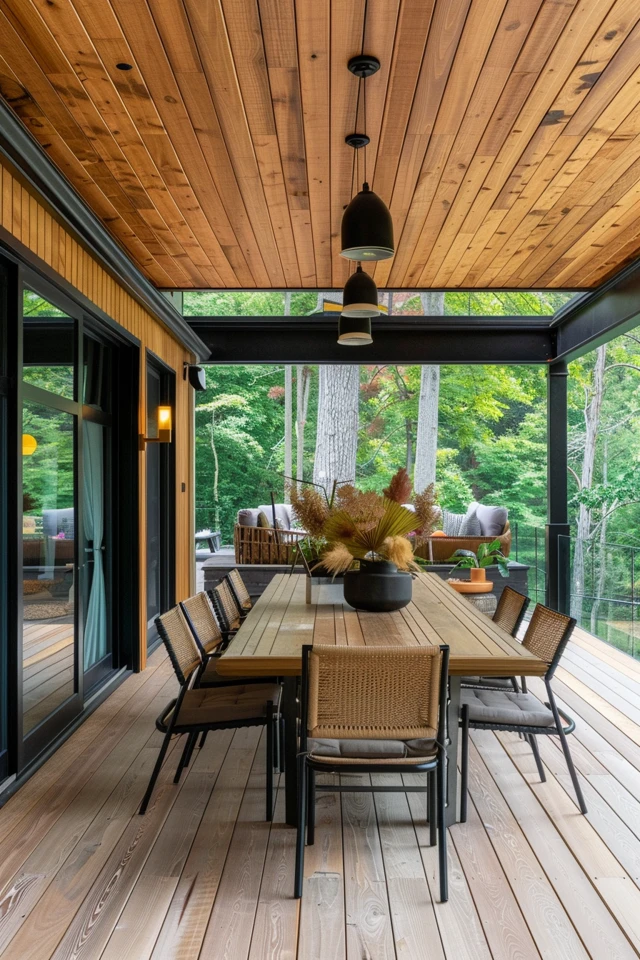
Elevate Your Space with Unique Deck Ceiling Ideas
When we design outdoor living spaces, the focus almost always lands on the decking material, the furniture layout, or the landscaping. However, just like indoors, the ceiling—often called the “fifth wall”—holds massive potential to define the atmosphere of a room. A thoughtful deck ceiling transforms a basic overhang into a sophisticated architectural feature.
I recall a project last summer where the clients had a beautiful composite deck, but the space underneath felt like a dark, utilitarian storage area filled with cobwebs. By installing a proper drainage system and cladding the ceiling in warm, honey-toned cedar beadboard, we instantly doubled their livable footage. It went from a place to hide the lawnmower to their favorite spot for evening cocktails.
Whether you are looking to finish the underside of a second-story deck or spruce up the roof of a covered porch, the options are vast. For a visual feast of inspiration to spark your creativity, be sure to scroll down to the Picture Gallery at the end of this blog post.
1. Selecting the Right Material for Durability and Aesthetics
The material you choose sets the tone for the entire space. As a designer, I always balance the visual goal with the reality of your local climate. Outdoor ceilings face humidity, temperature swings, and potential moisture, so material stability is non-negotiable.
Natural Wood (Cedar and Pine)
Nothing beats the warmth of real wood. Tongue-and-groove cedar is the gold standard because it is naturally resistant to rot and insects.
- The Vibe: deeply traditional, rustic, or mid-century modern depending on the stain.
- Designer’s Rule of Thumb: If you use pine to save money, it must be sealed and painted. Cedar can be left to gray naturally, but I recommend a clear sealant every two years to maintain that rich color.
- Budget Reality: Cedar is premium. Expect to pay 30% to 50% more than pine.
PVC and Composite Beadboard
For clients who want a “set it and forget it” solution, I turn to cellular PVC. It looks incredibly similar to painted wood but will never rot, warp, or attract termites.
- The Vibe: Crisp, clean, and coastal.
- Maintenance: A quick power wash once a year is usually all it takes.
- Caveat: Ensure you buy a product specifically meant for ceilings. Some floor composites are too heavy for overhead installation.
Fiber Cement Panels
If you are in a high-humidity area or a wildfire zone, fiber cement (like Hardie Board) is excellent. It paints up beautifully and offers a smooth, seamless look compared to individual planks.
Designer’s Note: Acclimatization is Key
If you choose natural wood, do not install it the day it is delivered. I have seen beautiful tongue-and-groove ceilings buckle because the contractor rushed. Let the wood sit in your outdoor environment (stacked with spacers for airflow) for at least 48 to 72 hours before installation so it adjusts to the humidity.
2. Using Architectural Details to define the Style
Once you have your material, how you apply it changes everything. The pattern and texture of the ceiling can manipulate how large or cozy the space feels.
Exposed Rafters and Beams
Leaving rafters exposed creates height and volume. However, raw framing lumber often looks messy.
- The Fix: Wrap the structural beams in cedar or faux-wood box beams. This hides the ugly framing stamps and nails while giving you that heavy timber look.
- Scale Check: Ensure the beams are proportionate. In a space with an 8-foot ceiling, massive 12-inch beams will feel oppressive. Drop down to 6-inch faux beams to keep it airy.
The Coffered Ceiling
This is a grid pattern of sunken panels. It brings a level of formal elegance usually reserved for indoor dining rooms.
- Best For: High ceilings (9 feet or higher).
- My Strategy: Paint the beams white and the recessed flat panels a soft “Haint Blue” or light gray to add depth without darkening the space.
Directional Lines
The direction you run your planking matters. Running boards parallel to the house’s siding tends to make a narrow porch feel longer. Running them perpendicular draws the eye outward toward the view/yard.
What I’d Do in a Real Project:
If I am designing a modern farmhouse porch, I almost always specify a “nickel gap” shiplap rather than traditional beaded beadboard. The clean, flat lines with the slight gap feel more contemporary and less “cottage-y” than the rounded beads.
3. Lighting: The Jewel of the Ceiling
Lighting is where a deck ceiling goes from construction project to designed room. The biggest mistake homeowners make is relying on a single floodlight or one central fan light. You need layers.
Recessed Lighting (Cans)
These provide your general illumination.
- Rating: You must use fixtures rated for “Wet Locations” if they are exposed to driving rain, or “Damp Locations” if the roof is solid.
- Spacing: A good starting point is to divide your ceiling height by two. If you have an 8-foot ceiling, space your cans roughly 4 feet apart for even coverage.
Statement Pendants and Chandeliers
Use these to anchor specific zones, like a dining table or a conversation set.
- Sizing Rule: Add the length and width of the room in feet. The sum in inches is a good approximate diameter for a chandelier. For example, a 10×10 foot space could handle a 20-inch wide fixture.
- Stability: Outdoor fixtures sway in the wind. Use a rigid rod stem rather than a loose chain if you are in a breezy area.
Ceiling Fans
Essential for comfort and bug control.
- Clearance: For safety, fan blades should be at least 7 feet off the floor. If you have low ceilings (8 feet), use a “hugger” or flush-mount fan.
- Material: Look for ABS plastic blades that look like wood. Real wood blades can droop over time in humid environments.
Common Mistakes + Fixes
Mistake: Using 5000K (Daylight) LED bulbs.
The Fix: It looks like a hospital operating room. Stick to 2700K (Warm White) or 3000K (Soft White). This creates that cozy, golden-hour glow that makes evening entertaining magical.
4. Color Strategy: Paint vs. Stain
The color of your deck ceiling dramatically affects the perceived temperature and size of the space. It is also the best place to tie in colors from your interior decor to create that indoor-outdoor flow.
The “Haint Blue” Tradition
Originating in the American South, painting porch ceilings a soft, pale blue is timeless.
- The Effect: It visually extends the sky, making the ceiling feel higher and lighter.
- Folklore: It is said to confuse insects and keep wasps from nesting, though I find a good fan works better for that.
Dark Stains (Walnut or Espresso)
Dark ceilings are incredibly cozy and intimate.
- Best For: Large, high spaces that feel too cavernous. The dark color visually lowers the ceiling.
- Lighting Requirement: Dark wood absorbs light. If you go dark, you need to increase your lighting output by about 20% to keep the space functional at night.
Crisp White
The safest and most reflective choice. It bounces light back down into the living space, which is helpful if your porch roof blocks natural light from entering your home’s windows.
Designer’s Note: Coordination
Don’t look at the ceiling in isolation. If your interior flooring is a white oak, try to match that tone on the outdoor ceiling stain. If your house siding is a cool gray, avoid red-toned cedar stains as they will clash. Bring samples outside and look at them at different times of day before committing.
5. The Under-Deck System (DrySpace Solutions)
If you are working with a second-story deck and want to finish the space underneath (a walk-out basement patio), you have a unique engineering challenge: water management.
You cannot simply nail wood over the joists from below. Water will seep through the deck boards above, hit the ceiling, and rot it out within a season. You need a water diversion system.
How it Works
These systems (like Trex RainEscape or ZipUP UnderDeck) use troughs or panels installed between or below the joists to catch water and funnel it into a gutter system at the beam.
Design Options for Under-Decks
- Vinyl Panels: Many systems come with finished vinyl beadboard panels that snap into place. They are waterproof and easy to clean.
- Wood Look: Some systems allow you to install wood cladding below the drainage troughs. This requires lowering the ceiling height by a few inches to accommodate the hardware.
Access Matters
If you run electrical or plumbing pipes in that ceiling cavity, ensure you leave an access panel. I usually hide a small hatch near the house wall where it is least visible.
Realistic Constraints: Height
Under-deck systems steal headroom. You will lose 3 to 6 inches depending on the slope required for drainage. If your under-deck area is already barely 7 feet tall, be very careful with the system you choose. You might need a low-profile solution.
Final Checklist for Your Deck Ceiling Project
Before you purchase materials or hire a contractor, run through this list to ensure you haven’t missed a critical detail.
- Weather Protection: Is the roof above 100% watertight (for porches) or do I need a drainage system (for under-decks)?
- Electrical Plan: Have I mapped out where the fan and lights go? The wiring must be run before the cladding goes up.
- Material Acclimatization: Do I have a dry place to store the wood for 3 days before install?
- Insect Screening: If I am screening the porch, how does the screen track attach to the ceiling? You often need solid blocking around the perimeter.
- Height Clearance: Have I measured the fan drop to ensure no one hits their head?
- Maintenance Reality: am I willing to restain this every two years, or should I buy PVC?
Frequently Asked Questions
Can I use indoor beadboard outside?
Generally, no. Indoor beadboard is often made of MDF (medium-density fiberboard), which acts like a sponge when exposed to humidity. It will swell and crumble. Always buy material rated for exterior use, even if the porch is covered.
How much does a wood ceiling cost compared to vinyl?
While prices vary by region, a natural cedar ceiling is usually the most expensive option due to material cost and the labor of staining. Vinyl/PVC is often cheaper on labor but the material cost can be comparable to high-end wood. Basic plywood with battens is the most budget-friendly option.
How do I clean my porch ceiling?
For painted or PVC ceilings, a long-handled soft bristle brush and a mixture of warm water and mild dish soap work wonders. Avoid high-pressure power washing, especially on vented soffits, as you can drive water into the roof cavity and cause mold.
What if my ceiling is slanted/vaulted?
Vaulted ceilings are beautiful! You can run planks horizontally (up the slope) to accentuate height, or horizontally across the slope to make it feel wider. Just ensure your light fixtures come with adapters for sloped ceilings so they hang straight down.
Conclusion
Treating your deck or porch ceiling with the same care as your living room changes the entire experience of your home. It creates a cohesive, finished look that draws people outside and encourages them to stay longer. Whether you opt for the classic charm of Haint Blue paint, the warmth of stained cedar, or the modern durability of PVC, the investment pays off in both curb appeal and daily enjoyment.
Take the time to plan your lighting and drainage, and don’t be afraid to mix materials to create something truly custom. Your outdoor space deserves to be beautiful from top to bottom.
Picture Gallery


