
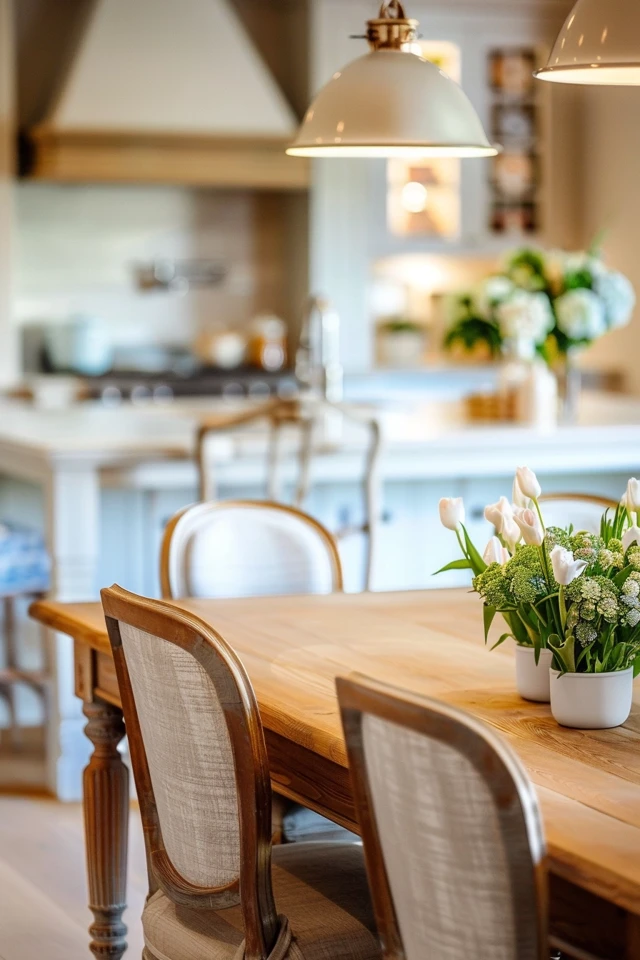
Title: Country Kitchens Decor – My Charming French Kitchen Guide
Introduction
There is something undeniably magnetic about a French country kitchen. It is the one room in the house where imperfections are not just tolerated; they are celebrated as signs of a life well-lived. Whenever clients come to me asking for a space that feels warm, welcoming, and timeless, I almost always pull inspiration from the provincial homes of rural France.
It is a style that balances elegance with rustic utility, creating a space that feels like it has evolved over generations rather than being installed in a single afternoon. For a visual feast of inspiration, be sure to scroll down to the Picture Gallery at the end of the blog post.
In this guide, I am going to break down exactly how to achieve this look, whether you are renovating a historic farmhouse or updating a suburban rental. We will cover everything from the architectural bones to the smallest styling details that make the design sing.
1. The Foundation: Walls, Floors, and Architectural Bones
The authentic French country look starts with the shell of the room. In modern American construction, we often strive for perfectly smooth drywall and seamless floors, but this style demands texture and depth.
Flooring Choices
If you are doing a full renovation, natural stone or terracotta tiles are your gold standard. I prefer using tumbled limestone or reclaimed terracotta because the edges are softened, instantly adding age to the room.
For size, avoid anything smaller than 12×12 inches; large flagstones (18×24 inches) help a small kitchen feel grander. If you are working with wood floors, opt for wide planks (at least 6 inches wide) with a matte, oil-rubbed finish rather than high-gloss polyurethane.
Designer’s Note: Dealing with Terracotta
Real terracotta is extremely porous. In my projects, I always warn clients that unglazed terracotta will stain if you drop oil or wine on it. If you have young kids or crave perfection, look for high-quality porcelain tiles that mimic the variation of terracotta without the maintenance.
Wall Treatments
French interiors rarely feature stark white, flat walls. To get that soft, diffused light effect, I often use a lime wash paint or a plaster finish.
If plaster is out of the budget, you can achieve a similar feel by using a matte paint finish rather than eggshell. Colors should be warm and earthy—think creamy whites, pale ochres, or soft greiges that change with the sunlight.
Adding Beams
Exposed wooden beams are a hallmark of this style. If your home doesn’t have them, you can install faux reclaimed beams, but scale is critical here.
Common Mistake: Installing beams that are too small for the ceiling height.
The Fix: If your ceilings are 8 feet high, keep beams shallow (about 4 inches deep). For ceilings 9 feet or higher, you need substantial beams (6×6 or 8×8 inches) so they don’t look like toothpicks stuck to the drywall.
2. The “Unfitted” Kitchen Layout
One distinct difference between an American standard kitchen and a French country kitchen is the cabinetry. American kitchens are usually fitted wall-to-wall with continuous counters and toe kicks.
French kitchens often embrace an “unfitted” look. This means utilizing furniture-style pieces that look like they could be picked up and moved, rather than built-in cabinetry that runs seamlessly around the perimeter.
Mixing Furniture Pieces
Instead of a standard island, consider using a large, antique farm table as your central prep space. This allows for open sightlines beneath the furniture, which makes the room feel airier and less boxy.
If you need storage, a freestanding armoire or a hutch (often called a vaisselier) is a beautiful alternative to upper cabinets. This is where you display your everyday dishware behind chicken wire or glass doors.
Clearance Rules of Thumb
When using freestanding furniture like a prep table, you must respect traffic flow.
- Walkways: You need a minimum of 36 inches between the edge of your table and the surrounding counters. Ideally, aim for 42 to 48 inches if multiple people cook together.
- Table Height: A standard dining table is 30 inches high, which is too low for prep work. Look for a “counter height” table (36 inches) or add casters to a vintage table to raise it up.
Real-World Constraints: Renters
If you are renting and stuck with standard built-ins, you can still fake the unfitted look. Add a small butcher block cart with turned legs to the end of a counter.
You can also remove the doors from one or two upper cabinets and paint the interior a contrasting color to mimic an open hutch. This breaks up the monotony of a fitted kitchen without requiring demolition.
3. Cabinetry Profiles and Hardware
When built-in cabinets are necessary—which is true for most of us—the door style and finish dictate the vibe.
Door Styles
Avoid sleek, flat-panel doors. You want inset cabinetry or a simple shaker style with a bead detail. The “inset” style is where the door sits flush inside the frame, rather than resting on top of it.
This is a more expensive construction method, but it is historically accurate and incredibly elegant. If you are on a budget, full-overlay doors can work if you choose a profile with some decorative molding.
The Paint Finish
High-gloss lacquer is a no-go for this aesthetic. Cabinets should look hand-painted.
I recommend a satin or semi-gloss finish. Popular colors include:
- Sage Green: Pairs beautifully with copper and wood.
- Dusty Blue: A classic Provençal choice.
- Warm Mushroom/Greige: A sophisticated neutral that hides dirt better than white.
Hardware Selection
Hardware is the jewelry of the kitchen. For a French look, avoid tubular stainless steel bars.
Instead, opt for:
- Unlacquered Brass: This will tarnish and patina over time, which is exactly what you want.
- Oil-Rubbed Bronze: Offers a nice contrast against light cabinets.
- Bin Pulls: These cup-style pulls are classic on drawers.
- Latches: Use cupboard latches on upper cabinets for that old-world feel.
Designer’s Note: Scale Matters
Don’t use tiny knobs on large pantry doors. A good rule of thumb is that the pull should be roughly one-third the width of the drawer if you are using a single pull. For drawers wider than 24 inches, use two knobs or pulls.
4. Countertops and Backsplashes
In a French country kitchen, surfaces should feel natural and honed, not synthetic and shiny. We want materials that age gracefully.
Countertop Materials
- Marble: Carrara or Calacatta are classic, but they etch with lemon juice and wine. In Europe, this patina is accepted. If you can’t handle the etching, skip it.
- Soapstone: This is a wonderful, durable alternative. It is non-porous and develops a dark, rich patina over time. It feels very historic.
- Butcher Block: Wood counters add immense warmth. I often mix materials, using stone near the sink and wood on the island.
The Backsplash Strategy
Keep it simple. You rarely see complex glass mosaics in a French farmhouse.
Handmade square tiles (Zellige style) are fantastic because their uneven surface reflects light beautifully. A simple slab of the same stone used on the countertops is also very authentic.
Common Mistake: Using bright white grout with rustic tile.
The Fix: Always use a warm gray or almond grout. It hides grease splatter better and softens the grid pattern, making the tile look established.
5. Lighting: Lanterns, Sconces, and Warmth
Lighting sets the mood. A French kitchen should feel glowing and ambient, not clinical.
The “No Can Light” Challenge
While recessed cans are practical, relying on them exclusively kills the atmosphere. I try to limit recessed lights to task areas and rely on decorative fixtures for the rest.
Fixture Styles
- Oversized Lanterns: A large iron or brass lantern over the island is a staple. It anchors the room.
- Sconces: Install sconces above open shelving or flanking the window above the sink. This brings light down to eye level.
- Library Lights: Articulating picture lights mounted above open shelving add a layer of sophistication.
Placement Rules
- Pendants: The bottom of your pendant light should be 30 to 34 inches above the countertop.
- Sconces: Mount these so the bulb is roughly 60 to 66 inches from the floor, depending on your height. You don’t want to look directly into the bulb.
- Kelvin Temperature: This is non-negotiable. Use bulbs that are 2700K (Soft White). Anything higher (3000K-5000K) will look blue and sterile, ruining your warm finishes.
6. The Range and The Hood
The cooking area is the hearth of the home. In French design, the range is often the focal point.
If the budget allows, a cast-iron range (like a La Cornue or Lacanche) is the dream. They come in stunning colors and become the jewelry of the room.
However, you don’t need a $10,000 stove to get the look. You can elevate a standard stainless steel range by focusing on the hood.
Hood Design
Avoid the standard stainless steel chimney hood if possible. Instead, build a custom surround out of drywall or plaster.
The shape should be curved or tapered. Adding a reclaimed wood beam as the mantle of the hood creates a perfect shelf for displaying oils and spices.
Practical Spacing
Ensure your hood is mounted at the correct height. For a gas range, this is typically 30 to 36 inches above the cooking surface. If you mount it too high, it won’t capture smoke; too low, and it blocks your view.
7. Styling: Controlled Clutter and Texture
French country style is not minimalist. It embraces “controlled clutter.” It is about having your tools within reach.
The Pot Rack
A hanging pot rack filled with copper cookware is iconic. Copper adds a metallic warmth that stainless steel lacks.
If you hang a rack over an island, ensure the bottom of the lowest pot is at least 72 inches off the floor so tall guests don’t bump their heads. If you are shorter, hang it over a prep table where people won’t be walking.
Textiles
Soften the hard surfaces with fabric.
- Cafe Curtains: Install a rod halfway down the window with linen curtains. This provides privacy while letting light in from the top.
- Sink Skirt: Replace the cabinet doors under the sink with a fabric skirt on a rod. It’s a charming, budget-friendly way to add pattern (like a classic Toile de Jouy or ticking stripe).
Ceramics and Art
Display ironstone pitchers, wooden bread boards, and crocks holding wooden spoons. Lean a small vintage oil painting against the backsplash. These non-kitchen items make the room feel like a living space.
What I’d Do in a Real Project: A Checklist
If I were designing a French Country kitchen today, here is the cheat sheet I would use to ensure success:
1. Mix the metals. I would use unlacquered brass faucets, iron light fixtures, and copper pots. Matching everything looks too showroom-perfect.
2. Prioritize patina. I would choose honed marble or soapstone over quartz. I want the counter to feel cold to the touch and look like it has been there for 50 years.
3. Add a rug. I always place a vintage runner (usually a faded Oushak or Persian rug) between the sink and the island. It adds color and comfort.
4. Use “living” finishes. I would paint the cabinets with brush strokes visible, or use a stain that lets the wood grain show through, rather than a plastic-like spray finish.
5. Install a bridge faucet. A bridge-style faucet with cross handles is the most period-appropriate choice for the sink.
6. Skip the upper cabinets on one wall. I would replace them with a long, single shelf supported by ornate brackets to display stacked white dishes.
Frequently Asked Questions
How do I do this on a tight budget?
Focus on paint and hardware. Painting existing cabinets a soft mushroom color and swapping chrome handles for antique brass bin pulls changes the look instantly. Add a vintage rug and remove one cabinet door to create open shelving.
Is this style practical for families with messy kids?
Yes, because it is meant to be imperfect. Scratched wood floors and tarnished brass hide wear and tear better than high-gloss modern surfaces that show every fingerprint. Use slipcovers on dining chairs that can be bleached.
Can I mix stainless steel appliances with this look?
Absolutely. While paneled appliances (where the fridge matches the cabinets) are ideal, stainless steel is neutral. The trick is to distract the eye with other textures—wood, stone, and iron—so the appliances aren’t the only focal point.
How do I keep open shelving from looking messy?
Stick to a color palette for the items on display. I usually tell clients to only display white or cream dishes and clear glass. Group items of the same color together. Hide the mismatched plastic cups and Tupperware in the lower closed cabinets.
Conclusion
Creating a French country kitchen is less about following a strict set of rules and more about cultivating a feeling. It is a rejection of the sterile and the synthetic in favor of the natural and the enduring.
By focusing on honest materials like stone, wood, and iron, and allowing your layout to feel a bit more relaxed and unfitted, you can build a space that invites people to linger.
Remember that this style gets better with age. The first scratch on the floor or the darkening of the brass hardware is just the beginning of the room’s story. Start with the bones, layer in your textiles, and don’t be afraid to let your kitchen look like a room where real life happens.
Picture Gallery


