
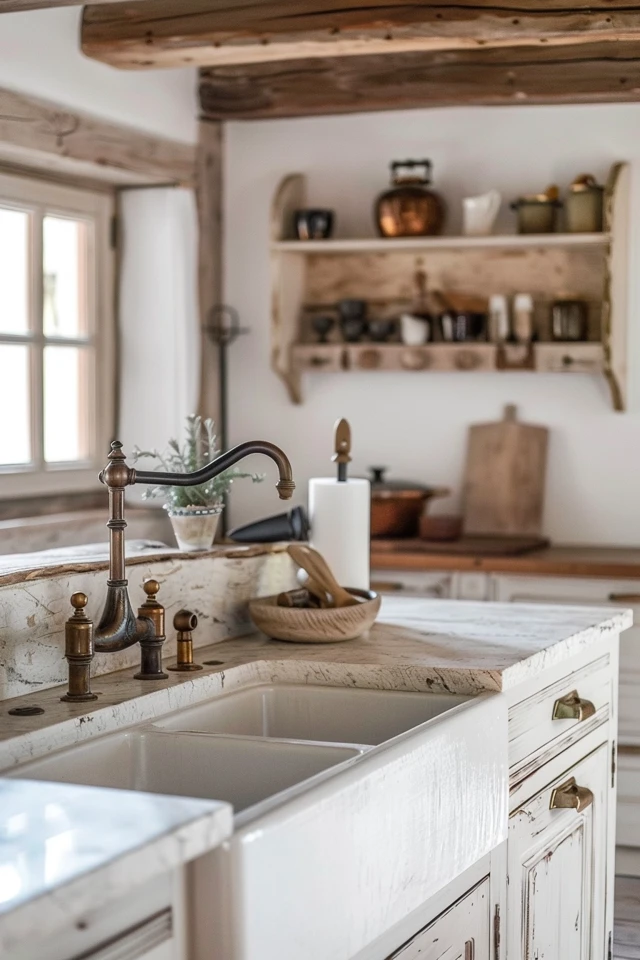
Farmhouse French Country Kitchen Charm Unveiled
Introduction
There is a distinct magic that happens when the rustic utility of an American farmhouse meets the refined, sun-baked elegance of the French countryside. It is a design marriage that feels both historically rooted and incredibly livable for modern families. I remember walking into a client’s kitchen in Provence years ago; it wasn’t the fancy range or the expensive tile that struck me, but rather the way the light hit the imperfect plaster walls and the worn timber beams.
That specific feeling of warmth and history is what we are trying to recreate, regardless of whether you live in a new build in the suburbs or a renovated apartment in the city. It is about layering textures, embracing patina, and prioritizing materials that get better with age rather than looking shabby. To see exactly how these elements come together, be sure to scroll to the Picture Gallery at the end of the blog post for visual inspiration.
In this guide, I am going to break down exactly how to achieve this look without it feeling like a theme set. We will cover the architectural bones, the specific hardware choices that make a difference, and the textile layers that soften the hard surfaces. We will also discuss the practical side of things, like aisle clearances and durable materials for homes with pets and kids.
1. The Foundation: Color Palettes and Architectural Bones
The backdrop of a French Country farmhouse kitchen is never stark white. While bright white kitchens had their moment, this style relies on “creamy” and “dusty” tones to create age and depth. You want the space to feel as though it has evolved over a century.
The Perfect Palette
I usually start with a base of warm neutrals. Think of colors like mushroom gray, heavy cream, or a very pale latte. From there, we layer in the “Provençal” accents, but in muted tones rather than bright primaries.
- Sage and Olive Green: Essential for connecting the indoors to the garden.
- Dusty Blue: Reminiscent of French shutters fading in the sun.
- Mustard and Ocher: Used sparingly in textiles or pottery to add warmth.
- Matte Black or Iron: Grounding elements used in light fixtures or window frames.
Flooring Essentials
If you can, go for natural stone or wood. In a high-traffic farmhouse kitchen, I prefer wide-plank white oak with a matte, oil-rubbed finish. It hides dust better than dark floors and scratches blend in as “character.”
For stone, limestone is the gold standard, specifically in a tumbling Versailles pattern. However, limestone is porous. If you have messy cooks or red wine drinkers in the house, look for high-quality porcelain tiles that mimic tumbled limestone. They offer the look without the staining anxiety.
Designer’s Note: The “Unfitted” Look
In true French country homes, cabinetry wasn’t built wall-to-wall. It was a collection of furniture. To mimic this, I often design the kitchen island to look like a separate work table, perhaps in a different wood stain or paint color than the perimeter cabinets. It breaks up the monotony and adds authenticity.
2. Cabinetry and Hardware: It’s All in the Details
Standard builder-grade shaker cabinets often fall flat in this aesthetic. To elevate the look, we need to focus on inset cabinetry or full-overlay doors with added detail. The goal is to make the storage look like fine furniture.
Cabinet Profiles
I recommend a modified shaker door with an inner bead detail. This small groove adds shadow and depth that feels more traditional. For a true focal point, consider replacing solid upper cabinet doors with wire mesh inserts or “wavy” restoration glass. This obscures the contents slightly while bouncing light around the room.
Hardware Selection
Hardware is the jewelry of the kitchen, and in this style, mixing metals is not just allowed; it is encouraged.
- The Latches: Use cupboard latches on upper cabinets rather than standard knobs. They encourage a slower, more deliberate interaction with your storage.
- The Pulls: Bin pulls (or cup pulls) are classic on drawers. They feel substantial and ergonomic.
- The Finish: Unlacquered brass is my top choice. It starts shiny but oxidizes over time to a dull, brown-gold patina that is stunning. If you hate maintenance, go for polished nickel, which has a warmer undertone than chrome.
Common Mistakes + Fixes
Mistake: Using short, rinky-dink hardware on tall pantry doors.
Fix: Scale matters. If your pantry door or refrigerator panel is substantial, your appliance pull needs to be at least 12 to 18 inches long. Anything smaller looks cheap and makes the heavy door difficult to open.
3. Surfaces: Countertops and the Essential Sink
The interplay between your countertops and your sink is the workhorse center of the kitchen. This is where the “Farmhouse” part of the title really takes the lead.
The Farmhouse Sink
You cannot achieve this look without an apron-front sink. It is the defining feature.
- Fireclay vs. Cast Iron: I prefer fireclay for its durability and resistance to scratching. However, it can crack if you drop a heavy cast iron pot on it.
- Sizing: For a main cleanup sink, aim for a minimum of 30 inches wide. If you have the space, a 33-inch or 36-inch single bowl is a luxury you won’t regret.
- Configuration: Stick to a single large bowl. It allows you to wash baking sheets and large roasting pans flat on the bottom of the sink.
Countertop Materials
Marble is the dream, specifically Carrara or Calacatta Gold. However, marble etches (dulls) when lemon juice or tomato sauce hits it.
For Real Life (Kids/Renters): If you cannot embrace the etching, choose a honed quartz that mimics marble or go for Soapstone. Soapstone is non-porous (sanitary), handles heat well, and develops a dark, moody patina that contrasts beautifully with cream cabinets.
Backsplash Strategy
Skip the modern glass tiles. You want texture.
- Zellige Tiles: These Moroccan clay tiles have irregular edges and varying glaze thickness. They shimmer in the light and look handmade.
- Tongue and Groove: For a more humble farmhouse look, wooden paneling painted in a semi-gloss works wonders and is budget-friendly.
- Slab Splash: Running your countertop material up the wall is elegant and easy to clean (no grout lines), though it is the most expensive option.
4. Lighting and Architecture: Scaling Up
One of the biggest failures I see in DIY designs is lighting that is too small for the space. In a French Country farmhouse, lighting fixtures are meant to be statements, often mimicking outdoor lanterns or old candelabras.
Pendants and Lanterns
Oversized lanterns in iron, copper, or gilded finishes anchor the island.
Rule of Thumb: If you are hanging two pendants over an island, they should be roughly 30 inches apart (measured center to center). Leave at least 30 to 36 inches of clearance between the bottom of the fixture and the countertop so you aren’t staring into a lightbulb while chopping vegetables.
Sconces and Task Lighting
Articulating sconces above open shelving or windows add a library feel to the kitchen. They also provide crucial task lighting.
What I’d Do in a Real Project: I always install a dimmer switch for every single light source. In the evening, you want to turn off the overhead cans and let the island pendants and sconces glow at 50% brightness. It changes the entire mood of the home.
Architectural Beams
If you have the ceiling height (9 feet or higher), adding faux or real reclaimed wood beams creates instant architecture. Run them across the width of the room to make a narrow kitchen feel wider.
5. Textiles and Styling: The Layered Look
This is where the room stops feeling like a showroom and starts feeling like a home. The French are masters of softening stone and wood with fabric.
Window Treatments
Avoid heavy drapes near cooking zones. Instead, opt for a café curtain hung on a simple brass rod halfway up the window.
This provides privacy from the neighbors while letting natural light flood in through the top half. 100% linen is the best fabric choice here; the way the sun filters through the weave is unmatched.
Rug Sizing and Placement
A kitchen runner is essential for comfort and color.
Sizing Rule: Ensure you have 6 to 12 inches of floor showing between the edge of the rug and the cabinets. If the rug touches the toe kick, it looks cramped.
Material: Vintage wool runners are surprisingly durable because the lanolin in the wool repels liquids. If you are nervous about spills, there are excellent printed vinyl mats now that look like antique rugs but wipe clean with a sponge.
Accessories with Purpose
Don’t buy decor just to fill space. In a farmhouse kitchen, the decor should be functional.
- Copper Pots: Hang them on a rack or stack them on shelves. They warm up the palette.
- Crocks: Use stoneware crocks to hold wooden spoons and utensils near the stove.
- Wooden Boards: Lean oversized breadboards against the backsplash. They hide outlets and add wood tones to the vertical plane.
Final Checklist: Bringing It All Together
Before you finalize your design or purchase list, run through this “What I’d Do” checklist to ensure you haven’t missed a critical element of the style.
- Check the finishes: Do you have at least two different metal finishes (e.g., brass faucet, iron lighting)?
- Review the clearances: Do you have at least 42 inches of walkway between the island and the perimeter counters? (48 inches if multiple people cook together).
- Texture check: Do you have a mix of wood, stone, metal, and fabric? If something is missing, the room will feel flat.
- Sink depth: Did you check that your farmhouse sink cabinet is reinforced to hold the weight of a water-filled fireclay sink?
- Range hood: Is the hood cover at least 3 to 6 inches wider than the range itself? This captures steam better and looks more proportional.
FAQs
Can I do this style in a small kitchen?
Absolutely. In a small space, focus on lighter cabinet colors to keep it airy. Use a single, large lantern instead of two small pendants, and use open shelving on one wall to prevent the “box” feeling of too many upper cabinets.
Is a farmhouse sink uncomfortable to use?
Actually, it is more comfortable. Because the apron front sticks out slightly past the cabinets, you stand closer to the sink basin. This means you don’t have to lean over as much, saving your lower back during long dishwashing sessions.
How do I mix wood tones without them clashing?
The secret is to keep the undertones consistent (all warm or all cool) but vary the darkness. For example, a pale white oak floor looks beautiful with a medium-toned walnut island. Avoid mixing reddish woods (like cherry) with yellow woods (like pine) unless you are very experienced.
Is open shelving practical for everyday use?
It is practical for items you use daily, like plates, bowls, and coffee mugs. Dust won’t have time to settle on them. Do not store rarely used serving platters or appliances on open shelves, as they will get greasy and dusty.
Conclusion
Creating a Farmhouse French Country kitchen is about balancing the rugged with the romantic. It is a style that forgives a little mess and welcomes a lot of guests. By focusing on authentic materials, proper scaling of lighting and furniture, and a warm, layered palette, you can build a space that feels timeless from the day it is finished.
Remember that this aesthetic is meant to evolve. Don’t feel pressured to buy every accessory at once. Let the kitchen grow with you, collecting pottery, linens, and memories along the way.
Picture Gallery


