
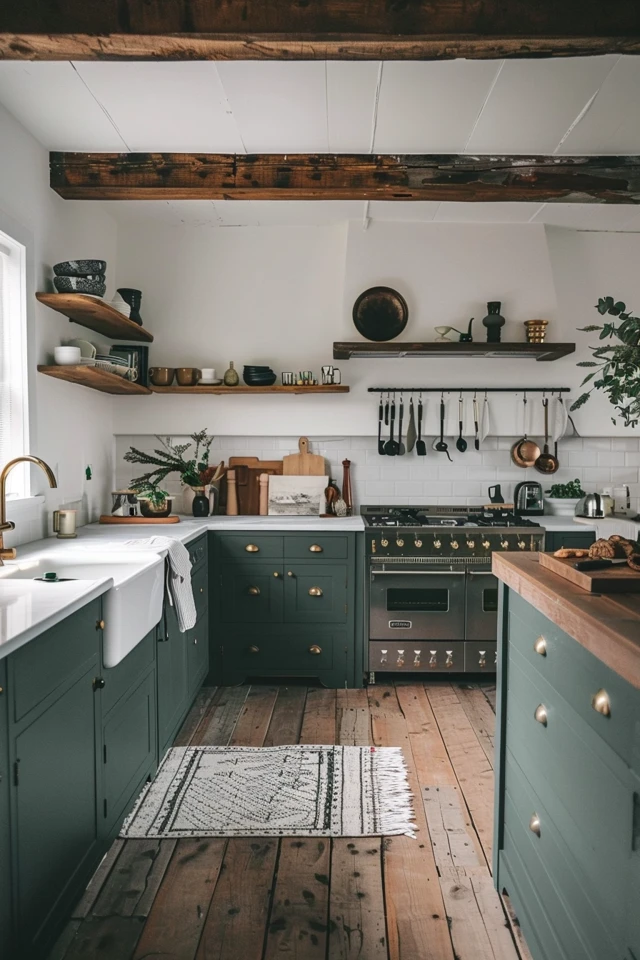
Farmhouse Kitchen Floor Ideas for Cozy Homes
When I design a farmhouse kitchen, I always start from the ground up. The flooring establishes the color palette, sets the texture for the room, and dictates how “precious” or rugged the space will feel. If you are looking for visual inspiration, you can find a curated Picture Gallery at the end of this blog post.
Farmhouse style is inherently forgiving, emphasizing materials that age gracefully and look better with a bit of wear and tear. However, the kitchen is the highest-traffic zone in your home, subject to dropped pots, spilled wine, and muddy paws. You need a floor that balances that cozy aesthetic with extreme durability.
In this guide, I will walk you through the best material choices, layout strategies, and practical considerations for achieving that authentic farmhouse look. Whether you are doing a full gut renovation or a budget-friendly refresh, these principles will help you make a choice you won’t regret in five years.
1. Wide Plank Hardwood: The Authentic Foundation
Nothing says “farmhouse” quite like wide plank hardwood. In traditional farmhouses, floorboards were cut from mature trees, resulting in planks that were significantly wider than the standard 2 ¼-inch strips we saw in mid-century homes. To replicate this look today, I recommend looking for planks that are at least 5 to 7 inches wide.
If you have a larger budget and a large room, going up to 9 or 10 inches creates a luxurious, historical feel. However, be aware of scale. In a small galley kitchen, massive planks can sometimes make the space feel smaller. A 5-inch plank is a safe “rule of thumb” width that works in almost any square footage.
Choosing the Right Wood Species
Not all wood is created equal in the kitchen. For a farmhouse aesthetic, White Oak is my top recommendation. It is harder than pine, takes stains beautifully, and has a neutral undertone that avoids the pinkish hue of Red Oak.
If you want a truly rustic, “lived-in” look and don’t mind dents, Heart Pine is historically accurate. It is soft, so high heels and dog claws will mark it, but in a farmhouse, we call that “patina.” If you are a perfectionist who hates scratches, skip the pine.
Designer’s Note: The Finish Matters
The biggest mistake I see clients make is choosing a semi-gloss or high-gloss finish for a farmhouse kitchen. Glossy floors show every speck of dust and look too formal.
Always choose a matte or satin finish. I prefer a wire-brushed texture with a matte oil finish. This hides crumbs and scratches remarkably well and feels more organic underfoot.
Common Mistakes & Fixes
Mistake: Installing solid hardwood over concrete or in humid climates without precautions.
Fix: Use engineered hardwood. It has a real wood top layer (look for at least a 4mm wear layer) but a plywood core that resists warping and cupping from humidity changes.
2. Brick and Terracotta: Old World Charm
If you want to lean into a European or “Cottage” farmhouse vibe, brick or terracotta tile is a stunning choice. This material brings immediate warmth and an earthy, grounding element to the kitchen. It pairs exceptionally well with creamy white cabinets and brass hardware.
Real brick pavers are incredibly durable and hide dirt better than almost any other floor. Because of the natural variation in color—ranging from deep reds to washed-out tans—a little bit of garden soil tracked in from outside practically disappears.
Layout and Pattern
For brick, the installation pattern is crucial. A “running bond” (like a standard brick wall) is classic, but a herringbone pattern elevates the design instantly.
If you choose herringbone, be mindful of waste. You typically need to order 15-20% extra material for cuts, compared to the standard 10% for straight lays.
Grout Considerations
The grout color can make or break a brick floor. Never use white grout on a kitchen floor; it will turn gray within weeks.
Designer’s Rule of Thumb: Choose a grout color that matches the darkest tone in your brick or tile. This unifies the floor and hides stains. For terracotta, a medium gray or sand color usually works best.
Comfort and Feasibility
The downside to stone and brick is that it is hard and cold. If you cook for hours at a time, your legs will feel it.
What I’d do in a real project: I would install electric radiant heating mats under the tile. It is an investment, but stepping onto warm brick on a winter morning is a game-changer. I would also place a thick, washable runner rug in front of the sink and prep zone.
3. Checkerboard and Patterned Tile: Vintage Appeal
A checkerboard floor is a hallmark of classic American farmhouse style. It adds a graphic punch that breaks up the monotony of wood cabinets. While black and white is the traditional choice, I am currently loving softer contrasts like charcoal and cream, or slate blue and light gray.
This style works particularly well in smaller kitchens or pantries where you want to make a bold design statement without overwhelming the house.
Material Options
You can achieve this look with ceramic tile, porcelain tile, or even linoleum tiles (marmoleum). Porcelain is generally superior to ceramic for kitchens because it is denser and less porous, making it highly water-resistant.
If you love the matte look of Encaustic Cement tiles, proceed with caution. They are beautiful but porous. They require regular sealing and can stain from acidic spills like lemon juice or vinegar. For a low-maintenance household, look for “cement-look” porcelain tiles instead.
Scale and Sizing
The size of the square matters immensely.
- Small Kitchens: stick to 12×12 inch tiles.
- Large Open Concepts: You can go up to 18×18 or even 24×24 inches to match the scale of the room.
- Installation Tip: Lay the tiles on a diagonal (diamond pattern) to make a narrow kitchen feel wider.
Renters and Budget Constraints
If you are renting or on a tight budget, peel-and-stick vinyl tiles have come a long way. Brands now offer rigid core vinyl tiles that click together or high-quality adhesive tiles that can be removed later.
Designer’s Tip for Renters: If you use peel-and-stick, start in the center of the room and work your way out. This ensures your cut tiles are at the edges, creating a symmetrical look.
4. Slate and Natural Stone: The Indestructible Choice
For a modern farmhouse or an industrial farmhouse aesthetic, large-format slate tiles are incredible. Slate usually comes in dark charcoal or blue-gray tones, which provides a fantastic anchor for the room.
If your kitchen has white cabinets and white walls, a dark slate floor creates necessary contrast. It grounds the space so it doesn’t feel like you are floating in a white box.
Texture and Safety
One major benefit of natural slate is the “cleft” texture. It is naturally slip-resistant, which is a huge safety plus in a kitchen where water spills are common. However, too much texture can make mopping difficult.
I recommend looking for “honed” slate for interiors. It retains some grip but is smooth enough to run a microfiber mop over easily.
Sizing and Grout Lines
Large rectangular tiles, such as 12×24 inches, are standard for a modern look.
Installation Rule: Install them in a 1/3 offset pattern (like stairs) rather than a 1/2 offset (brick pattern) to minimize “lippage” (uneven edges) and potential tripping hazards.
Keep your grout lines tight—1/8 inch or 3/16 inch. Wide grout lines collect grime and make the floor look dated.
5. Luxury Vinyl Plank (LVP): Practicality Meets Style
Ten years ago, I would never have recommended vinyl for a high-end look. Today, it is one of the most requested materials for families with young kids or large dogs. Luxury Vinyl Plank (LVP) can mimic the look of wide-plank oak or slate with startling accuracy.
It is 100% waterproof. Unlike real wood, if your dishwasher leaks or a pipe bursts, your LVP floor will likely survive unscathed.
What to Look For
To ensure it looks like a “farmhouse” floor and not a “plastic” floor, you need to check the specs.
- Wear Layer: Look for a wear layer of at least 20 mil. This determines how long the floor resists scratches.
- Texture: Ensure the product says “Embossed in Register” (EIR). This means the texture you feel matches the wood grain image you see.
- Bevels: Look for “painted bevels” or “micro-bevels” which define the individual planks, making them look like real wood boards rather than a seamless sheet.
Color Selection
Avoid vinyl that has high variation or “striped” patterns. Real wood blends more subtly. Look for warm, honey tones or light taupes. Avoid gray-washed vinyl, which is trending out and can make a home look cold.
Final Checklist: What I’d Do in Your Shoes
Before you order your flooring, run through this designer checklist to ensure you haven’t missed any critical details.
1. Test samples in your lighting.
Never buy flooring based on a picture online. Order at least 3-4 samples. Place them on the floor (not a table) and view them in the morning, afternoon, and night with overhead lights on.
2. Measure your appliances.
If you are layering new flooring on top of old flooring, you are adding height. Check that your dishwasher will still fit under the countertop and that your refrigerator doors will clear the floor.
3. Plan your transitions.
How will the kitchen floor meet the living room floor? If it is an open concept, I highly recommend running the same flooring throughout for continuity. If you must change materials, plan for a flush transition strip, not a bulky “hump.”
4. Calculate waste correctly.
For standard straight installation, add 10% to your square footage for waste/cuts. For herringbone or diagonal patterns, add 15-20%.
5. Check the subfloor.
Farmhouse floors (especially tile and large planks) need a flat subfloor. If your subfloor is uneven, your tiles will crack and your wood planks will squeak. Budget for “leveling” in your renovation costs.
FAQs
Q: Can I put hardwood in a kitchen with a lot of water usage?
Yes, but you must be diligent. Wipe up spills immediately. Place mats at the sink and dishwasher. If you have a history of major leaks or appliances breaking, porcelain tile or LVP is a safer bet.
Q: What is the best rug size for a farmhouse kitchen?
For a runner rug between the island and the main counter, leave about 6 inches of floor visible on all sides. If your walkway is 48 inches wide, a 2.5-foot or 3-foot wide runner is perfect.
Q: How do I clean wide plank matte floors?
Avoid wax-based cleaners or “polish” products, as they build up a hazy film over time. Use a pH-neutral cleaner specifically made for wood floors and a microfiber mop. Less water is better.
Q: Should my kitchen floor match my cabinets?
Generally, no. You want contrast. If you have wood cabinets, choose a floor that is at least two shades lighter or darker. If you have painted cabinets (white, green, blue), wood floors provide excellent warmth.
Conclusion
Choosing the right farmhouse kitchen floor is about balancing the romance of the aesthetic with the reality of your lifestyle. Whether you choose the authentic creak of solid wide-plank oak, the rugged charm of brick, or the bulletproof nature of luxury vinyl, the goal is to create a warm, welcoming foundation.
Remember that in farmhouse design, perfection isn’t the goal. A scratch on a wood floor or a variation in a terracotta tile adds to the story of the home. Focus on quality materials, proper scale, and a layout that flows, and you will create a kitchen that feels cozy and timeless for years to come.
Picture Gallery


