
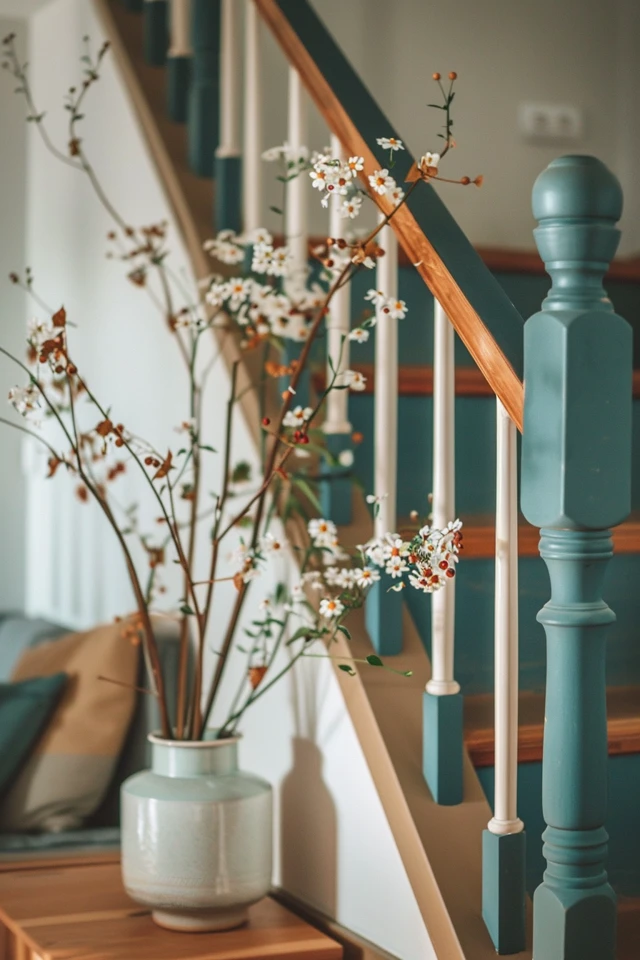
Farmhouse Rustic Stair Railing Ideas for Your Home
The staircase is often the architectural spine of a home. It is usually the first thing guests see when they walk through the front door, setting the tone for the entire house. When you are aiming for a farmhouse rustic aesthetic, the railing is not just a safety feature; it is a major design opportunity. For those of you looking for visual inspiration, please note that a curated Picture Gallery is included at the very end of this blog post.
In my years as an interior designer, I have seen many homeowners treat stair railings as an afterthought. They often stick with builder-grade oak and white spindles because they are afraid to make a change. However, upgrading your banister and balusters is one of the highest-impact renovations you can do without tearing down walls.
A true farmhouse rustic look balances rugged materials with refined craftsmanship. It is about mixing textures like rough-hewn wood, matte metals, and crisp paint. In this guide, I will walk you through the structural design, material selection, and code requirements needed to bring this look to life safely and stylishly.
1. Defining the Farmhouse Material Palette
The core of the farmhouse rustic style lies in the interplay between warm wood and cool metal. You want to avoid the high-gloss, overly polished look of traditional Victorian homes. Instead, focus on materials that feel grounded and durable.
Wood Selection
For the handrail and newel posts (the large anchoring posts), wood species matter. White Oak is currently the gold standard for this look. It has a neutral, tight grain that takes stain beautifully without turning orange like Red Oak or yellow like Pine. If you want something truly rustic, look for reclaimed Douglas Fir. It often features nail holes and saw marks that add instant character.
Metal Integration
Wrought iron is the classic partner to wood in farmhouse design. However, modern farmhouse styles have shifted toward cleaner lines. Instead of ornate scrolls or “knuckles” on every spindle, opt for plain square bars or simple horizontal rails.
Designer’s Note: The tactile experience
In my projects, I always prioritize the “hand feel” of the railing. A railing that is too wide or has sharp corners is uncomfortable to grip. I recommend a handrail width between 1.5 and 2.5 inches. Test the profile in a showroom before buying. If it doesn’t feel secure and smooth in your hand, it doesn’t matter how good it looks.
2. Baluster and Spindle Configurations
The balusters (the vertical spindles) are where you really define the style. In a farmhouse home, you have three primary configuration options that dictate the “vibe” of the space.
The Classic Contrast
This is the most common and timeless approach. It involves a dark stained wood handrail paired with crisp, white-painted square wood balusters.
- Pro Tip: Use square balusters rather than turned (rounded/curvy) ones. The square edges feel more craftsman and less colonial.
- Sizing: I prefer 1.25-inch square balusters. Standard 1-inch balusters can look spindly and cheap, while 1.75-inch can look too heavy for a standard ceiling height.
The Industrial Mix
For a more rustic or modern farmhouse look, swap the wood balusters for matte black iron rods.
- Patterning: You don’t need a pattern on every spindle. A popular pattern is “single knuckle, double knuckle” or simply alternating plain bars with a single twist.
- Installation: Ensure the iron shoes (the bottom piece covering the hole) are secured with a dab of epoxy so they don’t rattle when kids run up the stairs.
Horizontal Rails
This is a controversial but stunning choice. Using horizontal metal cables or flat iron bars creates a sleek, open feel.
- Space Perception: This is excellent for small foyers as it allows maximum light to pass through.
- The “Ladder” Effect: If you have small children, horizontal rails are essentially a ladder. Many building codes have strict regulations on this or discourage it entirely due to climbability. Always check your local code first.
3. Sizing, Spacing, and Code Compliance
Safety is the non-negotiable aspect of stair design. As a designer, I spend just as much time with a tape measure as I do with fabric swatches. If your railing isn’t code-compliant, you will fail inspection when you go to sell your home.
The 4-Inch Sphere Rule
This is the most critical rule in stair design. You must not have any gap in your railing system that allows a 4-inch sphere to pass through. This is to prevent a small child’s head from getting stuck.
- Baluster Spacing: When marking out your spacing, aim for a gap of roughly 3.5 to 3.75 inches. Do not push it to exactly 4 inches, or you risk failing inspection due to slight bowing in materials.
- The Triangle Gap: There is a triangular gap formed by the stair tread, the riser, and the bottom rail. A 6-inch sphere must not pass through this specific gap.
Rail Height
Standard residential building codes generally require the handrail to be between 34 and 38 inches vertically from the nose of the stair tread.
- My Preference: I almost always specify 36 inches. It feels natural for the average adult height. 34 inches can feel dangerously low, and 38 inches can be uncomfortable for shorter individuals.
Newel Post Scale
The newel post anchors the system. Visually, a skinny post makes the whole staircase look weak.
- The Rule of Thumb: If you have a grand foyer with high ceilings, use a box newel that is at least 5 inches or 6 inches wide.
- Standard Stairs: For a standard hallway staircase, a 3.5-inch or 4-inch solid post is sufficient.
4. Finishes and Stains
The finish is what ties the railing into your flooring and furniture. In a farmhouse rustic scheme, we want low sheen and high texture.
Stain Colors
Gone are the days of shiny red mahogany. We are looking for “dry” looking woods.
- Special Walnut: A great mid-tone brown that doesn’t pull too red.
- Jacobean/Espresso Mix: For a high-contrast look, mixing 50% Ebony with 50% Jacobean creates a rich, deep brown that mimics aged ironwood.
- Application: Always use a matte or satin polyurethane topcoat. High gloss finishes show fingerprints and dust, and they look too formal for a farmhouse aesthetic.
Painting Balusters
If you are painting wood balusters white, use a high-quality trim enamel.
- Color Match: Match the white to your existing baseboards and door casings. Do not introduce a new shade of white just for the stairs; it will make your trim look dirty.
- Durability: I recommend urethane-based enamel paints. They cure harder than standard latex and resist scuffs from shoes and vacuum cleaners.
Common Mistakes + Fixes
Mistake: Using a shiny black paint on handrails to mimic metal.
Fix: If you want a black handrail, use a black stain on wood (like an India Ink dye) or a very flat matte paint. Shiny black paint highlights every dent and scratch and looks like plastic.
5. Integrating the Surroundings
A railing doesn’t exist in a vacuum. To fully achieve the farmhouse look, you must consider the elements immediately surrounding the stairs.
Stair Runners
Hardwood stairs can be slippery and noisy. A runner adds safety and warmth.
- Material: For a rustic look, use a sisal or seagrass weave. However, these can be rough on bare feet. A wool blend with a low-pile herringbone pattern is a softer, durable alternative.
- Sizing logic: You generally want to see 3 to 4 inches of wood on either side of the runner. If your stairs are 36 inches wide, a 28-inch or 29-inch runner is ideal.
Wall Treatments
The wall running up the stairs is a prime location for architectural interest.
- Shiplap: Installing horizontal shiplap up the stairwell is a quintessential farmhouse move. It protects the drywall from scuffs and adds texture.
- Board and Batten: This grid-like molding adds height and grandeur. Keep the grid simple—large squares or tall rectangles work best.
Lighting
Lighting along the stairs is often neglected.
- Sconces: If space allows, install sconces along the stair wall. Place them roughly 60 to 66 inches high from the standing floor height (measure from the tread nose).
- Style: Go for metals that match your balusters. If you have iron spindles, use iron sconces.
What I’d Do in a Real Project
If I were designing a farmhouse staircase for a client today with a moderate budget and a family, here is exactly what I would specify:
- Newel Posts: 5-inch Box Newels in White Oak with a flat cap (no fancy finials).
- Handrail: “Plowed” White Oak handrail, stained in a matte “Weathered Oak” finish.
- Balusters: Matte black iron spindles. Alternating pattern: two plain square bars, followed by one single-knuckle bar.
- Installation: Surface mounted with epoxy-secured shoes.
- Runner: A slate-grey herringbone wool runner with a black canvas binding tape.
- Walls: Vertical board and batten painted a creamy white (like Benjamin Moore White Dove) to contrast with the dark iron.
Final Checklist for Your Project
Before you order materials or hire a contractor, run through this list to ensure you haven’t missed a critical detail.
- Code Check: Have you verified the 4-inch sphere rule and handrail height with your local municipality?
- Anchoring: Do you know where the floor joists are for anchoring the newel posts? (They cannot just be screwed into the subfloor).
- Measurement: Have you measured the total linear footage of the handrail, including the returns to the wall?
- Family Needs: Have you considered the grip size for elderly family members or the climbability for toddlers?
- Finish Sample: Have you tested your stain color on a scrap piece of the actual wood you are using? (Colors look different on Oak vs. Pine).
- Lead Times: Custom iron or turned wood can take weeks. Order well in advance.
FAQs
Can I install iron balusters into my existing wood railing?
Yes, this is a very common retro-fit. You cut out the old wood spindles and drill holes into the existing handrail and floor to accept the new iron ones. You will need “shoes” (metal covers) to hide the drill holes and glue mess at the bottom.
Is it cheaper to paint my railing or replace it?
Painting is significantly cheaper. Replacing a railing involves demolition, carpentry, and often drywall repair. If your railing is structurally sound but just ugly (e.g., orange oak), painting the spindles white and gel-staining the handrail dark is a cost-effective weekend project.
How do I clean matte black iron spindles?
Do not use furniture polish or wet rags, as they can cause rust or leave streaks. Use a microfiber cloth for dusting. If they need a deeper clean, use a damp cloth with a tiny drop of mild dish soap, and dry them immediately.
What is a “rake” rail versus a “balcony” rail?
A rake rail is the railing that goes up the angle of the stairs. A balcony (or level) rail is the railing that runs flat along the landing or hallway upstairs. They often require different baluster lengths, so be careful when ordering.
Conclusion
Updating your stair railing to a farmhouse rustic style is an investment that pays off in both daily enjoyment and resale value. It transforms a utilitarian passage into a design statement. Whether you opt for the industrial edge of black iron or the warmth of reclaimed timber, the secret to success lies in the details: the correct scale of the newel posts, the safety of the spacing, and the durability of the finish.
Take your time with the measurements, respect the building codes, and choose materials that feel as good as they look. With the right planning, your staircase can become the most striking feature of your home.
Picture Gallery


